
Gerry Feehily. “Ulysses with Finnegans Rising: An Interview with Andrew Gallix.” 3:AM Magazine, 17 May 2026.

Andrew Gallix arrives at my apartment just off the rue Beaubourg in the 3rd arrondissement of Paris at 4pm on a bright May 1st bank holiday. Like many a former punk his sartorial style in middle age verges on the mod. He wears a brushed cotton jacket, and a blue and white striped shirt, navy blue jeans and a pair of black Campers. Blue eyed, greying hair tightly cut, with a tuft at the widow’s peak, he speaks with a mild southern English accent, the emphasis on certain words revealing the very faintest underlying of French. For a deeply literary man, he is broad shouldered and barrel chested, the sort of build that would be an asset if there was any trouble outside the pub, or after a book reading. During the soundcheck I ask him to introduce himself. “Je m’appelle Loren Ipsum,” he replies.
Late in Loren Ipsum, the eponymous heroine quotes the fictitious author Adam Wandle, quoting Arthur Ramsone, who wrote — in a letter — I think of England as a sort of dream country. Were you born there?
No, I was born in Paris.
Given that you weren’t born there, but that you spend a lot of time there, is it?
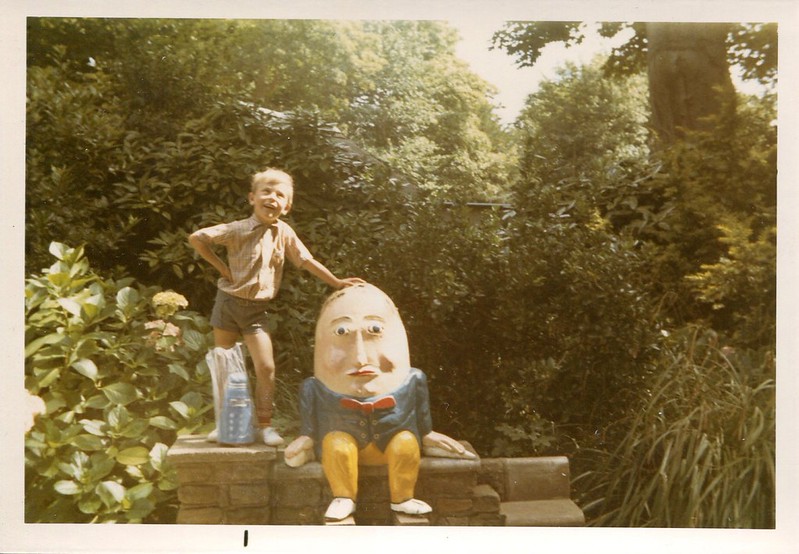
Yes, it’s a dream country for me. My father was French, my mother English. They separated very soon after my birth, and my mother took me to London, where she came from. So I was brought up there: the first happy years of my life were spent in London. Then there was a protracted custody case, and my father finally got custody, and so all of a sudden I was taken to France. It was quite traumatic, because I couldn’t speak a word of French, and in those days, of course, Paris wasn’t the international city it is now. Nobody spoke English, and there was actually a lot of hostility towards England, the natural enemy. I felt alienated, completely lost because I really wanted to be with my mother.
How old were you?
Just under six.
Too late not to be traumatised.
That’s right. I always went back to England during the holidays, and I’ve been going back and forth ever since. So it’s true that England became a kind of paradise lost, and although it’s very unfashionable at the moment — everyone going on about how bad it is — for me it really was a dream country: the grass was literally greener on the other side of the Channel. As soon as I went back to England I just felt at home, and then increasingly it wasn’t really my home anymore, it was what could have been my home: a sort of shadow home for the shadow self I could have been, for better or worse.
Today, I feel very English; I also feel very French. Things are more balanced than they used to be, but for a very very long time I just yearned to go back to England, and I think I’ll probably spend the end of my life there. I feel that I’ll have to go back at some point.
One critic described Loren Ipsum as an Anglo-French novel, but the term suggests settings that are genteel, or bourgeois, whereas Loren Ipsum is really quite a different kettle of fish. Did you have that genre of the novel in mind when you wrote the book?
To a certain extent, yes, but of course it’s different because, even though I felt like an outsider growing up, I’m also an insider. So I’m writing from within France, as a French person who’s also English. So it’s a slightly different slant from the novels you’re referring to. It’s also more subversive and, dare I say, experimental. As you know (since you were one of the contributors), I edited an anthology entitled We’ll Never Have Paris (Repeater Books, 2019) a few years ago, which explored Anglo perceptions of the French capital.
There’s a quite a bit of French in the novel, though not of War and Peace proportions, but enough to discombobulate an English reader. The French itself is very français populaire, argotic, that conveys an atmosphere that English can’t.
I thought it would be fun to discombobulate English-speaking readers! If people understand both languages, then they get a bit more. My ideal reader is obviously someone who understands both English and French. Most readers of Loren Ipsum will be Anglophone though, so what I’m doing is putting them in the position they would be in if they travelled to France. They’d hear people speaking a language they wouldn’t fully understand, but they’d recognise it as French. I wanted to put them in that situation. If you don’t understand those passages, you can skip them and still follow the plot. It was very deliberate not to put any vital information in the French dialogue.

You reference French punk as well.
I think the first time I heard about punk was actually in a French magazine, towards the beginning of the movement, and I was immediately hooked. The next time I went to London, I noticed a few punks on the street for the first time. It was thrilling.
Did you follow the French scene with as much intensity as you followed the English? Andrew Hussey suggests that punk is a French invention, and it’s McLaren who co-opted it.
I don’t buy that at all, but it’s true that in the very, very early days — in Paris in particular, but also in Lyon — there were quite a lot of people who were into the Stooges, the New York Dolls, and the Velvet Underground, perhaps even more than in London. There was Yves Adrien, of Rock & Folk magazine, who, back in the early seventies, would sign off his articles “Yves ‘Sweet Punk’ Adrien”. So there was something similar going on at the same time in New York City, London, and Paris, and then it really took off and became socially significant in London, and Paris was largely left behind.
In the early days of punk, in Paris, there were people like Marc Zermati — he did Skydog records, organised the very first punk festival (at Mont-de-Marsan) and had a record shop called the Open Market near here, in Les Halles. And there was another shop, also nearby, called Harry Cover. They had a magazine called Rock News and put the Sex Pistols on the cover very early on. Michel Esteban, the guy who did Rock News, would go on to be influential in the No Wave scene in New York. And then there was his partner, Lizzy Mercier Descloux: she was close to Patti Smith and Richard Hell, knew the Sex Pistols, etc. So there were a few figures like them on the French scene, who were definitely pioneers.
I was mainly into the British bands, but I liked most of the French bands too, particularly Métal Urbain, whose second single was the first release on the Rough Trade label. (The cover of that single, “Paris Maquis” inspired the cover of We’ll Never Have Paris.)
When did you first know you wanted to write?
I was always writing as a kid, constantly fashioning little books. I actually used to pretend I could write books before I even knew how to read and write! I’d just draw squiggly lines. I reference this in the second chapter of Loren Ipsum. Hang on, let me read it to you. Ah, here we are: “However much he squints, the words remain illegible squiggles — a preliterate child’s impression of writing as ludic abstraction”.
In the punk days, I was fascinated by fanzines, and fanzine writers like Mark Perry of Sniffin’ Glue, who went on to form a band (Alternative TV), or Patrick Eudeline, the French rock critic (and now novelist) who founded Asphalt Jungle. That kind of crossover between writing and music, theory and practice. I was almost more interested in people who wrote about the music than in the music itself. When the New York scene started, people in England were reading articles in the NME or Sounds about Television or Blondie or Talking Heads at CBGB’s, but they couldn’t hear them because there were no records, so they had to dream the music into existence. I’ve always found that aspect really fascinating. People would invest so much meaning into those images, those reviews. Malcolm McLaren was briefly the manager of the New York Dolls at the fag end of their career. He came back to London with this vision of Richard Hell, the spiky hair and all that. When he was looking for a lead singer for the Pistols, he actually tried to import Richard Hell from New York, but Hell was into drugs and couldn’t get his act together. So they found Johnny Rotten instead, who happened to have a very similar look.
Growing up, I used to read voraciously, both in English and French. As a pre-teen, I was massively into Jules Verne. There are a couple of references to his work in Loren Ipsum: Captain Nemo and the Nautilus, the blue island, and generally a spirit of adventure and discovery. In the punk days, I used to read the music press religiously every week. Between 1977 and 1986, I read all the music papers every week. Thereafter, I just got Sounds and then Melody Maker until they disappeared. I’ve still got piles and piles of newspapers and magazines at home. I can remember exactly where I was when I first read them — they act as a kind of Proustian madeleine. I got into Rimbaud, Dada, surrealism, and all the 20th century avant-garde movements through punk. The first essay I ever published, in 1995, was about Joe Orton, whose work I discovered via Adam and the Ants and Malcolm McLaren. In the late 80s and early 90s, I was on the lookout for young writers who, like me, had grown up with music, and discovered Bret Easton Ellis, Douglas Coupland, and, on this side of the pond, Deborah Levy, Hanif Kureishi, Michael Bracewell, Will Self, Toby Litt, Tony White, Stewart Home, etc. Martin Amis and the writers of that earlier generation weren’t really into music, not popular music. That wasn’t their thing. You sensed they dismissed it as low culture.
Important for Gen X, but not the boomers.
That’s right, for Generation X music became the thing. That’s why I launched 3:AM Magazine, one of the world’s first literary webzines, in 2000. The aim was really to explore the interface between post-punk writing and music. I’m proud to have been the first to write about Tom McCarthy’s Remainder (2005). That novel had a huge impact on me. It’s where 21st century literature really begins in my opinion.
Did you want to become a musician at any point?
Not really, no. I mean, I vaguely had a band here, in Paris. A kind of phantom band. I was very briefly the lead singer, and then I was the drummer. A very bad drummer. We used to rehearse in a little shop that sold musical instruments off Avenue Trudaine. That was in 1980.
When did you actually begin writing Loren Ipsum? I remember when we first met in 2008 you published, shortly after, a story about Sostène Zanzibar, who is key to Loren Ipsum. Was it the embryo of the book?
Zanzibar (a nod to Rimbaud) was indeed the embryo, but that story actually appeared a bit later, in 2012. Initially, it was a standalone, but several people said, there’s a book there, there’s more than just a short story. I started thinking, well, yeah, perhaps they’re right. Because for a very long time, I’d wanted to write — and I did sort of vaguely write fiction on the margins — but I always felt I wasn’t quite ready to take the plunge. For me, writing a novel — becoming a novelist — was something that was so important that you really had it to get it right, or as right as possible. I was also in thrall to what Susan Sontag describes as the “aesthetics of silence” or what Enrique Vila-Matas calls the “literature of the No”, you know, that tradition; the ideal of the blank book, the oscillation between everything and nothing, all that. So obviously that makes it quite difficult, because you can’t just write any old book, it’s got to be a special one. Now I feel like I probably waited a bit too long!
Was there any model? If the book has a star sign I’d say it would be Ulysses with Finnegans rising, that it has both those elements, the book is teeming with people. And linguistically, there’s a lot of work on the pun. Is Joyce a tutelary spirit?
Yes, definitely. I do reference Joyce in the book a couple of times. There’s the cat from the Calypso episode in Ulysses and there’s a phrase I borrowed from the beginning of Finnegans Wake — “from swerve of shore to bend of bay”. Which I believe he wrote in Nice (the chapter in which it appears is set in Nice). I studied Ulysses as a student, I think it was for the agrégation [the most competitive state entrance exam for qualifying as a teacher], and it just blew my mind. I read it alongside Gifford’s Ulysses Annotated, checking all the references line by line. Tom McCarthy told me that he’d also read it that way, a bit like the Bible. It was the kind of writing I was looking for: the constant oscillation between high and low, the impression that there’s everything in it (including the whole history of English literature!) and at the same time, it just takes place in the space of one day. There are so many passages, so many phrases, here and there, that have just stuck with me. Whenever I cross the road because it’s sunny on the other side, I think of Leopld Bloom: “He walked along the sunny side of Eccles Street”. So definitely Joyce, especially stylistically.
Loren Ipsum is a very sociable book.
Probably because I’m not.
How do you square that with your being a much more private person?
The drunkenness, the booze. For many years, whenever I went out, I would drink far too much, to compensate for being so shy and awkward and ill at ease. There are three parties in Loren Ipsum: one on a yacht, a decadent one in a flashback scene set in 1980, and the dinner party in the final chapters. Well, that whole party theme is something I enjoy reading about in books or watching in films, precisely because I’m usually on the outside in such social situations. Like in the Jona Lewie song, you’ll always find me in the kitchen at parties! I enjoy watching people enjoying themselves but never really feel part of what’s going on. Same in nightclubs.
I hate nightclubs.
In nightclubs, I’d always sit down with a drink and watch the people dancing around me. So there’s definitely that element: the outsider looking in.
Whenever I go to the south of France, I love checking out the names of the yachts and where they’re registered — usually in the Cayman Islands or somewhere like that. That whole lifestyle of the super rich is so obscene and vulgar, and yet so tempting and glamorous. The party on the yacht in Loren Ipsum comes from those mixed feelings, plus it tied in neatly with the pirate theme.
Nice is your vacation spot.
Yes. Nice, Antibes, Villefranche-sur-Mer, Menton…
What draws you to the French Riviera?
When I was a kid, my (French) grandmother used to go on holiday to the south of France. So I’ve got memories, going right back, of Nice. I remember going to the Anglican church in Nice at Christmas, one of the only Christmases I didn’t spend with my mother in London, and being in that kind of English enclave just felt so wonderful and comforting to me. The Riviera was largely invented by Brits — think of the Promenade des Anglais — and subsequently reinvented by Americans of the Fitzgerald generation. So there’s that element.
Then there’s the fact that my father was a big fan of Graham Greene, who had a flat in Antibes. He used to go there to Greene’s café, which is now a chain bakery shop. It was called Chez Félix at the time. The area is haunted by my Dad and Greene. I like to imagine them together chatting away at Chez Félix.
Loren Ipsum is objectively your first novel, but it must have quite an archaelogy of unwritten or abandoned novels.
Several chapters had already appeared in print as short stories. All of them bar one were revised and expanded. I envisaged them from the start as part of a future novel but it wasn’t very clear at that stage what the novel would be. And then it all clicked, it all came together. At one point, for instance, I needed a party scene and remembered I’d already written it! You know, the one that takes place in a flashback to 1980. It’s actually based on a party I attended that year aged fifteen. It was really weird — a mixture of punks and older, decadent socialites. Lots of sex and drugs. And rock and roll.
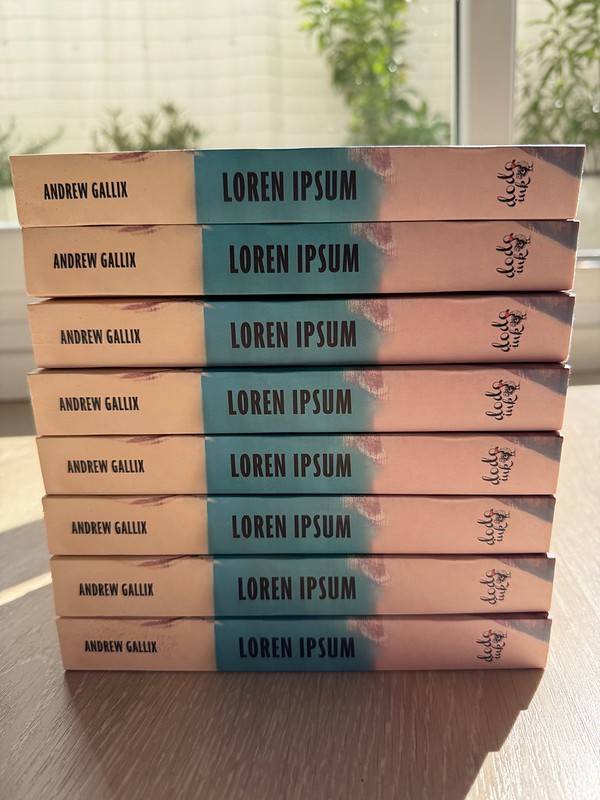
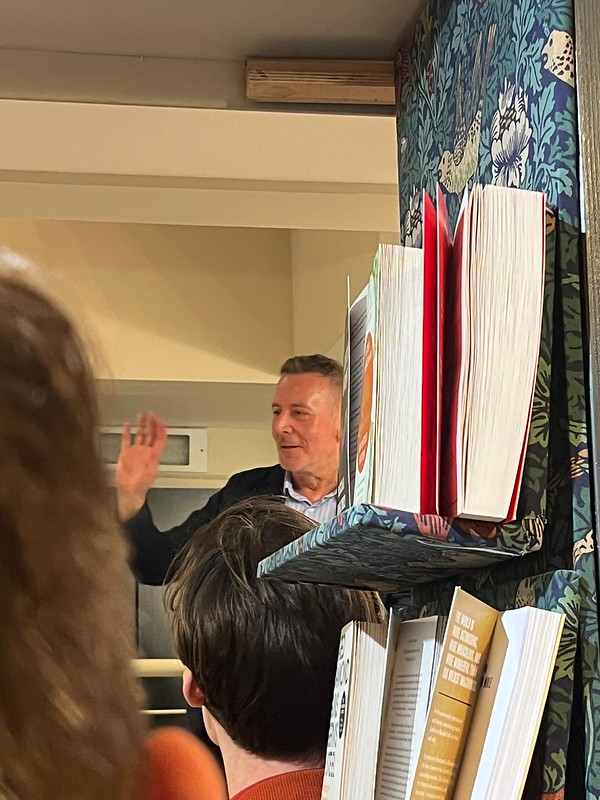
On the back page, we are told that there’s a series of literary murders going on in France. And while these murders are evoked, I’m wondering whether this is the first time that a McGuffin is announced on the back page, only to be subsumed by the other narrative flows in the book.
Yes, you’re right. There’s even a fast-food chain in the book called McGuffin’s!
The murders hold things together, they provide this kind of through line. The second strand, of course, is Loren Ipsum, who’s working on a book about this shadowy figure called Adam Wandle. The terrorists have adopted him as their guru but it remains unclear whether he’s actually one of them or not. I wanted to have those two things running alongside, and then just basically do what I damn well wanted with the rest.
There are lots of contemporary novels that I read and think, Oh, that’s a great idea. And then the whole novel is just the development of this very same idea. As Borges remarked: why go to all the trouble of writing a book if a mere summary would suffice? And none of these novels I’m referring to has a style that’s particularly interesting, they’re just the development of one narrative line from beginning to end. There’s a lot of that stuff going on these days, and I certainly didn’t want to replicate that. I wanted Loren Ipsum to be a bit more substantial than that.
I also wanted the book to undermine itself at times. In the first chapter, for instance, you’ve got all these references to Vladimir Jankélévitch or Wallace Stevens side by side with a mention of Pat Butcher from Eastenders. There’s a famous novelist who read parts of another chapter and remarked, This is great but that line can’t go in, because you’re completely undermining your own writing. So, of course, I made a point of keeping it in.
And the Argo gets namechecked. Is Apollonius of Rhodes another tutelary spirit? Did you want to out Hellenisticise the Hellenistic?
That’s kind of going back to Joyce, isn’t it? Well, I wanted it all, yeah — Joyce, Eliot. I also wanted to pay homage to that civilisation because it’s our civilisation, isn’t it? Or part of it. One of those literary points of origin.
Because in our time experimental or avant-garde literature is essentially Hellenistic, sceptical about pure story.
I definitely am. I can’t really enjoy a novel if I don’t get the feeling that the writer is aware that they are writing. It’s what I wanted to do with Loren Ipsum: I wanted the book to have a kind of consciousness of its own content. There are lots of echoes throughout the book, lots of references, which only the book itself could make. I wanted to convey the feeling that the novel was conscious of itself.
At the end of the book Loren says Art is about affirming the world, not changing it. Would you agree?
Absolutely. The way I see it, literature is writing as an art form. That’s the definition I would give. Of all the art forms, it’s probably the lowest because it uses language as its instrument, which everybody else uses. But it’s also the most important one for the very same reason: the centrality of language to the human experience. As human beings, our experience of the world, of being alive in the world, is always already mediated through language. As Roland Barthes stated, pretty much everything is discourse.
As soon as you say something is blue, what you communicate isn’t this precise, unique shade of blue, but a sort of generic blue. You don’t really see things anymore once they’ve been named. The name kills the living thing. For Stéphane Mallarmé, the word “rose” refers to the one that’s absent from every bouquet. As human beings, we don’t have access to things in themselves — we don’t have access to the essence of things — and language makes this even worse by covering everything up in discourse. One of the most important literary strategies is therefore to use language against itself — by subverting its communicative function, for instance — in order to get as close to things as they are. And that’s the opposite of ideology, politics, etc. Besides, politics is about society, and literature is far more about the individual.
Art, literature should be spaces of total freedom because total freedom is otherwise impossible in society, any kind of society, where things have to be regulated and you can’t just do whatever you please. If you find it unpalatable, then don’t look at that painting or read that book.
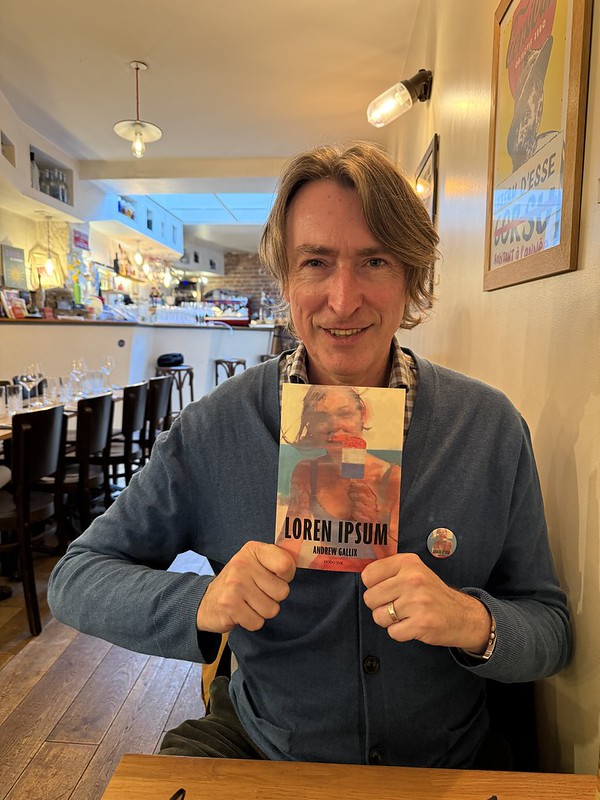
There are different literary personality types in the book. For my crimes in a past life, I spent quite a lot of time as a young man studying György Lukács, particularly his Theory of the Novel. He considered that literary people live in a kind of a hothouse and that this leads to types of distortions of personality, that they develop hypochondriacal, hysterical symptoms the way hothouse plants overgrow. Would this kind of type of categorization of the literary scene seem relevant now?
Perhaps even more so because the literary world today is all about performing. It’s about meeting the readers, giving witty interviews, being present on social media; networking and, dare I say, cocksucking. Imagine poor Beckett in such an environment!
One of the reasons why writing has always appealed to me is that I often struggle to express myself orally, especially in public. I sometimes come across people who are brilliant orators or raconteurs and think, well, if you just wrote that down, you’d have a book, right there. But they never seem to, probably because they don’t feel the necessity to write. Thomas Mann’s definition of a writer is someone for whom writing is more difficult than for other people. I really agree with that. I’m always suspicious of writers who give me the impression that they just dash off their books. They might make good writers but not important ones.
But you’re a rather good public speaker.
It’s a neurodivergent thing. I need to feel that I’m prepared, that I know in advance what’s going to happen; that I know in what context I’m going to speak. And all those issues are anxiety-inducing for me. So, for instance, when I’m teaching, unless I’m talking about something that I know by heart, I need to be prepared, I don’t like to just turn up and talk. And I find small talk very difficult, in daily life. Whenever I try to engage in banter with a cab driver or a waiter, it never works — it just becomes an excruciating experience for all involved!
Very often when there’s a group, I find myself excluded from it. I feel invisible. People don’t bring me in. They think that I’m aloof and that I don’t want to be part of the group, which is usually not the case. Writing is something that I can control to a greater extent, although it’s often most interesting when you lose control.
You told me that you were diagnosed as neurodivergent when we went to the Damned concert at the end of 2024. What does this mean on the day-to-day level? How does it shape your writing life?
I think the diagnosis is important from a practical point of view. One of the things they ask you, when you go through this process, is, If somebody told you that you were on the spectrum, as it were, would it explain lots of things for you? I’ve always been kind of hostile to grand theories. I’m wary of any theory that claims to explain everything but as soon as I was given that official diagnosis, I thought, this does explain so much.
This was only a couple of years ago, but I’d been thinking about the question seriously for twenty years, when a couple of close relatives were diagnosed. People didn’t talk about it much at the time. I started reading up on it and almost everything I read seemed to apply to me in varying degrees.
My childhood was really traumatic at times, and I had always ascribed my feeling of alienation, of being different, to that trauma. But then I started realising I had memories from very early childhood of times when I already felt completely lost, like being at school, pre-school, and being in this big sort of crazy space and hearing all these noises and everything being a blur around me and not comprehending what the hell was going on. There was actually an advert for one of the autism societies in the UK: the picture of a kid, and everything around him was blurred. That was exactly how I felt. So then I realised that there was the trauma, but that there was also probably something that existed before the trauma, genetic or whatever. So it explained lots of things, and I think it’s made things easier.
It’s your internal climate, and once you know you have an internal climate that’s objectively there, you almost kind of get on with it to a certain extent.
Though it’s not something that defines me entirely. It’s not an identity thing. For some people today, it’s like joining a gang: they colour their hair, get the uniform… That said, I think the connection between writing and autism is pretty obvious. It’s a solitary, single-minded pursuit. Very often writers see their work as the most important thing in the world. Joyce writing Ulysses during the First World War.
And pissed off that World War II rained on Finnegans Wake.
“What did you do during the war? I wrote Ulysses“! There’s that autistic kind of thing, I think — that obsession, that single-mindedness.
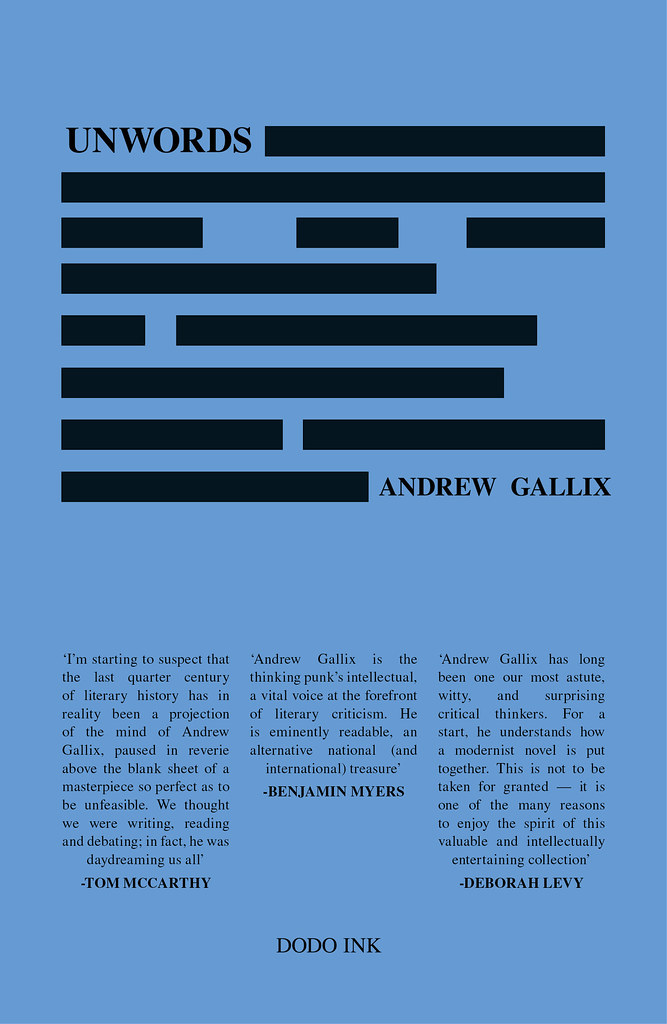
In Loren Ipsum you tell again the story told in Unwords — your collected criticism — about the book that was commissioned with a New York editor when you were a very young man, which you didn’t manage to write. In your work as a critic and as author you’re haunted by the impossibility of writing. Yet Loren Ipsum exists. What went wrong?
Haha! Well, you learn to compromise. With age you have to accept that what you publish will not be perfect. It is what it is, as people say, but it has the merit of existing, if nothing else.
Because I remember when Loren Ipsum was already a done deal and we had lunch in the autumn 2024, you told me, I’ve got about 40% of the book to do. And then when I met you six months later, I said, how’s it going? And you told me, well, I’ve got about 40% of the book to do.
I’ve always been useless at statistics.
So I was worried you were repeating the nightmare scenario of when you were a young man. You must have been very conscious of that. Was it traumatic?
It was, actually. You’re right, this kind of repetition compulsion was definitely at work. I was going through the exact same process. At one stage I must have become conscious of what was going on, and just snapped out of it. And then, the rest was written surprisingly quickly. There was a long period when it all seemed to be going at a glacial pace, and then all of a sudden, it was done! So on to the next one.
Is punk dead?
(Pause.) Yes.
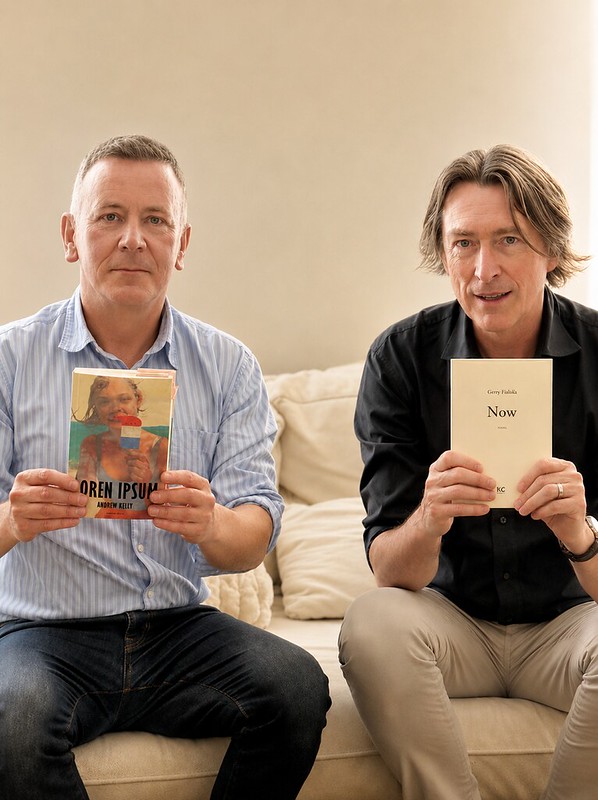
Gerry Feehily (right) was born in London and brought up in Ireland. After studying literature in Dublin, he moved to Paris in the 1990s, where he still resides. He runs the Europe desk at French weekly Courrier International. His first novel, Fever, was published in 2007, followed by the novella Gunk in 2013. Now, his first novel in French, was published in May 2026.
 ANDREW GALLIX