
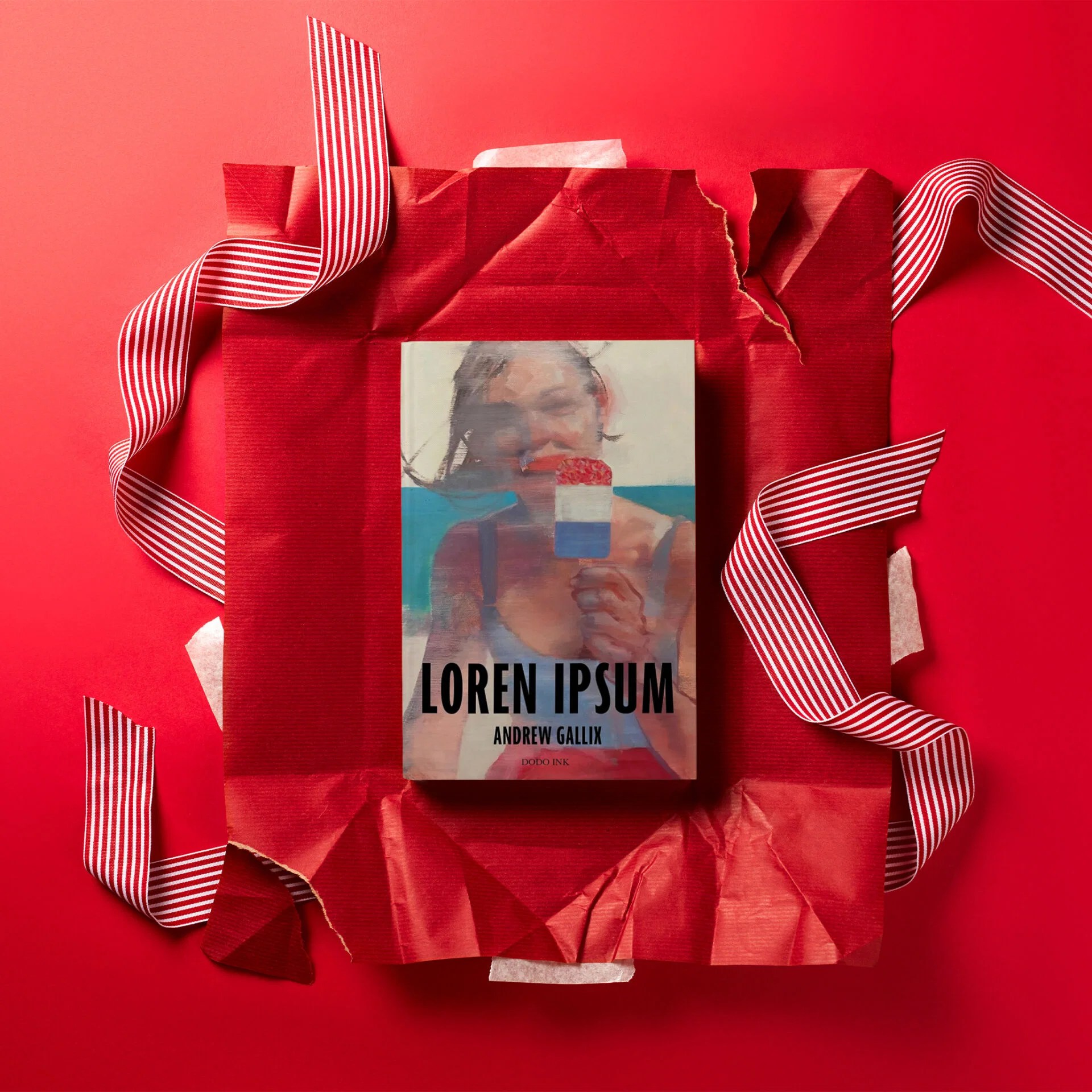
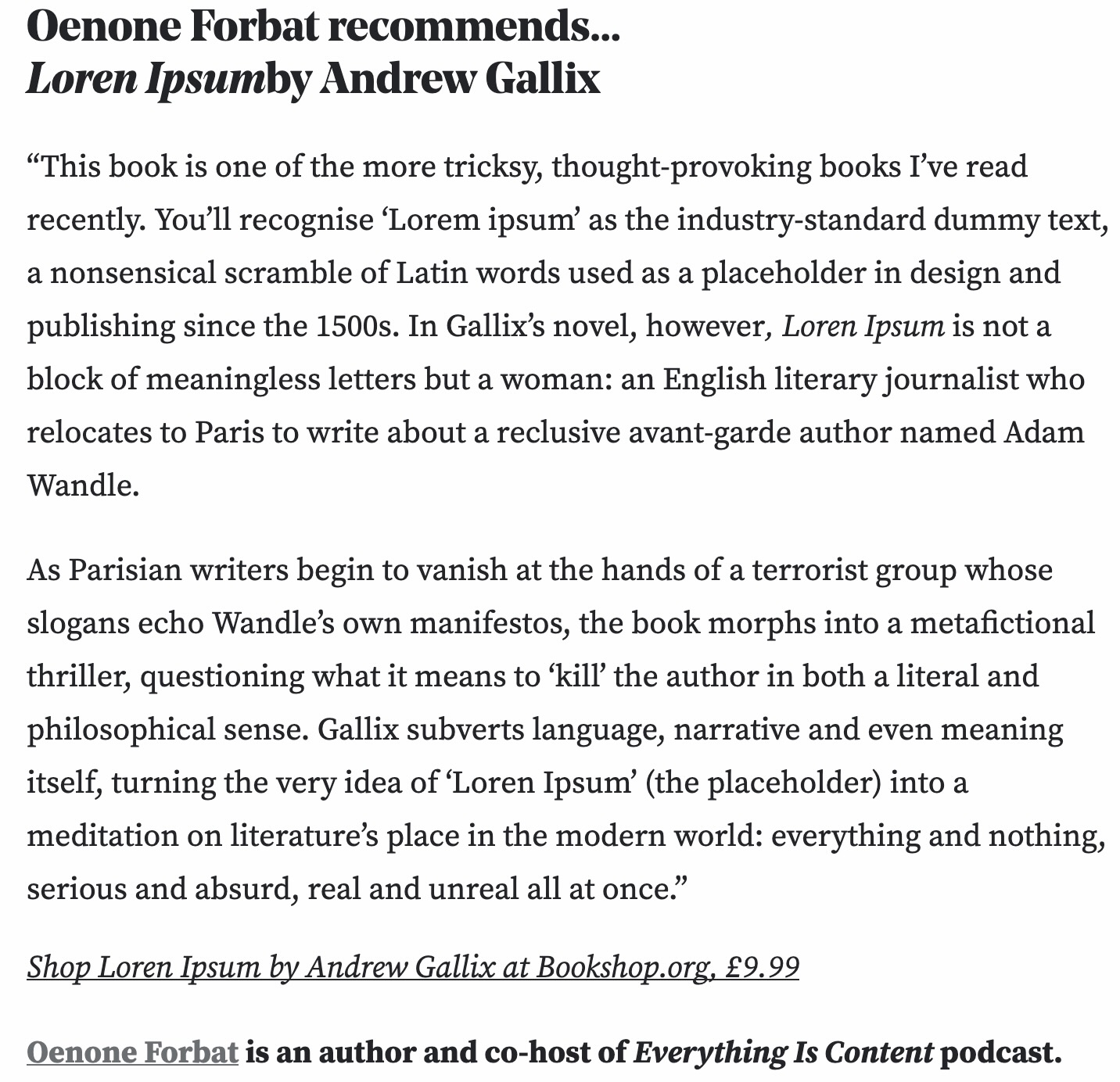
Oenone Forbat chose Loren Ipsum as her Best Book of 2025 in Stylist, 25 November 2025:
I have interviewed Gerry Feehily for 3:AM Magazine:
“The Annihilating Now: An Interview with Gerry Feehily.” 3:AM Magazine, 7 September 2026.
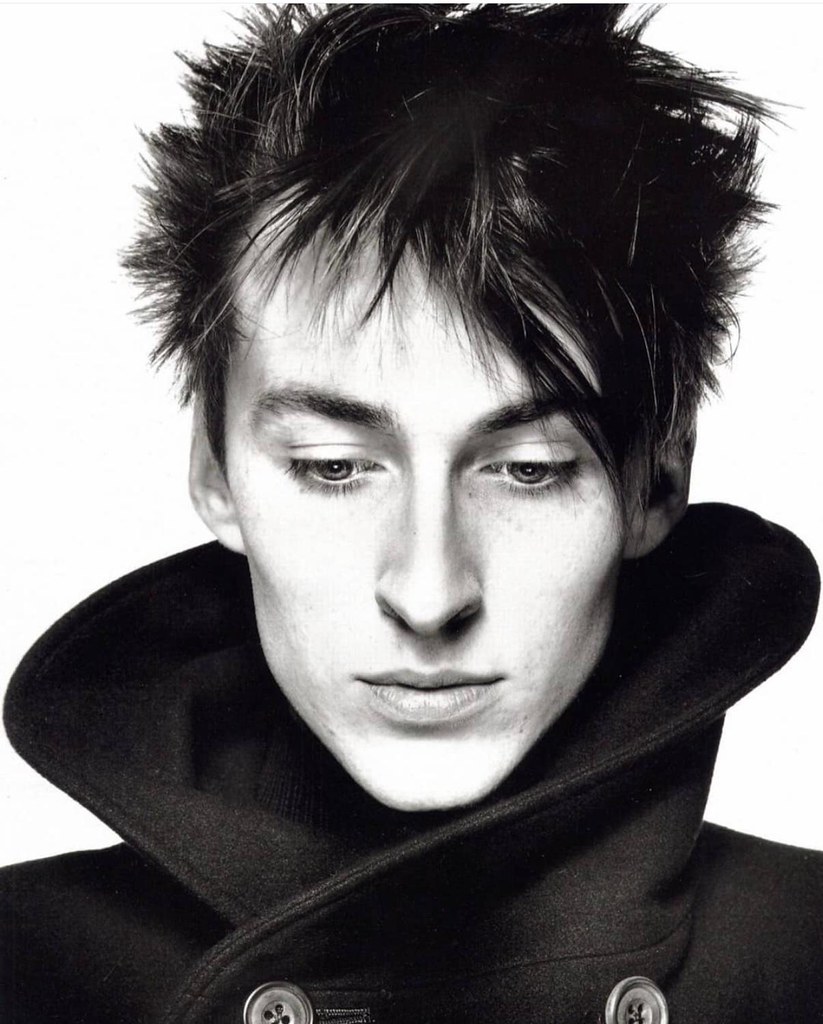
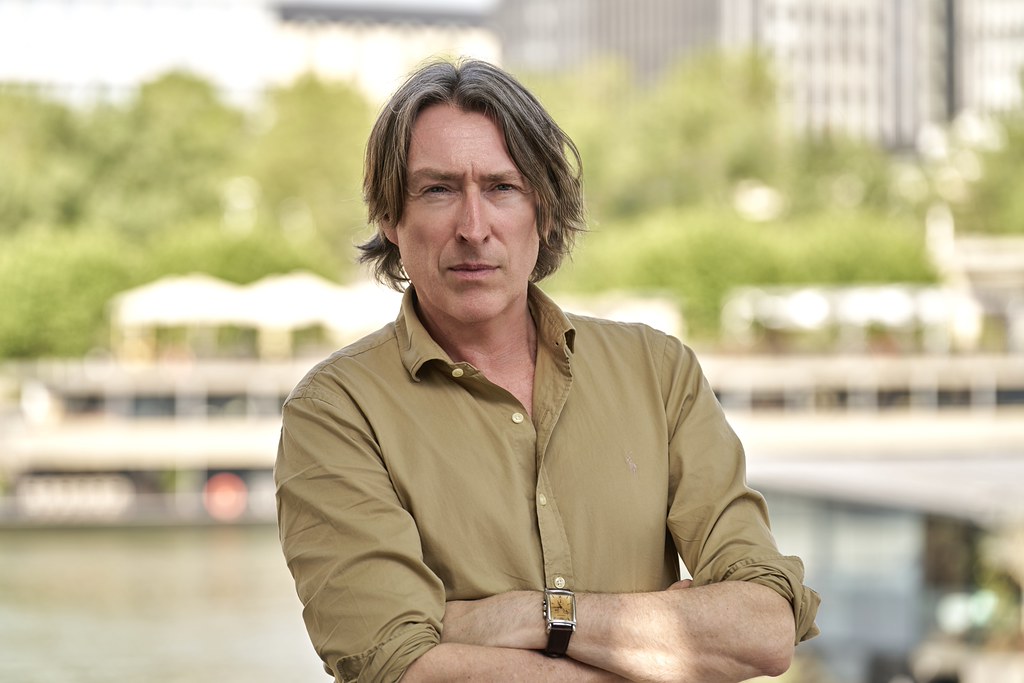
The following interview took place on 5th July at Gerry Feehily’s spacious, immaculate apartment, located on a bustling street — close to the Pompidou Centre — which a famous listings magazine recently described as the hippest in town right now. The Paris-based Irish author sits on a plush white leather sofa, suitably attired for the latest heatwave in a green T-shirt and cream-coloured shorts. Tall and slim — a former male model — he still cuts a fine Byronic figure. He has the patrician nose and piercing blue eyes of Julian Barnes, as well as the floppy hairstyle, complete with centre parting, of a young Hugh Grant (or Wyndham Lewis) but with a few distinguished greying strands. Wisps of blue, orange, and red float above his head across the canvas of an elegant abstract painting, which looks tantalisingly incomplete — Twombly interrupted. Lancelot, Gerry’s strikingly beautiful cat, elects to sleep next to me throughout.
Over the years, Gerry has been a translator, literary critic, and journalist. His first novel, Fever (Parthian), was published in 2007, followed in 2014 by a chapbook entitled Gunk (3:AM Books). His second novel, Now (KC Éditions), recently came out in France.
Tell us about your day job…
Oh God. I work at Courrier International, which is part of the Le Monde group. It’s a weekly magazine focused on world affairs, geopolitics and culture, founded in 1991 and still going strong.
And what’s your current position?
Europe editor. I manage a team of about twenty journalists, most based in their respective zones — Athens, Lisbon, Prague and so on. I edit, organise the day-to-day work, come up with ideas: what are we going to put on the front page next week, next month? It’s a sort of rawer version of The Economist.
So you’re not in charge of North America?
No, just Europe, which is everywhere from Belfast to Vladivostok. The specific thing about Courrier is that we select articles from the press of all these countries and have them translated into French. The original idea was simply to show how other countries think, what they talk about. Compared to Le Monde, we’re tiny — more a niche Wes Anderson-type outfit compared to the Batman-like grandeur of Le Monde.
How do you reconcile your day job with writing?
Courrier is quite an intense job, particularly since the accelerations of 2015-16 — Trump, Brexit, the migrant crisis — and because news websites are bulimic and need content 24/7. I started there in 2009, a couple of years after I published Fever, my first novel. It was my first full-time job after years of hand-to-mouth freelancing.
The shameful truth is that I became more disciplined as a writer with the day job taking up a third of my day than I ever was when I was freelancing. Most weeknights you’ll find me writing from about nine until eleven or midnight.
Do you consider yourself an Irish writer?
It’s complex. I was born in Willesden in London and until I was seven I thought I was English. We moved to Lewisham where my folks ran a pub, The Sydney Arms! Then they announced that we were moving “back” to Ireland. We arrived in Bundoran, a seaside town in Donegal. Living standards fell off a cliff. Suddenly there was no colour TV, no running hot water, the teachers carried canes and beat kids up. The Troubles were going on a couple of miles across the border, with bombs and killings every week. Englishness was not a popular move, so I worked hard on getting an Irish accent.
I haven’t lived in Ireland since I was nineteen. All my breaks as a writer and journalist came from Britain, London more precisely. My first novel, Fever, was set in a fictionalised Bundoran, but with Now — or The House of Now, as it’s called in English — I wanted to write a specifically English novel.
Of course I feel very Irish. That’s non-negotiable. My sister did a DNA test a few years ago and apparently it’s 98% from Leitrim, Cavan and Monaghan. Ninety-eight per cent spud. But “Irish writer” suggests to me someone talking out of Ireland to the world. I’m talking from France, which is another zone, mentally and culturally.
The writers I most admire are the nomads and wild rovers — Lawrence Durrell, Paddy Leigh Fermor, Aidan Higgins, Francis Stuart — writers who made deep dives into the culture and consciousness of continental Europe and the Balkans and beyond. I’ve lived in Spain and Italy, and spent almost every summer since I was twenty-one in Greece. I can get by tolerably enough in five languages. I see myself as European, but not in some fake and lame EU sense: European with Irish lumps.
Were there writers who made you want to become one yourself?
When I was eleven or twelve, the BBC did a television adaptation of A Portrait of the Artist as a Young Man. I saw it and thought: I want to be an artist! So I started writing poems, mainly about the girls I was into.
My father saw how much the film had affected me and bought me the book. It blew my mind. I didn’t know books could do that. How much I actually understood is another question. Stephen Dedalus’s convoluted religious and philosophical musings went completely over my head. But I loved the wordiness of it all.
I was also lucky because my best mate’s older brother had been at UCD and brought about two thousand second-hand Penguin books back to Bundoran. So I became a voracious reader of modern fiction.
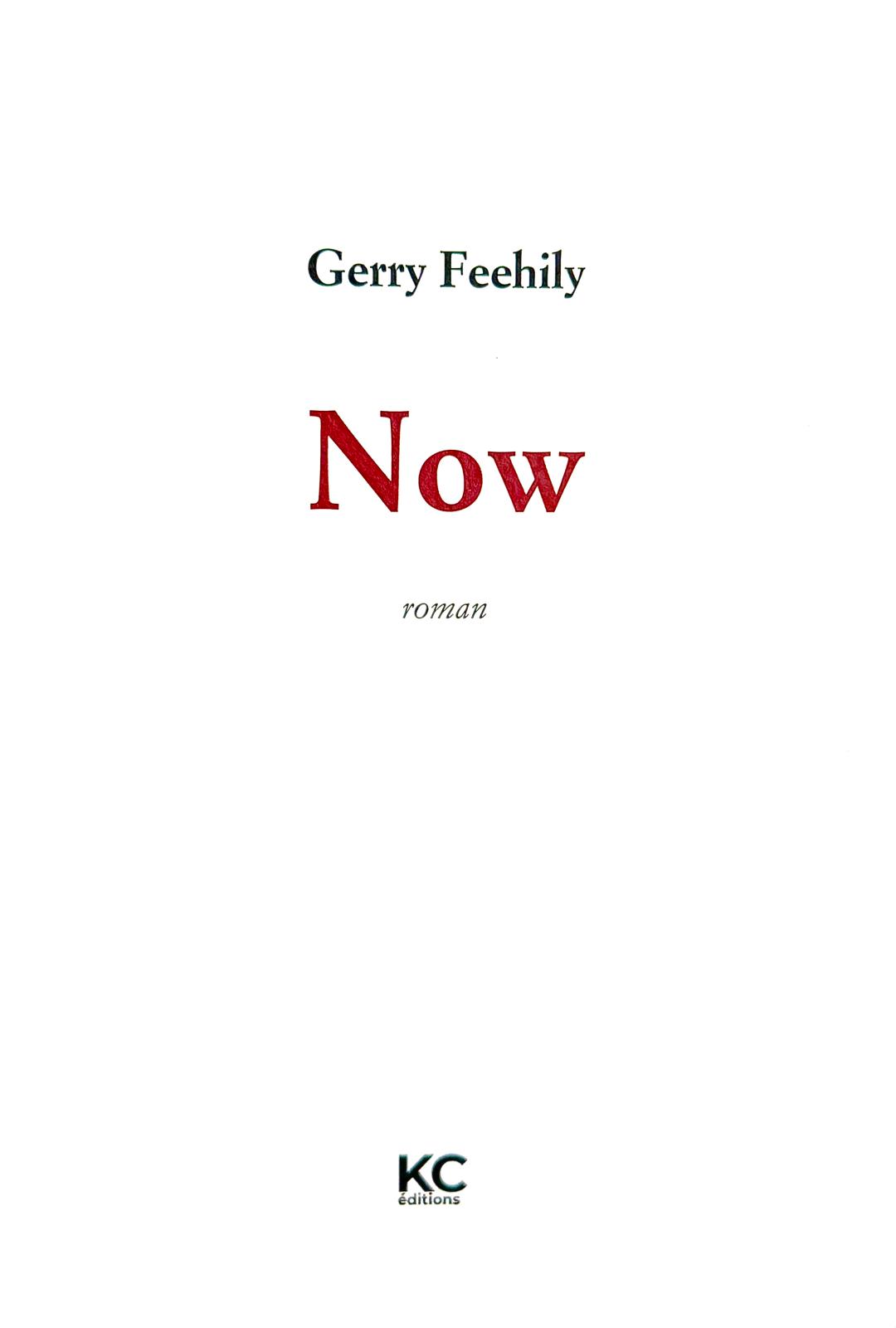
You wrote The House of Now in English, then attracted the interest of a French publisher, who asked you to translate your own book. But my understanding is that it’s not a straightforward translation… So which is the original: the English version or the published version in French?
In 2024, Silvia Contarini of KC éditions published Pavel Hak’s Autobiographie. He’s an extraordinary Franco-Czech writer whose second novel, Sniper, I translated for Serpent’s Tail back in 2003. Pavel’s a mate. Silvia had already seen some of my stories, including Gunk and “The Irish Genius” in your Paris anthology. She invited me to come up with a French translation.
I thought: if I simply translate this, I’m going to lose too much of what is happening in the English. Traduttore, traditore: the translator as traitor. So I thought, I have to write another book. The French became an adaptation.
I delivered it in spring 2025 and we went through a very rigorous editing process. Early this year, all those cuts and edits went back into the English and made that novel shorter, quicker, snappier. Silvia really identified the soul of the book: the accelerations, the cascade, that sense that things are forever tottering and about to collapse.
The two books are autonomous. Basically twins, with ever so slightly different traits.
You moved to Paris in the 1990s. Was that linked to modelling (the focus of your new book) or to your literary ambitions?
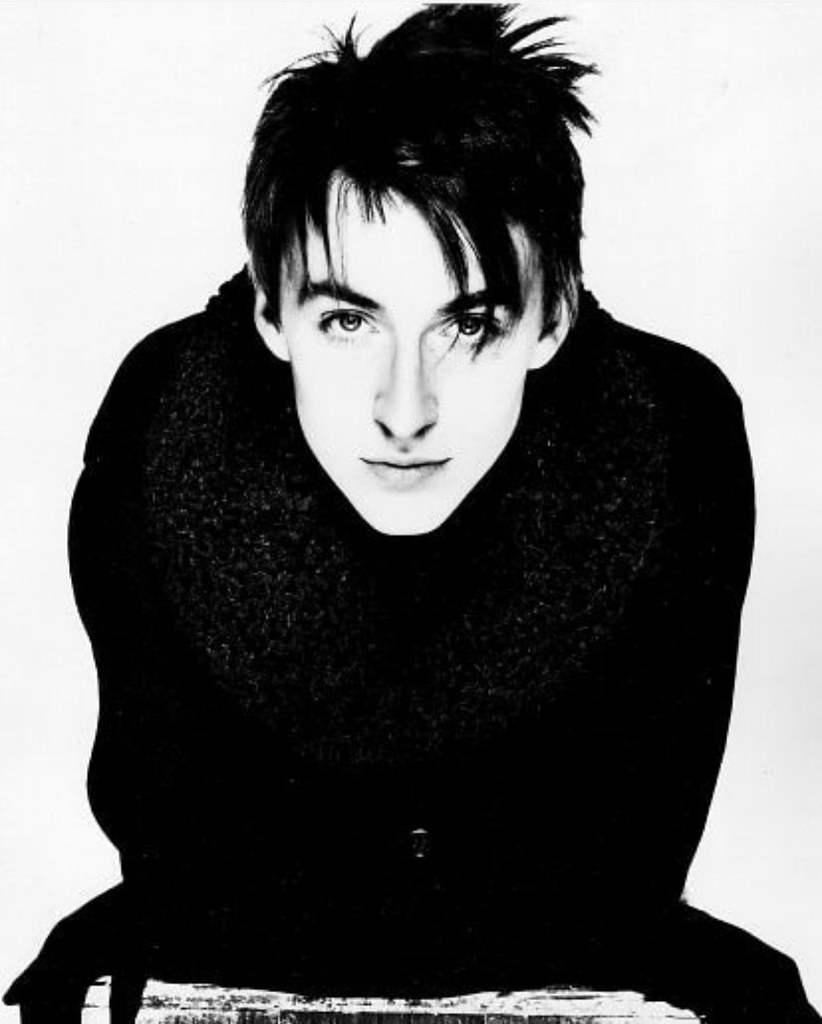
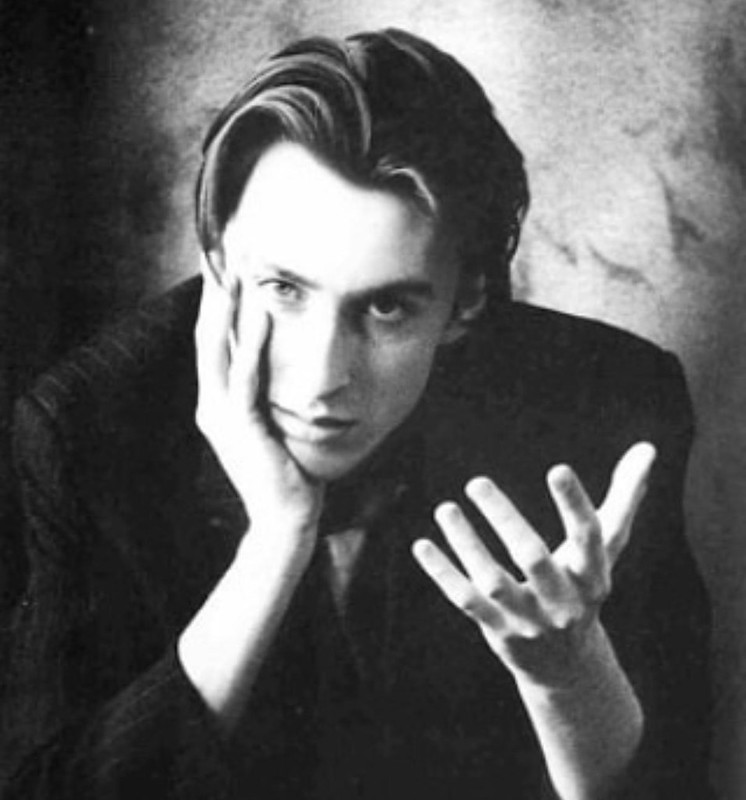
Both, really. From the age of thirteen or fourteen I knew I wanted to live on the “Continent”. Modelling allowed me to put that plan into action. I had a French girlfriend, I was spending a lot of time in Milan, I lived in Japan for six months — I was big in Japan — and worked in London, Barcelona and Madrid. The literary ambition was already there. I was still modelling when I wrote the first version of what, decades later, would become this book.
How did you become a model?
I was in the Spice of Life, this once gothy (but no longer), punky pub at Cambridge Circus, London, waiting to meet some Irish goth punks I was in a band with. We were called the Fireworks Factory.
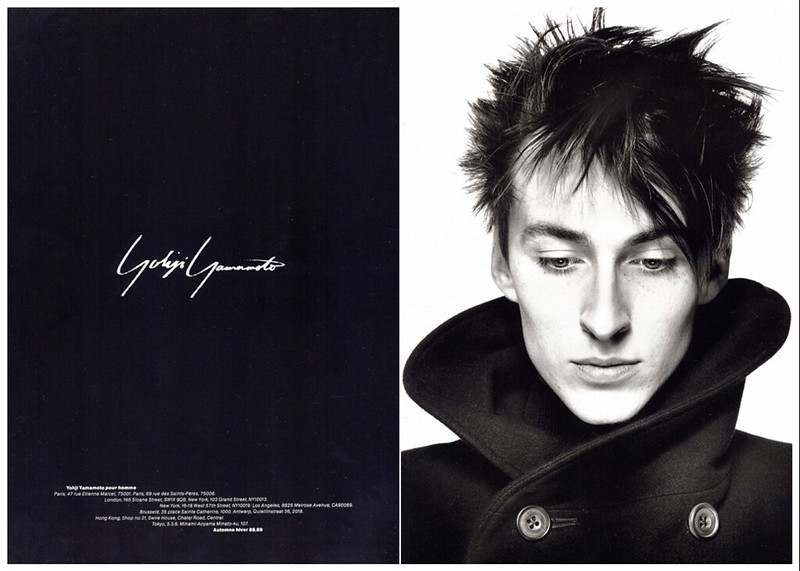
This incredibly well-dressed man came up while I was having my pint and said, in a very strong French accent, “Excuse me, I’m the art director of Yohji Yamamoto in France. Would you be interested in doing our fashion show in a couple of weeks?”
I said, “Are you taking the piss, mate?”Three weeks later I was in Paris.
They put me up in a four-star hotel, I did the show, went out to places like Le Palace, Les Bains Douches, the legendary nightclubs, and that same weekend I ended up with agents in Paris, London and Milan. I was supposed to go back to Dublin to continue studying English and philosophy. I wasn’t a bad student at all, but I simply couldn’t say no.
So I never went back. Never finished the degree. I’m a dropout, mate.
To what extent is The House of Now based on your experiences as a model? And which character do you feel closest to?
Art is the obvious one because he’s Irish and drops out of philosophy. But I don’t think I was quite as naïve as Art, and probably not quite as nice. Dave and Doug contain other bits and bobs. But I wasn’t writing autobiography. At a certain point the characters developed their own internal logic, and I had to follow that rather than my memories.
I’d been trying to write a fashion novel since I was about twenty-four or twenty-five. For years, there was a conflict in me: I wanted to be an intellectual, I wanted to be considered a serious writer, and fashion seemed so trivial and silly.
Then, much later, once I’d established myself professionally and had a family, that part of my past somehow broke off from me and became an object. I could look at it and think: that was actually great craic. There’s a great story there. I could finally tease out all the different strands of the experience, including Amber, who for me is central to the book. She’s the star around whom the main characters orbit.
There’s a commercial they’re filming for the perfume called Now, which is central to the novel. You’re making fun of fashion’s exploitation of high culture, aren’t you?
Yes, but there’s an ambiguity there. It’s a standard trope in fashion photography: photograph a model in front of a great monument because the monument gives weight and density to what is essentially a commercial exercise.
Fashion is constantly feeding off culture and whatever happens to be fashionable culturally. If there’s a huge Frida Kahlo exhibition, you can guarantee that within six months there’ll be Frida Kahlo-influenced fashion shows. Put a beautiful woman in front of Machu Picchu, dress her in Dior, and of course it’s completely absurd. But it may also look absolutely fantastic.
That’s the ambiguity: fashion is parasitic on culture, but the parasite can produce something genuinely beautiful.
There’s a sequence in the book with a wax effigy of Shelley burning on a bonfire while the models are dressed in velvet dresses, leather boots, et cetera, in this nineteenth-century style, with Dave effectively playing Byron. It’s ridiculous. It’s also beautiful. You can’t entirely resist beauty or cultural references simply because you know they’re being used to sell clothes.
The novel isn’t simply a satire or a critique of fashion…
No. I didn’t want it to be broad. I’d spent five years modelling and probably, in total, ten years in and around fashion through relationships afterwards. I knew photographers, I saw textiles being chosen, visited factories, watched seamstresses work. I even assisted the great Nick Knight for one day and was an absolute disaster. I realised I was crap at it and that I wasn’t visual.
But I knew enough of the industry to know I couldn’t just take the piss out of people because they were fashion people. They’re young people, often with artistic longings, involved in the drama of their own lives, and that drama is real to them, even inside a superficial, exploitative world. Once you take that drama seriously, you’re no longer just doing satire.
There’s a fairy-tale element too: the rags-to-riches stories of characters like Doug and Burt. And at one point the Dutch film director Wik Volkskrant says that models aren’t paid to speak, they’re paid “to be.” That struck me because models embody desire, don’t they? They embody a kind of aesthetic perfection…
Absolutely. If you were chosen to do a major fashion show, it was an extraordinary ego boost — like having your manuscript accepted. And then you were paid a disproportionately large sum simply to put on an outfit.
So Wik is being disparaging when he says models are paid “to be”, but there’s something true in it. For a brief period, your existence itself becomes the commodity. And then all these doors open into a world of luxury and privilege.
That’s the fairy tale. Except a fairy tale takes place in a moral universe and has a moral at the end. I absolutely didn’t want to write the moralising fashion book: like, it’s empty, it’s superficial, everybody is crazy, stay away. If the satire was going to work, the world had to be as attractive in the book as it really was.
What tradition does the novel belong to?
I think much more of the picaresque and the nineteenth-century roman d’ascension sociale than the modern fashion novel. I loved Fielding’s Joseph Andrews, but I’m particularly interested in the much more cynical French tradition: Balzac, then the anti-Balzac of Flaubert, then Maupassant and Bel-Ami, stories of social ascent with something caustic underneath.
I think the French were particularly good at it. Dickens veers treacly, whereas Balzac goes off into grandeur.
So I see The House of Now in that tradition: the rake’s progress, social ascent, people moving through worlds that weren’t supposed to be open to them.
Which brings us to the structure. It’s episodic, with multiple points of view. Why did you choose that approach?
Because when I read the catastrophic first draft I realised I’d actually written about five different stories. And I thought: what the fuck am I going to do with this?
I started thinking about Faulkner’s As I Lay Dying, the different points of view, and Graham Swift’s Last Orders, which itself owes something to Faulkner. Books beget books.
Then I realised the episodic structure could actually give me what I wanted. Short chapters, multiple characters, deliberately disobeying sequencing so the book doesn’t simply proceed A, B, C, D. Dos Passos and the early modernists were doing these things, obviously — nothing new, of course.
My one rule was that every chapter had to move forward in time. An Art chapter might be followed by Doug, Amber, Nick or the Wicked Agency, but a day, a week or a month has passed. That creates the acceleration towards the climax — the cascade, the feeling that everything is tottering and about to collapse. I wanted the reader to have that picaresque sensation I love myself.
The book is set in 1989, against the background of AIDS, the fall of the Berlin Wall and the collapse of the Soviet bloc. There’s an atmosphere of decadence, of decline and fall — shades of Gibbon, perhaps even Spengler. Why 1989?
I chose 1989 because there was still a kind of innocence to the period. The Wall was coming down, the Soviet system was collapsing, and in the West there was this sense that history might somehow have resolved itself in our favour. Fukuyama’s end of History. But there were bum notes already. A shady figure like Herbert von Karajan had conducted Beethoven’s Ninth at the Brandenburg Gate; Václav Havel, the great post-communist saint, would write an essay called “The Twilight of Europe”. Twilight? Wasn’t this supposed to be the dawn of the new Europe?
Then 9/11 happened and all of a sudden the ground shifted again. Retrospectively, the Berlin Wall triggered it. Like a lot of people, I suspect, I only began reading Gibbon and Spengler much later because we intuit that there’s some kind of unravelling going on. In Gibbon’s case, Rome unravels over centuries, with its eastern empire surviving at Constantinople for another millennium. I imagine the current unravelling will go much faster. That’s also the unravelling in Now: everything accelerating, everything being forgotten more quickly. What city falls first?
Here’s an anecdote.
I saw the Smiths in Dublin in spring of 1987, around the time of “Shoplifters of the World Unite”, and I had this strange sensation that night that I was witnessing the end of something — of what I had thought pop or rock music was: a way of life, a form of freedom. That was my first apprehension of decline and fall.
Took me years to interpret what bothered me: the extent to which rock itself was like a propaganda machine, making millions out of the demoralisation of young people, the artists themselves being barely conscious of it. I remember hearing Beck’s “Loser” for the first time on a beach in Greece and thought: yes, I’m a loser too — but this guy is an elite Californian grifter.
What I’m saying is that a lot of rock, not all, contains an element of capitalist agitprop. That’s Baz’s story in the novel: a public-school boy affecting a working-class accent and raging against life. It’s pure fakery. The songs are still fabulous, though. Baz’s are too. But that negative epiphany that The Smiths or the Bunnymen or rock won’t save us, that they are the system, although they think they’re not, was shattering.
There’s also nostalgia in the novel for a lost golden age — those old waiters in Naples, for instance, who remember the real stars. An idea that authentic glamour has been devalued.
Edmund Wilson made the point that revolutionaries are always nostalgic for an earlier period: Lenin for the Commune, the French revolutionaries for the Roman republic. Even revolutionaries, God bless them! The old Italian waiters in Naples are nostalgic, I suspect, for that enormous sense of American power embodied, first, by the army coming through the city and then later the soft power of the Hollywood stars flooding into Italy, discovering Capri and the Amalfi coast. They’re nostalgic for a glamour inseparable from power, which isn’t there in mass democratic tourism.
Coming out of comparatively poor Ireland in the eighties, though, my experience was very different. I remember going “up” to Dublin to study and being struck by how disillusioned my contemporaries from well-to-do backgrounds already were. I was working class, coming out of a small town, and I was ecstatic. I was completely full of joy about getting out and seeing this world.
There’s an irony there. Working-class people take cultural disillusionment to heart, the black pill is really meant for them, whereas the elites sail on regardless. That’s why Art’s optimism matters. He hasn’t yet acquired the luxury of disillusionment.
So where next? What’s the next book about?
I can’t tell you. But I have a five-year plan.
Like in the Soviet Union?
Exactly. Going full on CCCP. And look how well that went.
You’ve done fashion. What about journalism?
That’s part of the five-year plan.
We haven’t talked about Spengler properly.
Nor Leopardi, who provides the opening epigraph!
So let’s turn now to this dialogue between Fashion and Death, which gives the book its epigraph.
Leopardi’s Dialogue Between Fashion and Death, 1824. Someone first gave it to me when I was modelling. I read it and thought: this is very odd and very strange and cool. Fashion and Death are sisters?
It was only much later that I really twigged it. They’re both children of time — of caducità, caducity, transience, decay. Death destroys us biologically. Fashion destroys us in another way: by continually making the new old. Our clothes, tastes, identities, desires — everything falls into obsolescence.
Fashion is an accelerator of time and therefore, in a sense, an accelerator of our own death.
That became a springboard for the entire novel. The models are paid “to be”, as Wik says, but precisely what they’re being paid for is extraordinarily perishable: beauty, youth, newness. Fashion creates the Now and immediately begins destroying it.
And hence the title Now…
Exactly. Schopenhauer’s essay On the Vanity of Existence is a banger about Time, the idea that even a great event happening today will eventually seem insignificant, almost as though it had never happened. Our greatest passions, our greatest love affairs — years later, what was that all about? The present has this awful habit of becoming the past while you’re still living in it. The Now annihilates.
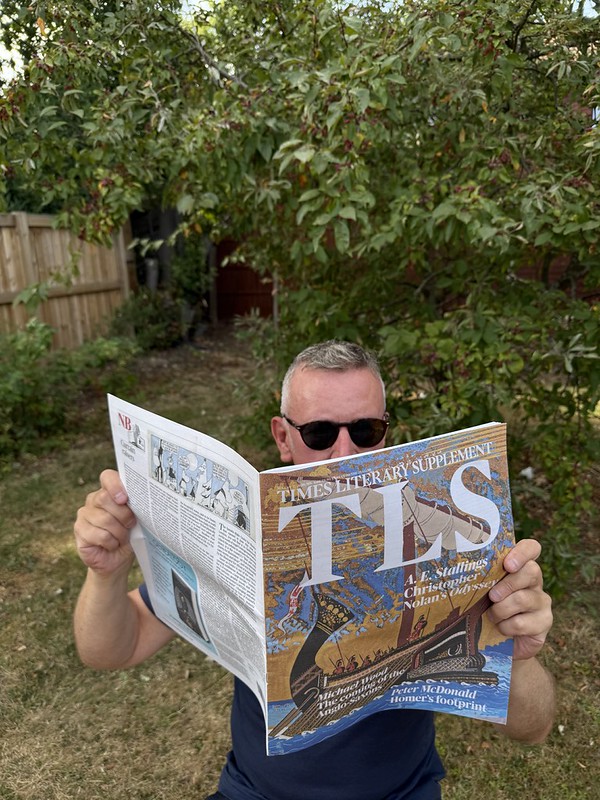
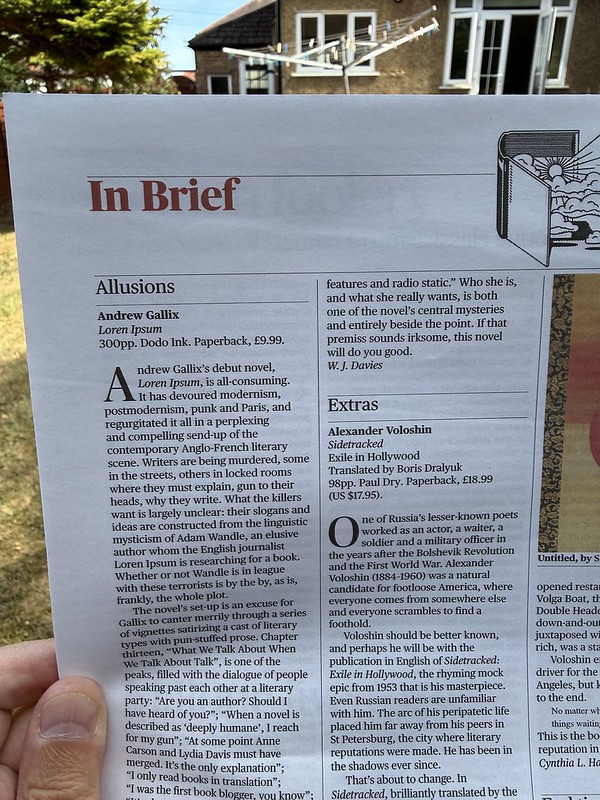
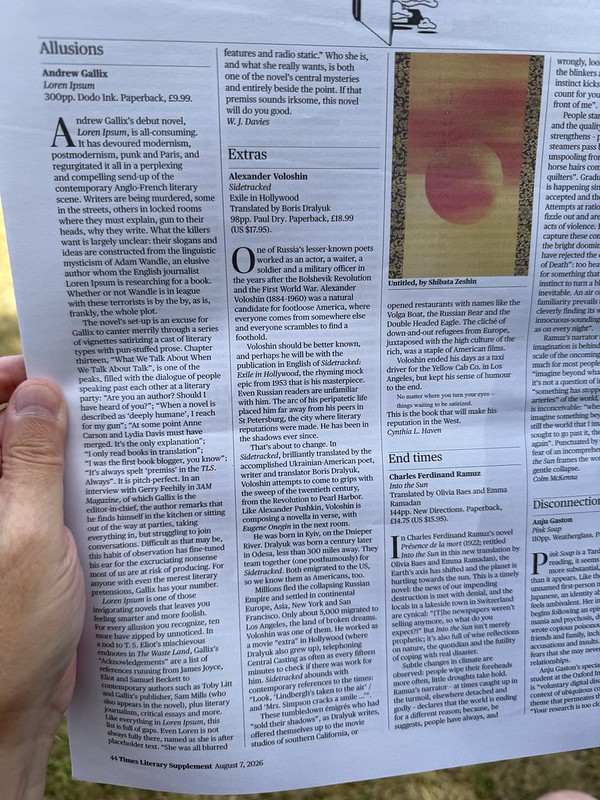
W. J. Davies reviews Loren Ipsum in the Times Literary Supplement, 7 August 2026, p. 44:
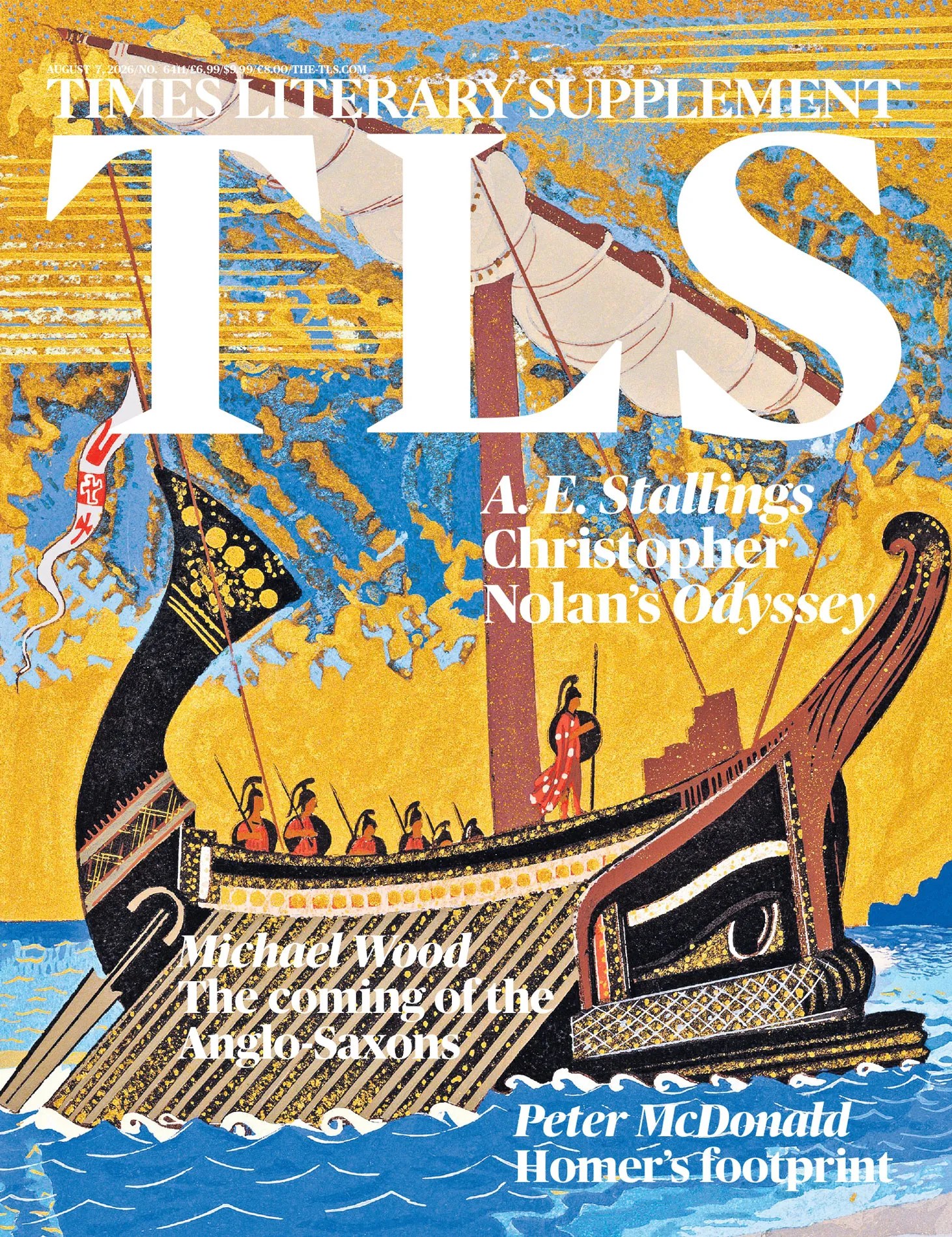
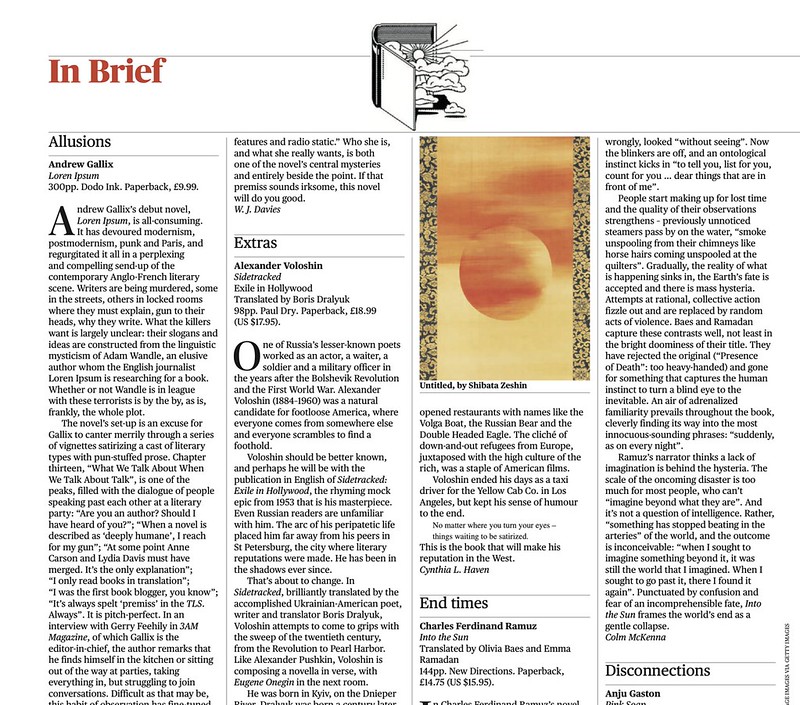
Andrew Gallix’s debut novel, Loren Ipsum, is all-consuming. It has devoured modernism, postmodernism, punk and Paris, and regurgitated it all in a perplexing and compelling send-up of the contemporary Anglo-French literary scene. Writers are being murdered, some in the streets, others in locked rooms where they must explain, gun to their heads, why they write. What the killers want is largely unclear: their slogans and ideas are constructed from the linguistic mysticism of Adam Wandle, an elusive author whom the English journalist Loren Ipsum is researching for a book. Whether or not Wandle is in league with these terrorists is by the by, as is, frankly, the whole plot.
The novel’s set-up is an excuse for Gallix to canter merrily through a series of vignettes satirizing a cast of literary types with pun-stuffed prose. Chapter thirteen, “What We Talk About When We Talk About Talk”, is one of the peaks, filled with the dialogue of people speaking past each other at a literary party: “Are you an author? Should I have heard of you?”; “When a novel is described as ‘deeply humane’, I reach for my gun”; “At some point Anne Carson and Lydia Davis must have merged. It’s the only explanation”; “I only read books in translation”; “I was the first book blogger, you know”; “It’s always spelt ‘premiss’ in the TLS. Always”. It is pitch-perfect. In an interview with Gerry Feehily in 3:AM Magazine, of which Gallix is the editor-in-chief, the author remarks that he finds himself in the kitchen or sitting out of the way at parties, taking everything in, but struggling to join conversations. Difficult as that may be, this habit of observation has fine-tuned his ear for the excruciating nonsense most of us are at risk of producing. For anyone with even the merest literary pretensions, Gallix has your number.
Loren Ipsum is one of those invigorating novels that leaves you feeling smarter and more foolish. For every allusion you recognize, ten more have zipped by unnoticed. In a nod to T. S. Eliot’s mischievous endnotes in The Waste Land, Gallix’s “Acknowledgements” are a list of references running from James Joyce, Eliot and Samuel Beckett to contemporary authors such as Toby Litt and Gallix’s publisher, Sam Mills (who also appears in the novel), plus literary journalism, critical essays and more. Like everything in Loren Ipsum, this list is full of gaps. Even Loren is not always fully there, named as she is after placeholder text. “She was all blurred features and radio static.” Who she is, and what she really wants, is both one of the novel’s central mysteries and entirely beside the point. If that premiss sounds irksome, this novel will do you good.
Noël Godin, the infamous Belgian patisserie terrorist, has died at the age of 80. In 2011, I wrote the following piece for the Guardian:

Jonathan May-Bowles (aka Jonnie Marbles), who attacked Rupert Murdoch during yesterday’s phone-hacking hearing, has all the makings of a formidable flan flinger. In his capacity as comedian-cum-activist, he embodies a kind of Platonic ideal of patisserie terrorism – that strange interface between slapstick and protest.
Pie-throwing as a political gesture has its roots in the Groucho-Marxism of the 1960s student uprisings and, more specifically, in the prankish happenings of the Yippies. Tom Forcade, the founder of High Times magazine, is usually considered to have perpetrated the very first political pie crime in 1970. Aron Kay, who came to be known as “The Yippie Pie Man”, followed suit, covering countless politicians and celebrities (including the mayor of New York City and Andy Warhol) in cream, between the late 1970s and early 1990s. Yesterday, he allegedly posted a message on a website giving his full support to May-Bowles: “Murdoch definitely needed a pie, for sure.” However, it was a Belgian anarchist who really put “patisserie guerrilla” on the map. One could argue that he even managed to turn it into an art form.
In the late 60s, Nöel Godin was, among other things, a film critic who amused himself by reviewing movies he hadn’t seen or that didn’t even exist. Georges Le Gloupier, a fictitious film director (invented by his partner in crime Jean-Pierre Bouyxou), made regular appearances in these reviews.
In 1969, Godin wrote that Le Gloupier had been so outraged by Robert Bresson‘s latest film that he had felt compelled to chuck a “Mack Sennett-style” pie smack in the director’s face. In a sequel, he went on to describe how the French novelist Marguerite Duras had avenged the initial “creamy affront” by giving Le Gloupier an impromptu pastry pasting while he was dining out in Saint-Germain-des-Prés. “Madame,” said the biter bit after licking his frothy chops, “I prefer your patisserie to your novels.”
Through some quirk of fate, the publication of the second article coincided with Madame Duras’s arrival in Belgium on a promotional tour. This proved a godsend to Godin, who decided to give a final twist to this burlesque saga. He ambushed the prime exponent of the “empty novel” and treated her to a real custard pie this time round. A visiting card was nestling in the incredible, edible weapon. It read: “With the compliments of Le Gloupier.”
The seminal Duras drubbing provided a blueprint for all the subsequent pie attacks. A few months later, it was choreographer Maurice Béjart‘s turn to fall victim to a Chantilly crime. By that time, Le Gloupier had acquired all his distinctive features: the refined dinner jacket and bow tie of gentleman-burglar Arsène Lupin, the false beard and spectacles of a cartoon, bomb-throwing anarchist and, last but not least, the absurd “gloup! gloup!” mantra. In the time-honoured tradition of Galatea, Pinocchio and sundry gingerbread men legging it after rising from the pastry board, Le Gloupier took on a life of his own: he started popping up all over the place, unbeknown to his creator, who was often associated with attacks he had taken no part in, but was only too willing to take credit for.
According to Godin, a well-aimed pie can break through the victim’s public image and lay bare his true character. New Wave director Jean-Luc Godard, for instance, reacted in good-humoured fashion and refused to press charges. By contrast, Bernard-Henri Lévy reacted violently and was flanned on at least five occasions as a result. The vendetta against the pop philosopher turned into a running gag in France.
The movement probably peaked in 1998, with the pieing of Bill Gates. Godin had now become a celebrity in his own right, and was frequently invited on live TV shows to be pied by presenters he had himself pied. The whole thing was descending into farce. However, the website of Godin’s “Internationale pâtissière” continues to advertise the latest pie attacks on a monthly, and sometimes even weekly, basis. The pieing of Murdoch could well be the sign of a revival.
Jonathan May-Bowles still has a thing or two to learn, though. A plateful of shaving foam is no substitute for the real thing. Godin once told the Observer: “We only use the finest patisserie ordered at the last minute from small local bakers. Quality is everything. If things go wrong, we eat them.”
Delighted to discover that Dennis Cooper‘s “Spotlight On … Alain Robbe-Grillet, For a New Novel (1963)“, posted on 3 August 2026, opens with an old essay of mine. The link is here.

‘David Shields recently dismissed most contemporary novels as “antediluvian texts” that “could have been written by Flaubert 150 years ago”. “In no way,” claimed the author of Reality Hunger, “do they convey what it feels like to live in the 21st century.”
He has a point — albeit one that Alain Robbe-Grillet had already made in 1965 when he deplored the fact that young French novelists were praised for writing “like Stendhal” but castigated as soon as they refused to abide by the “dead rules” of a bygone age. Along with Michel Butor, Nathalie Sarraute and Claude Simon – the main proponents of the new novel (nouveau roman) – Robbe-Grillet stood resolutely in the second camp. In his essays, he returns time and again to the notion that the novel, from Stendhal to Joyce, has constantly evolved – hence the absurdity of using “the norms of the past” to judge the fiction of today. Far from representing a rejection of the past, the quest for a new novel was thus very much in keeping with the history of a genre which, by definition, must always be renewed.
Feeling that his work was too often misrepresented by the critical establishment (with a few notable exceptions including Barthes, Blanchot and Nabokov), Robbe-Grillet published a series of articles to set the record straight. In 1963 they were collected in Towards a New Novel – for my money, one of the most important works of postwar literary criticism. However, these “critical reflections” were never meant to constitute a manifesto. Every novel, according to Robbe-Grillet, is a self-sufficient work of art which cannot be reduced to some external meaning or truth that is “known in advance”. “The New Novel,” as he put it, “is not a theory, it is an exploration.” Why bother writing a book that illustrates a rule when “the statement of the rule would suffice”?
Quoting Heidegger at the beginning of an essay on Waiting For Godot, Robbe-Grillet writes that the human condition is “to be there”. In another essay, he states that it is “chiefly in its presence that the world’s reality resides”. So there you have it. Man is here, the world is there and the distance between the two lies at the heart of the new novel project. We endow the world with meaning (or meaninglessness) in order to control it. From this point of view, the writer’s traditional role was to excavate nature in order to unearth the “hidden soul of things”. Robbe-Grillet calls for the creation of a new form of fiction that reflects the “more modest, less anthropomorphic world” we live in today – one which is “neither significant nor absurd,” but simply is.
This seemingly anodyne observation has serious literary ramifications. Gone is the traditional hero of yore who believed the world was there to be conquered and whose hour of glory coincided with the triumph of individualism. Gone is the humanist “communion” between people and things: “Things are things, and man is only man.” Gone is the notion of tragedy, which Robbe-Grillet sees as a twisted ploy to reaffirm this solidarity: “I call out. No one answers. Instead of concluding that there is no one there (…) I decide to act as if someone were there, but someone who, for some reason or other, will not answer”. In the new novel, “Man looks at the world” but “the world does not look back,” which precludes any symbolism or transcendence. The novelist’s task now is to describe the material world, not to appropriate it or project himself onto it; to record the distance between human beings and things without interpreting this distance as a painful division. All this implies that the “entire literary language” be reformed. Similes and metaphors, which are often used gratuitously to confer literary status upon a text, are seldom innocent since they tend to anthropomorphise the world.
The new novel is routinely attacked for being inhuman and coldly descriptive. Robbe-Grillet responds that his work is in fact far less objective than the godlike, omniscient narrator who presides over so many traditional novels. Description here is purely subjective and takes centre stage, whereas in Balzac, for instance, it simply sets the scene by lending the plot an air of authenticity. Instead of referring to an external, pre-existing reality, Robbe-Grillet’s descriptions seem to create their own objects, their own hallucinatory reality. “Nothing,” he explains, “is more fantastic, ultimately, than precision.”
The reality of any work of art is its form, and to separate style from substance is to “remove the novel from the realm of art”. Art, Robbe-Grillet reminds us, is not just a pretty way of presenting a message: it is the message. Like the world out there, a novel is self-sufficient and “expresses nothing but itself”. Its “necessity” has nothing to do with its “utility”. Whenever an author envisages a future book, “it is always a way of writing which first of all occupies his mind,” which leads Robbe-Grillet to state – provocatively – that “the genuine writer has nothing to say. He has only a way of speaking”. Creative writing classes should always start and end on that note.
Just a few thoughts upon reading Tom McCarthy‘s forthcoming The Rhyl Poster.
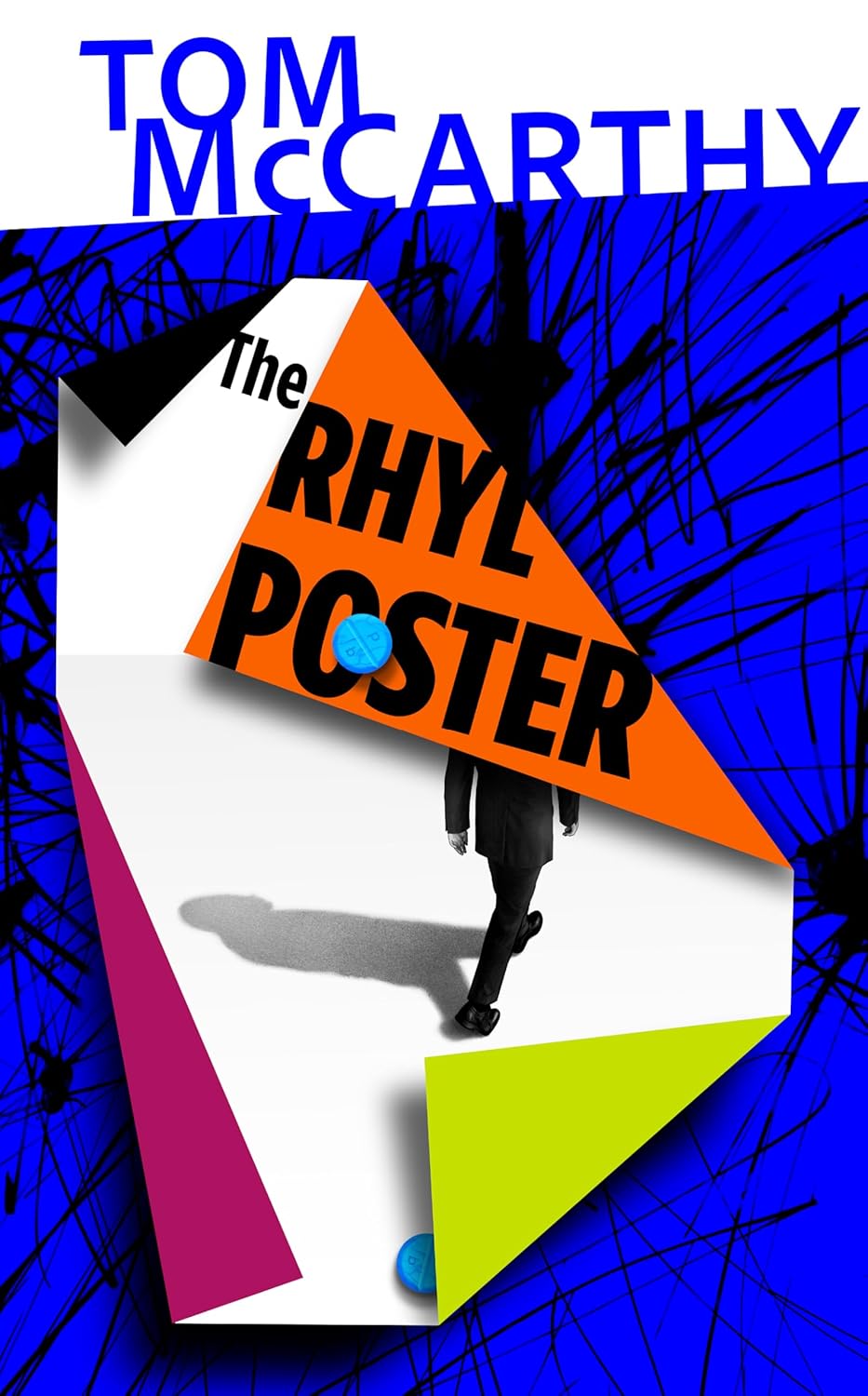
Tom McCarthy’s The Rhyl Poster is, in my opinion, one of his very best novels to date, like a Graham Greene rewritten by DeLillo with a little help from Ballard.
Remainder, his debut, opened with a reference to Simon Critchley’s work. His latest book is actually dedicated to the philosopher (who was also McCarthy’s one-time partner in crime at the International Necronautical Society).
At the outset, a taxi accidentally exits a car park through the entrance, thereby producing a remainder — “a surplus piece of paper” — in the shape of a ticket that preserves its potentiality by remaining in abeyance: “the unsurrendered ticket, paper scrap that had purloined itself, slipped through the architecture of the system it was meant to serve”. There are other similar intervals — interregna — in the novel where the order of things is subtly subverted. Benjamin Stanton, the protagonist, argues that the time of law (he is a legal expert) is in fact an aporia, “the gap, the interval, the instant of suspense” that escapes time. His strange stutter remixes his speech so that the ends of sentences come first (his sentences exit through the entrance). He is depicted at home “hand and Pilot Falcon pen suspended above a rectangular sheet” of white paper — a suspension which is the very space of literature: “Stanton found himself placed in an interval, a stretch of time that, once vacated, turned into a magnet for events”. The ur-hiatus, however, is the eponymous, and recurring, image of the Rhyl poster — that of a worker (later likened to an actor playing the part of Hamlet) on a cigarette break at a railway station, who has removed a poster from a hoarding and is yet to replace it with a new one. This hesitation between palimpsest and blank canvas, as well as the worker’s temporary désoeuvrement (the incompletion of his task, which is reminiscent of the incompletion of the ticket’s cycle) open up a space of creative freedom.
Exiting through the entrance: The Rhyl Poster is, among so many other things, a compendium of McCarthy’s favourite themes: slightly menacing bureaucratic environments (here, the Court of Justice in Strasbourg), simulacra (copies without originals), terrorism, realism, metaphor (what things — Weapons of Mass Destruction, for instance — really stand for), time, incest, entomology, voices piped in from elsewhere, speech impediments, geometry, archaeology, conceptual art, not forgetting loops, cycles, and webs. There are new themes too such as the world of video games or the “zombie half-life” of the UK now that it has “unplugged” from the European grid.
Benjamin Stanton’s origins (he is a foundling) and even nationality (he claims to have taken on Irish nationality) remain shrouded in mystery. We know that he is a veteran of the war in Iraq and is now a star référendaire at the European Court of Justice. After meeting a shadowy figure called Pirotti, who is at the head of the Centre for Juridical Collaboration, Stanton becomes a double agent: “To sweep the old order away and bring the new one in: didn’t this task call for an outlaw, for an act of violence?” Possibly under the growing influence of the little blue pills Pirotti has introduced him to and to which he becomes addicted, he sets about composing his “great counter-confession” — a demented Gesamtkunstwerk, a “universal grammar” that, he prophesies, “would do nothing less than lay the groundwork for the founding of a whole new order”. I’ll stop there — no spoilers about the ecstatic, apocalyptic denouement.
From time to time, we need to be reminded that Tom McCarthy is one of the best and most important writers of the 21st century. The Rhyl deal.
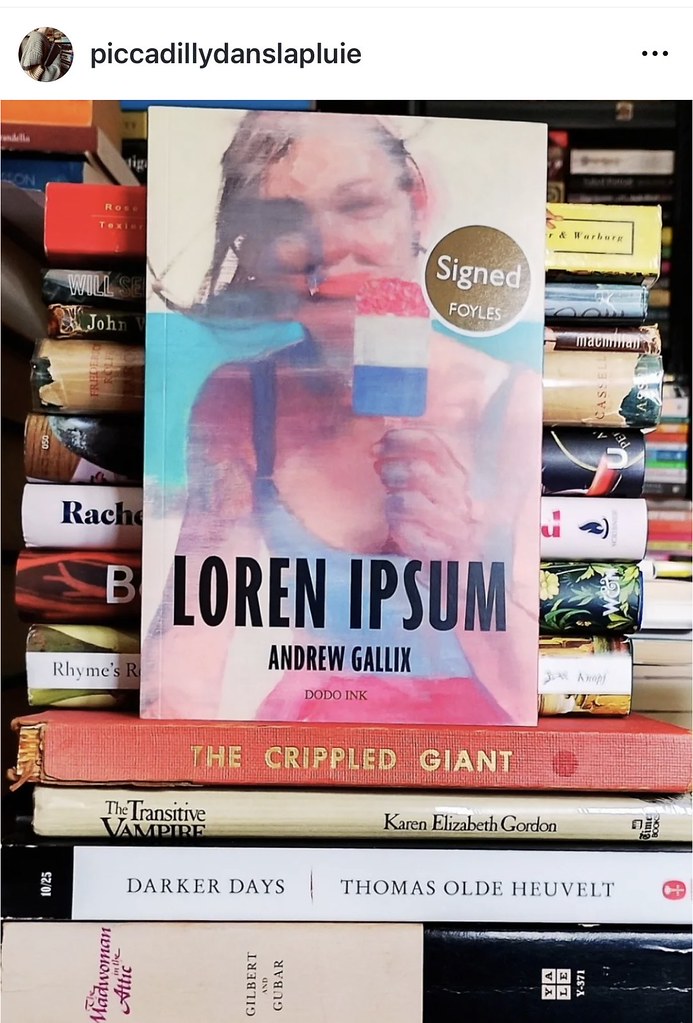
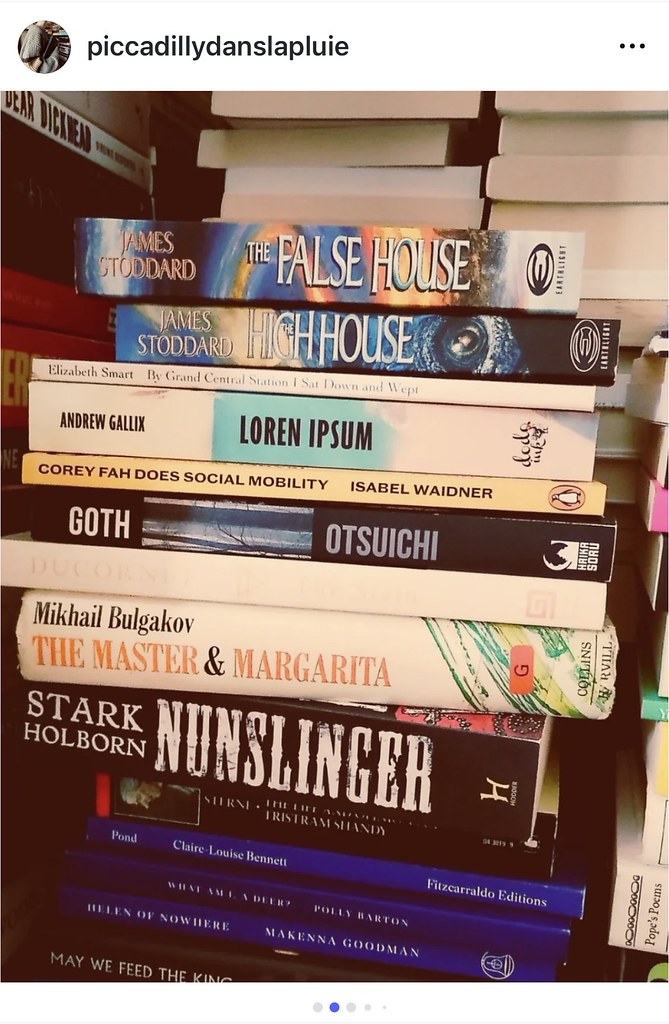
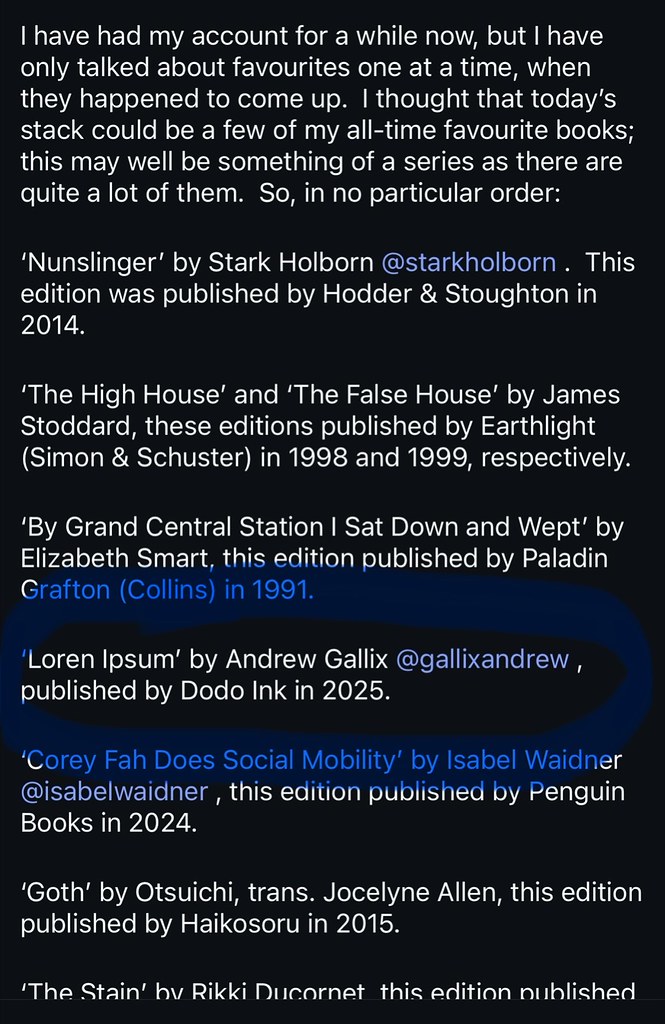
I was thrilled to see Loren Ipsum among a selection of @piccadillydanslapuie‘s “all-time favourite books” alongside Mikhail Bulgakov’s The Master & Margarita and Elizabeth Smart’s By Grand Central Station I Sat Down and Wept (two personal favourites — the latter is referenced in Loren)! Posted on Instagram, 7 June 2026.
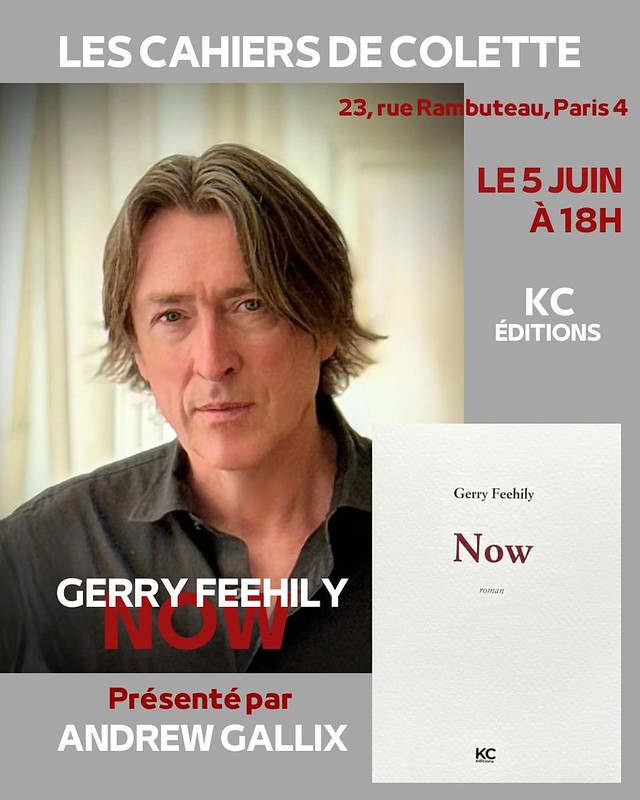
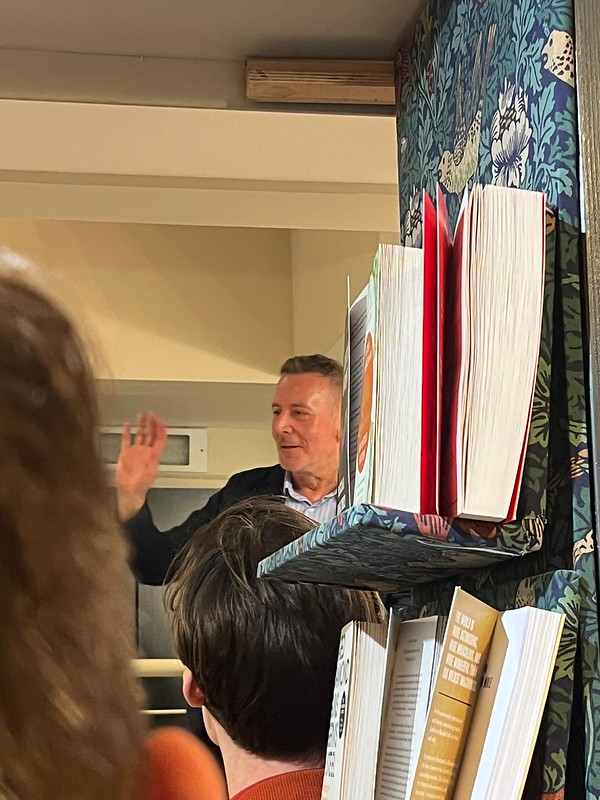
A full house at Les Cahiers de Colette last night to celebrate the launch of Gerry Feehily‘s fantastic new novel, Now (KC Éditions). It was an honour and a great pleasure to interview him. Thanks to all those who came.
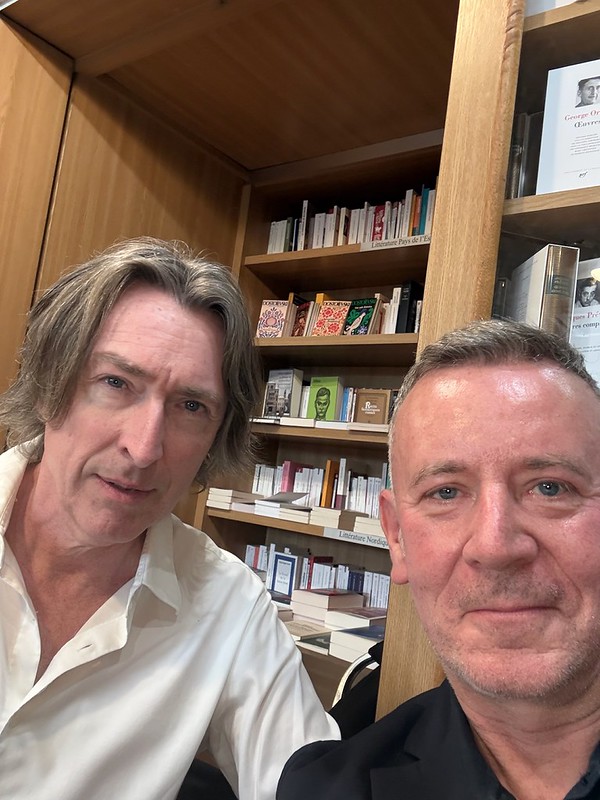
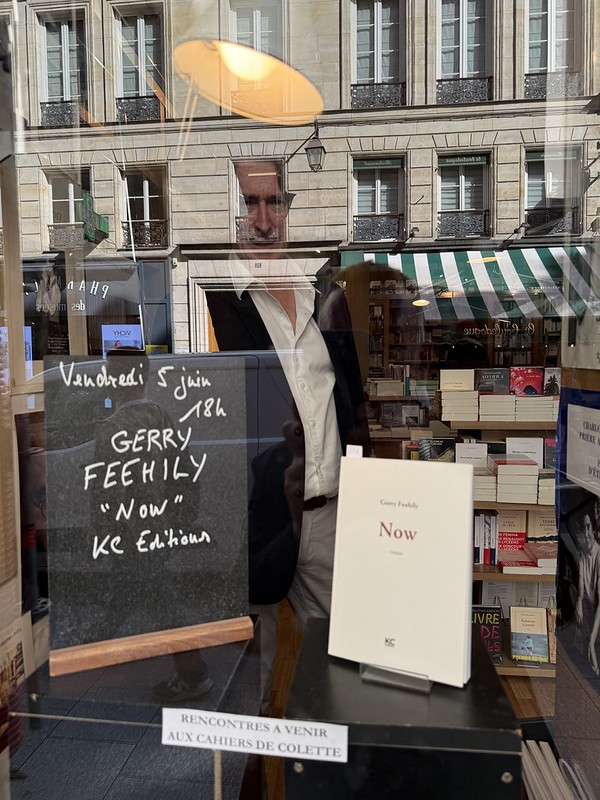
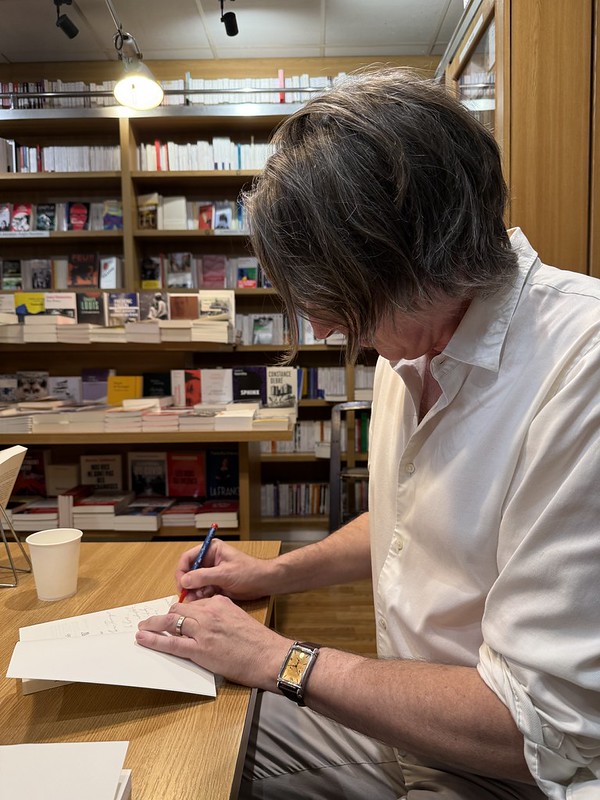
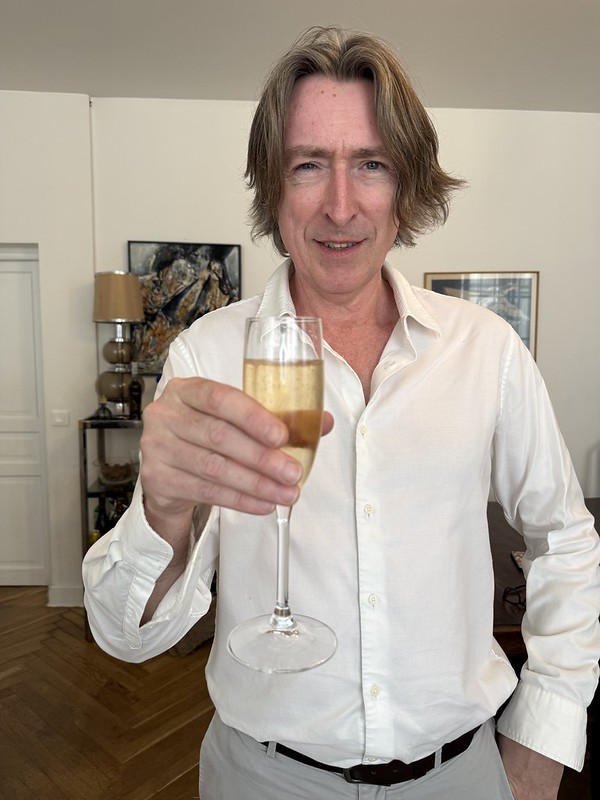
Please come along on Friday if you’re in Paris: we’ll be celebrating Gerry Feehily‘s wonderful new novel, Now, at Les Cahiers de Colette.
Gerry Feehily. “Ulysses with Finnegans Rising: An Interview with Andrew Gallix.” 3:AM Magazine, 17 May 2026.

Andrew Gallix arrives at my apartment just off the rue Beaubourg in the 3rd arrondissement of Paris at 4pm on a bright May 1st bank holiday. Like many a former punk his sartorial style in middle age verges on the mod. He wears a brushed cotton jacket, and a blue and white striped shirt, navy blue jeans and a pair of black Campers. Blue eyed, greying hair tightly cut, with a tuft at the widow’s peak, he speaks with a mild southern English accent, the emphasis on certain words revealing the very faintest underlying of French. For a deeply literary man, he is broad shouldered and barrel chested, the sort of build that would be an asset if there was any trouble outside the pub, or after a book reading. During the soundcheck I ask him to introduce himself. “Je m’appelle Loren Ipsum,” he replies.
Late in Loren Ipsum, the eponymous heroine quotes the fictitious author Adam Wandle, quoting Arthur Ramsone, who wrote — in a letter — I think of England as a sort of dream country. Were you born there?
No, I was born in Paris.
Given that you weren’t born there, but that you spend a lot of time there, is it?
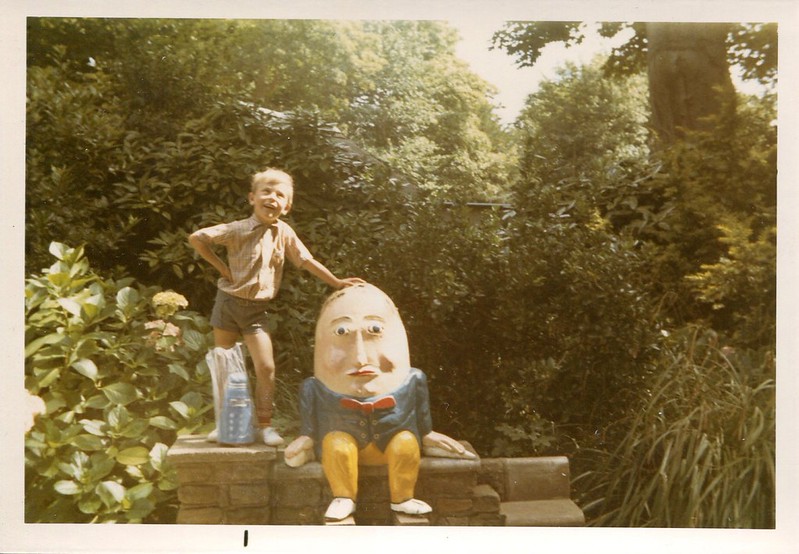
Yes, it’s a dream country for me. My father was French, my mother English. They separated very soon after my birth, and my mother took me to London, where she came from. So I was brought up there: the first happy years of my life were spent in London. Then there was a protracted custody case, and my father finally got custody, and so all of a sudden I was taken to France. It was quite traumatic, because I couldn’t speak a word of French, and in those days, of course, Paris wasn’t the international city it is now. Nobody spoke English, and there was actually a lot of hostility towards England, the natural enemy. I felt alienated, completely lost because I really wanted to be with my mother.
How old were you?
Just under six.
Too late not to be traumatised.
That’s right. I always went back to England during the holidays, and I’ve been going back and forth ever since. So it’s true that England became a kind of paradise lost, and although it’s very unfashionable at the moment — everyone going on about how bad it is — for me it really was a dream country: the grass was literally greener on the other side of the Channel. As soon as I went back to England I just felt at home, and then increasingly it wasn’t really my home anymore, it was what could have been my home: a sort of shadow home for the shadow self I could have been, for better or worse.
Today, I feel very English; I also feel very French. Things are more balanced than they used to be, but for a very very long time I just yearned to go back to England, and I think I’ll probably spend the end of my life there. I feel that I’ll have to go back at some point.
One critic described Loren Ipsum as an Anglo-French novel, but the term suggests settings that are genteel, or bourgeois, whereas Loren Ipsum is really quite a different kettle of fish. Did you have that genre of the novel in mind when you wrote the book?
To a certain extent, yes, but of course it’s different because, even though I felt like an outsider growing up, I’m also an insider. So I’m writing from within France, as a French person who’s also English. So it’s a slightly different slant from the novels you’re referring to. It’s also more subversive and, dare I say, experimental. As you know (since you were one of the contributors), I edited an anthology entitled We’ll Never Have Paris (Repeater Books, 2019) a few years ago, which explored Anglo perceptions of the French capital.
There’s a quite a bit of French in the novel, though not of War and Peace proportions, but enough to discombobulate an English reader. The French itself is very français populaire, argotic, that conveys an atmosphere that English can’t.
I thought it would be fun to discombobulate English-speaking readers! If people understand both languages, then they get a bit more. My ideal reader is obviously someone who understands both English and French. Most readers of Loren Ipsum will be Anglophone though, so what I’m doing is putting them in the position they would be in if they travelled to France. They’d hear people speaking a language they wouldn’t fully understand, but they’d recognise it as French. I wanted to put them in that situation. If you don’t understand those passages, you can skip them and still follow the plot. It was very deliberate not to put any vital information in the French dialogue.
You reference French punk as well.
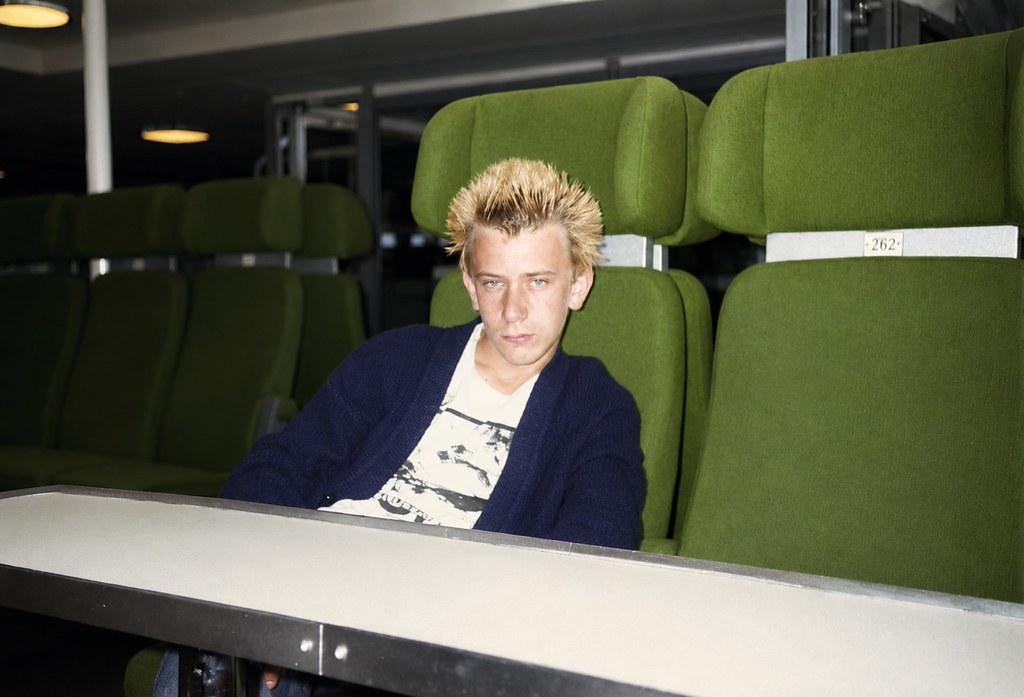
I think the first time I heard about punk was actually in a French magazine, towards the beginning of the movement, and I was immediately hooked. The next time I went to London, I noticed a few punks on the street for the first time. It was thrilling.
Did you follow the French scene with as much intensity as you followed the English? Andrew Hussey suggests that punk is a French invention, and it’s McLaren who co-opted it.
I don’t buy that at all, but it’s true that in the very, very early days — in Paris in particular, but also in Lyon — there were quite a lot of people who were into the Stooges, the New York Dolls, and the Velvet Underground, perhaps even more than in London. There was Yves Adrien, of Rock & Folk magazine, who, back in the early seventies, would sign off his articles “Yves ‘Sweet Punk’ Adrien”. So there was something similar going on at the same time in New York City, London, and Paris, and then it really took off and became socially significant in London, and Paris was largely left behind.
In the early days of punk, in Paris, there were people like Marc Zermati — he did Skydog records, organised the very first punk festival (at Mont-de-Marsan) and had a record shop called the Open Market near here, in Les Halles. And there was another shop, also nearby, called Harry Cover. They had a magazine called Rock News and put the Sex Pistols on the cover very early on. Michel Esteban, the guy who did Rock News, would go on to be influential in the No Wave scene in New York. And then there was his partner, Lizzy Mercier Descloux: she was close to Patti Smith and Richard Hell, knew the Sex Pistols, etc. So there were a few figures like them on the French scene, who were definitely pioneers.
I was mainly into the British bands, but I liked most of the French bands too, particularly Métal Urbain, whose second single was the first release on the Rough Trade label. (The cover of that single, “Paris Maquis” inspired the cover of We’ll Never Have Paris.)
When did you first know you wanted to write?
I was always writing as a kid, constantly fashioning little books. I actually used to pretend I could write books before I even knew how to read and write! I’d just draw squiggly lines. I reference this in the second chapter of Loren Ipsum. Hang on, let me read it to you. Ah, here we are: “However much he squints, the words remain illegible squiggles — a preliterate child’s impression of writing as ludic abstraction”.
In the punk days, I was fascinated by fanzines, and fanzine writers like Mark Perry of Sniffin’ Glue, who went on to form a band (Alternative TV), or Patrick Eudeline, the French rock critic (and now novelist) who founded Asphalt Jungle. That kind of crossover between writing and music, theory and practice. I was almost more interested in people who wrote about the music than in the music itself. When the New York scene started, people in England were reading articles in the NME or Sounds about Television or Blondie or Talking Heads at CBGB’s, but they couldn’t hear them because there were no records, so they had to dream the music into existence. I’ve always found that aspect really fascinating. People would invest so much meaning into those images, those reviews. Malcolm McLaren was briefly the manager of the New York Dolls at the fag end of their career. He came back to London with this vision of Richard Hell, the spiky hair and all that. When he was looking for a lead singer for the Pistols, he actually tried to import Richard Hell from New York, but Hell was into drugs and couldn’t get his act together. So they found Johnny Rotten instead, who happened to have a very similar look.
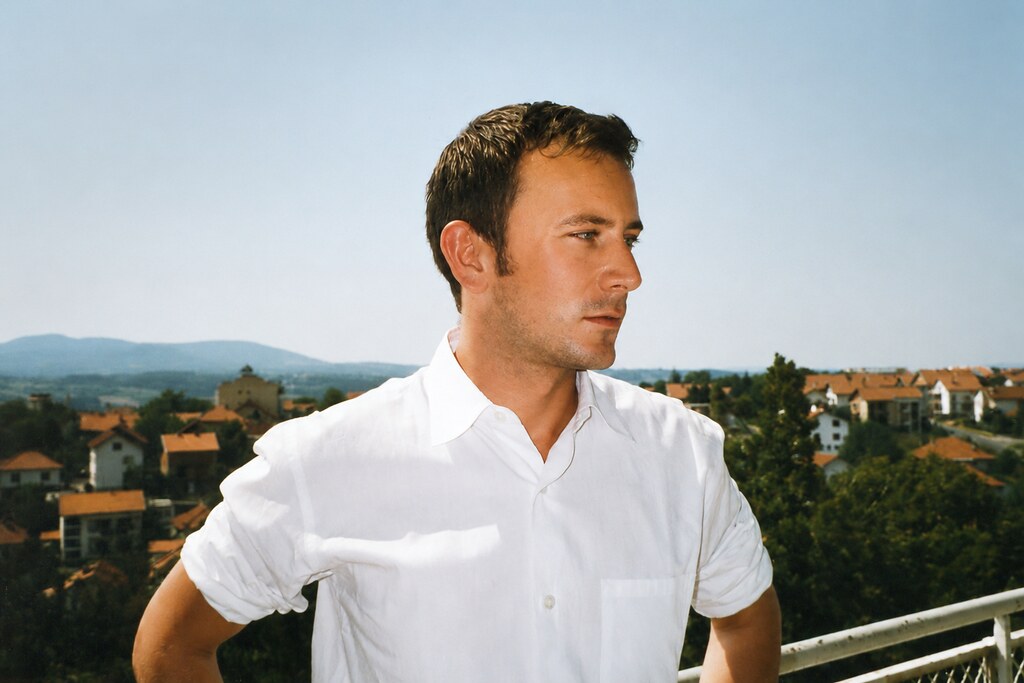
Growing up, I used to read voraciously, both in English and French. As a pre-teen, I was massively into Jules Verne. There are a couple of references to his work in Loren Ipsum: Captain Nemo and the Nautilus, the blue island, and generally a spirit of adventure and discovery. In the punk days, I used to read the music press religiously every week. Between 1977 and 1986, I read all the music papers every week. Thereafter, I just got Sounds and then Melody Maker until they disappeared. I’ve still got piles and piles of newspapers and magazines at home. I can remember exactly where I was when I first read them — they act as a kind of Proustian madeleine. I got into Rimbaud, Dada, surrealism, and all the 20th century avant-garde movements through punk. The first essay I ever published, in 1995, was about Joe Orton, whose work I discovered via Adam and the Ants and Malcolm McLaren. In the late 80s and early 90s, I was on the lookout for young writers who, like me, had grown up with music, and discovered Bret Easton Ellis, Douglas Coupland, and, on this side of the pond, Deborah Levy, Hanif Kureishi, Michael Bracewell, Will Self, Toby Litt, Tony White, Stewart Home, etc. Martin Amis and the writers of that earlier generation weren’t really into music, not popular music. That wasn’t their thing. You sensed they dismissed it as low culture.
Important for Gen X, but not the boomers.
That’s right, for Generation X music became the thing. That’s why I launched 3:AM Magazine, one of the world’s first literary webzines, in 2000. The aim was really to explore the interface between post-punk writing and music. I’m proud to have been the first to write about Tom McCarthy’s Remainder (2005). That novel had a huge impact on me. It’s where 21st century literature really begins in my opinion.
Did you want to become a musician at any point?
Not really, no. I mean, I vaguely had a band here, in Paris. A kind of phantom band. I was very briefly the lead singer, and then I was the drummer. A very bad drummer. We used to rehearse in a little shop that sold musical instruments off Avenue Trudaine. That was in 1980.
When did you actually begin writing Loren Ipsum? I remember when we first met in 2008 you published, shortly after, a story about Sostène Zanzibar, who is key to Loren Ipsum. Was it the embryo of the book?
Zanzibar (a nod to Rimbaud) was indeed the embryo, but that story actually appeared a bit later, in 2012. Initially, it was a standalone, but several people said, there’s a book there, there’s more than just a short story. I started thinking, well, yeah, perhaps they’re right. Because for a very long time, I’d wanted to write — and I did sort of vaguely write fiction on the margins — but I always felt I wasn’t quite ready to take the plunge. For me, writing a novel — becoming a novelist — was something that was so important that you really had it to get it right, or as right as possible. I was also in thrall to what Susan Sontag describes as the “aesthetics of silence” or what Enrique Vila-Matas calls the “literature of the No”, you know, that tradition; the ideal of the blank book, the oscillation between everything and nothing, all that. So obviously that makes it quite difficult, because you can’t just write any old book, it’s got to be a special one. Now I feel like I probably waited a bit too long!
Was there any model? If the book has a star sign I’d say it would be Ulysses with Finnegans rising, that it has both those elements, the book is teeming with people. And linguistically, there’s a lot of work on the pun. Is Joyce a tutelary spirit?
Yes, definitely. I do reference Joyce in the book a couple of times. There’s the cat from the Calypso episode in Ulysses and there’s a phrase I borrowed from the beginning of Finnegans Wake — “from swerve of shore to bend of bay”. Which I believe he wrote in Nice (the chapter in which it appears is set in Nice). I studied Ulysses as a student, I think it was for the agrégation [the most competitive state entrance exam for qualifying as a teacher], and it just blew my mind. I read it alongside Gifford’s Ulysses Annotated, checking all the references line by line. Tom McCarthy told me that he’d also read it that way, a bit like the Bible. It was the kind of writing I was looking for: the constant oscillation between high and low, the impression that there’s everything in it (including the whole history of English literature!) and at the same time, it just takes place in the space of one day. There are so many passages, so many phrases, here and there, that have just stuck with me. Whenever I cross the road because it’s sunny on the other side, I think of Leopld Bloom: “He walked along the sunny side of Eccles Street”. So definitely Joyce, especially stylistically.
Loren Ipsum is a very sociable book.
Probably because I’m not.
How do you square that with your being a much more private person?
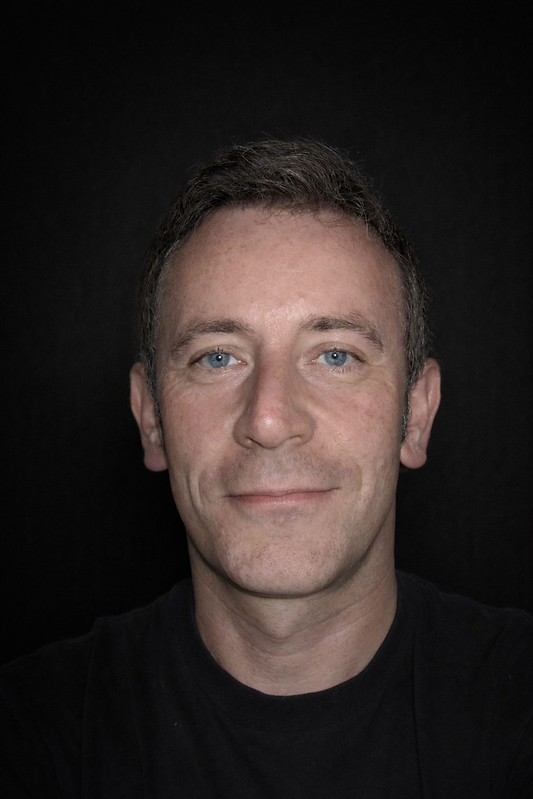
The drunkenness, the booze. For many years, whenever I went out, I would drink far too much, to compensate for being so shy and awkward and ill at ease. There are three parties in Loren Ipsum: one on a yacht, a decadent one in a flashback scene set in 1980, and the dinner party in the final chapters. Well, that whole party theme is something I enjoy reading about in books or watching in films, precisely because I’m usually on the outside in such social situations. Like in the Jona Lewie song, you’ll always find me in the kitchen at parties! I enjoy watching people enjoying themselves but never really feel part of what’s going on. Same in nightclubs.
I hate nightclubs.
In nightclubs, I’d always sit down with a drink and watch the people dancing around me. So there’s definitely that element: the outsider looking in.
Whenever I go to the south of France, I love checking out the names of the yachts and where they’re registered — usually in the Cayman Islands or somewhere like that. That whole lifestyle of the super rich is so obscene and vulgar, and yet so tempting and glamorous. The party on the yacht in Loren Ipsum comes from those mixed feelings, plus it tied in neatly with the pirate theme.
Nice is your vacation spot.
Yes. Nice, Antibes, Villefranche-sur-Mer, Menton…
What draws you to the French Riviera?
When I was a kid, my (French) grandmother used to go on holiday to the south of France. So I’ve got memories, going right back, of Nice. I remember going to the Anglican church in Nice at Christmas, one of the only Christmases I didn’t spend with my mother in London, and being in that kind of English enclave just felt so wonderful and comforting to me. The Riviera was largely invented by Brits — think of the Promenade des Anglais — and subsequently reinvented by Americans of the Fitzgerald generation. So there’s that element.
Then there’s the fact that my father was a big fan of Graham Greene, who had a flat in Antibes. He used to go there to Greene’s café, which is now a chain bakery shop. It was called Chez Félix at the time. The area is haunted by my Dad and Greene. I like to imagine them together chatting away at Chez Félix.
Loren Ipsum is objectively your first novel, but it must have quite an archaelogy of unwritten or abandoned novels.
Several chapters had already appeared in print as short stories. All of them bar one were revised and expanded. I envisaged them from the start as part of a future novel but it wasn’t very clear at that stage what the novel would be. And then it all clicked, it all came together. At one point, for instance, I needed a party scene and remembered I’d already written it! You know, the one that takes place in a flashback to 1980. It’s actually based on a party I attended that year aged fifteen. It was really weird — a mixture of punks and older, decadent socialites. Lots of sex and drugs. And rock and roll.
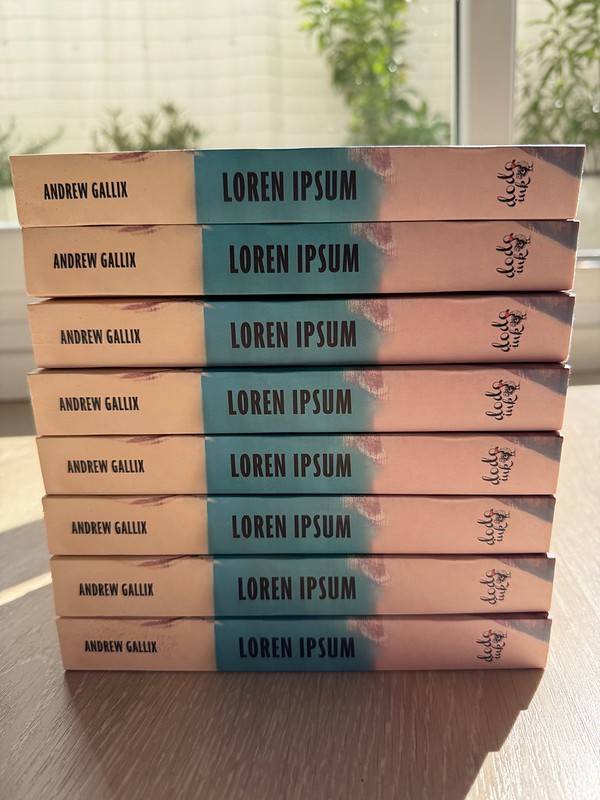
On the back page, we are told that there’s a series of literary murders going on in France. And while these murders are evoked, I’m wondering whether this is the first time that a McGuffin is announced on the back page, only to be subsumed by the other narrative flows in the book.
Yes, you’re right. There’s even a fast-food chain in the book called McGuffin’s!
The murders hold things together, they provide this kind of through line. The second strand, of course, is Loren Ipsum, who’s working on a book about this shadowy figure called Adam Wandle. The terrorists have adopted him as their guru but it remains unclear whether he’s actually one of them or not. I wanted to have those two things running alongside, and then just basically do what I damn well wanted with the rest.
There are lots of contemporary novels that I read and think, Oh, that’s a great idea. And then the whole novel is just the development of this very same idea. As Borges remarked: why go to all the trouble of writing a book if a mere summary would suffice? And none of these novels I’m referring to has a style that’s particularly interesting, they’re just the development of one narrative line from beginning to end. There’s a lot of that stuff going on these days, and I certainly didn’t want to replicate that. I wanted Loren Ipsum to be a bit more substantial than that.
I also wanted the book to undermine itself at times. In the first chapter, for instance, you’ve got all these references to Vladimir Jankélévitch or Wallace Stevens side by side with a mention of Pat Butcher from Eastenders. There’s a famous novelist who read parts of another chapter and remarked, This is great but that line can’t go in, because you’re completely undermining your own writing. So, of course, I made a point of keeping it in.
And the Argo gets namechecked. Is Apollonius of Rhodes another tutelary spirit? Did you want to out Hellenisticise the Hellenistic?
That’s kind of going back to Joyce, isn’t it? Well, I wanted it all, yeah — Joyce, Eliot. I also wanted to pay homage to that civilisation because it’s our civilisation, isn’t it? Or part of it. One of those literary points of origin.
Because in our time experimental or avant-garde literature is essentially Hellenistic, sceptical about pure story.
I definitely am. I can’t really enjoy a novel if I don’t get the feeling that the writer is aware that they are writing. It’s what I wanted to do with Loren Ipsum: I wanted the book to have a kind of consciousness of its own content. There are lots of echoes throughout the book, lots of references, which only the book itself could make. I wanted to convey the feeling that the novel was conscious of itself.
At the end of the book Loren says Art is about affirming the world, not changing it. Would you agree?
Absolutely. The way I see it, literature is writing as an art form. That’s the definition I would give. Of all the art forms, it’s probably the lowest because it uses language as its instrument, which everybody else uses. But it’s also the most important one for the very same reason: the centrality of language to the human experience. As human beings, our experience of the world, of being alive in the world, is always already mediated through language. As Roland Barthes stated, pretty much everything is discourse.
As soon as you say something is blue, what you communicate isn’t this precise, unique shade of blue, but a sort of generic blue. You don’t really see things anymore once they’ve been named. The name kills the living thing. For Stéphane Mallarmé, the word “rose” refers to the one that’s absent from every bouquet. As human beings, we don’t have access to things in themselves — we don’t have access to the essence of things — and language makes this even worse by covering everything up in discourse. One of the most important literary strategies is therefore to use language against itself — by subverting its communicative function, for instance — in order to get as close to things as they are. And that’s the opposite of ideology, politics, etc. Besides, politics is about society, and literature is far more about the individual.
Art, literature should be spaces of total freedom because total freedom is otherwise impossible in society, any kind of society, where things have to be regulated and you can’t just do whatever you please. If you find it unpalatable, then don’t look at that painting or read that book.
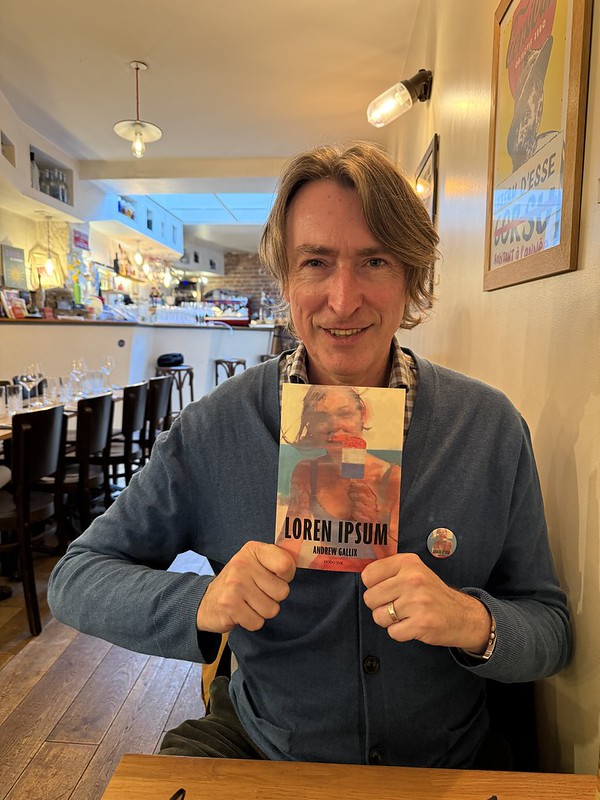
There are different literary personality types in the book. For my crimes in a past life, I spent quite a lot of time as a young man studying György Lukács, particularly his Theory of the Novel. He considered that literary people live in a kind of a hothouse and that this leads to types of distortions of personality, that they develop hypochondriacal, hysterical symptoms the way hothouse plants overgrow. Would this kind of type of categorization of the literary scene seem relevant now?
Perhaps even more so because the literary world today is all about performing. It’s about meeting the readers, giving witty interviews, being present on social media; networking and, dare I say, cocksucking. Imagine poor Beckett in such an environment!
One of the reasons why writing has always appealed to me is that I often struggle to express myself orally, especially in public. I sometimes come across people who are brilliant orators or raconteurs and think, well, if you just wrote that down, you’d have a book, right there. But they never seem to, probably because they don’t feel the necessity to write. Thomas Mann’s definition of a writer is someone for whom writing is more difficult than for other people. I really agree with that. I’m always suspicious of writers who give me the impression that they just dash off their books. They might make good writers but not important ones.
But you’re a rather good public speaker.
It’s a neurodivergent thing. I need to feel that I’m prepared, that I know in advance what’s going to happen; that I know in what context I’m going to speak. And all those issues are anxiety-inducing for me. So, for instance, when I’m teaching, unless I’m talking about something that I know by heart, I need to be prepared, I don’t like to just turn up and talk. And I find small talk very difficult, in daily life. Whenever I try to engage in banter with a cab driver or a waiter, it never works — it just becomes an excruciating experience for all involved!
Very often when there’s a group, I find myself excluded from it. I feel invisible. People don’t bring me in. They think that I’m aloof and that I don’t want to be part of the group, which is usually not the case. Writing is something that I can control to a greater extent, although it’s often most interesting when you lose control.
You told me that you were diagnosed as neurodivergent when we went to the Damned concert at the end of 2024. What does this mean on the day-to-day level? How does it shape your writing life?
I think the diagnosis is important from a practical point of view. One of the things they ask you, when you go through this process, is, If somebody told you that you were on the spectrum, as it were, would it explain lots of things for you? I’ve always been kind of hostile to grand theories. I’m wary of any theory that claims to explain everything but as soon as I was given that official diagnosis, I thought, this does explain so much.
This was only a couple of years ago, but I’d been thinking about the question seriously for twenty years, when a couple of close relatives were diagnosed. People didn’t talk about it much at the time. I started reading up on it and almost everything I read seemed to apply to me in varying degrees.
My childhood was really traumatic at times, and I had always ascribed my feeling of alienation, of being different, to that trauma. But then I started realising I had memories from very early childhood of times when I already felt completely lost, like being at school, pre-school, and being in this big sort of crazy space and hearing all these noises and everything being a blur around me and not comprehending what the hell was going on. There was actually an advert for one of the autism societies in the UK: the picture of a kid, and everything around him was blurred. That was exactly how I felt. So then I realised that there was the trauma, but that there was also probably something that existed before the trauma, genetic or whatever. So it explained lots of things, and I think it’s made things easier.
It’s your internal climate, and once you know you have an internal climate that’s objectively there, you almost kind of get on with it to a certain extent.
Though it’s not something that defines me entirely. It’s not an identity thing. For some people today, it’s like joining a gang: they colour their hair, get the uniform… That said, I think the connection between writing and autism is pretty obvious. It’s a solitary, single-minded pursuit. Very often writers see their work as the most important thing in the world. Joyce writing Ulysses during the First World War.
And pissed off that World War II rained on Finnegans Wake.
“What did you do during the war? I wrote Ulysses“! There’s that autistic kind of thing, I think — that obsession, that single-mindedness.
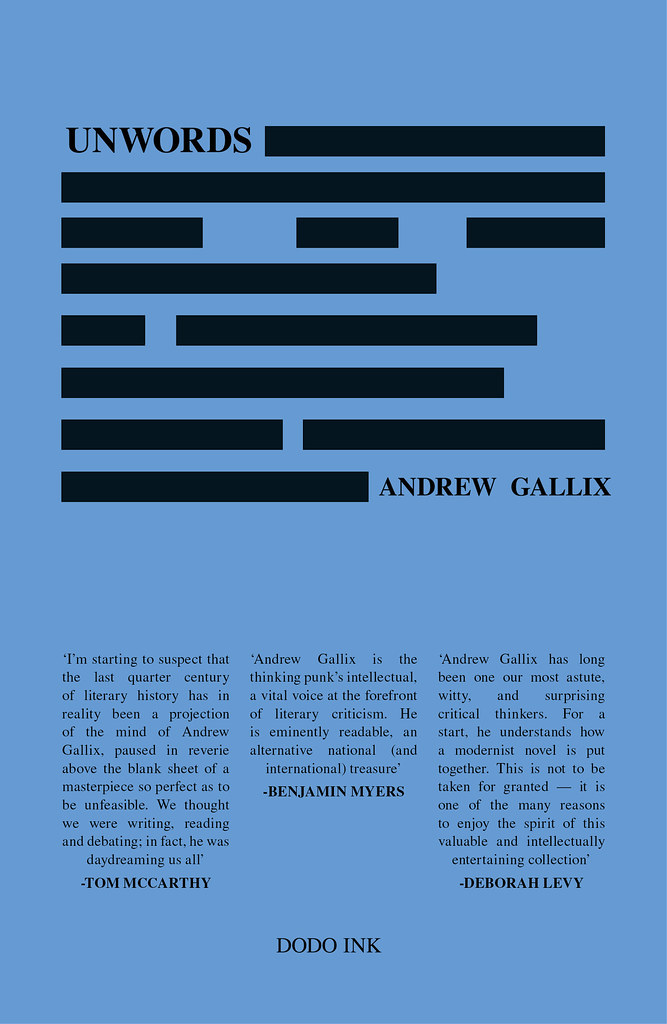
In Loren Ipsum you tell again the story told in Unwords — your collected criticism — about the book that was commissioned with a New York editor when you were a very young man, which you didn’t manage to write. In your work as a critic and as author you’re haunted by the impossibility of writing. Yet Loren Ipsum exists. What went wrong?
Haha! Well, you learn to compromise. With age you have to accept that what you publish will not be perfect. It is what it is, as people say, but it has the merit of existing, if nothing else.
Because I remember when Loren Ipsum was already a done deal and we had lunch in the autumn 2024, you told me, I’ve got about 40% of the book to do. And then when I met you six months later, I said, how’s it going? And you told me, well, I’ve got about 40% of the book to do.
I’ve always been useless at statistics.
So I was worried you were repeating the nightmare scenario of when you were a young man. You must have been very conscious of that. Was it traumatic?
It was, actually. You’re right, this kind of repetition compulsion was definitely at work. I was going through the exact same process. At one stage I must have become conscious of what was going on, and just snapped out of it. And then, the rest was written surprisingly quickly. There was a long period when it all seemed to be going at a glacial pace, and then all of a sudden, it was done! So on to the next one.
Is punk dead?
(Pause.) Yes.
ABOUT THE INTERVIEWER
Gerry Feehily (right) was born in London and brought up in Ireland. After studying literature in Dublin, he moved to Paris in the 1990s, where he still resides. He runs the Europe desk at French weekly Courrier International. His first novel, Fever, was published in 2007, followed by the novella Gunk in 2013. Now, his first novel in French, was published in May 2026.

