
This interview with photographer Jamie Stoker appeared in 3:AM Magazine on 23 March 2007:
The Radiance of the Future: An Interview with Jamie Stoker
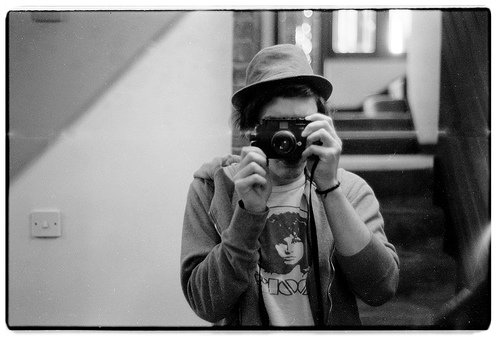
3:AM: Your pictures are both out of time and of the moment. As a result, they seem to capture the very essence of youth: the living for the moment, but also the fleetingness of that moment. Is this deliberate? And to what extent is this effect due to your use of old-school materials and methods?
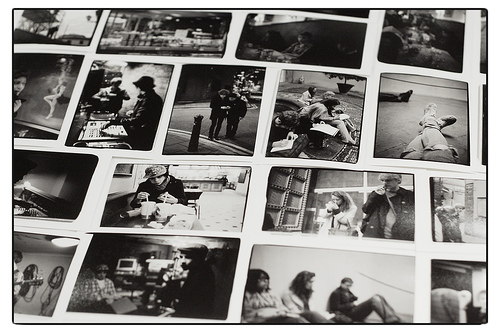
JS: Photography first became important to me because I realised that with a camera I could document my social surroundings, record the memories, the faces, all of that. Eighteen is an age, for me at least, where I feel like I’m finally living my life for real. My earlier teen years were mainly hanging around with nowhere to go or nothing worthwhile to do. So yeah, I guess it is deliberate, I didn’t like the idea of letting the best years of my life slip by unnoticed — so I picked up a camera. Shooting analogue is a long drawn-out process, and I like that. You spend your time engaging with the world and people around you, rather than the tiny LCD on the back of your camera. Having to spend time and work towards an image you can’t even see yet will always beat the instant gratification of digital. Getting prints back or developing a roll in the sink and seeing my images at the end feels like getting presents at Christmas (or something like that.)
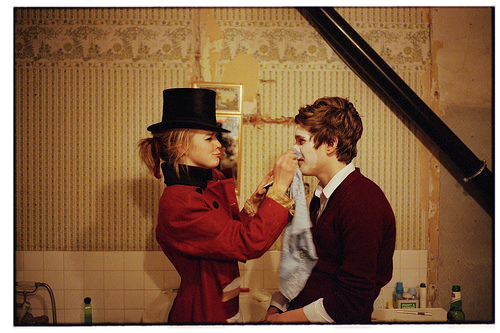
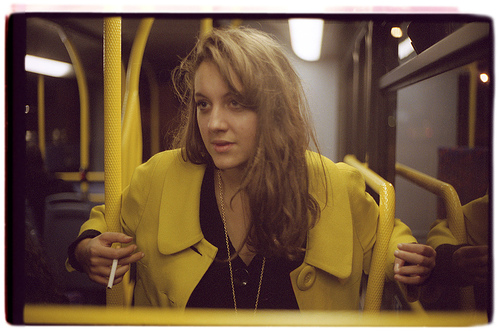
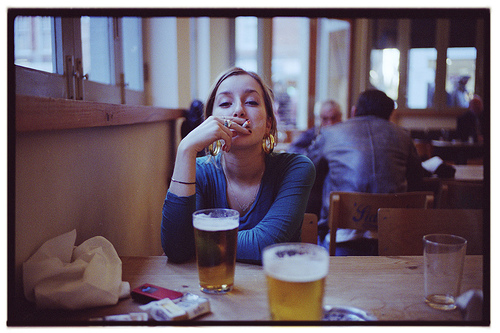
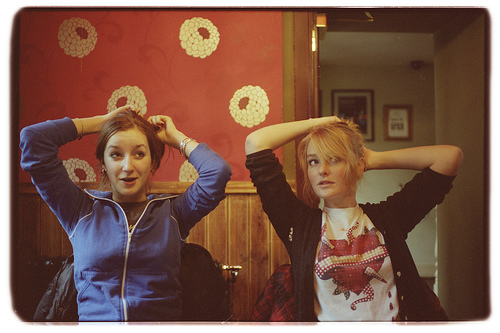
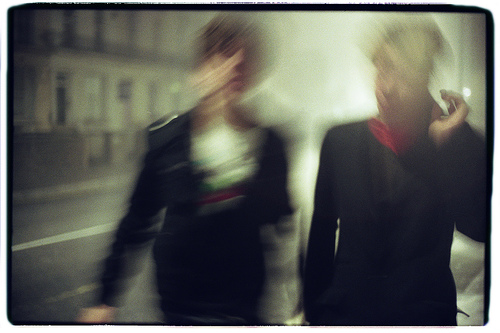
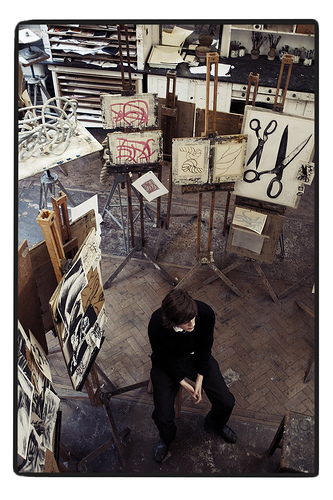 3:AM: This meeting of the old and the new also reflects recent trends in photography: digital cameras and the Internet have led to a paradoxical revival of interest in film and analogue cameras. You choose to shoot film but post scans of your pictures on your blog and on Flickr (where they are viewed by hundreds of people). Do you agree that the two media seem to complement each other?
JS: Definitely. Photography is a social art. My photos reflect the life I lead and the people I know, and I like being able to share that with people. I shoot film because the cameras and the process are fun and satisfying as hell, and the end results look amazing. Combining it with the Internet and its limitless possibilities is that perfect blend of old and new.
3:AM: Your favourite camera at the moment is a Bessa R2a. Could you explain what’s so great about it?
JS: Rangefinder. The viewfinder. Small, quiet, black (looks badass, like a ninja!). Great lenses. Well built, expensive but not to the extent where I’m afraid to use it and fuck it up. I named mine Beowulf. Nice.

3:AM: The colours in your colour Bessa pictures are beautifully passé as in ‘faded’, which lends them the wistful, nostalgic quality I mentioned previously. Where does that come from? Have you ever tried using a Holga or a Lomo L-CA which can produce similar effects? Where do you stand on the whole Lomo/toy camera phenomenon?
JS: I have film to thank for my colours (and tonality for black and white shots.) It’s really hard for me to pin down, but film just has these colours where they are both desaturated but at the same time incredibly rich. Digital looks fake. Film looks real. Haven’t tried any of those cameras although I was looking into Holgas the other day and was tempted to pick one up. I’m all for anything that can liberate your shooting style. Personally, I love Polaroids and the little cluster of photographers that still shoot with them. The old land cameras that take pack film and Sx-70s are beautiful feats of engineering, and great fun to shoot with too. A little shitty camera that you can have with you 24/7 is in my opinion worth more than a Leica that sits in your dad’s study. The other day I bought a Yashica Samurai for ten quid. It’s a half frame SLR, you get 72 shots on one roll of film and to make things better (or worse) it looks like a weapon from Star Trek. It’s great for when I’m too drunk to worry about an expensive rangefinder.


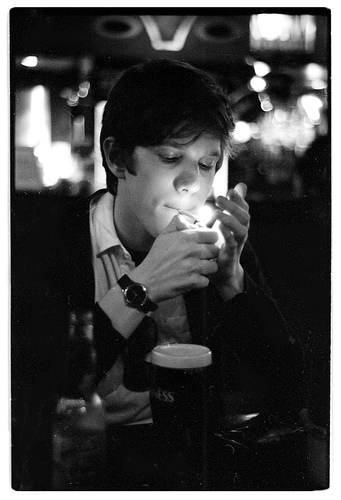
3:AM: Which do you prefer: colour or black and white? (Most of your pictures seem to be black and white.)
JS: It’s an eternal struggle within me. I don’t know. Black and white features more because it’s cheap to develop at home. It can be great for removing the distraction of colour and creating this amazing relationship with the viewer. That being said, if you nail a decent colour shot, it can be amazing. I really don’t know, both for the moment, they have their time and place, maybe I will favour one in the future — who knows.
3:AM: How did you come to photography in the first place? Tell us about your career plans…
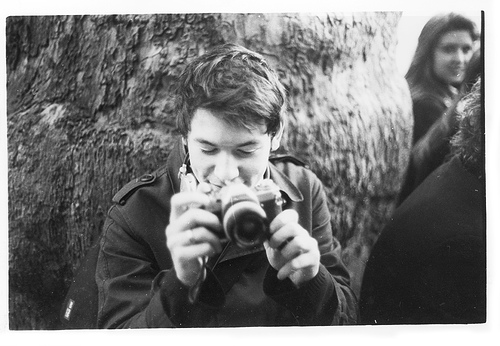
JS: JS: I went on a trip to Africa and wanted to take some photos to remember it (I always wanted go to there when I was younger.) So I stole my brother’s Canon Av-1 and a bunch of prime lenses even though I didn’t know what SLR stood for or how the hell to use it. 10 rolls of blurred shots later and I was hooked – I needed to know how to take decent photos. Like I said earlier, I realised that with a camera I could document me and my friends and the city around us. That was two years ago.
I used books, the Internet, friends, teachers — anything really — to teach myself all there is to know from the techniques to the execution of photography. I think I did pretty well if I can say so myself. One thing I will say was that digital was a great platform to learn on, and very forgiving with trial and error. But now that I know what I’m doing, it’s film all the way.
My plans? I’m in the process of applying to do some sort of photography course or degree at the London College of Communication. We’ll see what happens and how it goes. When I’m older I would love to be a photojournalist. To travel and meet people, try and make a difference. I know it’s over romanticised and the industry is very tough, but I could see myself happy doing it. Plus documentary photography is essentially what I do now with my friends, it is the kind of photography that I want to spend my life doing. In the summer I’m going to be assisting Nick Danziger in Monaco for a month, so I’m really excited about that. He’s a pretty big deal and a great photojournalist, so I feel very luck for the opportunity. He’s got an exhibition on at the National Portrait Gallery of shots taken behind the scenes with Tony Blair which I would definitely recommend.

3:AM: In your blog, you mention Winogrand: are you interested in the history of photography? Are you influenced by any of The Greats?
JS: Yes, yes and yes. I study History of Art at school and, aside from far too many essays, it’s great. It’s definitely taught me to appreciate what came before. At the moment we are studying Renaissance art in Florence and the thinker Plutarch talked about “moving forward in the radiance of the past”. That’s an idea that stuck with me.
As far as influences go, I don’t have singular devastating ones, but rather a melting pot of ideas. At the moment I’m reading this huge tome on Robert Capa I bought the other day, and it’s amazing from seeing his contact sheets and method of working to reading about his personal life. A great man indeed. I have a lot of respect and admiration for war photographers, and it’s definitely something which interests me with an eye to the future. Larry Burrows, McCullin and the rest. In a week or so I’m going to a talk by Philip Jones Griffiths on his amazing book Vietnam Inc and I really can’t wait.

3:AM: Many of the artists (Larry Clark, Gus Van Sant etc.) who document the lifestyles of young people do so from the outside. You are in the privileged position of being able to do so from the inside, which is why your pictures are revealing without being prurient. Are you afraid people will find your pictures less interesting when you grow older and move on to other subjects?
JS: Not at all. I shoot my friends because they are what I have access to, but as I get older and things change, so hopefully shall I. There’s so much going on in this world that it’s more a case of pure excitement for what the future will yield.

3:AM: Your pictures document your life and that of your friends, so tell us a bit about that. Let’s start with where you live: Hampstead…
JS: Hampstead. It’s nice. That’s about it. It’s not very exciting, but it’s a comfortable place to live. And the heath is lovely in the summer. There are far too many mobile phone shops and estate agents which makes no sense, however there’s an awesome private old camera shop called Photocraft where the old folks who work there all know their shit and are really helpful. With uni and whatnot, I am planning to move out and elsewhere in the next couple of years.
3:AM: Westminster School…
JS: It’s the most fantastic location, and the history of the school really pervades through. That being said, they are very focused on academics and Oxbridge and so I’ve become very bored with it all. I’m studying A-levels in History, English, History of art and Art — far too many essays. The art department is like this little bastion of sanity for me.

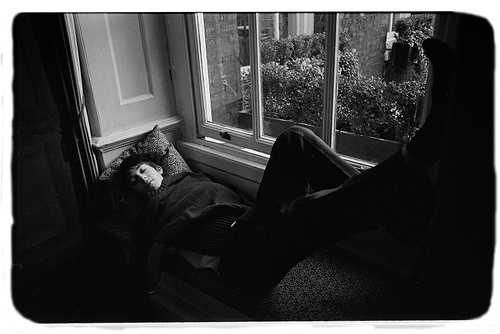
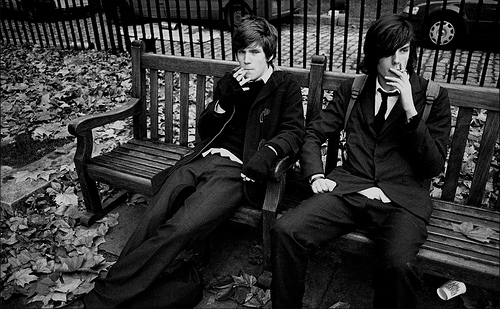

3:AM: Many of your pictures depict your nightlife in trendy East London (333, 93 Feet East)…
JS: Well, my other main hobby aside from photography is partying. But I take a camera with me (of varying expense depending on how much I’m planning to party) so I kinda combine the two. The maddest shit happens on night buses and in the early hours of the morning in London, so I like to be prepared. Lots of interesting people and places in that area of London. London itself is another main element of my photos. I’ve travelled a lot, but nowhere compares to London. It really is the most fantastic, diverse city. I think it’s also the most visited city in the world now, and so it should be. I’m proud to live in it.
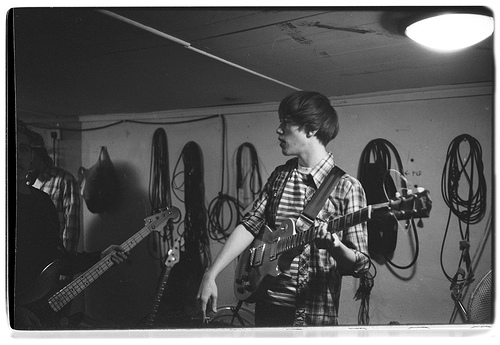
3:AM: You are also the drummer in a band called Trafalgar. How does that fit into the grand scheme of things?
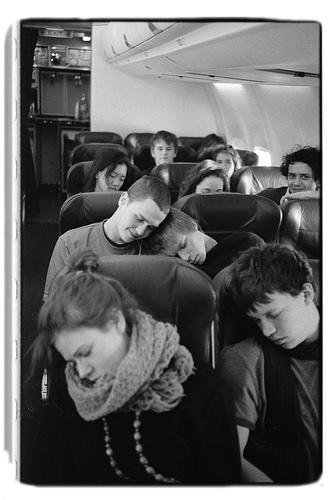
JS: Well, things are really about to take off with Trafalgar. We played an all-expenses-paid gig in Barcelona at this huge club called Razmatazz the other week, and it was pretty much the greatest 24 hours of my life. I shot it all on Polaroid taken on an old Sx-70. Our single’s out around June followed by a 2-week-long UK tour, so we shall see what happens. It also provides me with interesting situations from a photographical point of view. I keep a scrapbook of our shows and flyers and press clippings and photos I’ve taken and whatnot so I can reminisce about it all when I’m a crusty old man.
3:AM: Where does your Tintin fetish come from?
JS: Growing up, I loved reading the books. He went on the most amazing journeys and adventures. I have original French posters on the wall of my room, and every one of the books. Plus he’s really inspirational, because if you think about it, he’s pretty much the greatest journalist ever. Plus in Tintin in Tibet he uses some sort of Leica to take photos of the Yeti. Sweet.
3:AM: Finally, is your family related to Bram Stoker?
JS: Ahahaha, I get asked this a lot, from random old men working in the Tube to excited English teachers. The truth is I’m not sure. I know my dad looked into it. Our family (well the British side, I’m also half American) is originally up near Manchester, so not that far from Ireland where Bram was from. It’s likely there is some sort of vague link. Dracula is an amazing book and so the idea excites me a lot!


 ANDREW GALLIX