
My grandfather’s 80th, somewhere near Melun, circa 1990.


My grandfather’s 80th, somewhere near Melun, circa 1990.
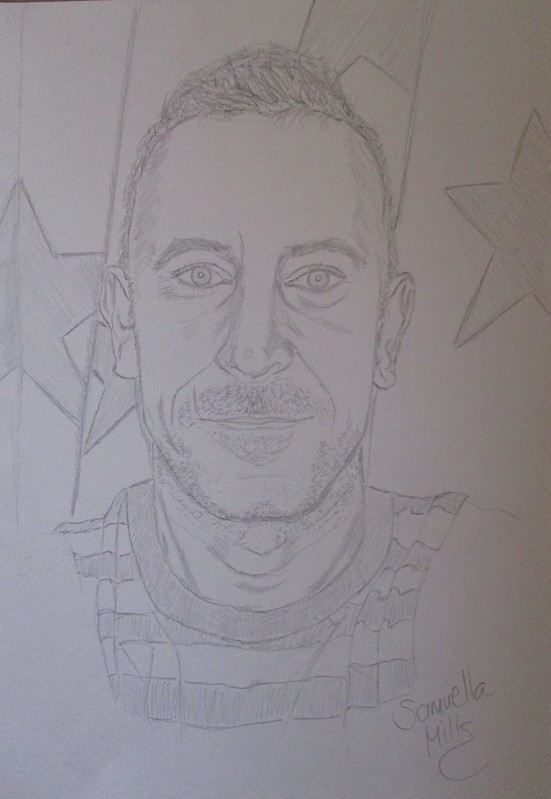
Sketch by Sam Mills, August 2020.

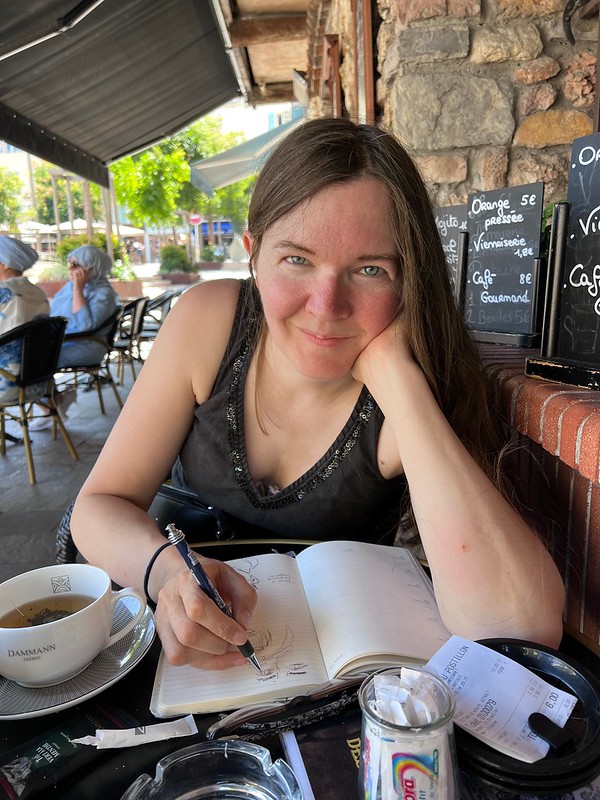
Sketch by Sam Mills, Antibes 2023.

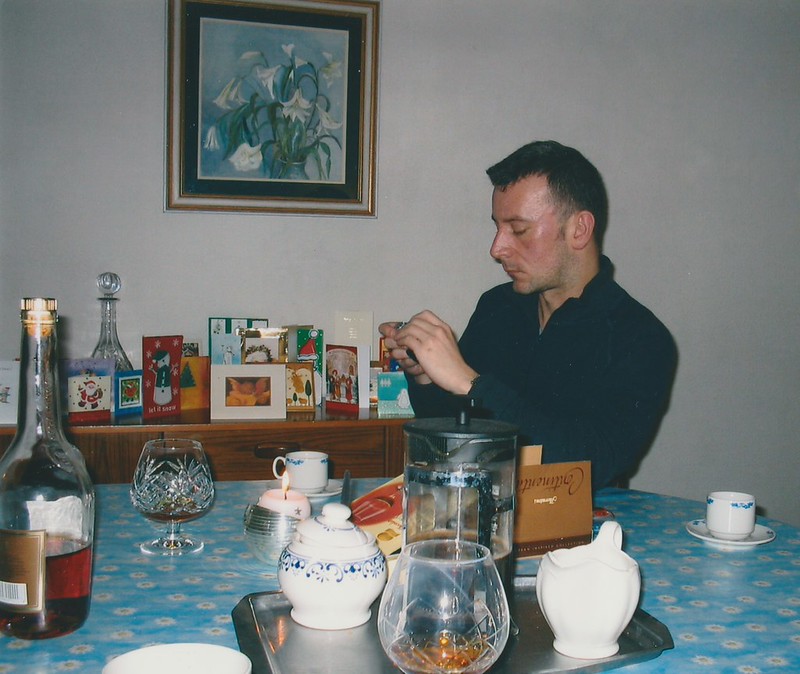
Rushmere Pond, Wimbledon Common, 1994.

London, Christmas 2001.
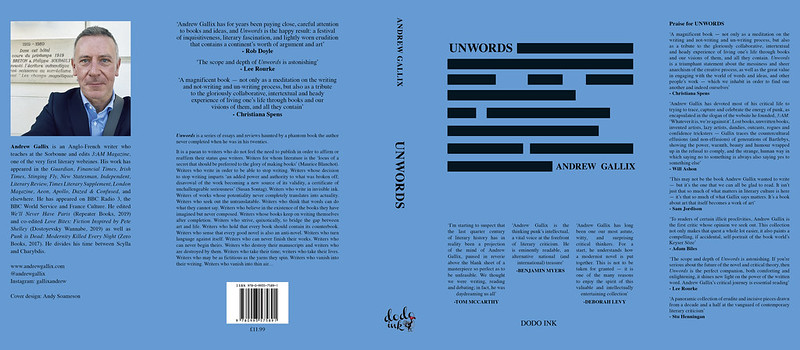
My new book, Unwords, comes out in January 2024.

Here is “Millenial Edgelord”, my interview with Susan Finlay, 3:AM Magazine, 27 August 2023.

Andrew Gallix: At the beginning of The Lives of the Artists, you write, ‘I’ve always been scared of writing a memoir in case I come across as unlikable or worse still boring’. There’s absolutely no risk of that, but I wonder if this fear may account, at least in part, for the book’s shapeshifting quality (it includes poems, emails, a PowerPoint presentation, a screenplay, a chapter to be read in a ‘slam’ style…)?
Susan Finlay: A friend of a similar age recently referred to her ‘first person aversion’ and this is something I can definitely relate to. One of the things I became aware of when writing The Lives of the Artists, was that although I like to think of myself as having a youthful outlook, there’s a real difference between my millennial contemporaries and gen z in terms of how we present ourselves. Taking selfies, sharing family photos, mental health issues — you name it — on social media just isn’t something I feel able to do without huge amounts of anxiety/cringe. At the same time, I suffer from big time FOMO and like talking about myself. So yes, the ‘shapeshifting’ is a way of doing/not doing this, and containing both my repulsion of and desire for exposure simultaneously.
AG: You mention a promotional article in which you’d referred to your ‘younger selves’. Sadly, you go on to explain, the plural was edited out and turned into a singular in the published version. You have now got your revenge with The Lives of the Artists — a deliciously paradoxical choice of title for a memoir. Could you talk to us about this emphasis on a plural self, which is so refreshing in this age of navel-gazing?
SF: When I was at art college, the question of Identity with a capital ‘I’ was a big thing. I remember Anouchka Grose coming into give a guest lecturer, and how she used the example of a shopping list to explain the ways in which identity can be regarded as being in a permanent state of flux: if the person who made the list was the same person as the one who arrived at the shop, then the list would be obsolete. Rather, you write things down to remind the future you of what the past you thought that they would want. This really stuck with me, not only the idea of different selves, but different selves leaving reminders for each other, and trying to predict who else they might become. It’s also a convenient way to escape taking responsibility for the less pleasant aspects of oneself: ‘But that was the old me!’
AG: You recount how you once posted the portrait of another Susan — Susan Sontag — in lieu of your likeness on your website. Are you doing something similar here, where each chapter is prefaced with the reproduction of a self-portrait by a female artist? How did you go about choosing these frontispieces, and how do you see them interacting with the text? Why is one self-portrait male?
SF: Yes, I am, or I’m trying to. The choices of frontispiece were informed by a number of things. First, I wanted artists who also chose to portray themselves as someone else in their portrait, or to link their image to a particular profession, which as I’m writing this after a bout of insomnia at 5AM and feeling pretty lazy I’m going to say made it ‘a bit meta’. Second, I liked the idea of giving equal weight to relatively unknown female artists alongside the better known ones. Third, there was no budget so I had to choose images that weren’t in copyright. I’m not sure why I chose one male figure, other than I liked his expression and felt I could relate to it somehow. And because a small press anti-memoir taking pops at the arts establishment does feel kind of David and Goliath.
AG: The title of your book is probably a nod to Giorgio Vasari’s The Lives of the Most Excellent Painters, Sculptors, and Architects as one of the two epigraphs is from this 16th century art historian. Could you tell us about his praise of rough sketches — their spontaneity and energy — and how this relates to your own work?
SF: Well, like the idea of plural selves it can function as a get-out clause for bad behaviour (or to put it nicely, poetic licence). It’s also a reaction to the type of soulless, overworked books that those very prestigious creative writing programmes sometimes (but by no means always) produce: technically they’re perfect but also boring because you can still see through all the ‘tricks’. That said, although my first drafts are always written in a hurried fever dream, I write literally hundreds of versions of each book. So, while I aim for a spontaneous feel, in reality there’s a lot of mundane grind behind it.
AG: Does the title of your book also imply that your life as an artist has an exemplary quality in that it mirrors the lives of many other struggling up-and-coming artists?
SF: I like to think so. I mean, feeling like you’re in the cool gang, that’s the reward.
AG: You talk about the hardship (juggling multiple minimum-wage jobs, moving back in with your parents on several occasions, etc.) you encountered as a budding artist who — unlike most full-time artists — wasn’t ‘seriously loaded’. There is a great deal of social satire here (the posh conservatives who ‘identify as queer’; correct English defined as ‘the dialect of the ruling class’ etc.) as in The Jacques Lacan Foundation. Could you please talk to us about this?
SF: The last few years has seen some fabulous changes concerning diversity within the arts — but class is the one area where the need for change still goes largely unacknowledged. 82% of people in England and Wales identify as white. Around 92% of them attend or have attended state schools. Yet big publishers and blue-chip galleries are, by and large, populated by disproportionately large amounts of white, privately educated people. My theory is that such people are (sometimes) happy to champion works by people of colour, because they believe that in so doing, they will be perceived as enlightened, risk-taking members of the majority. In direct contrast, to highlight the lack of people from financially underprivileged backgrounds also highlights that they belong to an elitist minority — and who wants to highlight that?
Not only does this situation often result in ‘fake diversity’, whereby publishing a book by a Nigerian heiress becomes an example of an ‘engagement with multicultural Britain,’ it also prevents deeper, structural change from occurring. Take for example the mysterious ‘readers’ involved in the vast majority of literary prizes. Yes, the official panel of judges includes those from a variety of ethnic and socio-economic backgrounds, but the 20 or so entries that they actually choose from are, by and large, still selected by white upper-middle-class people. And things won’t really change until we actually talk about these things.
Phew! I could (and often do) bore for England on this topic!
AG: Your move to Berlin was motivated, in part, by the fact that living a bohemian lifestyle in London had become too costly. As you put it, ‘contrary to popular opinion you can’t be really poor — or poor without a safety net — and bohemian’. Do you think Berlin is to contemporary artists and writers what Paris was, say, to the Lost Generation?
SF: Yes, in that they’ll be an expat artist or writer in pretty much every Berlin cafe you visit because it’s still cheap enough to allow you to waste time (but in a good way). No, in that that Parisian moment was just so unique, reckless, and stylish that I don’t think anything can match it. It is my fantasy of an artist’s life.
AG: Your memoir seems to be almost as much about an artistic lifestyle — with an emphasis on style (‘I bought a pair of white jeans because I was thinking “casual at Cannes”’) — as about your life as an artist (in fact, it’s your passion for ‘music and clothes’ that guided you towards art in the first place). You remark, for instance, that ‘it’s so nice to wander through an art exhibition and feel as if I’m my idea of myself’. Is this why you describe cinema as ‘the highest art form’ — because it comes closest to bridging the gap between art and life?
SF: Well, it is now! I love that reading and I’m keen to ‘borrow’ it. However, when I wrote the line, I was thinking more about how film combines writing, visuals, music, and so on and demands skill in lots of different areas. Also, something about the way it can make one feel — or not feel — that time is passing. Also, glamour, yes, it has a lot to do with that too, and that (supposedly) Lacanian thing of seeing a beautiful, poetic figure on the screen and thinking ‘Hey, that could be me…’.
AG: Following on from the previous question, you are particularly attracted to a specific kind of wasted glamour once found in style magazines, commercials, and films. It is best illustrated by the final sentence (‘“Well, you’re never too old to get into smack’”). Could you tell us about this?
SF: Again, I think this goes back to the difference between millennials and gen z, in that I came of age reading about ‘cocaine Kate’, Mark E Smith, and deliberately, wilfully provocative advertising for Dunlop tyres. Reading transphobic Guardian columnists gets me every bit as riled up as the next hipster-leftie, but TBH I’m a massive edgelord too. I know smoking is bad for your health and that few women can achieve the same physique as Lily-Rose Depp without an eating disorder, but when I see her smoking in her little bondage-style bikini I still think she looks cool. Another way of putting it, is that I’ve always been seduced by ‘wasted figures’, because I always will be seduced by anyone who appears young and in the moment enough to be indifferent to death. Deep down I think all sensible people are, even if, being sensible, they don’t admit it.

AG: During a lecture you’re asked to give on your practice (and which you don’t give due to the pandemic), you inform students that on your website your work as an artist is separate from your work as a writer. You go on to add, ‘Of course, in reality there is an overlap, both in that my tastes are my tastes regardless of the medium and that my whole sensibility and frame of reference is intensely art school’. Do you think you approach writing differently because you’re also an artist?
SF: In a word, yes. I’ve always been more interested in whether something can be said to have cultural value than whether it is ‘good’. Similarly, the concept of being or not being a ‘literary’ writer strikes me as an irrelevant concern. That definitely comes from art school (although not necessarily the art world), a place where they also teach you to take a gun to a knife fight, spit on the graves of your heroes, and that clothes always always maketh the man/woman/just no to even having to explain myself to you.
AG: Are you afraid of losing your ‘dual artist-writer identity’, of being viewed increasingly as a writer rather than an artist who (also) writes; whose writing derives from her art practice? Do you think this would entail some kind of loss?
SF: This question really hit a nerve. Yes I do, yes to an extent I have already, and yes it is a big loss. Last week I visited two friends at their studios and I realised how completely out-of-touch I am. I still paint, but in a Sunday painter way — i.e. for pleasure only — whereas previously it was all about the struggle to create something new and to show that I was really up-to-date on all the shows. At the same time, I’ve never got the sense that I belong in the world of ‘proper writers’, so the current situation makes me feel really weird: special on a good day, slightly lost on a bad one.
AG: The last two chapters are truly extraordinary. I won’t describe them because that would spoil the reader’s enjoyment, but perhaps you could give us an insight into their composition?
SF: What a lovely thing to say. I guess, this is the point where I should give Rachel Cattle some credit. Obviously, the editors I’ve not gelled with make more interesting copy, so they’re the ones that appear in the book, but I’ve been lucky enough to work with some excellent ones too. Rachel and I have very similar tastes and backgrounds, and she totally got where I was coming from. Whenever there was a particularly large, associative leap, or a switch between time periods she’d put ‘You could push this further’ in the comments. I guess that loops back to my being a millennial edgelord — I like being told to push it.
AG: What’s next, Susan?
SF: Currently, I’m working on a sci-fi called The Ultraviolet Catastrophe — a bit of a departure. It’s kind of a space race satire. The draft seems to have confused a lot of people.
“But then again, it’s so nice to wander through an art exhibition and feel as if I’m my idea of myself that who even cares about what it’s housed in? Let alone what it houses…?”
– Susan Finlay, The Lives of the Artists (JOAN, 2023)

 ANDREW GALLIX