Rebel With a Literary Cause

409692229_e75d124f7c_t.jpg

“Rebel With a Literary Cause” was published in the Guardian Books Blog on 2 May 2007:

Rebel With a Literary Cause

From Goethe to Rimbaud, a new book from Jon Savage reminds us of teenagehood’s bookish origins.

Rupert Brooke

Through some felicitous coincidence, a stage adaptation of Absolute Beginners recently premiered in London just as Teenage was hitting the bookshelves. Colin MacInnes‘s late 50s cult masterpiece — often described as Britain’s answer to Catcher in the Rye — takes up the teenploitation motif almost exactly where Jon Savage teasingly leaves off. Mirroring the transitional nature of its subject, Savage’s Teenage chronicles the “creation of youth” from the mid-nineteenth century to the end of the second world war. Like Peter Pan, this “prehistory” is frozen “in a state of suspension, of permanent becoming.” In its end — the birth of the modern teenager circa 1944 — is its beginning.

Savage has produced a work of cultural history, not literary criticism, but he clearly shows that the proto-teenager was essentially a literary construct. Chatterton and Goethe provided the live-fast-die young blueprint which — via Rimbaud’s disappearing act and Rupert Brooke‘s shattered beauty — would lead to the James Deans and Kurt Cobains of later years.

Premature death is one way of burning always with the hard, gem-like flame of youth and avoiding the dreaded pipe and slippers. The other is fiction. Apropos of Alain-Fournier (who, incidentally, is not mentioned in Teenage although Raymond Radiguet gets a look-in), Adam Gopnik makes a distinction between the “novel of arrival,” that charts the young protagonist’s journey to maturity, and the “novel of adolescence” where adulthood is rejected in favour of extended adolescence. Le Grand Meaulnes, that supposedly archetypal coming-of-age novel is, in fact, a “refusal-to-age story” — a Bildungsroman that builds nothing.

It is precisely this literature of arrested development that holds the key to the dark secret lurking at the heart of Savage’s Teenage. Shifting skilfully from biography to fiction and back again, he makes much of the obvious parallels between Dorian Gray and Peter Pan: the “Faustian nature” of the “contra naturem” contracts and the death instinct that derives from the cult of eternal youth. We learn, for instance, that Rupert Brooke — a devotee of Wilde who was obsessed with J M Barrie‘s “tragic boy” — believed that the world’s great fault was that “its inhabitants grow old.” Talk about dramatic irony.

“It’s funny,” says Nicky in Noël Coward‘s The Vortex, “how mother’s generation always longed to be old when they were young, and we strain every nerve to keep young.” This transformation was brilliantly analysed by Witold Gombrowicz, the great Polish writer Savage fails to mention and who remains steadfastly ignored in Britain (although Updike, Kundera and Sontag rank among his most fervent admirers).

In the most famous passage of his debut novel, Ferdydurke (1937), Joey Kowalski — an amorphous thirty-year-old — is visited by an eminent old professor who treats him like a kid before marching him off to school where he fits in as naturally as a pupil half his age. If Kowalski embodies the notion (later popularised by Sartre) that identity is in the eye of the beholder, his own sense of immaturity reflects Poland’s cultural inferiority complex which, in turn, comes to symbolise the growing infantilism of society.

Ferdydurke dramatises the emergence of the “new Hedonism” Lord Henry had called for in Dorian Gray as well as the shifting human relations Virginia Woolf observed in the early years of the twentieth century. Gombrowicz was the first to sense how curiously one-sided the age-old battle between old age and young bucks was becoming. Outwardly, he says, we strive for completion, perfection and maturity; inwardly, we crave incompletion, imperfection and immaturity. The natural progression from immaturity to maturity (and death) is paralleled by a corresponding covert regression from maturity to immaturity. Mankind is suspended between divinity and puerility, torn between transcendence and pubescence. Through Kowalski, but also the characters of the schoolgirl and the farmhand, Gombrowicz diagnosed this tantalising tryst with trivia which defines the modern world.

The Fascination of Phantom Bands

409692229_e75d124f7c_t.jpg

Here’s a slightly longer version of the piece published by the Guardian on 27 December 2007:

The Fascination of Phantom Bands

Remember that time you opened the NME and chanced upon a picture of The Perfect Band? The one that was going to save your life? And then you read that they sounded like the roar on the other side of silence — only better? And then you rushed out the next day to buy their single (a limited pressing on 4’33” Records) but it had already sold out? And then you had to wait several long months for their eagerly-anticipated debut album that turned out to be…well…just ok? Tired of musicians who fail to live up to their hairstyles? Why not dance to the spirit ditties of no tone?

You see, when it comes to music, I take my cue from Keats: heard melodies are sweet, but those unheard are sweeter, hence my infatuation with L.U.V. or the Flowers of Romance. Even the greatest bands are mere approximations of the impossible dreams that conjured them up in the first place. However brilliant The Clash or The Smiths may have been, they often fell short of their own Platonic Ideal. More recently, The Libertines‘ music never did justice to the Arcadian rhetoric that made them so damn exciting.

Releasing a record is, ipso facto, a compromise whereas an unreleased (preferably unrecorded and strictly imaginary) record remains pure potentiality. In the final analysis, music can never compete with the silence it comes from and returns to — the silence inhabited by phantom bands.

In Rip It Up and Start Again, Simon Reynolds defines phantom bands as ones that exist “mostly as a figment of bragging and gossip”. The archetype is Liverpool’s The Nova Mob which included Julian Cope, Pete Wylie and Budgie. Cope explains that they had decided to form a purely conceptual group “that didn’t make music at all” but simply sat in cafés discussing imaginary songs — a practice they called “rehearsing”. Of course, they eventually went and spoilt it all by playing a disastrous headline gig at Eric’s following which they did the honourable thing and disbanded. Others, though, never sold out.

Designed to subvert showbiz from the inside, the proto-Pistols Chris Gray Band never existed beyond a few daubings in the vicinity of Victoria Coach Station. What they would have sounded like is anybody’s guess, but in my mind’s ear they are a gloriously shambolic cross between T.Rex and the MC5.

Talking of glammed-up rabble-rousers, no survey of phantom bands would be complete without a mention of London SS — probably the most influential group never to have released a record or played a single gig. Revolving around Mick Jones and Tony James (who are reunited today), their short existence was one long audition that brought together most of the major players on the future London punk scene. Legend has it that a demo tape exists somewhere, but the two founders have vowed, in true phantom band style, never to release it. Don’t you just wish more musicans followed their example? No Music Day would never sound the same again.

****

Here is the version that appeared in Guardian Unlimited:

The Fascination of Phantom Bands

From a ghostly Sex Pistols’ forerunner to Julian Cope’s conceptual collective, some of the greatest groups of all time were the ones that never happened

Julian Cope

Remember that time you opened the NME and chanced upon a picture of The Perfect Band? The one that was going to save your life? And then you read that they sounded like the roar on the other side of silence – only better? And then you rushed out the next day to buy their single (a limited pressing on 4’33” Records) which had already sold out? And then you had to wait several long months for their eagerly-anticipated debut album that turned out to be … well … just OK?

If this sounds familiar — if you’re tired of musicians who fail to live up to their hairstyles – why not dance to the spirit ditties of no tone? In other words, when it comes to music, I take my cue from Keats: heard melodies are sweet, but those unheard are sweeter. Hence my infatuation with phantom bands, such as L.U.V. or the Flowers of Romance. The appeal of semi-real or imagined groups is obvious, as even the greatest bands are mere approximations of the dreams that conjured them up in the first place. However brilliant the Clash or the Smiths may have been, they often fell short of their own Platonic Ideal. More recently, the Libertines‘ music never did justice to the Arcadian rhetoric that made them so damn exciting.

In Rip It Up and Start Again, Simon Reynolds defines phantom bands as ones that exist “mostly as a figment of bragging and gossip”. The archetype is Liverpool’s the Nova Mob, which included Julian Cope, Pete Wylie and Budgie. Cope explained that they had decided to form a purely conceptual group “that didn’t make music at all” but simply sat in cafés discussing imaginary songs – a practice they called “rehearsing”. Of course, they eventually went and spoilt it all by playing a disastrous headline gig at Eric’s, following which they did the honourable thing and disbanded. Others, though, never sold out.

Designed to subvert showbiz from the inside, the proto-Pistols Chris Gray Band never existed beyond a few daubings in the vicinity of Victoria Coach Station. What they would have sounded like is anybody’s guess, but in my mind they are a gloriously shambolic cross between T Rex and the MC5.

Talking of glammed-up rabble-rousers, no survey of phantom bands would be complete without a mention of London SS — probably the most influential group never to have released a record or played a single gig. Revolving around Mick Jones and Tony James (who are reunited today), their short existence was one long audition that brought together most of the major players on the future London punk scene. Legend has it that a demo tape exists somewhere, but the two founders have vowed, in true phantom band style, never to release it. Don’t you just wish more musicans did the same? No Music Day would never sound the same again.

All the Latest

409692229_e75d124f7c_t.jpg

Lee Rourke’s Everyday was reviewed in Time Out (London) on 4 February 2008. In his write-up John O’Connell devoted a paragraph to my “overexcited” intro (which, by the way, wasn’t written “straightfacedly”). Here is the relevant extract:

“At their best they’re [Lee Rourke’s stories] a delight, but at times their faux-naive simplicity (’It was two o’clock in the afternoon…’) feels slapdash, as if Rourke were more interested in establishing himself in a specific cultural pantheon than in crafting work that truly moves and endures.

An overexcited introduction by 3:AM Magazine editor Andrew Gallix underscores this, likening one tale, apparently straightfacedly, to ‘an episode of ‘Nathan Barley’ penned by Herman Melville and shot by Mike Leigh’ (a formulation which does the past-its-sell-by-date Hoxton satire of ‘Tale of an Idiot’ no favours) and another, intriguingly, to ‘The Rakes fronted by Julian Maclaren-Ross with Patrick Hamilton on bass, Ann Quin on drums and Maurice Blanchot on kazoo’. But the stories shouldn’t need this buttressing of explained context. As it is, they expend so much energy gesturing beyond themselves rather than simply being that they seem to aspire to some other status entirely — art prank, perhaps”.

Introduction to Everyday

409692229_e75d124f7c_t.jpg

Here is my introduction to Lee Rourke‘s short story collection, Everyday (Social Disease, 2007, pp. 9-13). I wrote it in October 2007 and the book was published in December:

Unlike his characters (1), Lee Rourke doesn’t go unnoticed. The first time we met was in the toilet at Filthy Macnasty’s where he’d cornered me during a gig organised by 3:AM Magazine back in April 2005. Oblivious to the funny looks people were giving us, he waxed lyrical about the literary insurrection we had kick-started five years earlier and were celebrating that night. Somewhere in the background, Shane MacGowan was emptying his bladder to the strains of the Monochrome Set. It was there — in what Joe Orton called the last stronghold of male privilege — that I realised a new scene (the Offbeats) had emerged. And Lee was slap-bang in the middle of it. I already knew of him as the editor of Scarecrow who banged the drum for “the unheard, the unconventional, the eccentric, the revolutionary and the radical”. I was soon to discover his short stories — as you are now. Brace yourselves.

What can you expect? Well, it all depends whether you squint or not, of course. If you do: 1) David Brent dry-humping Franz Kafka over the zerox machine, 2) an episode of Nathan Barley penned by Herman Melville and shot by Mike Leigh, 3) The Rakes fronted by Julian Maclaren-Ross with Patrick Hamilton on bass, Ann Quinn on drums and Maurice Blanchot on kazoo. If you don’t: pigeons, pints of bitterness, work, Islington, gratuitous violence, boredom, Hackney twits, psychogeography, pigeons, Hoxton twats, anonymous crushes on public transport, class war, urban alienation, media whores, pigeons, happy slapping, sexual frustration, City yuppies, the threat of terrorism, immigrants from Eastern Europe, boredom, work, binge drinking, pigeons, pigeons and more pigeons…

Lee Rourke certainly has his finger on London’s tachycardiac pulse, but it is the universal he zeroes in on with obvious relish. In one story, William Blake’s sober gravestone suddenly rears into view (“Gravestones”). Baudelaire’s captured albatross — a symbol of the impotence of the artist — reappears here in the shape of one of those big advertising placards modern slaves hold up for a living on busy street corners (“The Only Living Boy on Oxford Street”). The tale of the swan that is killed for kicks by a couple of mindless thugs has all the gravitas and pathos of a Greekish deicide. The pole dancer whose rotting flesh decomposes with every new gyration echoes Webster’s skull beneath the skin (“Night Shift”)…

2343375028_f62143870c.jpg

Alongside the ubiquitous pigeons, the emblem of this collection is surely the photocopying machine. This is why the figure of Sisyphus looms so large, from the hypnotic sway of a woman’s rump in “Cruel Work” to the Groundhog Day pattern (2) of “Footfalls”. After being knocked over by a runaway bus, a man is condemned to circle round Soho looking in vain for the young woman who had come to his rescue (“Searching For Amy”). Taking his cue from Dante via Eliot, Rourke describes the vicious Circle Line as a noughties version of the nine circles of Hell all rolled into one. The office drones (a keyword) who inhabit these stories are the direct descendants of the living dead crossing London Bridge in The Waste Land (minus Eliot’s class snobbery). In the author’s words, Everyday expresses “the realisation that we are fragmenting, falling, and that it is never ending: just repeating” (3). Rourke is fascinated by the straw that breaks the camel’s back — the moment when his Bartlebys start running amok or falling apart. As in Michael Andrews’ famous painting, people keep falling over, giving in to gravity, endlessly reenacting their postlapsarian condition (4). After dropping like flies, they squirm on their backs, Kafkaesque insects, while indifferent passersby pass them by. Again and again and again. And when they finally get up, they jump back on the conveyor belt. “I’m not what you could describe ‘as going places’,” says the eponymous narrator of “John Barleycorn” reflecting on the treadmill of his life. These characterless characters are always on the go, but theirs is the restlessness of the undead. They are going nowhere fast.

Some of the stories collected here hardly qualify as stories at all. They are vignettes, or “fragments” to use Rourke’s preferred term — fragments of a bigger picture that doesn’t end (5). There is no whole in Everyday, just a gaping hole in a pair of black tights, a book of blank pages and an all-pervasive Heideggerian boredom. A gaping whole, but no grand narrative. Lee Rourke “documents the little alleyways and back streets,” which brings us back to the toilet at Filthy MacNasty’s where it all began.
Begin!

(1) Rourke is fond of aptronyms (Sheila Hole, Elaine Lowbottom or the bibulous John Barleycorn), some of which advertise the characters’ very banality: “Hack” or “Guy”, for instance, are ideal names for everyday Everymen. And then, of course, there’s “Anon”.

(2) Or should that be Wernham Hogg?

(3) “Purposely Resisting All That: An Interview With Lee Rourke” by Susan Tomaselli, Dogmatika, October 2007.

(4) Here, we are very close to the failed transcendence that lies at the heart of Tom McCarthy’s works (which Rourke has described as “blueprints” for his own).

(5) Originally, the sentence “They are vignettes, or ‘fragments’ to use Rourke’s preferred term — fragments of a bigger picture that doesn’t end” read: “They are vignettes, or ‘fragments’ to use Rourke’s preferred term — fragments of a bigger picture that doesn’t exist”.

****

Lee Rourke’s book was reviewed in Time Out (London) on 4 February 2008. John O’Connell devoted a paragraph to my “overexcited” intro (which, by the way, wasn’t written “straightfacedly”). Here is the relevant extract:

“At their best they’re [Lee Rourke’s stories] a delight, but at times their faux-naive simplicity (‘It was two o’clock in the afternoon…’) feels slapdash, as if Rourke were more interested in establishing himself in a specific cultural pantheon than in crafting work that truly moves and endures.

An overexcited introduction by 3:AM Magazine editor Andrew Gallix underscores this, likening one tale, apparently straightfacedly, to ‘an episode of ‘Nathan Barley’ penned by Herman Melville and shot by Mike Leigh’ (a formulation which does the past-its-sell-by-date Hoxton satire of ‘Tale of an Idiot’ no favours) and another, intriguingly, to ‘The Rakes fronted by Julian Maclaren-Ross with Patrick Hamilton on bass, Ann Quin on drums and Maurice Blanchot on kazoo’. But the stories shouldn’t need this buttressing of explained context. As it is, they expend so much energy gesturing beyond themselves rather than simply being that they seem to aspire to some other status entirely — art prank, perhaps”.

Brit Lit of the Post-Punk Generation

409692229_e75d124f7c_t.jpg

Slates (Huw Nessbitt) published an article — “Brit Lit of the Post-Punk Generation” — about the Offbeat Generation on 6 December 2007:

In the burgeoning underground of new British literary talent the ideals of the punk DIY ethic are rampant. Shunned by the major publishing houses that determine trends based upon their potential market viability, and in reaction to the stagnant state of the contemporary literary culture, the latest generation of writers are utilising a new arena to publish their work; the internet. What began on the blogosphere through websites like 3:AM Magazine, created by editor Andrew Gallix as a small effort to raise greater awareness of new writing in 2000, has transformed into a growing cultural phenomenon.

In a recent article on Offbeat writers (a group who have formed a key part of this new wave) in Dazed and Confused, Andrew Gallix suggested that the movement was going overground and that the prospective release of a new anthology of Offbeat poetry that he is editing was akin to the Sex Pistols 1976 gig at the 100 Club. But already such comparisons are increasingly becoming obsolete. Members of its ranks are beginning to gain currency in mainstream publishing and the movement itself continues to further diversify by setting up independent presses of its own both here and internationally.

If such recognition not only in Dazed and Confused but also in the pages of the Guardian and the Independent is to be taken as an indicator of its entry into the zeitgeist, then for many this period of its preliminary development is of lessening importance as it moves away from this and into a definably ‘post-punk’ era. Whatever the case, the achievement of so few in such a short space of time is a revolution in all but name, as the relative success of associated Offbeat writers group the Brutalists illustrates.

Formed in the heatwave of summer 2006 by Adelle Stripe, Tony O’Neill and Ben Myers under the butchered punk motif of ‘Here’s a computer. Here’s a spell check. Now write a novel.’ The trio of have gone on to make big waves from their diminutive roots as a literary collective with only a MySpace page to their name. Most recently Tony O’Neill, one time keys player for Kenickie and The Brian Jonestown Massacre and a former junkie, has signed his first major publishing deal with Harper Collins to co-write the memoirs of flunked NFL star Jason Peter, detailing the sportsman’s battle with drug addiction. Elsewhere O’Neill has toured his collections of poetry at high profile readings that have featured Yoko Ono in the audience amongst other notable guests.

Yet despite their rising notoriety the Brutalists, like other Offbeat writers as they are widely known, are continuing to publish their contributions via a network of indie publishing labels and websites that work closely to support each other. In the wake of 3:AM has sprung a number of affiliated websites, such as Ready Steady Book, The Beat, and most notably Scarecrow, co-edited by Lee Rourke, author of the short story collection Everyday, released by Social Disease, a privately funded publishing project of Offbeat supporter Heidi James. Created from similar frustrations as the writers that she publishes, Social Disease’s approach to the business is reminiscent of the independent houses of Olympia Books or Grove Press that gave luminaries including Samuel Beckett, Henry Miller, James Joyce and William Burroughs a home at a time in the twentieth century when their works were either considered obscene or simply substandard.

With this in mind, and in terms of their techniques for disseminating their works, the Offbeats are nothing particularly unique in the history of literature. Writers and poets have distributed their work in the form of pamphlets, zines and small runs of publications for centuries, by everyone from the Romantics to the Beats. Indeed for that matter, the narrow-minded nature of publishers is nothing new either. In an industry that is driven by profit, much like any other, publishers occupy the paradoxical position of simultaneously dictating tastes and also being driven to respond to change in sales by altering these accordingly.

What is different, however, is the way in which these groups have aligned themselves in direct opposition to this practice as a defining principle of their raison d’être. Moreover, with their expanding influence in Europe through other guerrilla bodies in the form of Blatt Magazine (Berlin), Metronome Press (Paris), and the semi-fictitious worldwide arts organisation, the International Necronautical Society chaired by Offbeat associate Tom McCarthy, it would be difficult to imagine this situation retrogressing any time soon. In which case contingency plans need to be made for the future as, if the movement truly is going to go overground, then something needs to be done to protect them from being swallowed up into the mucky realms of its major publishing foes completely when success inevitably knocks at their door.

All the Latest

409692229_e75d124f7c_t.jpg

I’ve just noticed that Leora Skolkin-Smith has appended a really nice comment to one of my stories. It was posted on 26 September 2007:

“This was a fascinating work. So many lines alone struck out at me.
But this was central for me pulling me into a whole,

‘For a few split nanoseconds, another train pulling into the station tricks you into believing that your train is pulling out.

Adam Horton — 33, caucasian, 5’6″, underendowed, thinning on top — viewed this sensation as a perfect metaphor of his stumbling through life like a sleepwalker on a treadmill, a pet hamster on a wheel, or a commuter on the Circle Line. Hence the choice of a railway station over any other point of departure. But which one?’

I think there is a beautiful sorrow in it, mixing with gritty lust and sudden unexpected phrases like ‘At this juncture — when you are about to abandon wife and children, sail the seven seas or commit genocide because men cannot help acting on impulse —’.”

Thanks, that made my day.

Half-Hearted Confessions of a Gelignite Dolly-Bird

409692229_e75d124f7c_t.jpg

I was feeling homesick for the event while it was happening
– Douglas Coupland, Generation X

Daintily, a faun-like figure stole across the cluttered room, pirouetting over the bottles and ashtrays that littered the splattered floorboards. She was the first to notice, having been awakened by a muffled squishy sound as of manifold foreskins peeled back in unison.

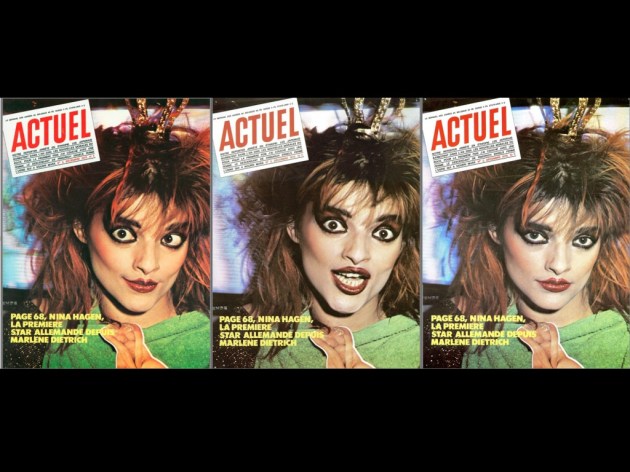
Fanny sat up and fumbled for her cigarettes, which she dimly recalled leaving beside a dog-eared magazine. She pouted outrageously, mimicking Nina Hagen on the glossy cover, but feeling more like Mme Pompidou gone feral. Not that anyone could see her, of course; nor she anyone. Except when she sparked up and caught a glimpse of the other partygoers who had crashed on the rugs. The expensive Persian rugs with their expansive mindfuck designs: it was all coming back now.

actuel

Guy Debord in hot pursuit of a statuesque demi-mondaine modelling a lampshade hat. That fucking twat, with his sweater knotted around his neck, whose inanities were still audible above the UK Subs. Astrid surrounded by livid creatures of indeterminate gender lapping up the dark glamour of a voluptuous runaway terrorist. The lead singer with a pretentious Parisian band reclining on a Moroccan pouffe drinking champagne from a shiny boot of leather. An amazon (with a blonde beehive and the blank expression of a blow-up doll) fellating an oversize banana in some dark (dank?) corner. Jacques Lacan doing the twist to Martha and The Muffins: rather tentatively at first, then letting rip. Some obscure artist (with an impressive pompadour and an unresolved mother fixation) showing off his collection of individually-numbered potato prints. A boy who looked like a girl almost kissing a girl who looked like a boy before recoiling in sheer horror. Astrid astride an up-and-coming Post-Structuralist who kept neighing and bucking bronco-fashion. Malcolm McLaren describing his new film project as Blake Edwards meets Russ Meyer. A statuesque demi-mondaine modelling a lampshade hat in hot pursuit of Guy Debord…

…At some point, there had been a blackout. Matches were struck, candles were lit, she could remember that distinctly.

Probing eyes, disembodied, unblinking and bloodshot, trained on her, boring through. Bleeding gashes in the cloak of night.

Writhing couples, vertical, horizontal or higgledy-piggledy, their serpentine hips suddenly illuminated like quattrocento manuscripts. A torch flashed into the deepest recess.

Astrid, bent over a Formica table, Jackie O hairdo in disarray, retro ski pants concertinaed around her ankles, emitting unmistakably teutonic grunts while a rolly-polly Pataphysician with a twirly moustache bobbed up and down behind her in slo-mo.

Wall-to-wall hip young gunslingers, no worse looking than Johnny Thunders, every one a Sex Pistol.

Pointillist ponces in pointy shoes atomised under the strobe light: lithe, lank youths, all floppy fringes and flailing arms, moonstomping to the B-52’s like there was no tomorrow, although tomorrow was today.

Today was tomorrow when Fanny’s angelic features were bathed in gold, her halo melting like fondue cheese, and sparkling fruit carved in dewdrops dangled lasciviously from chandeliers like overripe testes.

How could she ever forget what it was like?

He had pounced out of nowhere and pinned her by the arms to the soft furnishings, his breath as fresh as a lungful of menthol, his greedy fingers foraging deep and she had put up a feeble show of resistance like a heroine in some cheap novel and the only time he ever smiled was when he slapped her and it only made her wetter still and she was confused because her mum was a feminist and The Buggles were on the stereo and she closed her eyes as soul surrendered to body and the world melted all around.

“You can only take so much beauty,” he said blowing a plume of smoke at the plaster putti on the ceiling, “before you hit the bottle.” Up close, he looked even more like Paul Simonon. Same fragile strength. Same studied abandon. A panther in a tonic suit. A pugilist cherub after a few rounds.

Later on that night, Fanny pictured him whizzing by at the speed of light on his shiny Lambretta, pork-pie hat cockily at half-cock, skinny tie flailing the air, high on hormones, bent on being. He was just wind in her hair now. A dot in the distance, merging with the background, at one with the cosmos. Pure life force. …Just wind in her hair. …She closed her eyes, but the world did not melt like it had the first time.

How could she ever forget what it was like? What it was like would never be forgotten, but what it was like was not what it was.

Yet her head still pounded to yesterday’s pogobeat. Someone said: Nobody has ever been this young, whereupon Astrid and her fawning retinue repaired to a dodgy sheesha bar near Les Bains Douches. In the metro, they mingled with the vanguard of the rush hour. Overground, daylight was competing with sodium. Several other revellers had woken up to the dinky farting sound of the faun darting around. As their eyes adjusted to the semi-obscurity, it transpired that he had been dipped, stark naked, in silver greasepaint. It also dawned on them that he was stealing everything his slender frame could carry. They all looked on, entranced, as if he were a cross between Vaslav Nijinsky and Arsène Lupin. A smattering of applause accompanied his final exit while tears rolled down Fanny’s eyes. In that instant, she sensed she had lost something she had never found.

Her heart still pounds to the Burundi rhythm of yesteryear.

Surfing the New Literary Wave

409692229_e75d124f7c_t.jpg

Am mentioned in Sam Jordison’s “Surfing the New Literary Wave”, Guardian Books Blog, 12 February 2007

There may not be many new movements in books, but that’s probably because all the action’s online

Although it’s never entirely enjoyable to be proved wrong, I was still very pleased with the response to a blog I wrote at the end of last year about the lack of literary movements in contemporary literature. My contention might have received a firm rebuff, but following the suggestions in the comments has been most rewarding. They may not signal a new movement exactly, but if our times lack a Generation to rival the Beats, there’s no shortage of energetic underground activity – in cyberspace.

Admittedly there are as many yawning chasms of dull writing as high peaks of excellent prose, but for the past few weeks I’ve thoroughly enjoyed exploring this new landscape. So, with the zeal of the newly returned traveller, I thought I’d compose a rough guide to the highlights.

One of the first stopping points has to be the excellent 3:AM Magazine. 3:AM (with apologies for straining my geographical metaphor yet further) more than delivers on its promise to provide a “dip in edgier waters”. If you scroll down the huge home page, you’ll find a healthy selection of interviews and a large array of short stories. I’d recommend Nathan Wilkinson’s Probability Anxiety for one. Elsewhere, 3:AM editor Andrew Gallix’s own work is well worth reading too.

Closely associated with 3:AM is the Offbeat Generation, a loose confederation of writers, who all – at the very least – show considerable promise. Worth investigation are: HP Tinker, Ben Myers, Paul Ewen, Heidi James, Matthew Coleman, and, especially, Tony O’Neill. The latter seems to be the figurehead for this burgeoning scene. He’s a man who has taken the phrase rock’n’roll poet to its furthest edges, as a former member of the infamous Brian Jonestown Massacre sacked for behaviour too wild even for that notorious band. Having finally cleaned up his act he’s written a memoir due out in April and (already touted as the next underground classic) and some quite brilliant, not to mention shocking, short stories.

The even more sweary cousins of the Offbeat Generation are The Brutalists, following whose trail led me into fascinatingly unexpected territory. Sure a lot of the writing was of the “I’m young! I’m in London! I’m drunk! Look at me!” genre, but there was no denying its energy. Clicking through the links on these various myspace pages was also an amusement in itself. I kept seeing a bare-chested man with a gas mask on his face called “T”, for instance.

I’m reliably informed that this is the author Travis Jeppesen, but all I got from visiting his site was horrific black metal from a band called Krieg and the information that T would like to meet “denizens of the next level” and is interested in combat boots and dwarves. Unsettling as that was, it was Mr Trippy (apparently a pseudonym of the always interesting Stewart Home); who finally convinced me I’d journeyed far enough down that particular link chain, thanks to his offer of “avant-garde porn” and “better living through chemistry”

Meanwhile, across the Atlantic resides the daddy of all online magazines, McSweeney’s. It now has as many detractors as loyal readers, but still seems to have the edge on young pretenders, the particularly user-hostile Underground Literary Alliance and the smart n+1 magazine.

The best US site that I visited came thanks to a tip-off from the editor of the (also excellent) Internet Board Poetry Community blog. It’s MiPoesias, a site distinguished by the realisation that the internet offers unparalleled opportunities to let visitorshear as well as read poetry. Their online audio show isn’t exactly a laugh a minute, but it does offer some fantastic readings from authors, as well as some fine interviews. (The best I’ve heard so far is a retrospective interview with the grand old man of American poetry, Donald Hall.)

Finally, in case anyone is feeling overwhelmed by all this enthusiasm, here’s a healthy dose of cynicism about the whole myspace phenomenon from the excellent Scarlett Thomas. For this link – and several others – I have to acknowledge a debt of gratitude to Brunner, a poster on my movements blog. Thanks! I do consider myself enlightened – and, as you suggested, chastened. If anyone else would like to point out significant sites that I’ve missed, please go ahead.

Literature For the MySpace Generation

409692229_e75d124f7c_t.jpg

Am mentioned in Sam Jordison’s “Literature For the MySpace Generation,” The Guardian, Wednesday 7 February 2007

Sam Jordison discovers how a new wave of publishers and writers are harnessing the power of MySpace and print on demand to bypass their bricks-and-mortar competitors to find new audiences

Journalists have an appalling track record when it comes to predicting revolution in the publishing industry, particularly when related to new technology. It was only at the turn of the millennium, for instance, that we were confidently forecasting that the rising “e-tide” would wash away the old publishing houses. Electronic books were going to make the traditional ink and paper product seem as ludicrously old-fashioned as Moses’s stone tablets. Meanwhile, the free transfer of data on the internet was going to make publishers’ distribution networks entirely redundant and loosen their grasp on copyright so completely that most of their revenue streams would dry up.

Of course, since then, almost the exact opposite has happened. Numerous mergers and acquisitions have ensured that the big houses have a tighter grip on the market than ever before, while the internet has actually generated new millions and new markets as blogs and popular websites have been bought up and turned into successful product. And has anyone ever seen an e-book?

Bearing all this in mind — and remembering that it takes a special kind of fool to augur change in the book world anyway — it’s with considerable nervousness that I’m now going to make my own assertion. A shake-up may well be coming — and it’s thanks to the opportunities opened up by new technology and the internet.

Leading the charge is Heidi James, the 33-year-old owner and sole employee of Social Disease, a new kind of publishing company. It does most of its marketing and talent scouting on the internet and relies on new print on demand technology to keep its costs sufficiently low to ensure that, even if it can’t compete with the publishing behemoths, it won’t be crushed by them anytime soon either.

James sums up Social Disease’s raison d’être as: “Zadie Smith is not fucking interesting”, and neither are Monica Ali and the dozens of other writers of similar social comedies that emerged in the wake of White Teeth’s huge success. “All this postmodern irony is just so dull,” James explains. “And I realised that I really hate the homogeneity of the publishing world where it’s next to impossible to get genuinely interesting work published. The big publishing houses would have you believe that there isn’t a market for new and exciting work that takes a few risks and makes a demand on its readers, but that’s bollocks. Absolute bollocks.”

To prove this point she set up her own company, taking its name from the Andy Warhol quote — “I have Social Disease. I have to go out every night. If I stay home one night I start spreading rumours to my dogs” — and promising to bring back the element of risk that James claims has all but disappeared from conventional publishers’ lists.

“I don’t believe that people are stupid,” she declares. “I do believe that readers are out there. I know that people are interested and like to be challenged, it’s just that no one is prepared to challenge them at the moment. And if the product’s not there, how can they buy it?”

The plan of how to do this is beguilingly simple: there isn’t one. James is the only person in the company, so there are no shareholders to answer to. Social Disease’s costs are negligible: a small amount for cover designs and the time investment necessary to edit the books; and because it’s print on demand, there are no setup costs associated with each print run, the writers receive a healthy royalty for each book sold and profits can be ploughed back into design and marketing.

James claims there has been a significant takeup from independent booksellers, including such major players as Foyles. Meanwhile, the books are easily obtainable through Amazon and a growing community on the social networking site MySpace is already clamouring for the kind of writing that Social Disease promotes.

The implications of all this are intoxicating. Next time a John Kennedy Toole — whose suicide has been directly attributed to the fact that no one would print his masterpiece, A Confederacy of Dunces — comes along, their work can not only be published online, but stand a significant chance of finding a home with publishers like Social Disease who would risk nothing by promoting them.

However, if the advantages of this kind of small-scale, DIY publishing are clear, so too are the drawbacks. Print on demand is not yet able to provide the economies of scale of traditional print runs (the unit cost of a print run of one book is the same as for 10,000) and Social Disease is never going to make the kind of profits or pack the same marketing and distribution punch as the big publishing houses.

It’s also worth noting that James’s first novel, Carbon, is to be published by more conventional methods (via Wrecking Ball Press), although she does point out that one of her writers, Paul Ewen, recently declined the overtures of a bigger publisher to sign with Social Disease. More importantly, she says, her aim isn’t to make money and sell a product. It’s to nurture new talent, promote new writing, give writers a platform and at the same time offer the public choices that big publishers can’t or won’t.

Alongside James there now stand a growing number of like-minded readers and writers, exploiting MySpace’s networking and self-promotion opportunities as confidently as their counterparts in the music industry. Away from the prying eyes of the marketing departments and bean counters, the kind of community that publishers would love to create for themselves has been spontaneously growing up.

Most attempts have been doomed to failure because the website just doesn’t offer the same advantages to the printed word as it does to music (after all, it’s far easier to listen to a three-minute song than to read a novel, or even a short story, on the site’s notoriously badly designed blog interface). Nevertheless, these literary MySpace pages, complete with links to samples of their work, attract a large network of online “friends” who share similar tastes and interests.

Chief among these are the Brutalists and the Offbeat Generation, who between them boast hundreds of MySpace contacts (including countercultural figures like punk renaissance man Billy Childish, as well as the usual handful of bizarre tribute pages to dead heroes such as Jack Kerouac and William Burroughs), and whose message boards contain adverts for a bewildering array of literary events and websites offering samples of all manner of new and obscure writers’ work.

The Offbeat Generation is not, as its spokesman Andrew Gallix (the editor-in-chief of the long-running online literary magazine 3:AM) points out, strictly speaking “a generation” (since its writers range in age from 18-40), rather it is a bunch of people “united” because they “feel alienated by a publishing world dominated by marketing”.

The Brutalists, meanwhile, is a cheerfully sweary conglomerate of writers who also claim to be “united by our disgust with mainstream publishing world that consistently rejects us.” As they explain in their online manifesto, Brutalism “means writing that shows no quarter. Writing that rages and burns across the page — writing that doesn’t worry about causing offence, breaking taboos, cutting to the heart of it. Writing that may shock and shake the reader into submission rather than gently caress them. We’re not anti-intellectual or anti-literary but we are anti-apathy and we exist in a highly agitated state.” Pleasingly, they also note: “When they call Pete Doherty a poet — arguably a near contemporary in terms of age/background/interests/location — we can’t help but laugh.”

Both groups have a growing MySpace presence, are widely read on the net and — crucially — both are using that impetus to publish their own anthologies and launch their writers through independent publishers (including, naturally, Social Disease).

At the moment, much of the material you’ll find if you trawl through the links on their MySpace pages are reminiscent of the kind of mini-zine literature that used to be sold in places like the ICA and Tate Modern shop, demonstrating an overpowering influence of Huysmans and Bukowski and labouring under the belief that getting drunk is some kind of artistic statement.

However, as Heidi James points out, web publishing has the distinct advantage in that it’s free. And, whereas in the old days you had to spend your £5 before discovering that you didn’t like the writing in the mini-zines, with the net the worst that can happen is that you’ll hurt your eyes. “There’s also every chance that you’ll be find something you like, you can put it in your favourites to watch how the writer develops and follow the links he or she provides to more like-minded authors. That’s the beauty of it.”

What’s more, while there is a lot of chaff, there’s definitely also some wheat to be found, particularly around both the Brutalists and Offbeat Generation. Even the best writing could arguably benefit from the nurturing attention of a stern editor, but there’s no denying the abundant energy, passion and pleasingly warped imagination of writers such as Matthew Coleman, Ben Myers, HP Tinker, Tony O’Neill and Andrew Gallix — not to mention Heidi James herself. There’s every hope that soon one of them might produce something rather special — and that, if they continue to expand their influence as rapidly as they have been doing in recent months, mainstream publishers will have to sit up and take serious notice.

All the Latest

409692229_e75d124f7c_t.jpg

Here’s all the news since I started the Andrew Gallix site in February 2007:

22 October 2007
Lee Rourke: “My collection of short stories would not be the book it ostensibly is without the editorial guidance and expertise of Andrew Gallix who painstakingly edited the manuscript”.

****

October 2007
I’m quoted in an article (“Tell It Like It Is: The Offbeats” by Sarah Fakray) in the November issue of Dazed & Confused:

“…3:AM Magazine‘s Andrew Gallix has just finished putting together an anthology of key Offbeat writers’ short stories. ‘The movement is about to go overground,’ he explains. ‘The literary equivalent of the 1976 punk festival at the 100 Club.'”

****

September 2007
Am mentioned by Lee Rourke in an interview with Susan Tomaselli published in dogmatika:

“I sent Heidi the manuscript for Everyday some time ago now. I didn’t think she’d like it at first. But she did. She passed it straight away to Andrew Gallix to edit and write the introduction. …The ‘Offbeat Generation’ tag was invented by Andrew Gallix, Editor-in-Chief at 3:AM Magazine and author of many surreal, tightly composed short stories. …Like many of the writers who have been labelled, or label themselves ‘Offbeat’, such as: Tom McCarthy, Stewart Home, Andrew Gallix, Travis Jeppesen, Heidi James, Matthew Coleman and Tony O’Neill et al., I very much stand alone.”

****

25 September 2007
“Living Poetry” appeared in the Guardian Books Blog.

****

21 September 2007
A picture of mine appears in Schmap New Orleans.

****

15 September 2007
My interview with George Berger is published in 3:AM Magazine.
The Little Black Book: Books (Cassell Illustrated), to which I have contributed, is also published today.

****

September 2007
I am interviewed in the first issue of The Great Small Fishes (September-November 2007).

****

7 August 2007
Tom Bradley publishes an article about my fiction, entitled “Surplus Will”, in nthposition.

****

August 2007
“Join the Slow Writing Movement” published in Shrug Magazine (August 2007)

****

July 2007
A picture I took of Four Queens Hotel Casino appears in the third edition of Schmap Las Vegas.

2 July 2007
“Slow-Cooked Books: The Virtues of Writing Slowly” posted on the Guardian Books Blog.

****

May 2007
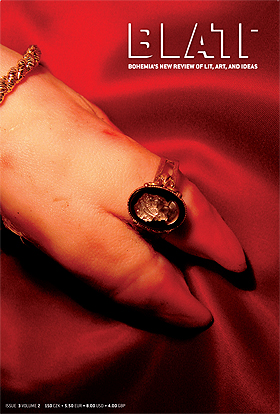
“Half-Hearted Confessions of a Gelignite Dolly-Bird” published in issue 3 of BLATT.

****

2 May 2007
A segment of RTE’s arts show The View was devoted today to Tom McCarthy’s Remainder. The author read from his novel which was then discussed by the members of a panel. The discussion began with Bisi Adigun quoting from my review of the book for 3:AM (which featured on the jacket of the hardback American edition): “I would start by quoting what 3:AM Magazine says. It says, it is ‘a masterpiece waiting to happen — again and again and again.'”

****

2 May 2007
“Dark Young Things” (published under the title “Rebel With a Literary Cause”) was posted on the Guardian Books Blog.

****

3 March 2007
“Forty Tiddly Winks” published in issue 45 of Scarecrow.

****

12 February 2007
Am mentioned in Sam Jordison’s “Surfing the New Literary Wave”, Guardian Books Blog, 12 February 2007

****

7 February 2007
Sam Jordison has published an article about the Offbeat Generation in The Guardian in which I am mentioned:

Sam Jordison, “Literature For the MySpace Generation,” The Guardian, Wednesday 7 February 2007