
[M]odernity often prefers the sketch to the finished painting and prizes the draft, chaotic with corrections, to the published text.
– George Steiner, Grammars of Creation 2001
[M]odernity often prefers the sketch to the finished painting and prizes the draft, chaotic with corrections, to the published text.
– George Steiner, Grammars of Creation 2001
Cath Clarke, “‘I’ve Got to Find the Flaming Nipple!’: The Hunt for Blue Velvet‘s Lost Footage,” The Guardian Thursday 3 November 2011:
“I’ve got to find the flaming nipple!” No, it’s not a line from a David Lynch script. That’s the man himself, reacting to the news last year that missing footage from Blue Velvet had been rediscovered. For years, Lynch-heads and film historians had speculated about the whereabouts of the deleted scenes: footage left on the cutting room floor after Lynch snipped his three-and-a-half-hour rough cut into a two-hour movie. Time passed and everyone — director included — figured it was lost for ever. As for the flaming nipple (nipples, in fact), they belong to a dropped scene. “That’s one of my favourite scenes,” Lynch said in an interview for the book Lynch on Lynch. Why cut it and (metaphorically speaking) kill his baby? “It was too much of a good thing.”
EM Cioran, Exercices d’admiration (Anathemas and Admirations), 1986
We are increasingly interested not in what an author says but in what he may have meant, not in his actions but in his projects, less in his actual work than in the work he dreamed of. If Mallarmé intrigues us, it is because he fulfills the conditions of the writer who is unrealised in relation to the disproportionate ideal he has assigned himself… We are adepts of the work that is aborted, abandoned halfway through, impossible to complete, undermined by its very requirements. The strange thing in this case is that the work was not even begun, for of the book, that rival of the universe, there remains virtually no revealing clue; it is doubtful that its structure was outlined in the notes Mallarmé destroyed, those that have survived being unworthy of our attention. Mallarmé: an impulse of thought, a thought that was never actualised, that snagged itself on the potential, on the unreal, disengaged from all actions, superior to all objects, even to all concepts — an expectation of thought.
Herman Melville, Moby Dick; or, The Whale, Los Angeles Review of Books, 1851
Wonderfullest things are ever the unmentionable…
Kenneth Goldsmith, “It’s Not Plagiarism. In the Digital Age, It’s ‘Repurposing’,” The Chronicle of Higher Education 11 September 2011 (an extract from Goldsmith’s Uncreative Writing):
In 1969 the conceptual artist Douglas Huebler wrote, “The world is full of objects, more or less interesting; I do not wish to add any more.” I’ve come to embrace Huebler’s idea, though it might be retooled as: “The world is full of texts, more or less interesting; I do not wish to add any more.”
It seems an appropriate response to a new condition in writing: With an unprecedented amount of available text, our problem is not needing to write more of it; instead, we must learn to negotiate the vast quantity that exists. How I make my way through this thicket of information—how I manage it, parse it, organize and distribute it—is what distinguishes my writing from yours.
The prominent literary critic Marjorie Perloff has recently begun using the term “unoriginal genius” to describe this tendency emerging in literature. Her idea is that, because of changes brought on by technology and the Internet, our notion of the genius — a romantic, isolated figure — is outdated. An updated notion of genius would have to center around one’s mastery of information and its dissemination. Perloff has coined another term, “moving information,” to signify both the act of pushing language around as well as the act of being emotionally moved by that process. She posits that today’s writer resembles more a programmer than a tortured genius, brilliantly conceptualizing, constructing, executing, and maintaining a writing machine.
Perloff’s notion of unoriginal genius should not be seen merely as a theoretical conceit but rather as a realized writing practice, one that dates back to the early part of the 20th century, embodying an ethos in which the construction or conception of a text is as important as what the text says or does. Think, for example, of the collated, note-taking practice of Walter Benjamin’s Arcades Project or the mathematically driven constraint-based works by Oulipo, a group of writers and mathematicians.
[…] Over the past five years, we have seen a retyping of Jack Kerouac’s On the Road in its entirety, a page a day, every day, on a blog for a year; an appropriation of the complete text of a day’s copy of The New York Times published as a 900-page book; a list poem that is nothing more than reframing a listing of stores from a shopping-mall directory into a poetic form; an impoverished writer who has taken every credit-card application sent to him and bound them into an 800-page print-on-demand book so costly that he can’t afford a copy; a poet who has parsed the text of an entire 19th-century book on grammar according to its own methods, even down to the book’s index; a lawyer who re-presents the legal briefs of her day job as poetry in their entirety without changing a word; another writer who spends her days at the British Library copying down the first verse of Dante’s Inferno from every English translation that the library possesses, one after another, page after page, until she exhausts the library’s supply; a writing team that scoops status updates off social-networking sites and assigns them to the names of deceased writers (“Jonathan Swift has got tix to the Wranglers game tonight”), creating an epic, never-ending work of poetry that rewrites itself as frequently as Facebook pages are updated; and an entire movement of writing, called Flarf, that is based on grabbing the worst of Google search results: the more offensive, the more ridiculous, the more outrageous, the better.
These writers are language hoarders; their projects are epic, mirroring the gargantuan scale of textuality on the Internet. […]
There’s been an explosion of writers employing strategies of copying and appropriation over the past few years, with the computer encouraging writers to mimic its workings. When cutting and pasting are integral to the writing process, it would be mad to imagine that writers wouldn’t exploit these functions in extreme ways that weren’t intended by their creators. […]
While home computers have been around for about two decades, and people have been cutting and pasting all that time, it’s the sheer penetration and saturation of broadband that makes the harvesting of masses of language easy and tempting. On a dial-up, although it was possible to copy and paste words, in the beginning texts were doled out one screen at a time. And even though it was text, the load time was still considerable. With broadband, the spigot runs 24/7.
By comparison, there was nothing native to typewriting that encouraged the replication of texts. It was slow and laborious to do so. Later, after you had finished writing, you could make all the copies you wanted on a Xerox machine. As a result, there was a tremendous amount of 20th-century postwriting print-based detournement: William S. Burroughs’s cutups and fold-ins and Bob Cobbing’s distressed mimeographed poems are prominent examples. The previous forms of borrowing in literature, collage, and pastiche — taking a word from here, a sentence from there — were developed based on the amount of labor involved. Having to manually retype or hand-copy an entire book on a typewriter is one thing; cutting and pasting an entire book with three keystrokes — select all / copy / paste — is another.
Clearly this is setting the stage for a literary revolution.
Or is it? From the looks of it, most writing proceeds as if the Internet had never happened. The literary world still gets regularly scandalized by age-old bouts of fraudulence, plagiarism, and hoaxes in ways that would make, say, the art, music, computing, or science worlds chuckle with disbelief.
Imagine all the pains that could have been avoided had Frey or Leroy taken a Koonsian tack from the outset and admitted that their strategy was one of embellishment, with dashes of inauthenticity, falseness, and unoriginality thrown in. But no.
[…] Nearly a century ago, the art world put to rest conventional notions of originality and replication with the gestures of Marcel Duchamp’s ready-mades, Francis Picabia’s mechanical drawings, and Walter Benjamin’s oft-quoted essay “The Work of Art in the Age of Mechanical Reproduction.” […]
In 1959 the poet and artist Brion Gysin claimed that writing was 50 years behind painting. He might still be right: In the art world, since Impressionism, the avant-garde has been the mainstream. Innovation and risk taking have been consistently rewarded. But, in spite of the successes of modernism, literature has remained on two parallel tracks, the mainstream and the avant-garde, with the two rarely intersecting. Now the conditions of digital culture have unexpectedly forced a collision, scrambling the once-sure footing of both camps. Suddenly we all find ourselves in the same boat, grappling with new questions concerning authorship, originality, and the way meaning is forged.
An extract from “The House Plans” from The Collected Stories of Lydia Davis (2009):
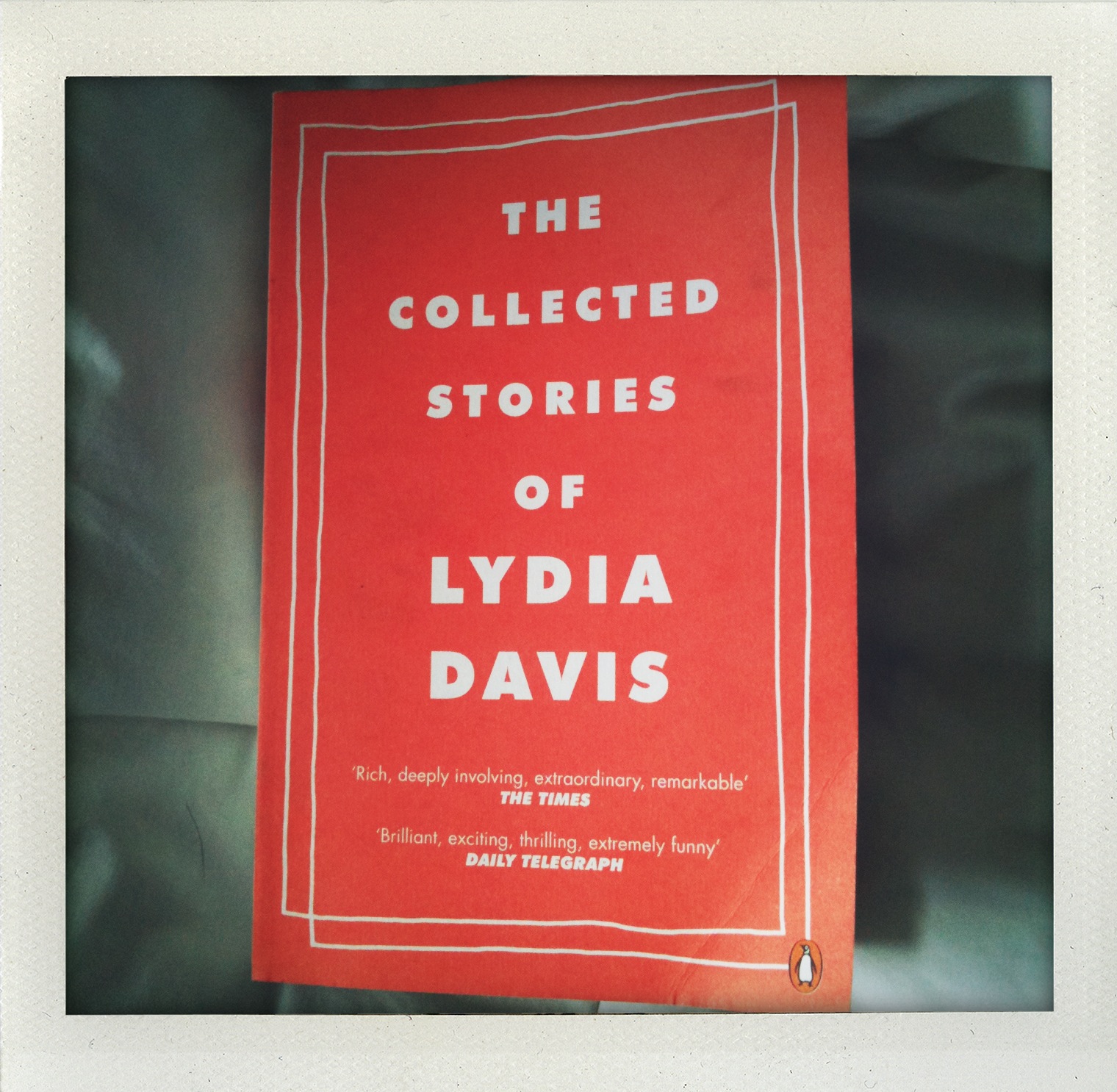
In the beginning, my blueprint had absorbed all my time and attention because I was going to build the house from it. Gradually, the blueprint became more vivid to me than the actual house: in my imagination, I spent more and more time among the pencilled lines that shifted at my will. Yet if I had openly admitted that there was no longer any possibility of building this house, the blueprint would have lost its meaning. So I continued to believe in the house, while all the time the possibility of building it eroded steadily from under my belief.
An extract from “Literature’s New Clothes,” A Life Unfurnished 4 July 2011:
Contemporary literary fiction is a case of the Emperor’s new clothes. It is time somebody shouted out from the crowd: “But they aren’t writing anything at all!”
[…] Contemporary literary fiction continues the attempt to live up to Plato’s definition of art — which, for Plato, made art true — by writing in a manner to give the appearance alone of literature. The effect is a genre in which, for the writer, the sense of Writing Literature is dominant, and, for the reader, the sense of Reading Literature is dominant. And this effect is produced, not simply by the abandonment of most of the elements of character and plot, not simply even by an avoidance of high-literary language and style, but by a self-conscious juxtaposition of the signs of excruciating effort — short, elliptical sentences; absence of fulsome description; muted tone of painful sublimation — with the signs of iconoclastic casualness — colloquialisms; lack of trajectory; air of the incidental. This is how the appearance alone of literature is pursued: by the combination of painful retention, of a Literature that will never appear, and easy production, of a Literature that need only appear. […]
An extract from “Biblioklept Interviews Novelist Lars Iyer,” Biblioklept 15 July 2011:
[…] Literature continues. But it does so, in contemporary literary fiction, as a kind of empty form. As the anonymous blogger of Life Unfurnished has put it: contemporary literary fiction gives ‘the appearance alone of literature’; it is a genre ‘in which, for the writer, the sense of Writing Literature is dominant, and, for the reader, the sense of Reading Literature is dominant’.
Reviewing Jean-Luc Godard’s film Every Man For Himself, Pauline Kael writes, ‘I got the feeling that Godard doesn’t believe in anything anymore; he just wants to make movies, but maybe he doesn’t really believe in movies anymore, either’. Without agreeing with Kael’s assessment of Godard, I’d like to paraphrase her formulation: I think literary writers want to write literary fiction without believing in literature — without, indeed, believing in anything at all.
It seems to me that the literary gestures are worn out — the creation of character, plot, the contrivance of high-literary language and style as much as the avoidance of high-literary language and style, and the abandonment of most elements of the creation of character and plot. The ‘short, elliptical sentences’ of which the blogger of Life Unfurnished writes, the ‘absence of fulsome description’, the ‘signs of iconoclastic casualness’, the ‘colloquialisms’, the ‘lack of trajectory’, the ‘air of the incidental’: all are likewise exhausted.
What, then, is to be done? As writers, as readers, we are posthumous. We’ve come too late. We no longer believe in literature. Once you accept this non-belief, once you affirm it in a particular way, then something may be possible.
Witold Gombrowicz seems to be advocating a return to older forms of literary insouciance: ‘Where are the good old days, when Rabelais wrote as a child might pee against a tree, to relieve himself? The old days when literature took a deep breath and created itself freely, among people, for people!’ But we cannot simply return to Rabelais, as Gombrowicz knew. Too much has happened! If a kind of self-consciousness is a distinguishing mark of the contemporary literary novelist, this is not something that can be relinquished altogether. The role of centuries of writing — of the rise of the nineteenth century bourgeois novel, of modernism and so on — must be marked.
But it can be marked by portraying our distance now from the conditions in which the great works of literature and philosophy were written. W. and Lars, the characters in Spurious, revere Rosenzweig. But this is also reverence for a culture that would deem Rosenzweig and his work important – a culture that is completely different from the one which W. and Lars occupy. True, they revere contemporary masters, too — the filmmaker Béla Tarr, for example — but Tarr lives far away, in very different conditions. W. and Lars occupy the world of the present, and the world that valued the ideas they value, the world that sustained those ideas and nurtured their production, has disappeared. Much of the humour of the book comes from the fact that its characters are men out of time — gasping in awe at Rosenzweig’s work at one moment, leafing through gossip magazines at another; proclaiming a great love of Kafka one minute, playing Doom on a mobile phone the next.
Rick Gekoski, Writing is Bad for You (in the Rick Gekoski: Fingers on the Page column), The Guardian 7 July 2011:
“…Alan Hollinghurst has recently observed a similar phenomenon in himself, and used it to explain why he lives alone. “I’m not at all easy to live with,” he says. “I wish I could integrate writing into ordinary social life, but I don’t seem to be able to. I could when I started. I suppose I had more energy then. Now I have to isolate myself for long periods.”
You don’t, of course, need to live by yourself to become isolated. When I am writing I wander in a fug all day, wake in the middle of the night — waking my wife Belinda as well — and stagger downstairs to record a thought or two. Leave the bed with my mind whirling with gorgeously formed sentences which are as evanescent as the smell of lily of the valley, and about as easy to recall. By the time I get to the keyboard their perfection (as it seems to me in my drowsy creative mode) has dissipated, and though I can catch something of what seemed a sensational formulation it is already, in that Platonic way, only an imitation of the ideal. I fiddle about, rewrite and reconsider, and go back to bed an hour later thoroughly stimulated, dissatisfied, and unable to sleep. I read for another hour. The next day I complain that I am tired, and show all the signs of it: irritability, abstraction, and a tendency to fall asleep on a sofa at any time, including when I am being spoken to. …”
It is not the ability to preserve riddles that has value, but the ability to engender them. …The fertility of a text…is its inachievement, its premature termination, its inconclusiveness.
– Nick Land, The Thirst For Annihilation: Georges Bataille and Virulent Nihilism (p. 36)
 ANDREW GALLIX