
This appeared in Guardian Review on 21 November 2015 (Page 10). It was posted on the Guardian‘s website on 18 November 2015:
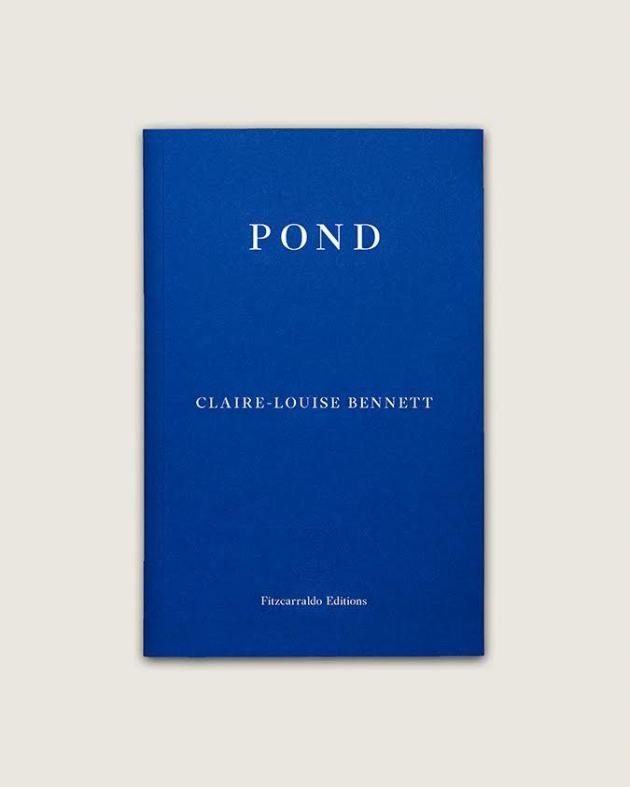
Pond by Claire-Louise Bennett
A woman meditates on her rural seclusion in a stunning debut that ‘re-enchants the world’
‘Bennett aims at nothing short of a re-enchantment of the world.’ Photograph: Tim Graham/Getty Images
Claire-Louise Bennett’s highly acclaimed debut, initially published in Ireland earlier this year, is a collection of 20 stories — the shortest of which runs to a couple of sentences. They are all told, it seems, by the same female character, whose semi-reclusive existence the tales revolve around. Reading them is an immersive experience. We come to share the “savage swarming magic” the narrator feels under her skin by focusing at length on her “mind in motion” (the only exception being the final story, told in the third person). For all this propinquity, we would be hard-pressed to recognise her, should she suddenly emerge from her rural retreat. One of the most striking aspects of this extraordinary book is how well we get to know the narrator — whose brain and body we inhabit — yet how little we know about her. We don’t even learn her name.
Her soliloquies are peppered with asides to an implied reader — “if you want to know” — cheekily drawing attention to the amount of information being withheld. The young woman discloses, in typically obfuscating fashion, that “it wouldn’t be entirely unwarranted to suggest that she might, overall, have the appearance and occasionally emanate the demeanour of someone who grows things”, despite having actually “propagated very little”. So much for what she looks like. We learn that she expended “many thousands of words” on an aborted doctoral thesis before relocating to the countryside, whence she chronicles the minutiae of her reduced circumstances with professorial pedantry and a mock-heroic style. Ireland, where the stories are set, is never even mentioned: “I live on the most westerly point of Europe, right next to the Atlantic ocean” is as close as we get and as much as we need.
The narrator’s largely solitary lifestyle enables her to eschew what Bennett (pictured) has called “anthropocentric parochialism”. “In solitude you don’t need to make an impression on the world,” the author explained to the Irish Times, “so the world has some opportunity to make an impression on you.” When that impression fails to materialise, in “A Little Before Seven”, the protagonist presses down on the worktop to give herself “a little more density”. In “Morning, Noon & Night” she lies in bed next to her boyfriend, thinking of the vegetables “out there in the dark”: “I’d splay my fingers towards the ceiling and feel such yearning!”
A rich seam of nostalgie de la boue runs through the collection, from the primeval earth that smells “as if it had never before been opened up” in the aforementioned story, to the mud — “feudal and rich, almost igneous” — in “The Big Day”, and the Dostoevskian close of “Words Escape Me”: “I was beneath the ground.” In “Control Knobs”, the narrator seems to envy a character in a novel she is reading, who becomes “more like an element” than a human being, “in the same way that rocks and trees are physiological manifestations. Material. Matter. Stuff.” Having recently moved into her cottage, she reclines on the lawn, and lets nature take her over: “I would listen to a small beetle skirting the hairline across my forehead. I would listen to a spider coming through the grass towards the blanket.”
In the opening story, the narrator is still a little girl, and she climbs over a wall into an ornamental garden and falls asleep on the “unfeasible lawn”, clutching a lilac seashell. This could imply that the rest of the book is an Alice-style dream, or series of daydreams. As she puts it in “The Deepest Sea”, “daydreams return me to my original sense of things” — one thinks here of Wallace Stevens’s “plain sense of things” — “and I luxuriate in these fervid primary visions until I am entirely my unalloyed self again”. The cottage, first glimpsed through a thick hedgerow, and the inaccessible secret garden that she stumbles upon in the process of chasing away a cat, are echoes of this paradise lost.
What Bennett aims at is nothing short of a re-enchantment of the world. Everyday objects take on a luminous, almost numinous, quality through the examination of what Emerson called “the low, the common, the near” or the exploration of Georges Perec’s “infra-ordinary” — a quest for the quotidian. Unlike Perec, however, the narrator does not set out to exhaust circumscribed fragments of reality; quite the contrary. “I don’t want to be in the business of turning things into other things”, which only ends up “making the world smaller”.
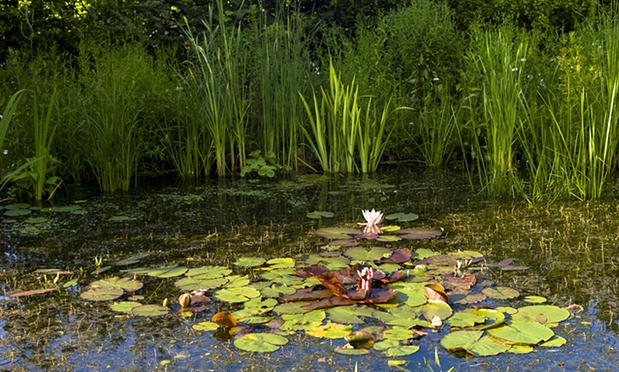
Besides being a nod to Walden Pond, where Thoreau went to “live deliberately”, Bennett’s title refers to a sign next to a pond “saying pond” — the kind of literal message that breaks the spell of place, preventing us from “moving about in deep and direct accordance with things”. On brief occasions, the narrator starts speaking in tongues, drawing on a private inner language that can never be “written down at all”. A language beyond meaning, conversant with “the earth’s embedded logos”, it remains “simmering in the elastic gloom betwixt our flickering organs”. This is a truly stunning debut, beautifully written and profoundly witty.

 ANDREW GALLIX