The Not-Oyster Bit

Tom McCarthy interviewed about Tristram Shandy in Henry HitchingsBirth of the British Novel broadcast on BBC Four, 7 February 2011:

HH: What is a novel?

(Tom McCarthy laughs.)

TMC: A novel is something that contains its own negation, right? So a novel is not a novel without an anti-novel lodged in it. It’s like an oyster: it isn’t interesting unless it has got a bit of grit in it as well — that not-oyster bit that kind of produces the pearl. In Tristram Shandy, this is precisely what produces the drama: the central drama of that book is its own undermining. And I think, in a way, this is what every book should be, in one way or another.

A Cathedral Full of Fire

Emma Brockes, “Michael Cunningham: A Life in Writing,” The Guardian 5 February 2011 (Guardian Review p.12)

…It is Cunningham’s project too, the pressure of which he feels, particularly after finishing a novel, when the terrible gap between what he hoped he’d produce and what he wound up with becomes apparent. Because, he says, one tends to value the things one isn’t good at, he has a fantasy that one day he’ll find he has written “some kind of vast epic novel that would include the Crimean war and interstellar space travel” rather than his usual slim volume of the interior lives of ordinary people.

“Like my hero Virginia Woolf, I do lack confidence. I always find that the novel I’m finishing, even if it’s turned out fairly well, is not the novel I had in my mind. I think a lot of writers must negotiate this, and if they don’t admit it, they’re not being honest. You have started the book with this bubble over your head that contains a cathedral full of fire — that contains a novel so vast and great and penetrating and bright and dark that it will put all other novels ever written to shame. And then, as you get towards the end, you begin to realise, no, it’s just this book. And it has its strengths, it has its virtues, but there’s nothing about the Crimean war, there’s nothing about interstellar travel. It says what it says and that’s it. And it joins all the other books in the world.” …

Journal

I spent half the night tossing and turning, fending off panic attack upon panic attack, fretting over everything in general; in particular, a few sentences I’d spent ages trying — and failing — to write. To think that, on a good day, Michael Moorcock can toss off some 50,000 words — or so I read in Hari Kunzru’s fascinating interview in The Guardian yesterday.

Naturally, today was a bit of a blur. I met one of my three half-sisters at Anvers. As I was early, I had a coffee at Les Oiseaux, a café across the road from La Cigale, the famous concert hall. I remember going there after an Interpol gig, in 2003, with a group of friends that included the young lady who would become my wife: that’s obviously one of the reasons why I’m fond of that café. It’s also slightly secluded and a good spot for people-watching — the prerequisites for any good Parisian café. It was mild and sunny, so I sat outside. It almost felt as though spring had arrived. It felt good, or as good as could be in my present state. It felt almost good. It almost felt good.

The restaurant experience was slightly surreal. For starters, the owner, who I had down as a typically Gallic character, was entertaining a young English guy in perfect English. He may well have been bilingual; I couldn’t hear him well enough to make sure. Then another English guy came in and they all started talking about Zadie Smith. (I almost expected her to walk in at this juncture.) Was he a literary agent or a translator? He was accompanied by a young woman — probably a writer — who was all dressed in black. The gaffer remarked that she looked scary. I glanced over at her. She was staring blankly at the menu. I felt I knew how she felt. Of course, it may just have been the effect produced by the menu.

On my way home, I walked past another restaurant. In fact, I walked past many other restaurants, but in this particular one I spotted an old mate of mine. He had already spotted me, but pretended he hadn’t. I followed suit.

Switched on the telly this evening, and my friend Tom McCarthy, was being interviewed about Tristram Shandy. As usual, he was spot-on. “A novel,” he said, “is something that contains its own negation, right?” Right.

I have always been very ambivalent about journals. I’m wary of the idea of writing as self-expression. I’ve always found it very difficult to talk about myself, as I fail to understand how anyone could be interested. People are attracted to journals in order to discover other people’s secret, private lives but I would never record anything that could embarrass anyone or hurt anyone’s feelings. Simon Critchley writes — and I was re-reading this yesterday — that “In the journal, the writer desires to remember himself as the person he is when he is not writing. …” Perhaps I don’t want to remember. Or can’t. I’m not even sure such a person really exists anyway.

Spank for England

Here is my interview with novelist James Hawes, published in 3:AM Magazine in April 2005:

3:AM: When you burst onto the literary scene in 96, you already seemed to be a fully-formed, fully-fledged novelist. Tell us about your writing apprenticeship.

JH: I wanted to be an actor and playwright, but I was useless at both and thus managed to end up totally lost, broke and CV-less at 27, living among smackheads, crims and slumming-it trustafarians just as the Loadsamoney late 80s were starting. I knew I couldn’t last in that world, so I went back and did a PhD, which meant I got a grant to live on (ah, lost days) and a name-tag for my life. For the next seven years I quietly close-read Kafka, Nietzsche, Mann, Musil, Hesse and suchlike. I did it seriously and straight: by 1993 I was quite a respected Young Academic, but I was also trying to write again, this time a novel. In hindsight I suppose it looks as though I half-consciously made myself a bubble where I could be paid to dissect serious writers and see how they did it. But then we all have PhDs in Hindsight.

3:AM: A White Merc with Fins was part of that whole finger-on-the-pulse-of-the-zeitgeist post-Trainspotting chemical generation/lad lit wave. Were you influenced, or at least inspired, by Irvine Welsh or any of those writers?

JH: I didn’t know anything about them. I was still working full-time as a teacher of German lit. I knew almost nothing about Eng. Lit in general (I had never read anything by Martin Amis except Money or by Ian McEwan except his first story-collection, and still haven’t). When my younger, cooler Manchester brother heard I was trying seriously to write, he sent me Trainspotting, but by the time I read it White Merc was finished and sent off to my agent. When I read it I loved it and was jealous as hell. You could tell straight away that unlike most so-called “young gunslinger” Brit writers (see next question(s)!) Welsh was not a posh North London day-school/olde grammar-school/Eton boy slumming it.

3:AM: The consensus at the moment is that Speak for England is your first truly serious work (Alfred Hickling wrote in The Guardian that you have “filled out into a comic novelist of considerable stature”) after starting off as a hip young gunslinger in the Bret Easton Ellis/Welsh mode. I think it’s becoming increasingly clear that you’ve been sending up the zeitgeist all along à la Kingsley Amis or Evelyn Waugh (who you recently described as the “only English writer” you “read and re-read for sheer pleasure”). Is the angry young man turning into a middle-aged fogy? Are you in the process of doing a John Osborne?

JH: I don’t think my writing was ever “angry” in that way. Or “young”, come to think of it. The hero of White Merc was quite explicitly a middle-class boy knocking on 30 who really only wanted “a flat with tall windows” but had gone adrift. The book took the piss out of “alternative” IRA groupies, smackheads, hippies and suchlike. I love Waugh for the LACK of foregrounded psychology in his writing — a satirical tactic which (bizarre though it probably sounds to Anglo-Saxon ears) he shares with Kafka. As for Waugh’s snobbery, see later answers…

3:AM: As Toby Clements points out in The Telegraph, the narrator’s allegiances seem to be divided in your new book, Speak for England. To what extent were you — the author — seduced by the reactionary lost world Brian Marley encounters? I mean, even if your intent is clearly satirical, it must have been quite intoxicating — liberating, even — to write the unwriteable by envisioning the Empire literally striking back, Britain withdrawing from the EU, the public humiliation of the PM’s “Best Friend” etc.

JH: Writing satire is a way of having your cake and eating it. For example, anyone who reads Brecht can hardly miss that the supposedly Bad Guys, the wicked capitalists and chancers, get all the best lines and laughs. And the more you know about Brecht himself the more clear it is that these characters are far closer to his (concealed) heart than the Good Persons. Then again (cf Waugh, too), as Nietzsche says: “What do we care about the ORIGIN of a work? The artist is only the soil and the earth — sometimes the dung and shit — from which the WORK grows!” (fx: insane cackling).

3:AM: Your analysis of the psycho-sexual roots of power is fascinating. If we “are all forever small children”, as Carl Jung surmises in the epigraph to Chapter Three (Speak for England, 95), the past is “the only real home we shall have” (ibid 335) and, consequently, we all want to go back in order to go back home. In Speak for England, the past literally comes home. The protagonist Brian Marley — who is stranded in Papua New Guinea after taking part in a Survivor-type reality game show called Brit Pluck, Green Hell, Two Million — stumbles upon a corner of a foreign jungle that is forever England, created by the passengers of a plane crash which happened in 1958. The Colonists eventually return to Britain where they reintroduce no-nonsense Fifties values. Your academic work on Nietzsche must have had some bearing on this hankering after authority (“the ultimate perversion is repression,” 315) which drives the National Government’s counter-revolution.

JH: Yes, Nietzsche is fascinating on the psychology of power and I did a lot of work on Kafka/Nietszche in that light, so no doubt it filtered in. But even more so (and more importantly for Speak for England), he’s a master of insight about our crippling need for structures of belief and certainties — as he famously says “man would rather will nothingness than not will” — meaning that we tend to embrace (any old) system of thought that can deliver “Certainties”, at almost any price, rather than face the uncharted oceans of modernity. Today that insight is more serious than ever — it exactly explains the triumph of Muslim Fundamentalism in Iran, for example.
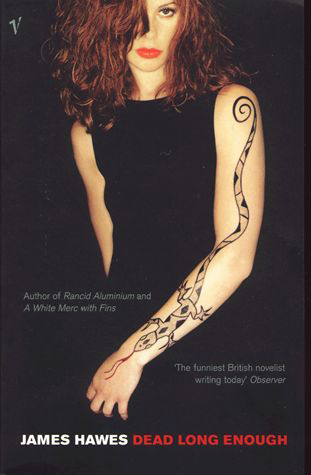
3:AM: You get a lot of mileage out of the past/present dichotomy. The scene in which the Prime Minister’s “Best Friend” is “seen live on TV, by about half a billion people, being caned thoroughly on his naked backside by an elderly gentleman while handsome, bronzed youths with ancient rifles and big shorts stood about and laughed at him” (254) could be innocent enough in a Boy’s Own story, but has strong S&M/homoerotic connations for us. Likewise the depiction of the PM’s Press Secretary being tossed, stark naked, in the Union Jack by sixth formers while a beautiful young lady looks on “holding her hips and shaking with laughter” (249). Could you tell us a bit about that?

JH: The bizarre thing about the 50’s was that in certain circles (i.e. ex-public school, theatrical, cinematic) people were openly gay in a way that has only become more generally possible in the last ten or fifteen years. To be honest, my conscious intentions in the above passages were simply Broad Comedy — but what do our intentions matter when it’s a question of subconcious enactments…

3:AM: If we are “all forever small children”, the childhood we long for only ever really existed in books — the kind of books which created our notion of childhood in the first place. Brian Marley (whose name advertises its own literary nature) has a Proustian moment when he rediscovers his 1965 Eagle Annual which strikes him as more real than reality itself. Speak for England often resembles one of those Disney films which mix flesh-and-blood actors with animated figures. The Colonists, for instance, seem to have stepped out of a typical Boy’s Own story: significantly, they use a toy Dan Dare radio station to make contact with the modern world. There are even two references to the Famous Five, one of which is made by a female character called George! So when people like Clemency Burton-Hill (whose name could come straight out of your book!) criticise the “dismal cliche” of the dialogue, they overlook the whole metatextual aspect, don’t they?

JH: Couldn’t out it better myself. How else would these characters talk? The whole point is that our Hero free-falls easily into that clipped, anti-emotional, impersonal, oh-so “English” mode — as a grateful escape from the pressures of Individuality.

3:AM: This childhood nostalgia can be likened to “a warm homecoming to something we have never truly known but yet missed all our lives” (28), first of all because it is fictitious, but also because the childhood depicted in most children’s books is an upper-class or at least very middle-class one. The same can be said about notions of Englishness which are also class-based. Do you think there is a link between these two notions of childhood and Englishness?

JH: Absolutely. There’s a striking difference between England and America here that goes all through cinema, especially U.S. depictions of “the golden times of youth” or whatever are always (right from Citizen Kane) small-town, close-to-the-soil, classless. Ours are Edwardian upper-middle. And in every U.S. film, the Hero has to prove his blue-collar cred (even if he’s a bigshot lawyer or the President himself) by e.g. smacking a baseball out of sight. Whereas in the UK we seem happy to accept Hugh Grant’s dithering shtick as “normal everyday Englishman”. Pinter marries into the nobility, Scruton goes hunting: to a middle-class Englishman there simply IS no other model of success than a mad sub-Austen Georgians At Home fairytale.

3:AM: Speak for England — which is partly a robinsonnade — is often reminiscent of Robinson Crusoe. Like Robinson Crusoe, the Colonists have recreated the society they came from in the middle of nowhere. Like Robinson Crusoe, Brian Marley’s problems stem from his relationship with his father (Robinson disobeys his father; fatherless Brian is in thrall to the Führer-type Headmaster, the ultimate father figure). Robinson Crusoe’s inability to accept the “middle Station of Life” is mirrored by Brian’s desire to become a “real Englishman”, ie a member of the upper-classes. The difference between the two novels is that Robinson Crusoe marks the triumph of middle-class social climbing whereas in Speak For England there is a constant distinction between becoming and being.

When Brian Marley thinks he is dying in the jungle and wishes to record a last message for his son, he cannot find his own voice. As a member of the lower middle-classes, he has no voice, no identity: being lower middle-class is a transitional state. But as you show in several of your works, the upward-mobility associated with the post-war consensus has disappeared leaving only frustration in its wake. People like Brian Marley struggle through their mediocre, ersatz lives (fake mail-order Agas!) with the nagging feeling that they are “below their imagined station” (80) and are denied “the unreflective joy of unthinking union” (222) which is shared by the working and upper classes. Tell us more about this opposition between becoming (the aspirational lower middle-classes) and being (“A caveman, that would be real”, 21).

JH: I have honestly not seen this “being” vs “belonging” business before (as an ex-academic I think I have to almost consciously repress the awareness of intellectual substructures in order to preserve any life and freedom in my writing) but you are quite right. Hmm. Yes, the salient facts of the middle-class are its very MIDDLE-ness (i.e. its lack of any “authentic” aspects) and (as Marx pointed out) its dynamism. Its relations with the Working Classes are a mixture of disdain, fear and envy, while the Upper Classes are objects of secret outrage mixed with public fawning. To my Hero’s mother’s generation the vision of “oak trees growing out of the ruins of Buckingham Palace” still implied a sort of Good Old Uncle Joe All Them Cornfields And Ballet In the Evenings left-wing project: but that Lower-Middle Radicalism is, in the saloon-bars of today, more often part of something very different: “get rid of the Posh Wasters (the Queen herself alone excepted), dismantle social security, do-gooding and multiculturalism, smash the unions, kick out the asylum seekers…”. And never underestimate the dynamism Marx spotted: we are facing what Brecht said we should dread — interesting times.

3:AM: As befits any novel about Englishness, class plays a central part. Your characters often sleepwalk through life, forgetting that “this is not a rehearsal” (Rancid Aluminium, 29), prolonging the “long vacation of extended adolescence” (A White Merc with Fins, 19), in order to maintain “the helpful fantasy that their true lives still lay in the future” (Speak for England, 80) until they make a last-ditch attempt at saving themselves by doing “something radical” (A White Merc with Fins, 22): robbing a bank, say, or taking part in an extreme reality TV show. Before reaching the end of his tether, the protagonist of Speak for England, Brian Marley, teaches English as a foreign language and flees “to some new foreign country” whenever “things get too tough or too real” (Speak for England, 41) because “moving about lets you kid yourself you are moving on” (A White Merc with Fins, 70). Countless authors of your generation have depicted the nihilistic slackerdom of the idle rich or its lumpen variety, but nobody else has dissected the “pre-emptive strike on living” of the lower middle-classes with such deadly accuracy. Would you agree that this is your great theme, and do you see it as a particularly English phenomenon?

JH: I think it’s my great theme because I’m English. Nietzsche again: “We are all just organ-grinders with only one tune, but eternity itself turns the handle”. I went to Oxford in 1978 from a rural comp like some mad innocent with a straw in his mouth, four years behind the fashion and quite literally having never met a boarding-school boy in my life. I found that the world (Oxford was then still largely a men-only-colleges place) was full of incredibly sophisticated, shamingly cool and impossibly well-connected young chaps who were used to partying in publishers’ holiday homes, skiing every Xmas vac and using mummy’s debenture at the Royal Court. They seemed two or three years older than me, never mind infinitely richer. And they (step forward in particular a certain person whom I learned ten years ago was none other than Will Self) naturally got the Posh Birds I wanted but hadn’t the faintest notion how to approach. You may detect a chip on ye olde Hawes shoulder. A sack of spuds, more like, my dear. I shudder to remember, never mind relate, the wretched idiocies I got into. And all based on class.

3:AM: You seem to imply that the linguistic class war goes far beyond the “Garridge”/”garaaj” dichotomy (256), that it is not merely a question of pronunciation.

JH: My own theory is that this can be traced right back to the Conquest. Show me a name like Percy Beaufort in the phone-book and I will call someone posh for you. I invented an Irish archaeological book from which to supposedly lift an epigraph on this subject in order to avoid forcing my views into the mouth of some hapless “character”…

3:AM: I thought the controversial end of the book (which could be described as the ultimate cliffhanger) was really effective. Did you know how it would (or would not) end right from the start, or did you come up with this — hum — aporetic non-dénouement precisely because you had no idea?

JH: No, I really didn’t know what to do with the Hero at the end, and the last thing I wanted was to manufacture a ghastly film-syle “upbeat” ending. I wish I’d ended it like A Good Man in Africa in retrospect, but I’m glad you think it worked.

3:AM: Did the Comet IV accident really happen?

JH: No, that was made up. Delighted you even have to ask.

3:AM: Many novelists of your generation like Jonathan Coe (The Rotters’ Club) or Toby Litt (Deadkidsongs) seem to be writing about their childhood. Is this a generational thing? Were you in any way inspired by these books?

JH: I haven’t read either of these. As you get older you realise that what you thought, when you were 20, was pure freedom to create your own, new, form of living is in fact tugged at by hidden (apron-)strings that go back even beyond your birth. By 40 — or maybe with parenthood? — you see that you will never know who you really are and what you could really do until you know what you actually were, and were being formed for. If anyone under 25 is reading this, my motto to them would be: “No, you don’t believe this, of course you don’t, you’re not MEANT to. But you will”.

3:AM: So what’s next?

JH: I’m putting the final touches to my first original screenplay so a Producer can take it to Cannes. It’s a screwball rom-com called Dr Kafka’s Love-Letter. I adore it and it’s had great initial come-back. I’m thinking of a novel version, but the next one will be a black-comic story about a cheated lower-middle-class man (hey, what else?) who is digging his little South London garden while wishing he’d had the guts to completely desert his ex-wife and kids by buying a bar in Valparaiso for $15,000 instead of paying £300K for this shitheap, when he comes across a long-buried, perfectly oiled and preserved AK-47…

Things Not Said, Actions Not Done

Gabriel Josipovici, “Learning From the Master,” The Irish Times 18 December 2010 [a review of Colm Tóibín’s All a Novelist Needs: Colm Tóibín on Henry James]:

“…I do, however, have to take issue with Tóibín and with James himself on one important point. In an essay on the meaning for the novelist of Lamb House, his Sussex retreat in his later years, Tóibín quotes a letter James wrote to his friend Grace Norton about the heroine of A Portrait of a Lady and her relationship to the real-life Minnie Temple: ‘I had her in mind and there is in the heroine a considerable infusion of my impression of her remarkable nature. But the thing is not a portrait. Poor Minny was essentially incomplete and I have attempted to make my young woman more rounded, more finished. In truth everyone, in life, is incomplete, and it is [in] the work of art that in reproducing them one feels the desire to fill them out, to justify them, as it were.’

Tóibín is so taken with this formulation that he repeats it verbatim in one later essay and paraphrases it in another. But what artists say about their work, even artists as self-aware as James, is, as Tóibín knows all too well, not necessarily the truth. It seems to me that both James and Tóibín in The Master are using their art not to round out and fill out a portrait left incomplete by life, which sounds more like the sort of aim Oscar Wilde might have expressed, but to bring home (to themselves, to the reader) the mystery of that life. That is why each of the great last novels ends not with resolution, not with final understanding, but with the sense that something which could be said in no other way has, remarkably, been said by the accumulation of things not said, of actions not done. That is why James’s greatest short story, The Turn of the Screw, ends so magnificently and so mysteriously: ‘I caught him, yes, I held him — it may be imagined with what a passion; but at the end of a minute I began to feel what it was truly that I held. We were alone with the quiet day, and his little heart, dispossessed, had stopped”. …”

The Impossibility of Narrating the Event

Tom McCarthy interviewed by Richard Wolinsky, Bookwaves (KPFA) 1 November 2010:

“This idea of reconstruction, of how to narrate the event: this is the kind of conceptual impossibility at the core of Remainder, which involves this guy elaborately spending millions of pounds to hire people to reconstruct events that he vaguely remembers — and they never get it right because you can’t. And, I suppose, this is almost a metaphor for all of narrative: the impossibility of actually narrating the event.”

The Enigmatic Polygeneration

One of my stories — “Dr Martens’ Bouncing Souls” — features in a new anthology entitled New Cross-Fucked Musings on a Manic Reality (Dog Horn Publishing, December 2010). Here is an extract from Tom Bradley‘s introduction:

In a universe ruled by karma and rebirth, “generation” is a bad word denoting as it does the stifling of spirits in coats of crass skin, the greatest disservice that can be done. Nevertheless, Hugh Fox got to christen the Invisible Generation, Andrew Gallix the Offbeats. So I’ll invent a name to embrace these people. I’ll make it doubly apt, as they produce electricity as well as useful heat: the Enigmatic Polygeneration.

crossfuckFIX2

This appears on the back cover:

This volume is ripe with prime produce sprung from minds that span five decades, but comprise a single literary generation. And who are the Enigmatic Polygeneration? They were christened by Tom Bradley in chapter four of Put It Down in a Book, as follows:

Digital connectivity has rendered physical locality irrelevant and made polyversality the new thing . . . Once space has been erased by the miracle of email, so has time, in terms of its effects on the human frame . . . In a creation where particles can spookily act upon each other at a distance of quadrillions of light years, the Seven Ages of Man are as days in the week, and a generation can span an open-ended number of decades . . . I’ll invent a name that’s doubly apt, as these writers produce electricity as well as useful heat.

In this vast anthology, among other delights, you will meet a pornographic ventriloquist and a man who has spent a lifetime getting laid only because he looks like certain famous people. You’ll be taken deep into the heads of such gentry as Charles Manson, Jack the Ripper (who, we learn, was actually Bram Stoker), and Kerry Thornley, author of a book about Lee Harvey Oswald published before the Kennedy assassination.

Andrew Gallix will give you a crash course in transgression, and underground press legend Hugh Fox will bring you to understand what it means to be the small Jewish boy who would one day become Charles Bukowski’s first biographer. Meanwhile, mighty Dave Migman teaches us how to live and die. Fabulous Adam Lowe reveals his adventures in cross-genre, multimedia literature. And lovely Deb Hoag . . . well, as usual, she’s got a surprise!

The Expatriate Literary Scene in Paris

Anthony Cuthbertson, “From the Lost to the Beat to Now,” Notes From the Underground 19 November 2010

The expatriate literary scene in Paris

What Allen Ginsberg called, ‘The bewildering beauty of Paris’ has attracted writers and artists for centuries. It has been the setting of great novels and the home of great writers, and in the last hundred years has briefly been the stage for two waves of expatriate writers that changed the face of modern literature: the Lost Generation and the Beat Generation. Fifty years have passed since the latter faded away, and though the expatriate literary scene has remained vibrant, no significant movement has since emerged. However, with the arrival of new soirées, literary journals, writers’ workshops and readings, as well as a fresh generation of writers flocking to Paris, a new wave may well be rolling in.

Historically, Paris has been a place of refuge for artists and writers. It has attracted political and cultural exiles fleeing the injustice and intolerance of their homelands, offering them a liberal safe haven and allowing them artistic freedom. In the 1920’s and 1950’s it became a place of escape for those left disenfranchised by the World Wars. The Génération perdue, as Gertrude Stein named them, included writers like Ernest Hemingway, Ezra Pound, F. Scott Fitzgerald, T.S. Eliot, and later James Joyce and Samuel Beckett. They were a generation disillusioned by the horrors they had witnessed in the First World War, and who felt disaffected and betrayed by their governments back home. Pound wrote of his contemporaries, ‘(they) walked eye-deep in hell believing in old men’s lies, then unbelieving came home, home to a lie’. They gathered in cafés and hung about Stein’s salon to share ideas, bottles of absinthe and write, together forming a movement that still resonates strongly today.

By the time the Second World War and the occupation of Paris came about, these writers had for the most part moved on. Although some later returned after the war (Hemingway famously ‘liberated’ rue de l’Odéon, the then site of the bookshop Shakespeare and Company), a new literary movement in the form of the Beat Generation arrived. Leading figures of the Beats, including William Burroughs, Gregory Corso and Ginsberg, came to Paris for much the same reasons as their predecessors. They sought refuge from the strict conformist confines of McCarthy-era America and found it in Paris. In the years that have followed the departure of the Beats, Paris has remained a centre for culture and art. It continues to attract writers and artists with its history and beauty and the lively literary scene is a reflection of its magnetism.

The first stop for any would-be writer or literary pilgrim should be Shakespeare & Company. Its location may have moved over the years but the spirit and the name have remained. The current owner, George Whitman, has described it as ‘a den of poets and anarchists disguised as a bookshop’, having been sanctuary to writers of both the Lost and Beat Generations. The writers, whom George refers to as ‘tumbleweeds’, drift through the doors and find community and lodging in the poky upstairs rooms in exchange for helping out in the shop below. Supporting young writers continues to be one of the cornerstones of S&C. As well as providing a place to stay, they hold workshops, readings and even organize a literary festival every other year. They have also recently relaunched their literary magazine (The Paris Magazine), and announced the Paris Literary Prize (10,000€) for unpublished writers. In its current location on the banks of the Seine it is as much a tourist attraction as it is a bookshop, but between the piles of books still remain bunks for the next hopeful Hemingway to stay.

Beyond this pillar of the past not much remains of the old haunts of writers beyond landmarks and tourist traps. It is easy to get lost wallowing in the myth of Paris but for new writers it is essential to escape the seductive expatriate past, away from the romance of the Latin quarter and the ghosts that wander the left bank, and over to the other side of the river to where the literary scene is shifting.
Boulevard Saint Germain and its surrounds have developed from bohemian havens to bourgeois hangouts popular with tourists. The cafés once frequented by the likes of Hemingway and Joyce, such as Café de Flore, Les Deux Magots and Le Dôme, now sell souvenir memorabilia and a cup of coffee can set you back six euros.

Nowadays it is areas like Belleville and the 19th and 20th arrondissements in the east of Paris where the cost of living is the cheapest that have become the new centres of the literary scene. These parts of Paris continue to provide a conducive environment for young and aspiring writers.

Paris-based writers have often remarked that unlike other big city literary communities, Paris has an open-minded and accepting scene that encourages experimental forms and welcomes outsiders. David Barnes, the founder and compère of a spoken word poetry night in Belleville at Culture Rapide, describes Paris as “a beautiful backwater where life is slower than New York or London. It gives breathing space, distance from the anglo-metropoles that supports writing”.

He argues that the English speaking community in Paris is just the right size “to come together and do something, to provide a home and platform for, to nurture and be nourished by.” The spoken word nights that take place every week welcome anyone and everyone up on stage to read a poem, tell a story or perform a play — the only rule being ‘make the words come alive’. A collective has formed around this café with regulars comprising English speakers from around the world.

In an age where literary scenes and movements are becoming more international by way of the internet, less centred around a location and more around uniting notions and ideals, Paris has managed to retain its place as one of the world’s literary hubs. Since the turn of this century, a movement referred to as the Offbeat Generation has partly formed in Paris. They comprise of a loose collection of like-minded writers, including Lee Rourke and Booker prize nominee Tom McCarthy, who feel alienated by a mainstream publishing industry dominated by marketing. Paris is home to the founder of this movement, Andrew Gallix, whose Paris-based literary magazine 3:AM has provided the main platform for the Offbeats.

Other English language literary magazines that have formed in Paris in recent years include Double Change, Upstairs at Duroc and Platform. The most recent of these, Platform, formed around the spoken word night at Culture Rapide.

As fate would have it, this new scene that is emerging is forming beside where many of their predecessors have found their final resting place: the Père-Lachaise cemetery. It is behind these gates that you can find the graves of such literary icons as Gertrude Stein and Oscar Wilde.

Its legacy may be one of the great appeals of Paris, though it is the smallness and accessibility of the anglophone writing communities, combined with their supportive and inclusive atmospheres, that is currently causing such a surge in the scene. It seems now that the stories shape the city as much as the city once shaped the stories and for any aspiring writer coming to Paris it would be easy to feel intimidated by the past. For them it is perhaps best to consider again the words of Allen Ginsberg: “You can’t escape the past in Paris, and yet what’s so wonderful about it is that the past and present intermingle so intangibly that it doesn’t seem a burden”. The scenes may be as transient as the writers, but the essence of Paris endures.

On The Beat Anthology

Dan Holloway kindly mentions me a couple of times in his interview with Sean McGahey apropos of The Beat anthology. Here are the two relevant extracts:

beat-anthology-banner

Dan Holloway, “Beat Me Before I Come Up With Any More Crass Metaphors,” Eight Cuts 13 November 2010

A while ago I recommended the really rather fantastic Beat Anthology, the best of the also fantastic site The Beat UK, published by the equally fantastic Blackheath Books. It’s a remarkable collection of stories that it’s rather tricky to track down to a certain theme, oeuvre, or any other arts wank category. Well, almost. Because I did notice a preponderence of public transport. Is this a comment on our eco-aware age? Is it an anti-individualist statement? Are the authors actually, like me, just not quite up to getting a driving licence.

Do I have a favourite? No, not really. I loved Andrew Gallix’s train; and Melissa Mann’s car (hmm, car, it must have been one of those street share jobs). But I couldn’t say one story was better than another. Some have more modes of transport, and some fewer maybe, but better? That’s about more than planes, trains, and automobiles.

[…] I was intrigued reading some of these pieces — like Andrew Gallix’s and Lee Rourke’s. the short story is a great place for paying with voice and form, but I wonder if the results can ever really transfer to novels. What’s rich in shorts can be stodgy in novels; what’s piquant can become downright tedious. What IS the point of novels other than publishers don’t really know what else to do?