My review of Agustín Fernández Mallo‘s Nocilla Dream appears in The Independent. Here’s an extract:
Nocilla Dream is a world seen in a grain of Nevada sand. Its arborescent structure stems from a solitary poplar tree, decorated with hundreds of pairs of shoes, growing alongside US Route 50. By juxtaposing fiction with non-fiction — more than 20 chapters are lifted verbatim from extraneous works — the author has created a hybrid genre that mirrors our networked lives, allowing us to inhabit its interstitial spaces. A physician as well as an artist, Mallo can spot a mermaid’s tail in a neutron monitor; estrange theorems into pure poetry.
“‘In my world there is something wrong with people who are writers,’ he says. ‘If someone wants to write, that means there is something incomplete in them; if they’re writers, it’s a certain sign of unhappiness.'”
– Karl Ove Knausgaard, “Why Karl Ove Knausgaard Can’t Stop Writing” by Liesl Schillinger, The Wall Street Journal 4 November 2015
Barry Hannah, “The Art of Fiction N°184,” The Paris Review Winter 2004
Gordon Lish was a genius editor. A deep friend and mentor. He taught me how to write short stories. He would cross out everything so there’d be like three lines left, and he would be right.
I was asked to write and read an essay on Roland Barthes as part of a series entitled ‘Signs and Mythologies – The Significance of Roland Barthes’ for BBC Radio 3‘s The Essay programme. It first aired on 26 November 2015 at 10:45 pm and was repeated on 11 May 2017 at 10:45 pm. The other essays were written by Andrew Hussey, Nick James, Penny Sparke, and Michael Wood.
Here is the presentation from the BBC Radio 3 website:
An encounter as a teenager with Roland Barthes and an orange moped inspired the magazine editor Andrew Gallix, who now teaches at the Sorbonne, with a fascination for the ideas of the great French theorist. In this week of essays celebrating the 100th anniversary of his birth, Andrew reflects on what Barthes meant by ‘The Death of the Author’.
Across the week five authors write about Barthes’ significance to them and discuss the influence the maverick cultural philosopher has had upon their own work. Over the week they create a picture of a literary figure whose writing was fun, accessible and is still deeply influential on the way we look at the world. Barthes’s literary output was not only prolific, but also eclectic. During the course of his life his thinking influenced the development of theories of structuralism, semiotics, social theory, design, anthropology and post structuralism. A powerful blast of fresh air in post war cultural thought, his carefully argued, accessible and sometimes mischievous examinations of philosophical, cultural and social ideas continue to influence contemporary writers and thinkers.
An eclectic group of essayists celebrate the range of influence his writing has had. Andrew Hussey examines Barthes’ impact in Europe in the 1960s. Other essayists over the week include design historian Penny Sparke, film journalist Nick James, the editor of 3 A.M. Magazine and teacher at the Sorbonne in Paris, Andrew Gallix, and cultural historian Michael Wood.
****
Here is the text. The passages that were cut are in square brackets:
I never met Roland Barthes, but I did spot him once, walking down the street[, at what I recall to be a brisk pace]. It was in the Latin Quarter, where he lived most of his life and seldom strayed from. I must have been fourteen at the time, fifteen at a push. The day before this sighting, I had chanced upon a Barthes profile in a weekly news magazine. Despite skimming it in a most cursory fashion, I gathered that he was a prominent intellectual. It was the accompanying picture — in colour, if memory serves — that allowed me to recognise him. The thing that struck me — and almost struck him — was that orange moped he narrowly avoided when crossing the road. In hindsight, it is difficult not to view this near escape as a dress rehearsal for his iconic (but also ironic, in light of his deconstruction of detergent commercials) encounter with a laundry van — an accident that would eventually lead to his demise in 1980. The feeling that I had conjured him up simply by reading about him was nonsense, of course, but also quite fitting given that Barthes — unbeknown to me — had extolled the creative powers of the reader, whose symbolic birth was the flip side of the death of the author.
‘The Death of the Author’ is not only Barthes’ most famous essay (at least in the Anglophone world) but also the most misunderstood. As though enacting one of its central themes — literature as palimpsest and collage — it first appeared in an American journal: the 1967 original was thus, in effect, already a copy; an English translation of a French text that would remain unpublished until the following year. As it was only anthologised a decade later, the essay was photocopied and distributed samizdat-fashion on campuses the world over, which no doubt enhanced its subversive appeal. For many, on either side of the barricades, it symbolised the emergence of what came to be known as Theory. Malcolm Bradbury’s satire of post-structuralism, Mensonge, is an extended joke on the death-of-the-author trope. The eponymous character — whose name means ‘lie’ in French — is a shadowy intellectual, a former student and collaborator of Barthes, who takes elusiveness to the point of illusiveness, so that the reader, and indeed the narrator, are never even quite sure whether he is meant to exist or not. Much comic capital is derived from the misconception — deliberate, I presume — that Barthes believed books wrote themselves, or that he was denying the very existence of writers, when in fact what he was challenging was the notion of authorship. Take a love letter someone sent you years ago, when people still sent letters and loved you. [An epistle you had mislaid perhaps.] You read it again. The content remains the same, although the person who penned it now hates you with a passion or, worse still, has forgotten about your very existence. The author is dead — detached from his or her work, which endures independently. Let me reassure you: Barthes’ essay, however brief, is far more subtle and interesting than that.
Barthes’ premiss is a sentence lifted from a novella by Balzac[, which cannot be attributed to anyone with any degree of certainty]. He argues that as soon as writing becomes ‘intransitive’ — as soon as language is no longer an instrument, but the very texture of a text — ‘the voice loses its origin’. [In literature, as Mallarmé, Heidegger, and Blanchot had already claimed, it is essentially language that speaks.] The ‘scriptor’ — whose existence coincides with the composition of a text — replaces the ‘Author-God,’ whose absence implies that a work can no longer be assigned a single, ultimate[, ‘theological’] meaning. Barthes also undermines the authority of the critic, whose traditional remit was precisely to decipher the Author-God’s message; to explain a work of fiction through the life (frequently the private life) of its progenitor. Every text, he concludes, is always ‘written here and now’ — by the reader.
Roland Barthes took reading out of the library and into the world, which, he believed, was structured like discourse. In Mythologies, his 1957 bestseller, he exposed the ideological underpinning of what usually goes without saying in everyday life, from the world of wrestling to the art of striptease [through steak and chips], thus demonstrating that the world is always already written. Language — as he put it, somewhat provocatively, [during his inaugural lecture at the Collège de France in 1977] — is ‘fascist’: it [speaks us,] compels us to think and talk along certain lines. In one of his numerous television appearances, he ventures that death is the only true event — in that it escapes language — while all the rest is words, words, words.
If reading was a means of engaging with the world, it could also be a personal, even intimate, activity. For Barthes [reading literature involves ‘rewriting the text of the work within the text of our lives’.] Textual pleasure climaxes when a book ‘succeeds in writing fragments of our daily lives’ — when it reads us. Life and text even become synonymous in what he called ‘life writing’: writing as a way of life, whereby life becomes the text of the work [— a text to be produced, not deciphered]. Barthes, who, for better or worse, popularised the use of the word ‘text’ instead of essay, novel or book, went back to the etymology of the word, which, in Latin, refers to a textile. [This fabric, he argued, is traditionally regarded as a ‘ready-made veil’ concealing meaning (which can only be unveiled through interpretation).] He suggests we consider text as a piece of material that is constantly in the process of being woven, prompting him to compare Proust’s work to that of a seamstress. As early as ‘The Death of the Author,’ he had pinpointed the ‘radical reversal’ operated by Proust. Barthes said of Proust, ‘instead of putting his life into his novel, as is so often maintained, he made of his very life a work for which his own book was the model’. In his last series of lectures, entitled The Preparation of the Novel, he reaffirmed his assessment of Proust: ‘the positioning of the life as work,’ he declared, ‘is now slowly emerging as a veritable shift in values’. In Search of Lost Time, he went on, is ‘entirely woven out of him, out of his places, his friends, his family; that’s literally all there is in his novel’ — and yet it is not an autobiography.
Barthes had little time for the sanctity of books. What interested him was the interaction between life and writing. He claimed, for instance, that he derived more enjoyment from the ‘abrasions’ that his distracted reading imposed upon ‘the fine surface’ of a text than from the narrative itself: ‘I read on, I skip, I look up, I dip in again’. He established a famous distinction between the Book (capital B) and the Album (capital A). The former is a total artwork[: the Absolute in codex form]. The latter — aphorisms, scrapbooks, journals, collages, and so on — remains resolutely fragmentary in nature. According to Barthes, ‘the future of the Book is the Album, just as the ruin is the future of the monument’: ‘What lives in us of the Book’ — a quotation, for instance — ‘is the Album’. Similarly, what lives in us of the biography is, what he called, the biographeme, akin to a textual snapshot: ‘Photography,’ he writes in Camera Lucida, ‘has the same relation to History that the biographeme has to biography’. If someone were to write his life, he once remarked, anticipating his own memoir, he hoped it would be limited to a few ‘biographemes’ — ‘a few details, a few preferences, a few inflections’ [— which, ‘like Epicurean atoms,’ would perhaps touch ‘some future body, destined to the same dispersion’]. Barthes felt that lives should not be written in stone since the past never stands still and identity is open to constant recomposition. His oeuvre is punctuated with [prefigurations or] echoes of the biographeme, which, I think, attests to the centrality of this concept. One finds ‘the Surprise, the Incident, the Haiku’ — presented as near synonyms — or the punctum, the accidental detail in a photograph (as opposed to its ostensible subject), which moves the observer to the extent that his or her involvement becomes deeply personal.
Surprising though it may seem, Roland Barthes had nothing against biography per se, and even toyed with the idea of composing one himself. Susan Sontag observed that he started his career by writing about André Gide’s journal and ended up reflecting upon his own. Barthes was always fascinated by the moment when authors like Stendhal or Proust switched from diary to novel, and seemed to be about to follow suit. His work took a decidedly autobiographical — and indeed literary — turn with the publication of Empire of Signs in 1970. This was followed by a memoir in fragments (Roland Barthes by Roland Barthes) and what he described as an ‘almost novel,’ a novel ‘without proper names’ (A Lover’s Discourse). The subject (himself, his life) is real, but the narrative voice belongs[, of necessity,] to the realm of fiction. This is why it is prefaced with the following caveat, which, significantly, appears in the author’s own elegant script: ‘It must all be considered as if spoken by a character in a novel’. Readers often suspect novels of being thinly disguised biographies; Barthes sensed, contrarily, that biographies were novels that dare not speak their name. The appeal of authors’ diaries is that they are repositories of what he described as the ‘fantasy’ of the writer figure, that is to say ‘the writer minus his work’. In truth, though, a writer cannot dissociate him or herself from the act of writing, just as it is impossible to discuss language in nonlinguistic terms. Barthes, I suspect, felt that he somehow produced himself through his work.
In the wake of the death of his mother, with whom he lived most of his life, the French theorist famously declared: ‘It is the intimate which seeks utterance in me, seeks to make its cry heard, confronting generality, confronting science’. During a lecture delivered a mere two months before his death, he even disavowed ‘The Death of the Author,’ dismissing it as modish structuralist excess. He goes on to confess that he has ‘sometimes come to prefer reading about the lives of certain writers to reading their works’. Barthes had seemingly forgotten to reread his own essay, just like his numerous detractors who never bothered to read it in the first place. Let it be said once and for all, then: the death of the author is that of the ‘Author-God’. Barthes never denies the very existence of the writer, which would be patently absurd. [When he states that, from a linguistic standpoint, ‘the author is never more than a man who writes,’ he recognises that he or she is never anything less either.] When he speaks of literature being an experience of identity loss ‘beginning with the very identity of the body that writes,’ he acknowledges that a body is doing the writing. [It is the presence of this body that he would increasingly seek out in his work.] The author [‘who leaves his [or her] text and comes into our life,’ as Barthes put it,] is primarily a physical presence devoid of psychological [or chronological] unity (a body, not a person). The text dispossesses the writer of his or her ‘narrative continuity’: ‘it takes my body elsewhere,’ he says. [The subject unmakes him or herself in the making of the text, ‘like a spider dissolving in the constructive secretions of its web’. However, it is also through these very secretions that the subject resurfaces, in disseminated form, ‘like the ashes we strew into the wind after death’. These ashes are ‘biographemes’].
Roland Barthes never considered himself as a visual artist, but he derived a great deal of pleasure — ‘a kind of innocence,’ he said — from the sheer physicality of drawing or painting. His most interesting artworks are multicoloured squiggles that resemble a preliterate child’s impression of writing[: writing as ludic abstraction]. What he found most attractive about Japanese calligraphy was that it allowed writing to take flight into painting. Barthes devoted several essays to the tradition of ‘illegible writing’ in the works of artists like Cy Twombly. He even produced some elegant doodles of his own, which we would now describe as asemic writing — a purely gestural form of writing with no semantic content whatsoever. The care with which he fashioned the file boxes for his famous index cards indicates that he also considered writing as a handicraft, as do the corrected proofs of his manuscripts, with their lovingly redacted lines in blue felt-tip that look like erasure poetry. His beautiful handwriting is as distinctive as the legendary grain of his voice. Barthes, it is often said, wrote from the body. He sought to inscribe ‘the hand as it writes’ — his very desire for writing, rather than his psychological subjectivity — into the body of his texts. Given the fascist nature of language, the utopian mission of literature is ‘to unexpress the expressible,’ to take the intransitivity of writing to its logical conclusion by relinquishing meaning altogether: ‘For writing to be manifest in its truth (and not in its instrumentality) it must be illegible’. Roland Barthes, the arch-interpreter dreamed, paradoxically, of a world ‘exempt from meaning’ — an unwritten world, that simply is.
“And the babes flung their duvets back in abandon, swung their little legs over the edge of the bed and scampered down the stairs. The chambers of their baffled baby hearts filled with yearning and they tingled, they bounded down towards before, before, before all this. The father, drunk on the voice of his beloved, raced down after them. The sound of her voice was stinging, like a moon-dragged starvation surging into every hopeless raw vacant pore, undoing exquisite undoing.”
– Max Porter, Grief is the Thing with Feathers, 2015
This appeared in Guardian Review on 21 November 2015 (Page 10). It was posted on the Guardian‘s website on 18 November 2015:
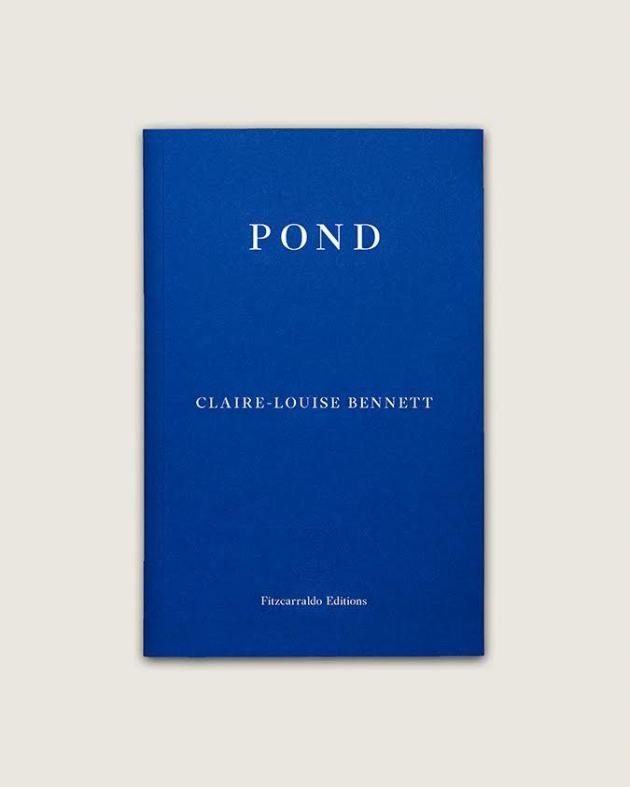
Pond by Claire-Louise Bennett
A woman meditates on her rural seclusion in a stunning debut that ‘re-enchants the world’
‘Bennett aims at nothing short of a re-enchantment of the world.’ Photograph: Tim Graham/Getty Images
Claire-Louise Bennett’s highly acclaimed debut, initially published in Ireland earlier this year, is a collection of 20 stories — the shortest of which runs to a couple of sentences. They are all told, it seems, by the same female character, whose semi-reclusive existence the tales revolve around. Reading them is an immersive experience. We come to share the “savage swarming magic” the narrator feels under her skin by focusing at length on her “mind in motion” (the only exception being the final story, told in the third person). For all this propinquity, we would be hard-pressed to recognise her, should she suddenly emerge from her rural retreat. One of the most striking aspects of this extraordinary book is how well we get to know the narrator — whose brain and body we inhabit — yet how little we know about her. We don’t even learn her name.
Her soliloquies are peppered with asides to an implied reader — “if you want to know” — cheekily drawing attention to the amount of information being withheld. The young woman discloses, in typically obfuscating fashion, that “it wouldn’t be entirely unwarranted to suggest that she might, overall, have the appearance and occasionally emanate the demeanour of someone who grows things”, despite having actually “propagated very little”. So much for what she looks like. We learn that she expended “many thousands of words” on an aborted doctoral thesis before relocating to the countryside, whence she chronicles the minutiae of her reduced circumstances with professorial pedantry and a mock-heroic style. Ireland, where the stories are set, is never even mentioned: “I live on the most westerly point of Europe, right next to the Atlantic ocean” is as close as we get and as much as we need.
The narrator’s largely solitary lifestyle enables her to eschew what Bennett (pictured) has called “anthropocentric parochialism”. “In solitude you don’t need to make an impression on the world,” the author explained to the Irish Times, “so the world has some opportunity to make an impression on you.” When that impression fails to materialise, in “A Little Before Seven”, the protagonist presses down on the worktop to give herself “a little more density”. In “Morning, Noon & Night” she lies in bed next to her boyfriend, thinking of the vegetables “out there in the dark”: “I’d splay my fingers towards the ceiling and feel such yearning!”
A rich seam of nostalgie de la boue runs through the collection, from the primeval earth that smells “as if it had never before been opened up” in the aforementioned story, to the mud — “feudal and rich, almost igneous” — in “The Big Day”, and the Dostoevskian close of “Words Escape Me”: “I was beneath the ground.” In “Control Knobs”, the narrator seems to envy a character in a novel she is reading, who becomes “more like an element” than a human being, “in the same way that rocks and trees are physiological manifestations. Material. Matter. Stuff.” Having recently moved into her cottage, she reclines on the lawn, and lets nature take her over: “I would listen to a small beetle skirting the hairline across my forehead. I would listen to a spider coming through the grass towards the blanket.”
In the opening story, the narrator is still a little girl, and she climbs over a wall into an ornamental garden and falls asleep on the “unfeasible lawn”, clutching a lilac seashell. This could imply that the rest of the book is an Alice-style dream, or series of daydreams. As she puts it in “The Deepest Sea”, “daydreams return me to my original sense of things” — one thinks here of Wallace Stevens’s “plain sense of things” — “and I luxuriate in these fervid primary visions until I am entirely my unalloyed self again”. The cottage, first glimpsed through a thick hedgerow, and the inaccessible secret garden that she stumbles upon in the process of chasing away a cat, are echoes of this paradise lost.
What Bennett aims at is nothing short of a re-enchantment of the world. Everyday objects take on a luminous, almost numinous, quality through the examination of what Emerson called “the low, the common, the near” or the exploration of Georges Perec’s “infra-ordinary” — a quest for the quotidian. Unlike Perec, however, the narrator does not set out to exhaust circumscribed fragments of reality; quite the contrary. “I don’t want to be in the business of turning things into other things”, which only ends up “making the world smaller”.
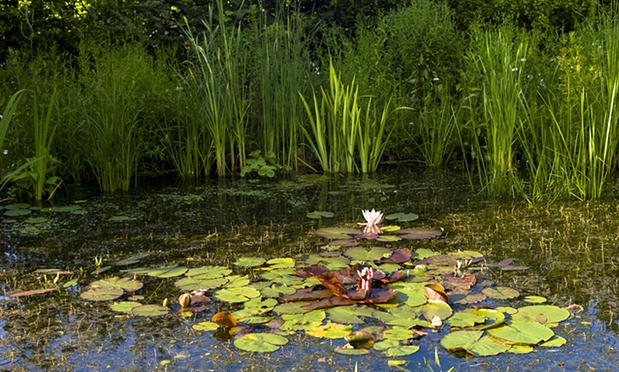
Besides being a nod to Walden Pond, where Thoreau went to “live deliberately”, Bennett’s title refers to a sign next to a pond “saying pond” — the kind of literal message that breaks the spell of place, preventing us from “moving about in deep and direct accordance with things”. On brief occasions, the narrator starts speaking in tongues, drawing on a private inner language that can never be “written down at all”. A language beyond meaning, conversant with “the earth’s embedded logos”, it remains “simmering in the elastic gloom betwixt our flickering organs”. This is a truly stunning debut, beautifully written and profoundly witty.
“Perhaps the closest we come to dying is through writing, in the sense that writing is a leave-taking from life, a temporary abandonment of the world and one’s petty preoccupations in order to try to see things more clearly. In writing, one steps back and steps outside life in order to view it more dispassionately, both more distantly and more proximately. With a steadier eye. One can lay things to rest in writing: ghosts, hauntings, regrets, and the memories that flay us alive.”
– Simon Critchley, Notes on Suicide, 2015
My review of Claire-Louise Bennett‘s Pond was posted today on the Guardian‘s website. It will feature in Saturday’s Guardian Review. You can read it here.