Caleb Crain. Rev. of Memory Theater, by Simon Critchley. The New York Times 16 December 2015
… In “The Phenomenology of Spirit,” Hegel imagined history as a long, bloody drama acted out by the spirit of history, which played all the characters. Critchley cleverly describes (or rather, claims that his late teacher cleverly described) Hegel’s idea of history as a moving memory theater — “a kind of proto-cinema.” The narrator concludes that his own experiments have failed because his memory theater didn’t move, and he looks forward to a posthuman upgrade: “an endlessly recreating, re-enacting memory mechanism.” This sounds awfully like the Internet, to which it is so tempting nowadays to offload one’s more tedious tasks of remembering — and indeed, in a recent interview with Andrew Gallix of 3:AM Magazine, Critchley has admitted that the Internet is “what the whole thing is about.” Maybe it makes more sense to think of “Memory Theater” as an allegory.
My review of Agustín Fernández Mallo‘s Nocilla Dream appears in The Independent. Here’s an extract:
Nocilla Dream is a world seen in a grain of Nevada sand. Its arborescent structure stems from a solitary poplar tree, decorated with hundreds of pairs of shoes, growing alongside US Route 50. By juxtaposing fiction with non-fiction — more than 20 chapters are lifted verbatim from extraneous works — the author has created a hybrid genre that mirrors our networked lives, allowing us to inhabit its interstitial spaces. A physician as well as an artist, Mallo can spot a mermaid’s tail in a neutron monitor; estrange theorems into pure poetry.
I was asked to write and read an essay on Roland Barthes as part of a series entitled ‘Signs and Mythologies – The Significance of Roland Barthes’ for BBC Radio 3‘s The Essay programme. It first aired on 26 November 2015 at 10:45 pm and was repeated on 11 May 2017 at 10:45 pm. The other essays were written by Andrew Hussey, Nick James, Penny Sparke, and Michael Wood.
Here is the presentation from the BBC Radio 3 website:
An encounter as a teenager with Roland Barthes and an orange moped inspired the magazine editor Andrew Gallix, who now teaches at the Sorbonne, with a fascination for the ideas of the great French theorist. In this week of essays celebrating the 100th anniversary of his birth, Andrew reflects on what Barthes meant by ‘The Death of the Author’.
Across the week five authors write about Barthes’ significance to them and discuss the influence the maverick cultural philosopher has had upon their own work. Over the week they create a picture of a literary figure whose writing was fun, accessible and is still deeply influential on the way we look at the world. Barthes’s literary output was not only prolific, but also eclectic. During the course of his life his thinking influenced the development of theories of structuralism, semiotics, social theory, design, anthropology and post structuralism. A powerful blast of fresh air in post war cultural thought, his carefully argued, accessible and sometimes mischievous examinations of philosophical, cultural and social ideas continue to influence contemporary writers and thinkers.
An eclectic group of essayists celebrate the range of influence his writing has had. Andrew Hussey examines Barthes’ impact in Europe in the 1960s. Other essayists over the week include design historian Penny Sparke, film journalist Nick James, the editor of 3 A.M. Magazine and teacher at the Sorbonne in Paris, Andrew Gallix, and cultural historian Michael Wood.
****
Here is the text. The passages that were cut are in square brackets:
I never met Roland Barthes, but I did spot him once, walking down the street[, at what I recall to be a brisk pace]. It was in the Latin Quarter, where he lived most of his life and seldom strayed from. I must have been fourteen at the time, fifteen at a push. The day before this sighting, I had chanced upon a Barthes profile in a weekly news magazine. Despite skimming it in a most cursory fashion, I gathered that he was a prominent intellectual. It was the accompanying picture — in colour, if memory serves — that allowed me to recognise him. The thing that struck me — and almost struck him — was that orange moped he narrowly avoided when crossing the road. In hindsight, it is difficult not to view this near escape as a dress rehearsal for his iconic (but also ironic, in light of his deconstruction of detergent commercials) encounter with a laundry van — an accident that would eventually lead to his demise in 1980. The feeling that I had conjured him up simply by reading about him was nonsense, of course, but also quite fitting given that Barthes — unbeknown to me — had extolled the creative powers of the reader, whose symbolic birth was the flip side of the death of the author.
‘The Death of the Author’ is not only Barthes’ most famous essay (at least in the Anglophone world) but also the most misunderstood. As though enacting one of its central themes — literature as palimpsest and collage — it first appeared in an American journal: the 1967 original was thus, in effect, already a copy; an English translation of a French text that would remain unpublished until the following year. As it was only anthologised a decade later, the essay was photocopied and distributed samizdat-fashion on campuses the world over, which no doubt enhanced its subversive appeal. For many, on either side of the barricades, it symbolised the emergence of what came to be known as Theory. Malcolm Bradbury’s satire of post-structuralism, Mensonge, is an extended joke on the death-of-the-author trope. The eponymous character — whose name means ‘lie’ in French — is a shadowy intellectual, a former student and collaborator of Barthes, who takes elusiveness to the point of illusiveness, so that the reader, and indeed the narrator, are never even quite sure whether he is meant to exist or not. Much comic capital is derived from the misconception — deliberate, I presume — that Barthes believed books wrote themselves, or that he was denying the very existence of writers, when in fact what he was challenging was the notion of authorship. Take a love letter someone sent you years ago, when people still sent letters and loved you. [An epistle you had mislaid perhaps.] You read it again. The content remains the same, although the person who penned it now hates you with a passion or, worse still, has forgotten about your very existence. The author is dead — detached from his or her work, which endures independently. Let me reassure you: Barthes’ essay, however brief, is far more subtle and interesting than that.
Barthes’ premiss is a sentence lifted from a novella by Balzac[, which cannot be attributed to anyone with any degree of certainty]. He argues that as soon as writing becomes ‘intransitive’ — as soon as language is no longer an instrument, but the very texture of a text — ‘the voice loses its origin’. [In literature, as Mallarmé, Heidegger, and Blanchot had already claimed, it is essentially language that speaks.] The ‘scriptor’ — whose existence coincides with the composition of a text — replaces the ‘Author-God,’ whose absence implies that a work can no longer be assigned a single, ultimate[, ‘theological’] meaning. Barthes also undermines the authority of the critic, whose traditional remit was precisely to decipher the Author-God’s message; to explain a work of fiction through the life (frequently the private life) of its progenitor. Every text, he concludes, is always ‘written here and now’ — by the reader.
Roland Barthes took reading out of the library and into the world, which, he believed, was structured like discourse. In Mythologies, his 1957 bestseller, he exposed the ideological underpinning of what usually goes without saying in everyday life, from the world of wrestling to the art of striptease [through steak and chips], thus demonstrating that the world is always already written. Language — as he put it, somewhat provocatively, [during his inaugural lecture at the Collège de France in 1977] — is ‘fascist’: it [speaks us,] compels us to think and talk along certain lines. In one of his numerous television appearances, he ventures that death is the only true event — in that it escapes language — while all the rest is words, words, words.
If reading was a means of engaging with the world, it could also be a personal, even intimate, activity. For Barthes [reading literature involves ‘rewriting the text of the work within the text of our lives’.] Textual pleasure climaxes when a book ‘succeeds in writing fragments of our daily lives’ — when it reads us. Life and text even become synonymous in what he called ‘life writing’: writing as a way of life, whereby life becomes the text of the work [— a text to be produced, not deciphered]. Barthes, who, for better or worse, popularised the use of the word ‘text’ instead of essay, novel or book, went back to the etymology of the word, which, in Latin, refers to a textile. [This fabric, he argued, is traditionally regarded as a ‘ready-made veil’ concealing meaning (which can only be unveiled through interpretation).] He suggests we consider text as a piece of material that is constantly in the process of being woven, prompting him to compare Proust’s work to that of a seamstress. As early as ‘The Death of the Author,’ he had pinpointed the ‘radical reversal’ operated by Proust. Barthes said of Proust, ‘instead of putting his life into his novel, as is so often maintained, he made of his very life a work for which his own book was the model’. In his last series of lectures, entitled The Preparation of the Novel, he reaffirmed his assessment of Proust: ‘the positioning of the life as work,’ he declared, ‘is now slowly emerging as a veritable shift in values’. In Search of Lost Time, he went on, is ‘entirely woven out of him, out of his places, his friends, his family; that’s literally all there is in his novel’ — and yet it is not an autobiography.
Barthes had little time for the sanctity of books. What interested him was the interaction between life and writing. He claimed, for instance, that he derived more enjoyment from the ‘abrasions’ that his distracted reading imposed upon ‘the fine surface’ of a text than from the narrative itself: ‘I read on, I skip, I look up, I dip in again’. He established a famous distinction between the Book (capital B) and the Album (capital A). The former is a total artwork[: the Absolute in codex form]. The latter — aphorisms, scrapbooks, journals, collages, and so on — remains resolutely fragmentary in nature. According to Barthes, ‘the future of the Book is the Album, just as the ruin is the future of the monument’: ‘What lives in us of the Book’ — a quotation, for instance — ‘is the Album’. Similarly, what lives in us of the biography is, what he called, the biographeme, akin to a textual snapshot: ‘Photography,’ he writes in Camera Lucida, ‘has the same relation to History that the biographeme has to biography’. If someone were to write his life, he once remarked, anticipating his own memoir, he hoped it would be limited to a few ‘biographemes’ — ‘a few details, a few preferences, a few inflections’ [— which, ‘like Epicurean atoms,’ would perhaps touch ‘some future body, destined to the same dispersion’]. Barthes felt that lives should not be written in stone since the past never stands still and identity is open to constant recomposition. His oeuvre is punctuated with [prefigurations or] echoes of the biographeme, which, I think, attests to the centrality of this concept. One finds ‘the Surprise, the Incident, the Haiku’ — presented as near synonyms — or the punctum, the accidental detail in a photograph (as opposed to its ostensible subject), which moves the observer to the extent that his or her involvement becomes deeply personal.
Surprising though it may seem, Roland Barthes had nothing against biography per se, and even toyed with the idea of composing one himself. Susan Sontag observed that he started his career by writing about André Gide’s journal and ended up reflecting upon his own. Barthes was always fascinated by the moment when authors like Stendhal or Proust switched from diary to novel, and seemed to be about to follow suit. His work took a decidedly autobiographical — and indeed literary — turn with the publication of Empire of Signs in 1970. This was followed by a memoir in fragments (Roland Barthes by Roland Barthes) and what he described as an ‘almost novel,’ a novel ‘without proper names’ (A Lover’s Discourse). The subject (himself, his life) is real, but the narrative voice belongs[, of necessity,] to the realm of fiction. This is why it is prefaced with the following caveat, which, significantly, appears in the author’s own elegant script: ‘It must all be considered as if spoken by a character in a novel’. Readers often suspect novels of being thinly disguised biographies; Barthes sensed, contrarily, that biographies were novels that dare not speak their name. The appeal of authors’ diaries is that they are repositories of what he described as the ‘fantasy’ of the writer figure, that is to say ‘the writer minus his work’. In truth, though, a writer cannot dissociate him or herself from the act of writing, just as it is impossible to discuss language in nonlinguistic terms. Barthes, I suspect, felt that he somehow produced himself through his work.
In the wake of the death of his mother, with whom he lived most of his life, the French theorist famously declared: ‘It is the intimate which seeks utterance in me, seeks to make its cry heard, confronting generality, confronting science’. During a lecture delivered a mere two months before his death, he even disavowed ‘The Death of the Author,’ dismissing it as modish structuralist excess. He goes on to confess that he has ‘sometimes come to prefer reading about the lives of certain writers to reading their works’. Barthes had seemingly forgotten to reread his own essay, just like his numerous detractors who never bothered to read it in the first place. Let it be said once and for all, then: the death of the author is that of the ‘Author-God’. Barthes never denies the very existence of the writer, which would be patently absurd. [When he states that, from a linguistic standpoint, ‘the author is never more than a man who writes,’ he recognises that he or she is never anything less either.] When he speaks of literature being an experience of identity loss ‘beginning with the very identity of the body that writes,’ he acknowledges that a body is doing the writing. [It is the presence of this body that he would increasingly seek out in his work.] The author [‘who leaves his [or her] text and comes into our life,’ as Barthes put it,] is primarily a physical presence devoid of psychological [or chronological] unity (a body, not a person). The text dispossesses the writer of his or her ‘narrative continuity’: ‘it takes my body elsewhere,’ he says. [The subject unmakes him or herself in the making of the text, ‘like a spider dissolving in the constructive secretions of its web’. However, it is also through these very secretions that the subject resurfaces, in disseminated form, ‘like the ashes we strew into the wind after death’. These ashes are ‘biographemes’].
Roland Barthes never considered himself as a visual artist, but he derived a great deal of pleasure — ‘a kind of innocence,’ he said — from the sheer physicality of drawing or painting. His most interesting artworks are multicoloured squiggles that resemble a preliterate child’s impression of writing[: writing as ludic abstraction]. What he found most attractive about Japanese calligraphy was that it allowed writing to take flight into painting. Barthes devoted several essays to the tradition of ‘illegible writing’ in the works of artists like Cy Twombly. He even produced some elegant doodles of his own, which we would now describe as asemic writing — a purely gestural form of writing with no semantic content whatsoever. The care with which he fashioned the file boxes for his famous index cards indicates that he also considered writing as a handicraft, as do the corrected proofs of his manuscripts, with their lovingly redacted lines in blue felt-tip that look like erasure poetry. His beautiful handwriting is as distinctive as the legendary grain of his voice. Barthes, it is often said, wrote from the body. He sought to inscribe ‘the hand as it writes’ — his very desire for writing, rather than his psychological subjectivity — into the body of his texts. Given the fascist nature of language, the utopian mission of literature is ‘to unexpress the expressible,’ to take the intransitivity of writing to its logical conclusion by relinquishing meaning altogether: ‘For writing to be manifest in its truth (and not in its instrumentality) it must be illegible’. Roland Barthes, the arch-interpreter dreamed, paradoxically, of a world ‘exempt from meaning’ — an unwritten world, that simply is.
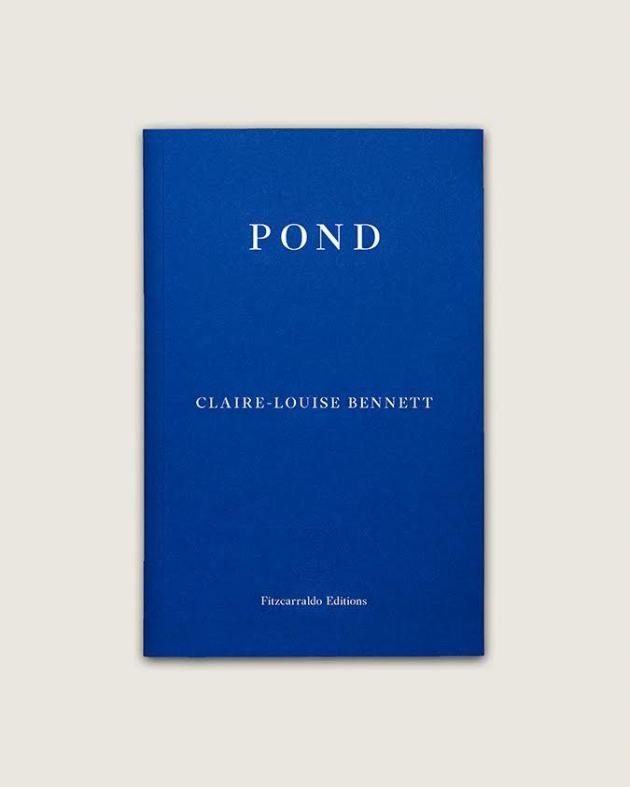
My review of Claire-Louise Bennett‘s Pond was posted today on the Guardian‘s website. It will feature in Saturday’s Guardian Review. You can read it here.
“At Home in the Unheimlich,” my interview with Deborah Levy, appears in the third issue of Gorse. A teaser has been posted online:
Andrew Gallix: I wonder if the discovery of your ‘own voice’ isn’t also due to the adoption of a less theatrical style. Were you more influenced, in the early days, by your playwriting? Many people who discovered you when Swimming Home was shortlisted for the Man Booker, in 2012, had no idea that you had been a successful playwright for many years: did this give you the feeling that you were starting over again as a fiction writer?
Deborah Levy: Yes, I trained as a playwright. Oddly, my two favourite plays written in the 1990s, The B File (an erotic interrogation of five female personas that has been performed all over the world) and Honey Baby: 13 Studies in Exile (performed at La Mama Theatre in Melbourne) are not theatrical at all. Read those plays (Deborah Levy: Plays 1, Methuen) and you will see I’m starting to slip into prose. I can’t begin to convey how hard it was to be a female playwright in the mid-1980s, writing in the way that I did — yes, the whole gender thing — but mostly because I wasn’t writing social realism which was very much in vogue, nor was I writing didactic feminist theatre which was also having a moment at that time. I was much more influenced by Pina Bausch and Heiner Müller than anyone else, though Pinter and Beckett were influences too. Writing for the theatre taught me to embody ideas.
I was giving a reading somewhere recently and a woman came up to me to say she had trained at drama school, and the play she had put on for her graduation show was The B File. I asked her if she remembered her lines, and do you know what, she did! She began to recite them to me, there and then, almost word perfect and with such power. That was the biggest tribute ever, because I knew they had meant something to her. The best actors are incredibly open-minded, shamanistic and playful: I loved those qualities in the rehearsal room.
The prose that is most theatrical is probably my first novel, Beautiful Mutants. Things I Don’t Want To Know is where I pulled open the theatre curtain and switched on the house lights, but obviously that’s not the same thing as saying there’s no artifice in its construction. There is a peculiar relationship between writers and readers — but then all relationships are probably a bit peculiar, aren’t they? For example, I know that Virginia Woolf trusted me when she wrote To the Lighthouse. I was never going to laugh at the seriousness of Lily Briscoe’s struggle and ambition to create a visual masterpiece. There was no nasty little voice saying to me, ooh she’s a bit above herself, isn’t she? I understood the class analysis Woolf made with the angry student Tansley waiting for his toff tutor to talk to him about his dissertation. I understood that domesticated Mrs Ramsay was Woolf’s bid to understand the rituals available to women of her generation, and to have a go at finding something good in them — despite rejecting them herself — via the avatar of Lily Briscoe. I understood that the form of the book was as radical as its content and that Woolf’s vision for her novel was complete. That is what a successful writing-reading relationship should be like. Strangely enough, I’m not the biggest fan of Oscar Wilde’s plays, although I am a big fan of his sensibility. I feel I have a writerly relationship with him, an attachment to his idea that ‘Being natural is simply a pose, and the most irritating pose I know.’
AG: Language can take on an Adamic quality for your characters. Its purpose is to ‘record and classify’ the world, as the narrator of ‘Black Vodka’ puts it. This often leads to a quasi-Oulipian desire to exhaust reality by enumerating its component parts, as in ‘Vienna,’ for instance: ‘She is Vienna. She is Austria. She is a silver teaspoon. She is cream. She is schnapps. She is strudel dusted with icing sugar. She is the sound of polite applause. She is a chandelier,’ and so on until the end of that long, delightful paragraph. The world becomes a kind of litany, as in this example from Swallowing Geography:
In Washington the currency is dollars, the bread yeasted, breakfast waffles and maple syrup, coffee filtered and decaffeinated, golf is being played on slopes of green grass and yellow ribbons hung on taxis. In Baghdad, the currency is dinars, the bread unleavened, breakfast goat’s cheese, coffee flavoured with cardamom, foreheads scented.
Ebele always describes J. K. in this enumerative fashion, much to her annoyance, because ‘That’s what strangers do. When they are in an unfamiliar place they describe it.’ This sends us back to the question with which Swallowing Geography opens: ‘When you feel fear, does it have detail or is it just a force?’ Giving detail to fear is an attempt to master it, to defuse its power. Shortly after, Gregory explains why he collected stamps as a young boy: ‘It was my way of naming places and conquering the world.’ Language, here, is conquest: a means of controlling the world and endowing it with meaning. Jurgen thus views Kitty Finch’s poem as a map that will show him ‘the way to her heart’ (Swimming Home). Is this neurotic, stamp-collecting approach a masculine way of writing?
DL: I am a stamp collector too — the skill is placing one stamp against another. For myself, when the writing is going well, I love the smell of the smoke! Here are some things I dislike in various types of books written by men. I don’t like it when girls and women have no point of view or intelligence or wit or interior life or subjectivity that doesn’t always serve the desires of the male world and its arrangements.
My favourite male writer is Ballard — then Houellebecq, which probably contradicts all of the above, but all his characters are so wrecked that I forgive him. I always buy his books in hardback and now we share the same publisher in France, so wish I could read fluently in French because I could get the book for free. I also love Apollinaire and Nietzsche. I’ve just read Lou Salomé’s gentle and fascinating portrait of Nietzsche translated by Siegfried Mandel. He was in love with Lou Salomé (what a beautiful name) who wisely declined his offer of marriage and wrote a book about him instead. And I admire Burroughs, who was endearingly fragile under that stylish hat. When I’m old and grey and have nothing to do except sit in a hot water spring in Iceland entirely naked (apart from my nose jewel) I think might write about how Burroughs is often misunderstood by the heterosexual men who have been influenced by him. On the other hand I might write a murder mystery set on a cruise ship.
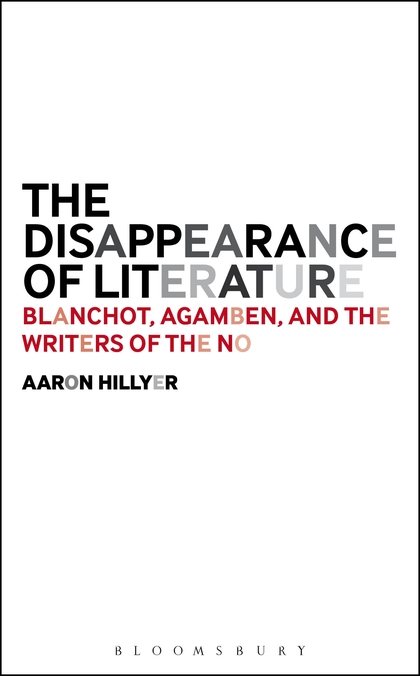
If language cannot speak the world, “can the world speak in language”? That is the crucial question at the heart of The Disappearance of Literature. It proceeds from an agonistic relation to language, which is construed as a curse or, at best, a negative force. From this post-Hegelian perspective, words give us the world by taking it away: they negate things and beings in their singularity, replacing them with concepts. The answer, Hillyer argues, is to negate the negation by deactivating “the tendencies that cause our experience of the world to be as abstract as the language we use to describe it”. Literature must go through a “zone of decreation” that deactivates its habitual signifying and informative functions “in order to communicate communicability itself, openness to the world itself”. Such openness is predicated on the author coinciding with her work; disappearing momentarily into a thingly, asignifying language that now speaks itself. Only a writer who has vanished into “the pure event of the word” — where the telling becomes the teller — may express (although not in so many words) “what absolutely escapes our language”.
Stuart Kelly, “Stuart Kelly: Diversity Rules in Non-Fiction,” The Scotsman 13 December 2014
But my personal favourite in this genre [literary biography] has to be The Biographical Dictionary of Literary Failure, by CD Rose and Andrew Gallix, a glorious alphabetical compendium of those who never achieved greatness.
Julian Hanna, “Beautiful Losers,” Rev. of The Biographical Dictionary of Literary Failure by C. D. Rose, 3:AM Magazine 11 December 2014
The introduction, a brilliant extended meditation on ‘real’ failure by 3:AM’s own co-editor-in-chief Andrew Gallix, complements the fictional failures that follow.




 ANDREW GALLIX