All the Latest

409692229_e75d124f7c_t

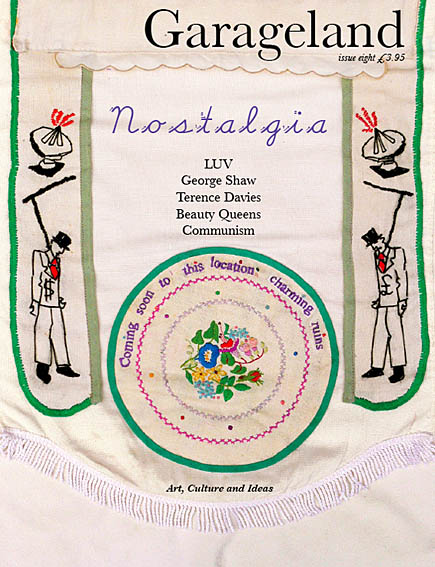
The summer issue of Garageland — which includes a piece I wrote about Parisian phantom band L.U.V. — is launched today at Transition Gallery in London. The general theme is Nostalgia, the cover is by Alex Michon (who famously designed many of The Clash’s outfits) and you can buy a copy here.

Garageland8_cvr_lg

All the Latest

409692229_e75d124f7c_t

Susana Medina (pictured below) kindly asked me to read a story on Monday at The House of Fairy Tales which is part of Tate Modern’s Long Weekend. The House of Fairy Tales is a festival for children of all ages curated by Deborah Curtis and Gavin Turk. There will be readings courtesy of Tlon Books, Isabel Del Rio, Salena Godden, Melissa Mann, Susana Medina, Jason Shelley, Clare Stanhope, Jan Woolf and others. As I won’t be able to make it, my story — a bowdlerised version of “Enough Ribena to Incarnadine the Multitudinous Seas” — will be read by somebody else.

susana-300x199

Here’s the child-friendly version of my story:

Enough Ribena to Incarnadine the Multitudionous Seas

Once upon a time my sister baked a batallion of gingerbread men who seemed destined for doughy, doughty deeds so gallant were they. I simply couldn’t bring myself to eat them; had neither the heart nor the stomach to do so. A moratorium was declared by sisterly decree and the spice boys remained in battle formation on the kitchen table pending mum’s final verdict. You could smell the sensuous, exotic aroma from my bedroom, even behind closed door.

That night, I had this vivid dream in which the naughty gingerbread men rose from the baking tray Galatea-fashion. Still under the influence of the self-raising flour, they legged it upstairs to bother the Play-Doh model of the Girl Next Door I had lovingly sculpted and kept secretly beside my comics and sensible shoes.

Breakfast, the morning after, was a truly religious experience. I binged ravenously on the horrid homunculi, tearing away at their limbs, biting off their heads with sheer abandon, and washing them down with enough glasses of Ribena to incarnadine the multitudinous seas.

Heroin Love Songs Interview

409692229_e75d124f7c_t

I am interviewed by Jack Henry in Heroin Love Songs 5 Spring 2009: 87-90:

JH: Thank you for taking the time to answer my questions.

AG: My pleasure!

JH: My primary interest is in New Media and what some refer to as New Media Literature. In addition there seems to be a resurgence in writing and poetry. Perhaps this is due to so many online outlets. Also, movements such as the Brutalists and Offbeat Generation owe their existence to the Internet and various online outlets, including 3:AM. I think some of these movements and/or online journals have sprung from some post-punk anarchy reaction against mainstream publishing. I’ve read as much and agree with it.

Some of these questions may seem obvious, but I am sure others are curious, as am I, to your unique perspective.

What is the importance of a movement or school of work? Is it an idea or concept developed from a historical perspective or can it be witnessed in the present, as it emerges?

AG: We never sat down one day and said ‘Let’s launch a new literary movement!’. We sat down one day and realised that we were part of a movement. It was already there and all it needed was a name to gain visibility. It was the Emperor’s New Clothes in reverse. So, to answer your question, we have been observing the development of the Offbeat phenomenon since 2005 when we became conscious of it.

JH: What can a writer gain, if anything, from the inclusion within a movement?

AG: First of all, I must make it quite clear that the Offbeats are a movement and not a school of writing. Offbeat writers are individuals — they all have different styles and influences even though they all share certain values and a certain rebellious spirit. Writing is a solitary activity, so it feels good to also have that collective experience.

JH: What are the unifying characteristics of the Brutalists or Offbeats? What is their historical heritage?

AG: The Brutalists are not a movement; they’re a trio of writers (Adelle Stripe, Ben Myers and Tony O’Neill) who sometimes come together to write under that banner. Instead of forming a band, they write poetry. The Brutalists are very much part of the Offbeat scene.

What unites all the Offbeats is a rejection of a publishing industry increasingly dominated by marketing, rather than literary, concerns. The name ‘Offbeat’ is an obvious nod to the Beats, but punk is perhaps the biggest historical reference. At least for some of us.

JH: In a few interviews I have read, the Offbeat Generation does not exist within a single style or genre, I am curious what the literary influences have been to this group? And, more specifically, any influences from areas outside of writing?

AG: That’s quite right, and since there is no house style, influences are pretty diverse. There’s the Bukowski-John Fante Real McCoy school of writing embodied by Tony O’Neill. There’s the Maurice Blanchot-Francis Ponge-William Burroughs axis led by Tom McCarthy. There’s the Barthelmesque comic postmodernism of HP Tinker. There’s the more quirky Brautigan-tinged world of Chris Killen or Tao Lin. And then there’s all the others with their personal influences.

Music is indeed very important to many Offbeats. Tony O’Neill played in bands like Kenickie or the Brian Jonestown Massacre. Ben Myers is also a music journalist and he even used to have his own indie label. Will Ashon has a hip hop label. As far as I’m concerned, Howard Devoto’s early lyrics are right up there with the works of the greatest writers.

JH: As the Beats of the 50s/60s gained popularity, pop culture turned them into a caricature of their origins. Is there a fear that current movements could be mainstreamed and, potentially, lose their power as a dissenting voice?

AG: Definitely. In a way, it’s already happened. There are lots of young writers who think they’re being Offbeat by spouting clichés about sex and drugs.

JH: What is the goal of a movement? Is it collective? Or individualistic?

AG: Total surrender of mainstream publishing.

It’s both individual and collective.

JH: It is my opinion that America’s “disposable mentality” has migrated to literature and our literary tradition. Publishers rely on a bestseller to support their efforts with other books. In my opinion, a majority of these best sellers are total shit. Writers that repeatedly appear on bestsellers lists utilize formula and structure that will satisfy the widest possible audience, with limited concern for craft, exploration and daring. Subsequently, the wider audience is “dumbed down.” Additionally, marketing departments focus a majority of their budgets on bestsellers thereby limiting marketing funds for up and coming writers. In short, big publishers continue to promote disposable writing in order to earn the quick buck.

Does literature still exist, either via New Media or traditional outlets? What is the future of literature?

AG: I totally agree with your analysis of the state of things. It’s the same in Britain — perhaps even worse because of the presence of a huge middlebrow market. In the States, it’s either total shit or pure genius. But, yes, literature still exists and will continue to exist. I can’t predict what its future will be, but I think the western notion of The Writer may be on the way out. I think there will be fewer career writers in the future: writers who write simply because that’s what writers do. People will write a novel when they really feel the need to do so, but will also have other creative outlets.

JH: Returning to New Media, how important are New Media platforms (blogs, social networks, YouTube, etc.) to writers? Is there such a thing as New Media Literature?

AG: Well, I think you need to make a distinction between e-literature which uses the internet as a new medium and most online creative writing which simply uses the web as a medium. As I wrote here, I get the impression that the future of e-literature is to merge into digital art. That view seems to be highly controversial in e-lit circles.

As for, webzines, blogs etc. I think their role has been essential. The Offbeat movement is the first literary movement of the digital age. Without the internet, it probably wouldn’t have existed in the first place.

JH: 3:AM is a widely admired online journal and has been around awhile now. I have always been impressed with the quality of writing that comes out of it. With the Internet providing a global platform and online outlets (websites, blogzines, etc.) is there a dilution of quality writing? Or, more specifically, is there too much content? Or, perhaps, is it just too easy to get published online?

AG: Thanks for the kind words.

Interesting questions. A band that releases an album on its own label has credibility. Writers who do that are accused of vanity publishing. It’s true that there are thousands of rubbish writers out there who publish themselves on the internet, but there are also stacks of rubbish writers whose works are published by big concerns — just visit any bookshop to see what I’m talking about. Bad writers will give up eventually; the good ones will float to the surface.

JH: How important is marketing to a New Media outlet or, as a whole, “underground” writers and publishers? With my journal I market wholly to give exposure to the writers I admire and feel have talent. The only real cost is time. With the press, I have a different attitude. I want to promote the writer, but I want to have some profit, no matter how minimal, in order to publish more writers. In the age of New Media Literature and the expectation of everything on the Internet should be free or relatively inexpensive, how does a press survive?

AG: I’ve been editing 3:AM Magazine since 2000; we get thousands of unique visitors a day and yet I’ve never made any money out of it. There’s very little money in serious fiction.

JH: Is it more important to publish than publish and profit?

AG: Definitely.

JH: Okay, enough of my bullshit, let’s focus on 3:AM.

JH: Would 3:AM exist without the Internet?

AG: An emphatic no. I’d been toying with the idea of a post-punk literary journal for years, but the logistics just made it virtually impossible.

JH: In researching this project I have read through a number of issues from 3:AM. In terms of quality and content, it is definitely one of the better online magazines available. You have had a long tenure on the Internet, longer than most. What do you attribute that to?

AG: To the fact that we’re genuinely interested in writing and that we don’t expect to make any money out of it.

JH: What are the future goals of 3:AM?

AG: To continue to spread the word.

All the Latest

409692229_e75d124f7c_t

Inés Martin Rodrigo mentions me in “Alunizaje perfecto de la armada offbeat” which appeared in Spanish daily ABC on 26 March 2009:

“Alunizaje perfecto de la armada offbeat”
La generación literaria más transgresora de los últimos años acaba de aterrizar en España. Heidi James, Tony O’Neill y Gerry Feehily ejercen ya de abanderados con sus primeras novelas en castellano.

La generación offbeat no tiene reglas y tampoco desea tenerlas. Su desembarco en la industria editorial española, observado con curioso escepticismo (por no decir morbo inquisitivo) desde las alturas literarias, desencadenó una extraña metamorfosis en la que ellos, potenciales alienígenas de la narrativa, se convirtieron en maestros del lenguaje y dejaron su nave espacial aparcada en el bar de la esquina, donde todos terminamos parando.

Heidi James, una joven escritora británica con pinta menuda y una extraordinaria lucidez en la oratoria, ha tenido el excelso honor de abanderar en España el aterrizaje (no forzoso) de una generación que, curiosamente, reniega del sistema al que tanto ha enseñado durante estos escasos días de lecturas y conversación.

Ha recalado en Madrid para presentar su primera novela en castellano, «Carbono» (Ed. El Tercer Nombre), el relato de un personaje que, en palabras de la propia Heidi, «está roto y por eso tiene una sexualidad subversiva, es como el síntoma de una enfermedad». La autora offbeat confiesa que su objetivo era «crear un personaje que se disolviera, que estuviera rompiéndose en pedazos y completamente inmoral». Objetivo alcanzado, pues la lectura de «Carbono» resulta tan explícitamente dolorosa como vehemente para comprender la posición de la mujer en la actual sociedad.

Ausencia de voces femeninas

Una mujer que, para nostalgia (y sucinto cabreo) de Heidi James (feminista confesa y practicante), prácticamente no existe en la generación offbeat salvo en el caso de la propia Heidi y de Adelle Stripe (fundadora del grupo poético «The Brutalists» junto a Ben Myers y Tony O’Neill). No obstante, tras enamorarse de las palabras al escuchar con tres añitos una conversación en la «habitación (nunca) propia» de su abuela y su madre, Heidi decidió dedicarse en cuerpo y sobre todo alma a la escritura.

«Crecí leyendo a Lynn Tillman, Clarice Lispector, Marie Darrieusecq, Angela Carter o Virginia Woolf. Siempre intento comunicar el realismo subjetivo de mis personajes, desestabilizar las modalidades que existen a nivel social, explorar diferentes modos de ser». Exploración que siempre lleva a cabo, con metódica y obsesiva obediencia, entre las nueve y media de la mañana y las cuatro de la tarde, aunque estos días haya visto agradablemente interrumpida su actividad para darnos a conocer «Carbono».
En este paseo literario por nuestro país Heidi James ha ido de la mano de Gerry Feehily, un reciente descubrimiento offbeat de Andrew Gallix (editor de «3:AM Magazine») en Francia cuya primera novela en castellano, «Fiebre», pronto veremos publicada. Sabemos a lo que han venido: «Queremos derribar las barreras que hoy en día existen en el mundo literario y examinar la vida en todas sus formas, lo que significa ser humano. La literatura de masas es decadente e inmmoral, también la española». Y, a juzgar por las señales, lo van a conseguir.

Las señales adecuadas

Una señales que han llegado a oídos de gente tan poco relacionada con la cultura de masas como Matt Elliott (está estos días en nuestro país presentando su último trabajo, «Howling Songs»), Nacho Vegas (recien llegado del «South by South West Festival» tejano), Rafa Cortés (en un break neoyorquino) o el mismísimo José Luis Cuerda. Ellos no fueron los únicos en seguir con atención los primeros pasos de la generación offbeat en España, pues una nutrida legión de no alienados fanáticos de la literatura de calidad escucharon con atención sus palabras, performances y lecturas en Madrid. Todo ello amenizado con música de raíz offbetiana como Primal Scream, The Brian Jonestown Massacre, los Ramones, My Bloody Valentine o The Velvet Underground.

Frescos, demoledores, ofensivos, renovadores, ambiciosos, desaprensivos, sin prejuicios, talentosos, genuinos y enganchados a la más adictiva de las drogas: la literatura. Así es la generación offbeat, privilegiados yonquis de la literatura sin pelos en la lengua. En España hemos sido testigos del aterrizaje de la primera hornada, pero el terremoto offbeat está por llegar.

¿Qué piensan de España el resto de offbeat?

Lee Rourke: «Los offbeats son una masa reaccionaria de disidentes literarios que simplemente quieren escuchar una nueva voz; nos hemos desarrollado, poco a poco, con nuestras propias condiciones y nunca nos hemos plegado a las demandas de los grandes conglomerados (no nos importa lo que piensen acerca de quiénes somos o lo que hacemos). Esto es un nuevo paso hacia adelante, un nuevo rumbo gracias al cual en España podréis descubrir a algunos de los escritores más apasionantes de nuestra generación».

Tao Lin: «Me encanta formar parte de la generación offbeat y estoy muy orgulloso y nervioso ante la posibilidad de que los offbeat empecemos a publicar en España».

Adelle Stripe: «Es maravilloso saber que los offbeat finalmente van a publicar en España. Siempre he pensado que existe un público objetivo para nuestra literatura en otros países y para alguien como Heidi James, una escritora a la que respeto muchísimo, es una oportunidad única a nivel internacional. Espero también que esto anime a otros offbeat españoles a escribirnos en respuesta. Sería un placer que nuestra literatura se leyese, digiriese y regresase a nosotros con pasión y firmeza».

All the Latest

409692229_e75d124f7c_t

My article on The Princess of Cleves as a symbol of resistance to Sarkozy was published on The Guardian‘s website today. Here’s a short extract:

“Sarkozy’s personal vendetta — cloaked in anti-elitist demagoguery — has managed to turn The Princess of Cleves into an unlikely symbol of political resistance. In the eyes of many, it now exemplifies the sheer effusion of a culture that cannot be squared with this government’s vulgar mercantile ethos.”

To read the whole thing, please go here.

All the Latest

409692229_e75d124f7c_t

Check out “The Resurrection of Guy Debord” published today on the Guardian‘s website: “Guy-Ernest Debord would be spinning in his grave — had he not been cremated following his suicide in 1994. The arch-rebel who prided himself on fully deserving society’s ‘universal hatred’ has now officially been recognised as a ‘national treasure’ in his homeland.” For more, go here.

Many thanks to Alejandrino Delfos for translating my 3:AM Magazine interview with Simon Reynolds into Spanish.

All the Latest

409692229_e75d124f7c_t

ArtGerust, a Spanish social network which focuses on the arts, published an article on the Offbeats on 18 February 2009:

ArtGerust, “La literatura Offbeat, el nacimiento de una nueva generación”

Se está hablando últimamente de una nueva generación literaria conocida como los “Offbeat”, término acuñado por uno de sus máximos exponentes el responable de la revista online 3:AM Magazine, Andrew Gallix, el conocido como Rimbaud de la red y también francés como él, y que se refiere a esos autores de entre 18 y 40 años -año arriba año abajo- que usan Internet para colgar su obra, que tienen como máxima influencia a la Generación Beatnik y el “surrealismo de fregadero”, es decir, Ginsberg, Kerouac, Burroughs, Bukowski, beben de la música de Tom Waits, Lou Reed, Scott Walker, David Bowie, etcétera, y que si tienen un lema común es “sea lo que sea, estoy contra ello”. Todo un fenómeno literario. Y ArtGerust, con su pretensión de ser una red social cultural lo más integral posible tiene que dar cuenta de este fenómeno.

Como sucesores de aquella generación de escritores malditos, estos autores suelen andar un poco al margen de la industria editorial -no demasiado, seamos sinceros, la industria hoy es día es tan amplia que puede dar cabida a cualquier grupúsculo por pequeño y políticamente incorrecto que sea- y aprovechan la libertad que da Intenet para darse a conocer y mostrar su imágen cínica e irónica del mundo.

La lista de integrantes es bastante amplia aunque todos tienen en común ciertas cosas que nos permiten hablar ya de una nueva genración en la literatura, una generación que esperamos que de sí todo lo posible, ya que falta hace al mundo cultural actual algo de originalidad y de calidad. Y que esta generación sea el primer paso al nacimiento de muchas otras.

Destacan autores como Laura Hird, escritora escocesa, Noah Cicero, novelista norteamericano, Ben Myers, idem inglés, Adelle Stripe, poeta británica, el mismo Andew Gallix, Heidi James, la que no esá muy conforme con la acuñación de Gallix, Tao Lin y muchos otros. Pero quizás si alguno destaca más que ningún otro es Tony O’Neill, neoyorkino devoto de Bukowski. Ex heroinómano y autor ya de cuatro novelas.

En España, está vez hemos tenido algo de suerte, y pronto llegarán alguna de estas obras en nuestro idioma. Se sabe que en marzo se publicará en español la última novela de Tony O’Neill Down and Out On Murder Mile, y también en marzo podremos disfrutar de Carbono de Heidi James, de la obra de Tao Lin, y a lo largo del año “The Bird Room” novela de Chris Killen.

Por supuesto, cualquier industria, incluida la editorial, quiere vender su producto. Es normal, el dinero es lo mantiene cualquier negocio. Pero hay que reconocer que esta generación tiene muy buena pinta. Y aunque, como siempre, desde el fin de la Segunda Guerra Mundial, se nos pretenda hacer creer que todo movimiento artístico de calidad e innovador, llega de EEUU y de su sucursal en Europa, Inglaterra, sin embargo, nos puede ayudar a dar a conocer una idea de literatura que en España -y por supuesto en otros países- ya había cuajado y dejaba auténticas joyas muy desconocidas para el gran público pero muy asentadas en ciertos círculos de Internet. Nosotros no creemos que éste sea un movimiento anglosajón sino más bien común a todos, por nacido de la abulia que crea la vida en esta aldea global, y no hay forma más sibarita y buguesa, eso está claro, que manifestar nuestro descontento social creando arte. Si bien es cierto que tenemos una prensa que primero se fija en lo que pasa allí que en lo que pasa aquí, bienvenido sea que, al fin, se vayan haciendo eco que hay una nueva forma de hacer literatura. Espero que disfruten del viaje.

Para terminar alguna recomendación:

– Sabemos que es un poco endogámico, pero la endogamia no es estrictamente negativa si tiene sentido. En ArtGerust contamos con dos autores -dentro de la red de blogs- que por influencias, modos y formas podrían enmarcarse dentro de esta generación Offbeat, que son IDT y Marquitos, y que todas las semanas nos dejan unos artículos que son una delicia. Por supuesto, no desmerecemos al resto de nuestros bloggers, pero sus influencias y formas ya no están ancladas en este tipo de generación de escritores.

All the Latest

409692229_e75d124f7c_t

Inés Martin Rodrigo has published an in-depth article on the Offbeats in top Spanish daily ABC in which I — “el Rimbaud de la Red”! — am quoted at length:

Inés Martin Rodrigo, “‘Se lo que sea, estoy contra ello,” ABC 16 February 2009

Es el lema de un nuevo grupo de escritores anglosajones con sede en Internet que está revolucionando la industria editorial. No tienen reglas ni manifiestos, pero la Generación Offbeat reclama su lugar en la escena literaria

La industria editorial es aburrida, está embotada y estreñida, desprende un cierto tufillo rancio y amenaza con eliminar todo fragmento de imaginación que aún quede en la mente del lector menos conformista. No es una sentencia categórica de un crítico cabreado con el ultimo best seller que ha llegado a sus manos, ni siquiera la reflexión concienzuda de un intelectual con complejo de Nostradamus. Es el pensamiento y la bandera literario revolucionaria de un nuevo grupo de escritores con sede en la Web y que se (auto)definen como Generación Offbeat.

Qué menos se podía esperar de los potenciales sucesores de Charles Bukowski, Allen Ginsberg, Jack Kerouac, William S. Burroughs y compañía. Autores todos ellos enraizados en la libertad y el compromiso con ser fiel a uno mismo, filosofía de la que dieron buena cuenta en sus años de lucha literaria con las armas de las que disponían. Las armas de la razón hecha palabra y empleada en defensa de la paz, en contra de la Guerra de Vietnam o como sagaz discurso contra el recalcitrante conformismo de la sociedad de la época.

Una generación pegada a los libros

Los años han transcurrido y el discurso se ha transformado, al igual que las armas para evocarlo y defenderlo. Pero la raíz prendió con fuerza en una generación de jóvenes que creció leyendo el “Junky” de Burroughs, “uno de los mayores trabajos literarios sobre el mundo de la droga, al lograr algo que muchos libros que le siguieron fueron incapaces: habló del modo de vivir de un drogadicto”, en palabras de Tony O’Neill, escritor offbeat por excelencia. Y es que Burroughs describió el oscuro laberinto de la drogadicción sin ejercer de falso predicador para el lector, sin miedo a llamar a cada cosa por su nombre. Porque, le pese a quien le pese, un heroinómano no será nunca un pervertido al que adoctrinar. Así, llamando a las cosas por su nombre y leyendo, sobre todo leyendo, empapándose de los popes del movimiento beat fue como este grupo de autores fue regando su propio discurso.

Un discurso que se vertebra en un nuevo y excitante trabajo de ficción, que corre riesgos y que, cada vez con más intensidad, empieza a generar demanda en cuantos lectores se topan con él casi sin pretenderlo. Y es que, demasiado ácidos, diferentes y afilados para la industria editorial tradicional, la generación offbeat se esconde (de momento, aunque cada vez menos) en los amplios (y libres) márgenes de la Web y en alguna que otra editorial independiente.

El origen del movimiento

El primero en usar el término offbeat (y por tanto quien lo acuñó) fue Andrew Gallix, redactor jefe y responsable de la revista literaria online 3:AM Magazine (puestos a hacer comparaciones, valdría decir que sería algo así como el New Yorker de los offbeats). De eso hace ya casi tres años aunque, como el propio Andrew reconoce, “el movimiento llevaba bastante tiempo emergiendo. Es un poco lo que pasó con el punk o los nuevos románticos, al principio no tenían nombre por lo que mucha gente desconocía su existencia”.

Un desconocimiento que se fue disipando a medida que los grupos fueron proliferando en el ciberespacio. Eran escritores, guionistas, periodistas, bloggers, artistas… con un interés común por la literatura pura (sin artificios), que empezaron a gravitar alrededor de 3:AM y a organizar lecturas, conciertos e incluso festivales. “Fue en esos eventos donde comenzaron a establecerse las relaciones –explica Gallix-. La primera vez que fui consciente de que había aparecido un nuevo movimiento fue en el baño de Filthy Macnasty’s (uno de los pubs londinenses preferidos por Pete Doherty), cuando Lee Rourke (escritor y a la postre integrante de la Generación Offbeat) se abalanzó sobre mi y empezó a hablar de la enorme revolución literaria que habíamos iniciado. Aquello fue realmente el comienzo de todo”.

Un inicio virtualmente surrealista para un movimiento con integrantes de carne y hueso. Son muchos los offbeats que, incluso sin saberlo, engrosan la lista de esta generación pero, si hubiera que etiquetar al movimiento como tal cabría decir que se caracteriza por la variedad de voces y estilos y la ausencia de reglas (aquí no hay manifiestos). “A pesar de la diversidad, muchos escritores offbeat comparten características. La mayoría son británicos, treintañeros y creen que la escritura es mucho más que un mero entretenimiento”, enfatiza Gallix. Y sienten la música como elemento catalizador y de equilibrio.

Una lista repleta de talento

La lista es interminable y suena francamente bien. Noah Cicero (novelista estadounidense a medio camino entre Samuel Beckett y The Clash), Ben Myers (autor inglés mezcla de Richard Brautigan con Lester Bangs), Adelle Stripe (poeta londinense heredera del cinematográfico “realismo de fregadero” de Sidney Lumet), el propio Andrew Gallix (el Rimbaud de la Red), Tom McCarthy (novelista estadounidense afanado en la deconstrucción de una nueva idea de novela), HP Tinker (joven inglés al que comparan con Pynchon y Barthelme), Tao Lin (el aventajado protegido de Miranda July –a quien pronto veremos publicada en nuestro país gracias a Seix Barral-, con todo lo que eso supone hoy en día) y los primeros (parece que las grandes editoriales empiezan a tomar apuntes) que aterrizarán en España: Chris Killen, cuya novela “The Bird Room” será publicada este año por Alfabia, y Heidi James y Tony O’Neill, ambos con la editorial El Tercer Nombre.

Todos ellos influidos por el particular lirismo de Tom Waits, Lou Reed, Scott Walker o David Bowie, de la misma manera que estos sintieron la influencia de los autores de los que la Generación Offbeat es heredera. Aunque también están los que prefieren huir de las comparaciones. Tal es el caso de Heidi James, para quien la comparación es un poco “perezosa, basada en el hecho de que evitamos formar parte de la corriente principal”. Esta joven autora británica, que en marzo publicará su primera novela en España (“Carbono”, Ed. El Tercer Nombre) y que se confiesa fascinada por Lynne Tillman, Clarice Lispector, Marie Darrieussecq, Angela Carter o Virginia Woolf, es dueña de su propia editorial en Reino Unido, Social Disease. Con ella, que debe su nombre a la famosa frase de Andy Warhol -“Tengo una enfermedad social. Tengo que salir todas las noches”-, Heidi se ha convertido en uno de los estandartes de la Generación Offbeat al publicar “literatura única y genuina al margen de su valor en el mercado”.

Un movimiento coordinado

La propia Heidi James, en una prueba evidente de que el movimiento está coordinado y sabe hacia dónde se dirige, ha publicado en Reino Unido a autores como HP Tinker o Lee Rourke pero, sobre todo, a Tony O’Neill, el máximo exponente de los offbeats. Este joven neoyorquino, devoto de Bukowski, responsable de una prosa brutalmente descarnada, ex heroinómano, miembro de bandas como The Brian Jonestown Massacre, ha publicado ya cuatro novelas (la última, “Colgados en Murder Mile”, llegará a España en primavera) y se erige en líder (sin pretenderlo) del movimiento con ansias de seguir reclutando adeptos.

Como su propio nombre (offbeat) indica, una generación extraña e inusual de escritores, para los que la Red es su campo de acción, con espíritu punk y ganas de comerse la industria literaria tal y como ahora está concebida. El mundo anglosajón ya ha sido testigo de los primeros bocados. En España está al caer, ¡y ni siquiera es una generación! Que tiemble Zafón.

All the Latest

409692229_e75d124f7c_t

Nick Kocz and Manisha Sharma, Managing Editors of The New River, respond to my Guardian blog on e-literature in their introduction to the Fall 2008 issue (December 2008):

“In September of 2008, The Guardian devoted space to an Andrew Gallix essay on the current state of Electronic Literature. This in itself is significant — an acknowledgement by one of the major newspapers of the English-speaking world that new media writing is worthy of its thoughtful attention. Yet after recapping some of the highlights of the form, the column’s tone becomes dispiriting: ‘So far, the brave new world of digital literature has been largely anti-climatic… Perhaps e-lit is already dead.’

Friends, rest assured we do not share this conclusion.

However, we understand how one can come to believe that electronic literature is a dud: it’s been two decades since the first hypertexts appeared and there’s yet to be a single electronic work that has generated a fraction of the commercial interest as the latest Stephen King novel. Or, for that matter, a fraction of the mainstream critical attention typically bestowed upon the latest Philip Roth or Marilyn Robinson novel. There are no blockbusters, no best sellers in the world of electronic literature. Despite all the ballyhoo, enthusiasts of electronic literature remain a relatively small coterie of practitioners and academics. Far from being relegated to antique store shelves next to Edison cylinders and stereoscopic cards, the book is alive and well.

Also in September, Robert Coover, a longtime advocate of literary experimentalism, gave the keynote address at the Electronic Literature in Europe conference. Needless to say, Coover paints a much more forgiving picture:

‘It took a millennia of cuneiform writing and the demise of the [Sumerian] civilization that invented it before the first known extended narrative was composed using it.

‘In America, book publishing had to wait nearly two centuries for the definitive American novel to appear [Herman Melville’s Moby Dick] and even then it took better than another half century while Melville’s reputation languished before its value was finally understood.’

Coover’s right. People have this idea that European culture was immediately transformed by Gutenberg’s mechanical printing press, but in truth culture lags behind technology. Elizabeth L. Eisenstein, in her landmark 1979 study on the historical effects of the printing press (The Printing Press as an Agent of Change, Cambridge University Press), found that ‘[t]he output of early presses drew on a backlog of scribal work; the first century of printing produced a bookish culture that was not very different from that produced by scribes.’

Much the same seems to be happening today. Gallix asserts that one reason for the curtailed development of electronic literature is that university humanities departments’ “emphasis on digitalising traditional books [comes] at the expense of promoting creative electronic writing.’ Virtually all online literary journals exist to publish work that was primarily intended for the printed page rather than the screen.

While there’s an abundance of MFA programs feeding writers into the traditional print genres of poetry, short story, novel, and memoir, comparatively few programs exist within the academy where emerging new media writers can nurture their talents.

Indeed, there are very few venues where an emerging (or even an established) new media writer can place his or her work.

One such venue, increasingly, is the contemporary art institution. Digital Art, now a museum staple, is but a variant of Digital Literature: both often incorporate textual elements, dreamy and/or surreal narratives, and derive from the same aggressively experimental impulse.

Mark Amerika’s groundbreaking 1997 hypertext Grammatron was cited by The Village Voice as being ‘the first major Internet-published work of fiction to produce an experience unique to the medium.’

Today, Amerika’s work is often intended for gallery exhibition. As he said in a recent interview at London’s Tate Modern, he is ‘consciously trying to blur the distinction between different forms and the venues in which they appear… I mean, what is the difference between what we think of as Cinema, Digital Video, Digital Narrative, Net Art, et cetera, Web 2.0 even?’

Amerika has a point: the distinctions between these media spectrums are getting fuzzier. There’s a cross-fertilization going on that will likely strengthen strains of electronic literature. While Gallix sees digital literature being ‘subsumed into the art world,’ others see it as a sign of the form’s relevancy that it can have such an impact on the contemporary art scene.

‘The real problem,’ Dene Grigar (who co-chaired the 2008 Electronic Literature Organization’s Visionary Landscapes conference in Vancouver) writes elsewhere, ‘would be if digital writing is not included [in contemporary art], which does not seem to be the case.’

Of course, distinctions between digital writing and contemporary art still remain. As a tradeoff for the ability to be read simultaneously by multiple viewers off a single gallery screen, Digital Art just does not feature the same level of interactivity as Digital Literature. This is no small distinction, interactivity being one of the earliest perceived advantages Digital Literature had over its paper-bound forebears.

But the question remains: why does Digital Art thrive in museum environments while Digital Literature is perceived in some quarters as being ‘already dead’?

Certainly audience expectation plays no small role in answering this question. People who step into modern art galleries go so with the understanding that some of what they see will confound them. There is, if you will, a certain humility within the museum-goer. Or at least a marked willingness to engage with that which she cannot immediately understand.

That tolerance for the new and the stylistically different does not exist at the same level in the literary world. Instead, people expect to understand that which they read. When they come across complex or experimental works that resist easy comprehension, readers grumble. American book culture, with its emphasis on accessibility and sales, punishes writers who take risks. Earlier this year, we came across an essay indicating that Donald Barthelme — one of the country’s most respected short story innovators — never sold more than 7,000 copies of any of his collections in his lifetime (he died in 1989). We would be shocked if more than a few of today’s most experimental writers sell half as well as Barthelme.

Seen in this light, should it be surprising that Digital Literature remains at the cultural periphery? Because it is a complex and evolving form born from aggressive experimentalism, it is not as user-friendly as, say, a Harlequin romance. Digital Literature, luckily, resists pandering. Style and complexity, more than any other factor, explains why mainstream culture has yet to embrace the form.

In our survey of the field, we’ve yet to stumble upon the equivalent of a digital Harlequin. Should such a thing exist, and we’re not convinced that it can, its blatant accessibility could very well ensure it a mass-market niche, and perhaps even critical acclaim, for despite however pure-minded we like to imagine Criticism, there is a link in the digital world between accessibility and acclaim.

One of the more fascinating observations in N. Katherine Hayles’ Electronic Literature — New Horizons for the Literary (University of Notre Dame Press, 2008 — order it now, it’s good!) is on the responses garnered by two Michael Joyce hypertexts. The first, 1990’s afternoon: a story, was developed in hypertext’s infancy and in many ways can be seen as an adaptation of a standard book-form narrative for the computer screen. In Hayles’ analysis, ‘afternoon has received many excellent interpretations.’

Joyce’s Twelve Blue appeared just one year later (1991) but was much more complex, both in its technological interpretations and its aesthetic and intellectual intentions. Despite these advances, or, more precisely, because of these advances, reader response suffered. As Hayles notes, ‘The player who comes to Twelve Blue with expectations formed by print will inevitably find it frustrating and enigmatic, perhaps so much so that she will give up before fully experiencing the work. It is no accident that compared to afternoon, Twelve Blue has received far fewer good interpretations and, if I may say so, less comprehension even among people otherwise familiar with electronic literature.’

The good news is that the more creative technologies infuse themselves into daily mainstream life, Electronic Literature as a form will appear less ‘frustrating and enigmatic’ to casual readers.

As Amerika notes, ‘Net Art has changed — let’s call it Net Art 2.0 — it’s really more embedded in daily practice. So when we think of the practice of every day life, Net Art is no longer like this kind of left field thing coming out of nowhere… [People are no longer asking,] ‘What are these artists trying to do?’

‘A lot of people have integrated all this media into their own daily experiences and so for them to experience art as well as part of that networked environment isn’t so odd any more.’

Beware though: leavening is a two-way street. Early hypertexts with their link-heavy emphasis on interactivity helped form what we expect — if not demand — from electronic media. As web usage changes the way we perceive and interact with media, digital literature changes — meaning that digital literature can not remain static.

David Foster Wallace, in perhaps his most insightful essay, “E Unibus Pluram: Television and U.S. Fiction,” deconstructed the reasons why contemporary post-modern fiction can seem stale and out-dated. The self-conscious irony that was the hallmark of post-modernists and meta-fictionists of Barthelme’s generation has been appropriated to better and more pervasive effect by Television: ‘And this is the reason why this irreverent postmodern approach fails…TV has beaten [today’s post-modernists] to the punch.’

There is ample reason to believe digital literature will not be ‘beaten to the punch’ any time soon by other forms. Five of those reasons — Andy Campbell, Angela Ferraiola, Michael J. Maguire, Nick Montfort, and the combo of Davin Heckman & Jason Nelson — are included in this issue. Many more submissions of excellent quality were sent for our consideration — and we received more submissions for this New River Journal issue than any previous issue.

…Despite Gallix’s suspicions, electronic literature is not a stillborn or moribund form. He is not, to say the least, prone to good cheer. Nor is he blindly dismissive. Instead, he is sober in his assessment — which is healthy, if not necessary. We enjoyed his column for the difficult questions it posed about the form’s state of development.

And this made us think. Absent something as crass as sales or distribution figures, how does a new form prove its relevancy? Are there critical or aesthetic benchmarks that we should strive for?

Grigar is quoted by Gallix as saying, ‘One of the most difficult aspects of e-lit is the ability to talk about it fast enough, so fast is the landscape changing.’

Which brings us back to Coover’s guarded yet hopeful keynote:

‘That no such widely acknowledged masters have as yet made their mark on the digital landscape is hardly surprising. All previous masters of a form were born into its technology and environed by it and so far only for pre-teens is that really true today.

‘The new computer technology of our age is still developing and may well need another half century to achieve some sort of maturity… meaning that even if digital novelistic masterpieces are improbably already being created, it will likely take at least that long for them to be widely recognized as such.’

It took generations for the contemporary art institution to become as welcoming as it is today to aggressive experimentalism. Remember how the Impressionists, whose work seems positively quaint today, could not gain entry into officially-sanctioned salons; at the same time, James Abbot McNeil Whistler was being slandered in the London popular press by the age’s most esteemed critic as being not an artist but a ‘cockney… coxcomb… flinging a pot of paint in the public’s face.’

Given the speed in which new technologies are being embraced in what Amerika calls our ‘daily practices,’ we are hopeful that Digital Literature’s gestation period will not be as long as Coover suggests. Which is a good thing, for we believe that the writers presented in this current issue are close to delivering the ‘digital novelistic masterpieces’ we all seek.”
New York Review of Books

409692229_e75d124f7c_t

Here is the picture I took of Tom McCarthy at the Palais de Tokyo (Paris) back in February 2007 which now appears in the special anniversary issue of The New York Review of Books (celebrating 45 years in print). It features on the second page (p. 90) of Zadie Smith’s in-depth article on Joseph O’Neill’s Netherland and McCarthy’s Remainder.

Zadie Smith, “Two Paths For the Novel,” The New York Review of Books (volume 55, number 18) 20 November 2008: 89-94.

392173592_d1eb09c8f6