
Mark Diston, Rev. of The Biographical Dictionary of Literary Failure by C. D. Rose, The Register 6 December 2014
The introduction by Andrew Gallix, editor of 3:AM Magazine, is a fascinating essay of literary failure and failures in literature.

Mark Diston, Rev. of The Biographical Dictionary of Literary Failure by C. D. Rose, The Register 6 December 2014
The introduction by Andrew Gallix, editor of 3:AM Magazine, is a fascinating essay of literary failure and failures in literature.
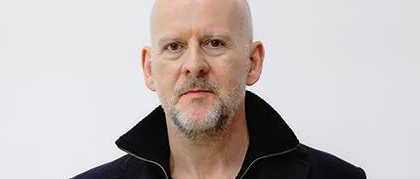
My interview with Simon Critchley appeared in 3:AM Magazine on 3 December 2014:
Writing Outside Philosophy: An Interview with Simon Critchley
3:AM: Do you agree that much of your back catalogue can now be read as a preemptive commentary on Memory Theatre, as though the latter had been written in the stars all along (which would be in keeping with the book’s uncanny astrological theme)?
SC: Sure. Why not? Look, what I really learned from Paul De Man years and years ago was that writers are structurally self-deceived about what they do, what they write and the intentions that might or might not lie behind their writing. Namely, to write is to be blind to one’s insight, if such insight exists. I understand this structurally: namely, that writing is an adventure in self-deception. I simply do not know what I am doing and you — as a reader, and a very good reader, moreover — can tell me what I am doing much more accurately than I can. Therefore, I should be interviewing you. In fact, let’s consider that we have reversed roles.
3:AM: The late Michel Haar, who haunts the book, is said to have been fascinated by the “poetic dimension” of Nietzsche’s style, which he saw as “that which might escape philosophy” — a fascination you also share. In Very Little . . . Almost Nothing (1997), you argued that “Writing outside philosophy means ceasing to be fascinated with the circular figure of the Book, the en-cyclo-paedia of philosophical science, itself dominated by the figures of unity and totality, which would attempt to master death and complete meaning by letting nothing fall outside of its closure”. Did you need to exorcise your fascination with this totalising tradition — by dramatising its failure — in order to write “outside philosophy”?
SC: Wow, thanks for reminding me of that passage from Very Little . . . Almost Nothing, which was written in 1992 or 93, as I recall, right towards the beginning of what became that odd book. I have two contradictory reactions to your question: on the one hand, many of the authors I have been obsessed with over the years have endeavoured to take a step outside philosophy, by which is usually meant the circle and circuit of Hegel’s system or Heidegger’s understanding of history as the history of being. I respect and love that gesture, that can be found in Bataille, Levinas, Blanchot and others. But, on the other hand, what I learned from Derrida very early on — my master’s thesis was on the question of whether we could overcome metaphysics — is that the step outside philosophy always falls back within the orbit of that which it tries to exceed. Not to philosophize is still to philosophize. Similarly, any text or philosophy that simply asserts the value of metaphysics is internally dislocated against itself, undermining its own founding gesture. This leaves us writing on the margin between the inside and the ouside of philosophy, which is where I’d like to place Memory Theatre. Also note that although Michel Haar existed and was real, as it were, he didn’t say much or anything that I say that he said. He is a kind of vehicle that I try and drive and steer.
3:AM: At one time, you entertained the idea of writing a book entitled “Paraphilosophy”, devoted to philosophically-impossible objects. A memory theatre strikes me as an impossible object of a different kind: one that can be conceived of, yet never conceived. Is your work a critique of what you call elsewhere the “aestheticization of existence” — the avant-garde project of turning life into art?
SC: Another way of answering your previous question would be to say that I am committed to a form of paraphilosophy, organized around what I call ‘impossible objects’ (a version of the scraps of that abandomed project will be published next year, I think). On the question of the aestheticization of existence, I sometimes really don’t know where I stand. On the one hand, we have known since Benjamin, that fascism aestheticizes politics, but on the other hand, much of what I do is committed to the idea of the aesthetic particularly as art practice as it was embodied in various avant-garde groups. Does that make me a fascist? Lord, I hope not. I think at that point we need to make a distinction between aestheticization in the tradition of the Gesamtkunstwerk and totality, the architecture of fascism, and that writing that unpicks, unravels and mocks that tradition of the Gesamtkunstwerk in the name of another practice of art, what Blanchot called the infinite conversation. It is in the spirit of the latter that I have tried to work.
3:AM: Memory Theatre includes a series of photographs — by British artist Liam Gillick — of a skyscraper in construction. Their appearance in reverse order (which reminded me of Robert Smithson’s notion of “ruins in reverse”) mirrors the deconstruction of the narrator’s attempt to build a real-life memory theatre. I wonder, however, if these pictures do not also refer to his surrogate grand narrative: a “perfect work of art” that would eventually “become life itself” by merging with it. One of the recurring themes in the book is that of the quest for a prelapsarian universal language which, although mocked by Swift, was once very fashionable: you write, for instance, of Leibniz’s “attempted recovery of the language of Adam against the Babel of the world”. Does Gillick’s dismantling of this Tower (block) of Babel gradually lead us towards an immanent conception of art that could express the world as it is in itself, free from human perception?
SC: Yes, but this is another fantasy: that of the artwork having an autonomy independent of its creator. A kind of machine or a puppet, or the fantasy of a non-human artwork, which is currently doing the rounds. All of this is in play in Memory Theatre for sure. What do Liam’s pictures suggest? To me, they exhibit a process of dismantling, or decomposition, that is ultimately the dismantling of philosophy and the decomposition of the heroic figure of the philosopher that has plagued us since Socrates. Memory Theatre is a critique of philosophy and, of course, a self-critique of my position as a ‘philosopher’. And yes Swift’s mocking of the science of his day, in Book III of Gulliver’s Travels has always been very important to me.
3:AM: Would you agree that the memory theatre and the “perfect work of art” envisioned at the end of the book correspond, respectively, to the two poles between which literature oscillates according to Maurice Blanchot? On the one hand, what you have called the “Hegelian-Sadistic” tradition, driven by the work of negation of human consciousness, and on the other, a striving after “that point of unconsciousness, where [literature] can somehow merge with the reality of things” (Very Little . . . Almost Nothing). Both poles, of course, are unattainable, but I suspect you have more sympathy for the latter, which is on the side of “The Plain Sense of Things” (Wallace Stevens) — “the near, the low, the common” (Thoreau) — and “lets us see particulars being various” (Memory Theatre) . . .
SC: That’s very interesting and I stole the “particulars being various” from Louis MacNiece, who is underrated and underread in my view. I remember reading Blanchot’s account of the two slopes of literature and it making a huge impact that continues to reverberate, particularly in relation to the INS [International Necronautical Society] work that I do with Tom McCarthy. On the one hand, literature is a conceptual machine that comprehends all that is, digests it and shits it out. That transforms matter into form. On the other hand, there is a kind of writing — poetry usually (Ponge, Stevens, late Hölderlin) — that attempts to let matter be matter without controlling or comprehending it. I am more sympathetic to the second slope, but the attempt to let matter be matter without form is also an unachievable fantasy. We can say with Stevens, we don’t need ideas about the thing, but the thing itself. But we are still stuck with ideas about the thing itself, with the materiality of matter. Form, even the form of the formless, is irreducible.
3:AM: Reviewers have remarked on the hybrid nature of Memory Theatre — a mixture of essay, memoir, and fiction. Why did you choose to call the narrator “Simon Critchley” — who is both you and not you — instead of creating a fictive character based on yourself? I’m guessing that you relished the ambiguity of inhabiting that gap between you and yourself (to paraphrase Pessoa) . . .
SC: The figure ‘Simon Critchley’ is a quasi-heteronym in Pessoa’s sense. You are absolutely right. I did have a lot of fun working in the gap between myself and myself, trying to create a kind of crack in myself, a decomposition as I said just now. ‘Simon Critchley’ is not me, but is still more than a little bit me. As for the hybrid nature of the text, all I can say is that this is how it came out. I wrote the first draft really quickly in about three weeks, largely against my will. It just came pouring out like that after I’d finished writing The Hamlet Doctrine with Jamieson Webster. Then I looked at Memory Theatre when it was done and was perplexed. What is that thing? I didn’t want to publish it. But other people liked it and I am stupidly vain.
3:AM: At one point your narrator believes he is about to discover his deathday, and feels “strangely exhilarated rather than afraid”: this episode echoes what Blanchot (or his protagonist) experiences, in The Instant of My Death, when he seems to be on the verge of being executed. The opposition between death and dying also derives from Blanchot (and Levinas), as does the example of suicide by hanging:
Even if I hanged myself I would not experience a nihilating leap into the abyss, but just the rope tying me tight, ever tighter, to the existence I wanted to leave (Memory Theatre).
Just as the man who is hanging himself, after kicking away the stool on which he stood, heading for the final shore, rather than feeling the leap which he is making into the void feels only the rope which holds him, held to the end, held more than ever, bound as he had never been before to the existence he would like to leave (Thomas the Obscure).
The image of the dredging machine is a clear reference to Derrida (referencing Genet). “The void has destroyed itself. Creation is its wound” is lifted verbatim from Georg Büchner’s Danton’s Death. “The blank, expressionless eyes of forty-nine papier mâché statues stared back at me” is possibly a nod to Hoffmannstahl’s “I felt like someone who had been locked into a garden full of eyeless statues” (The Lord Chandos Letter). I am sure that there are many other examples of references to, or quotations from, other people’s works that I missed or did not even recognise. Do you consider intertextuality — another aspect of the book’s hybrid nature — as a memory theatre?
SC: You are too good, Andrew, too good. Yes, I used all these quotations, usually from memory, in the text and there are many, many others. Memory Theatre is a kind of composite and composition drawn from everything that I have ever read and remembered. I then seek to decompose them, pull them apart, by setting them to work in some different way. Palimpsest-like. I have always been suspicious of ‘intertextuality’ as it sounds like a post-structuralist version of ‘tradition’. We are composed of networks of citations and references. At least I am. It’s the way I think about things most of the time.
3:AM: There are many instances of internal intertextuality (sorry!) in Memory Theatre, but most seem to come from your earlier works. Is this purely coincidental, or does a regressive theme run through the whole book? I’m thinking, for instance, of the narrator’s contention that Hegel’s Phenomenology of Spirit “can only be read in reverse” or his tentative description of his youthful memory loss as “a kind of reverse dementia”, not to mention Gillick’s pictures . . .
SC: Yes, there is a kind of inhabitation of all my earlier work in Memory Theatre. That was deliberate. It felt like a taking stock, a settling of accounts with myself. A look back into the rear-view mirror as I press harder on the gas. Also, to make matters worse, my first idea for a PhD thesis in 1987 was on Hegel’s conception of memory in relation to the tradition of the art of memory. So, Memory Theatre is also an attempt to write (and unwrite or undo) that original dissertation plan.

3:AM: When the memory theatre is built, ‘Simon Critchley’ surveys his work: “Like crazy Crusoe in his island cave out of his mind for fear of cannibals, I would sit onstage and inspect my artificial kingdom, my realm, my shrunken reál”. This reminded me of what Barthes writes about Jules Verne’s “self-sufficient cosmogony” — symbolised by The Nautilus (“the most desirable of caves”) — that he likens to “children’s passion for huts and tents”:
The archetype of this dream is this almost perfect novel: L’Ile mystérieuse, in which the manchild re-invents the world, fills it, closes it, shuts himself up in it, and crowns this encyclopaedic effort with the bourgeois posture of appropriation: slippers, pipe and fireside, while outside the storm, that is, the infinite, rages in vain (Mythologies).
One might also think of Georges Perec, who often circumscribed a small fragment of the world and then set about exhausting it. This dream of a total artwork in which one might poetically dwell often ends up being a womb with a view, right?
SC: Absolutely right. It is a kind of male, maternal fantasy. Except the child is always stillborn. It is also a meditation on obsessional neurosis and the masculine sexual tendency to collect, to collate and to kill. Memory Theatre describes a solitary and dead world devoid of love. I do not want to live in that world, though I have often found myself oddly at home in it. I hate myself. That much should be obvious.
3:AM: There seems to be a crisis of fiction today, highlighted by authors like David Shields or Knausgaard. Is Memory Theatre’s genre-bending a reflection of this crisis? Have we — writers and readers alike — lost that capacity to lose ourselves, which fiction, I feel, is premised on? Can disbelief no longer be suspended?
SC: Maybe we have lost the capacity to suspend disbelief because the world seems such a strange, malevolent fictional edifice. But I am against the heroic authenticity of memoir, the laying bare of oneself in what purports to be reality. I read a chunk of Knausgaard recently. It’s great, but it’s not for me. I’ve been to Norway too much for that. Memory Theatre is a kind of anti-memoir, perhaps even a kind of pastiche. I mean, someone wrote to me recently because they believed that everything I had said in Memory Theatre was true and they were truly worried about me. This was heartfelt and nice, but strange. I do not want to be the ‘Simon Critchley’ of Memory Theatre.
3:AM: Recently, Rachel Cusk claimed that “autobiography is increasingly the only form in all the arts” — and she may well have a point. This put me in mind of what you wrote, quoting Blanchot, in Very Little: “In the journal, the writer desires to remember himself as the person he is when he is not writing, ‘when he is alive and real, and not dying and without truth'”. Does this account for the autobiographical turn in literature and the arts?
SC: I don’t know, in the sense that I don’t have an opinion. I am always suspicious of ‘turns’ to anything. Literature is always autobiographical and it always isn’t just that. It requires research and reading. We have to simply face up to that contradiction. Literature is one long song of myself even when that self is something I really don’t want to be. In fiction, we step out of our skin, but we still remain in our skin as we read it.
3:AM: Has psychogeography partly inherited this tradition of the memory theatre (as the narrator seems to imply at one stage)?
SC: Yes, that was definitely on my mind at an early stage of thinking about the project. The idea of psychogeography as the construction of alternative maps for cities and places is what is at stake in Memory Theatre. I got that from Stewart Home. When the narrator wakes from the dream/nightmare of the Gothic cathedral in the middle of Memory Theatre, the entire landscape is psychogeograpized, legible through some arcane, occult grid.
3:AM: I’m pretty sure you must also have been thinking about the web — today’s version of the memory theatre — while writing the book. We live in an age of total recall and rampant dementia. It would be absurd to establish a connection between the two phenomena, but are we not increasingly relying on Google or Wikipedia to remember facts we would have memorised ourselves in earlier times? In other words, are we not using the web in order to forget?
SC: Yes, absolutely. Today’s memory theatre is the internet. I deliberately avoid broaching the question of the internet in Memory Theatre, but it’s what the whole thing is about. The difference — and it is crucial — between the internet and the memory theatre is the difference between Gedächtnis and Erinnerung, between an external, mechanized memory and an internal, living recollection. What has happened — largely without anyone noticing it — is that we have outsourced memory onto the internet. Everything is there, googleable, but not in our heads. Is this a good thing? I don’t know. It is certainly an odd thing, given that for several thousand years all education has ever meant has been the cultivation of a trained memory. We have somehow abandoned that in the name of forgetfulness. So, yes, we have chosen to drink the waters of Lethe and enter our private Hades. Literature can at the least remind us of that choice.
3:AM: Even though we are constantly (unwittingly) rewriting our own pasts, isn’t the right to be forgotten — which has arisen in the face of total digital recall — a rather dangerous concept? Are we really the sole owners of our pasts?
SC: No, we are not sole owners of our pasts. The drama of Memory Theatre is showing how our existence can be pre-remembered, as it were, by someone else, pre-destined. The fantasy of total recall, which is one way of approaching Hegel, is often met by the fantasy of active forgetting, in Nietzsche’s sense. Both these fantasies are delusional. We are flayed alive by memory, but not in possession of it.
3:AM: I was thinking of Proust’s notion of involuntary memory, and how In Search of Lost Time could be construed as a memory theatre, but what of the unconscious?
SC: Like I said earlier, Memory Theatre can be read as a case study in obsessional neurosis, as an attempt to collate, collect, control, and kill all that is and all that is close to you. I see the ‘moral’ of Memory Theatre in negative terms: do not build your memory theatre! That means trying to access unconscious material in other ways, in relation to other forms of sexuality than masculine obsessionality, and in relation to a different range of affects and transferential relations. This is a project I tried to begin with Jamieson Webster in The Hamlet Doctrine, a book of which I am really proud, mostly because I only-co-wrote it.
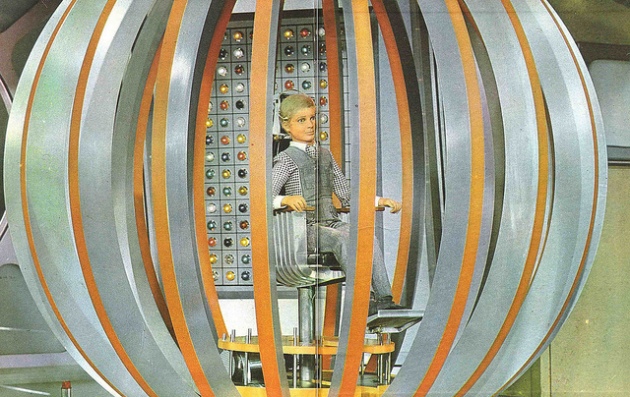
3:AM: Did Giulio Camillo Delminio’s memory theatre remind you, like me, of a similar contraption in 60s TV series Joe 90?
SC: Oh Lord, I used to love that show. I’d forgotten about it, as it were.
3:AM: The memory theatre tradition and dream of total recall find an echo in ‘Simon Critchley’ because (like you) he lost much of his memory following an accident (“My self felt like a theatre with no memory”). Accident-induced memory loss also happens to be the premise of Tom McCarthy’s Remainder. The quest for the “now of nows” — that moment of “absolute coincidence” with oneself and one’s fate at the point of extinction — is precisely what McCarthy’s anti-hero strives to achieve through his increasingly elaborate reenactments. As for the following sentence, it could come straight out of C: “My body is a buzzing antenna into which radio waves flooded from the entire cosmos. I was the living switchboard of the universe” . . . In Very Little . . . Almost Nothing, you pointed out that there is so much overlapping between Blanchot and Levinas that it is sometimes difficult to tell if an idea originated with the former or the latter. The very same comment could be made about you and McCarthy. Are you — especially through the International Necronautical Society — trying to escape the confines of the self by merging your two voices in a collaborative, polyphonic project? Is it two people, one artist, like Gilbert & George?
SC: Matters become even worse when you think of the first sentence of Remainder, which refers to Very Little . . . Almost Nothing. My relation with Tom is very precious to me and I have loved working together with him so much over the years. There is no doubt that meeting and working with Tom loosened my tongue and enabled me to say things I would never have previously imagined. We have a disinhibiting effect on each other, where the usual super-ego bullshit gets shut down and we are able to just burn it up and let it rip. As Levinas was fond of saying, on est mieux à deux. Writing with four hands is better than two. It is fair to say that Memory Theatre wouldn’t have existed without Remainder and elements of C are all over it.
3:AM: Memory Theatre opens with the following three sentences: “I was dying. That much was certain. The rest is fiction” — well, is it?
SC: Yes, it is. Oh, there is tinnitus too.
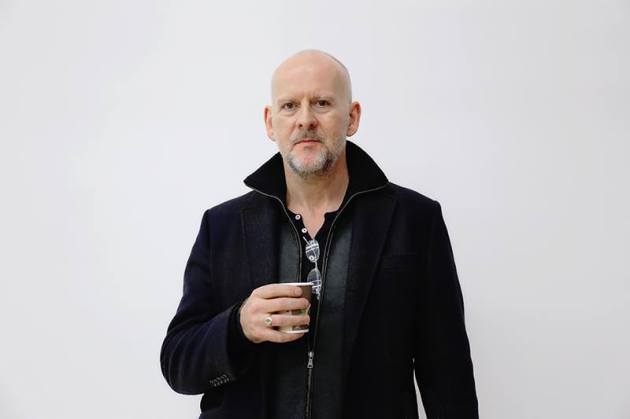
My interview with Simon Critchley appeared in 3:AM Magazine today:
“On the one hand, literature is a conceptual machine that comprehends all that is, digests it and shits it out. That transforms matter into form. On the other hand, there is a kind of writing — poetry usually (Ponge, Stevens, late Hölderlin) — that attempts to let matter be matter witout controlling or comprehending it. I am more sympathetic to the second slope, but the attempt to let matter be matter without form is also an unachievable fantasy. We can say with Stevens, we don’t need ideas about the thing, but the thing itself. But we are still stuck with ideas about the thing itself, with the materiality of matter. Form, even the form of the formless, is irreducible.”
“Who is she, this mocking Madame Bovary, staring all day at her carpets? This Italian suburban supermodel, catwalking the white surgical aisles of hypermarkets in Frankfurt. Clasping soap powder and pâté to her beautiful breasts as if they were Oscars.”
– Deborah Levy, The Unloved
“‘There are days’, she says, ‘when I stare into the carpet. We have a lot of carpet in our house in Frankfurt because it is very big. I imported it from Rome. It is blue, the blue of the Mediterranean.’ She stops, as if to measure the effect of her words on the provincial Detective Inspctor. ‘There are days’, she repeats, ‘when I do nothing but stare into the carpet. There are places, near the television set for example, where the blue deepens and I am sucked, abducted, into its dark centre. I am an alien in my own home, floating through the hyperspace of one hundred per cent wool.'”
– Deborah Levy, The Unloved
“I realised that the question I had asked myself while writing this book [Swimming Home] was (as surgeons say) very close to the bone: ‘What do we do with knowledge that we cannot bear to live with? What do we do with the things we do not want to know?'”
– Deborah Levy, Things I don’t Want to Know
Keith Watson, Rev. of The Biographical Dictionary of Literary Failure by C. D. Rose, failure magazine November 2014
The BDLF is a clever put-on, a brisk stroll through Borges’s Library of Babel guided by Rose’s fastidious prose and copious literary references, but it is also a clarion for the infinite possibilities of literature. As Andrew Gallix observes in his introduction, “Writing about fictitious or lost works is a means of holding literature in abeyance, of preserving its potentiality.” Rose’s failures are also potential successes, each one a small recognition that the actuality of literature will never equal its potentiality. Reading Ulysses will never quite match the idea of reading Ulysses. And in that sense, all literature, no matter how great, is a glorious failure.

“I have never got a grip on when the past begins or where it ends, but if cities map the past with statues made from bronze forever frozen in one dignified position, as much as I try to make the past keep still and mind its manners, it moves and murmurs with me through every day.”
– Deborah Levy, Swimming Home
“He asked her again to please, please, please drive him home to his wife and daughter.
‘Yes,’ she said. ‘Life is only worth living because we hope it will get better and we’ll all get home safely.'”
– Deborah Levy, Swimming Home
“It was impossible to believe that someone did not want to be saved from their incoherence.”
– Deborah Levy, Swimming Home

