Peter Rabbit is to be Found in Everything

Interview with Andrew Gallix, “The Brief: 3:AM Magazine,” Silent Frame 1 April 2017:

3:AM Magazine is a literary webzine that comprises reviews, critical essays, prose fiction, poetry, and interviews with prominent writers and philosophers. The interview responses below are given by the site’s Editor-in-Chief, Andrew Gallix. Alongside editing 3:AM, Gallix works as a freelance journalist, translator, and lecturer at the Sorbonne in Paris. He has written for various publications, including the Financial Times, The Guardian, and the Times Literary Supplement. With Richard Cabut, he co-edited and contributed to Punk is Dead: Modernity Killed Every Night (Zero Books, October 2017).

Which book would you recommend to our readers?
Remainder by Tom McCarthy. The best French novel ever written in English. It has a special place in 3:AM Magazine’s history, as we were the very first to champion it. This is where twenty-first-century literature began.

Which film would you recommend to our readers?
Berberian Sound Studio, directed by Peter Strickland, which revolves around a particularly gruesome giallo, evoked only through sound effects and snatches of overdubbed dialogue and howls — because films should be heard and not seen.

Which architectural work would you recommend to our readers?
The Serpentine Gallery Pavilion in Kensington Gardens, where Peter Pan poetically dwells — a new pavilion is built from scratch each year.

Which television episode would you recommend to our readers?

‘Episode 8’ from Series 1 of Life on Mars, directed by John Alexander — the episode where time-travelling protagonist Sam Tyler comes face to face with his young parents, and even catches a glimpse of himself as a child.

Which Mexican artwork would you recommend to our readers?
Under the Volcano, a novel by Malcolm Lowry. What I most admire about this most admirable novel is the line, ‘Everything is to be found in Peter Rabbit’.

[NB: Though an English author, Lowry briefly lived in Mexico, where Under the Volcano is also set.]

Which Serbian artwork would you recommend to our readers?
Complete Poems by Danilo Kupus, some of which were inspired by Beatrix Potter — because Peter Rabbit is to be found in everything.

Can art erase history?
No, but history can erase art. If art is a de Kooning drawing, history is Robert Rauschenberg’s rubber.

Can children make art?
Yes, but can adults?

Could art end civilisation?
No, but I suspect all great art aspires to do just that.

Is the alphabet a system of oppression?
Absolutely. Language, as Roland Barthes once remarked, is ‘fascist’. It speaks us; compels us to see things in a certain way.

Why discover?
Because the temptation to peek underneath is too great?

What question would you like to ask other Silent Frame interviewees?
What question would you fail to answer?

More to discover: You can read 3:AM Magazine here, visit Andrew Gallix’s website here, view his contributions to The Guardian here, and follow them on Twitter @3ammagazine and @andrewgallix.

Click on any of the following links to find out more about today’s recommended artists and artworks: Remainder (excerpt), Berberian Sound Studio (trailer), The Serpentine Gallery Pavilion (information), Life on Mars (trailer), Under the Volcano (excerpt).

On the Slow Writing Movement

Eva Orúe, “Slowhand es un artista, pero no (siempre) el que crees,” infoLibre 19 March 2017:

Cierto es que escribir no es lo que era. Trabajar con ordenadores y procesadores de texto permite a los autores juntar palabras más rápido que nunca, e Internet les brinda la oportunidad de publicar de manera instantánea, sin esperar a que un editor dé el plácet a tu texto. Consecuencia de lo cual es, sostiene el escritor Andrew Gallix, que lo que hoy pasa por narrativa publicable, “hace sólo unos años habría sido considerado si acaso como un borrador temprano”. De ahí que su propuesta de crear un Slow Writing Movement (SWM) a imagen (literaria) del fenómeno Slow Food, lanzada medio en serio medio en broma, quizá merezca una nueva oportunidad.

Doomed Quest

Ira Solomatina, “Fashion’s History of the Patch,” Sleek 4 August 2016:

The first sub-culture to subvert the patch was the hippies in the 1960s, whose patchwork clothes were laden with references to ethnic styles. However, it was the punks who really made it their own. As writer Andrew Gallix puts it, “The evolution of punk fashion was the doomed quest for authenticity” — hence why their bold DIY-aesthetic was opposed to all things conventional.

La Fayette Revisited

Erin Blakemore, “France’s Famous High School Exam Will Soon Feature Its First Woman Author,” Smithsonian 21 March 2017:

…But the novella isn’t La Fayette’s most famous work. That would be The Princess of Cleves, a dramatic novel that’s widely cited as France’s first historical novel. The book became a big deal in France again in 2009, when France’s then-president, Nicolas Sarkozy, mocked its inclusion on the civil service exam. As The Guardian‘s Andrew Gallix reported at the time, the president’s public hatred of the book turned it into a political symbol and short-lived bestseller.

A Quest for the Quotidian

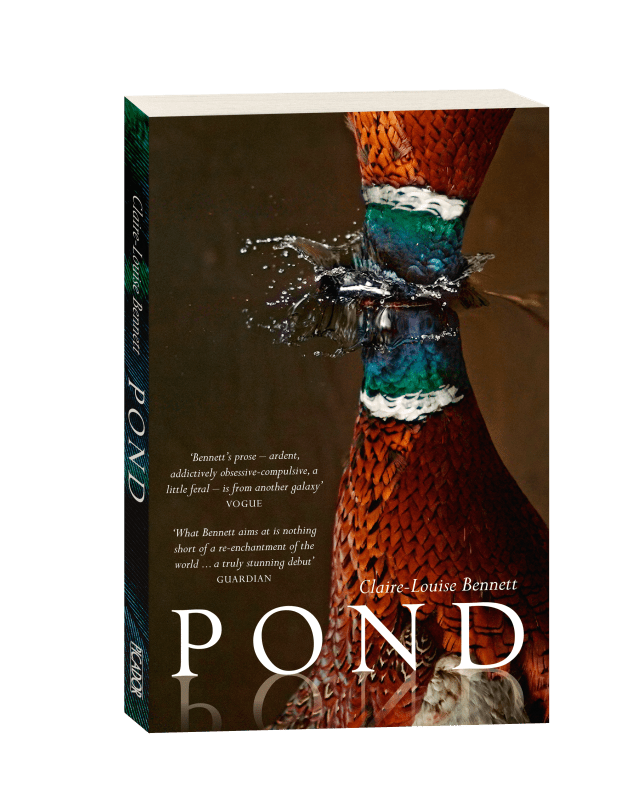
An extract from my review of Claire-Louise Bennett‘s Pond was quoted in Guardian Australia‘s “December literary picks” published on 10 December 2016:

Pond by Claire-Louise Bennett (Picador)

Guardian reviewer Andrew Gallix wrote of this collection of 20 stories:

Reading them is an immersive experience. We come to share the “savage swarming magic” the narrator feels under her skin by focusing at length on her “mind in motion” … One of the most striking aspects of this extraordinary book is how well we get to know the narrator — whose brain and body we inhabit — yet how little we know about her. We don’t even learn her name …

What Bennett aims at is nothing short of a re-enchantment of the world. Everyday objects take on a luminous, almost numinous, quality through the examination of what Emerson called “the low, the common, the near” or the exploration of Georges Perec’s “infra-ordinary” — a quest for the quotidian.”
pondaustralia

Theorems Estranged Into Pure Poetry

An extract from my review of Agustín Fernández Mallo‘s Nocilla Dream appears on the back cover of Nocilla Experience (Fitzcarraldo Editions, 2016).

nocillaexperience

By juxtaposing fiction with non-fiction … the author has created a hybrid genre that mirrors our networked lives, allowing us to inhabit its interstitial spaces. A physician as well as an artist, Mallo can spot a mermaid’s tail in a neutron monitor; estrange theorems into pure poetry.

Savage Swarming Magic

Lauren Elkin was kind enough to quote from my review of Pond when introducing Claire-Louise Bennett at Shakespeare and Company on 4 May 2016:

Andrew Gallix wrote in his review for the Guardian, of the stories in Pond — quote — “Reading them is an immersive experience. We come to share the ‘savage swarming magic’ the narrator feels under her skin by focusing at length on her ‘mind in motion’“.

Here is a picture I took of Claire-Louise signing a copy of her book at Chez Panisse, following her reading.

claire-louisebennett

Seeing the World Come Into Focus

Julie Muller Mitchell, “Eminent Theorist,” Stanford Magazine March-April 2016

Girard’s first book, Deceit, Desire and the Novel (published in French in 1961; the English edition followed in 1966), introduced his theory that human motivation is based on desire, and our desires are based upon what others want, emphasizing the role of imitation in our lives. In developing his theory of mimetic desire, he argued that human conflict results not from our differences but rather from our sameness. As people seek what others want, these competing desires lead to rivalry, jealousy and violence. In a 2010 article in the Guardian, writer Andrew Gallix said that discovering Girard’s book was like “putting on a pair of glasses and seeing the world come into focus.”