La Fayette Revisited

Erin Blakemore, “France’s Famous High School Exam Will Soon Feature Its First Woman Author,” Smithsonian 21 March 2017:

…But the novella isn’t La Fayette’s most famous work. That would be The Princess of Cleves, a dramatic novel that’s widely cited as France’s first historical novel. The book became a big deal in France again in 2009, when France’s then-president, Nicolas Sarkozy, mocked its inclusion on the civil service exam. As The Guardian‘s Andrew Gallix reported at the time, the president’s public hatred of the book turned it into a political symbol and short-lived bestseller.

A Quest for the Quotidian

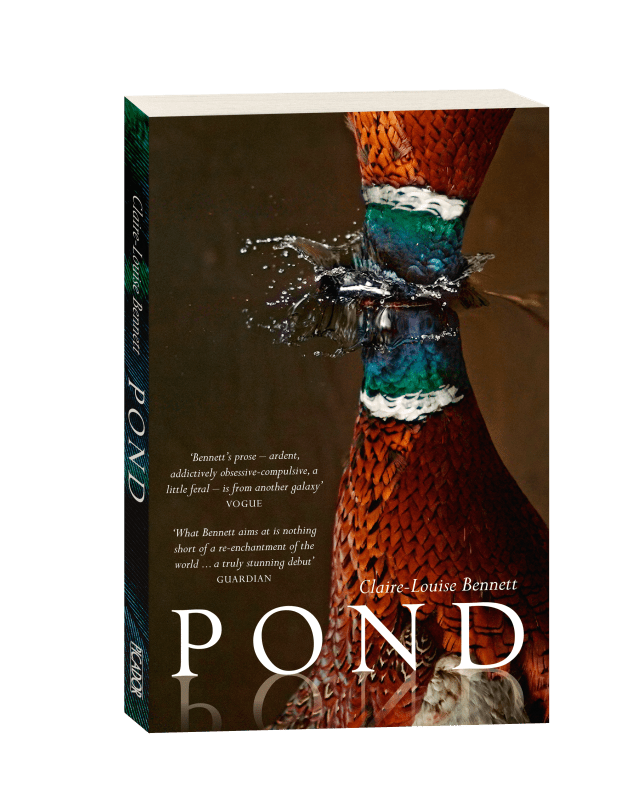
An extract from my review of Claire-Louise Bennett‘s Pond was quoted in Guardian Australia‘s “December literary picks” published on 10 December 2016:

Pond by Claire-Louise Bennett (Picador)

Guardian reviewer Andrew Gallix wrote of this collection of 20 stories:

Reading them is an immersive experience. We come to share the “savage swarming magic” the narrator feels under her skin by focusing at length on her “mind in motion” … One of the most striking aspects of this extraordinary book is how well we get to know the narrator — whose brain and body we inhabit — yet how little we know about her. We don’t even learn her name …

What Bennett aims at is nothing short of a re-enchantment of the world. Everyday objects take on a luminous, almost numinous, quality through the examination of what Emerson called “the low, the common, the near” or the exploration of Georges Perec’s “infra-ordinary” — a quest for the quotidian.”
pondaustralia

Albert Camus’ Counterfeit Manuscript

My review of Alice Kaplan‘s Looking for ‘The Outsider’: Albert Camus and the Life of a Literary Classic appears in the November 2016 issue of the Literary Review.

literaryreview

In July 1944 Albert Camus produced a counterfeit manuscript of his debut novel, The Outsider, published two years earlier. Josette Clotis, André Malraux’s partner, read the text aloud while Camus took it down in longhand, introducing the odd crossed-out variant to lend it the air of an early draft. In Looking for ‘The Outsider’, Alice Kaplan outlines this ingenious scam, born of wartime austerity, but does not say whether it proved successful or not. All the same, it speaks volumes about the book it sought to cash in on. The Outsider had already outgrown its title, acquiring the aura of a canonical work. Camus was now in a position to turn Bouvard and Pécuchet’s lowly profession — that of the copy clerk — into gold. All he had to do was replicate his near-indecipherable microscript, originally developed in response to an acute paper shortage. …

Theorems Estranged Into Pure Poetry

An extract from my review of Agustín Fernández Mallo‘s Nocilla Dream appears on the back cover of Nocilla Experience (Fitzcarraldo Editions, 2016).

nocillaexperience

By juxtaposing fiction with non-fiction … the author has created a hybrid genre that mirrors our networked lives, allowing us to inhabit its interstitial spaces. A physician as well as an artist, Mallo can spot a mermaid’s tail in a neutron monitor; estrange theorems into pure poetry.

Cafe Marx

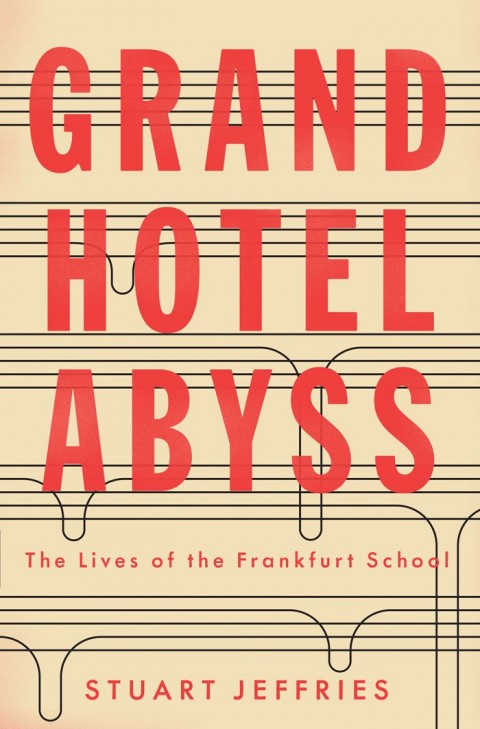
My review of Stuart JeffriesGrand Hotel Abyss: The Lives of the Frankfurt School is in Saturday’s Irish Times.

grandhotelabyss

… It is this embrace of negativity that is so bracing to some and frustrating to others, even within the school. During the 1960s student protests, change was deemed possible by Marcuse, who embodied a sunnier, Californian take on critical theory. The institute’s “late ethos” is likewise predicated on the feasibility of “ameliorating the conditions of capitalism and liberal democracy”. Yet Café Marx, as it used to be called derisively, remains tainted by Georg Lukács’s quip that these representatives of the chattering classes — branded traitors by Brecht — had holed themselves up in a beautiful hotel “equipped with every comfort, on the edge of an abyss, of nothingness, of absurdity”. There is a great deal of wisdom, however, in Adorno’s suspicion of revolutionary students’ “aversion to introspection”, which he had already observed in the dark days of Nazism. “I established a theoretical model of thought,” he told an interviewer in 1969. “How could I have suspected that people would want to implement it with Molotov cocktails!” There is also a great deal of hope in his belief that “whoever thinks offers resistance”.

At its best the Frankfurt School was always a think tank — in the armoured-fighting-vehicle sense of the word.

What the Whole Thing is About

Caleb Crain. Rev. of Memory Theater, by Simon Critchley. The New York Times 16 December 2015

… In “The Phenomenology of Spirit,” Hegel imagined history as a long, bloody drama acted out by the spirit of history, which played all the characters. Critchley cleverly describes (or rather, claims that his late teacher cleverly described) Hegel’s idea of history as a moving memory theater — “a kind of proto-­cinema.” The narrator concludes that his own experiments have failed because his memory theater didn’t move, and he looks forward to a posthuman upgrade: “an endlessly recreating, re-enacting memory mechanism.” This sounds awfully like the Internet, to which it is so tempting nowadays to offload one’s more tedious tasks of remembering — and indeed, in a recent interview with Andrew Gallix of 3:AM Magazine, Critchley has admitted that the Internet is “what the whole thing is about.” Maybe it makes more sense to think of “Memory Theater” as an allegory.

A Mermaid’s Tail in a Neutron Monitor

My review of Agustín Fernández Mallo‘s Nocilla Dream appears in The Independent. Here’s an extract:

Nocilla Dream is a world seen in a grain of Nevada sand. Its arborescent structure stems from a solitary poplar tree, decorated with hundreds of pairs of shoes, growing alongside US Route 50. By juxtaposing fiction with non-fiction — more than 20 chapters are lifted verbatim from extraneous works — the author has created a hybrid genre that mirrors our networked lives, allowing us to inhabit its interstitial spaces. A physician as well as an artist, Mallo can spot a mermaid’s tail in a neutron monitor; estrange theorems into pure poetry.

nocilladream