
My review of Claire-Louise Bennett‘s Pond was posted today on the Guardian‘s website. It will feature in Saturday’s Guardian Review. You can read it here.
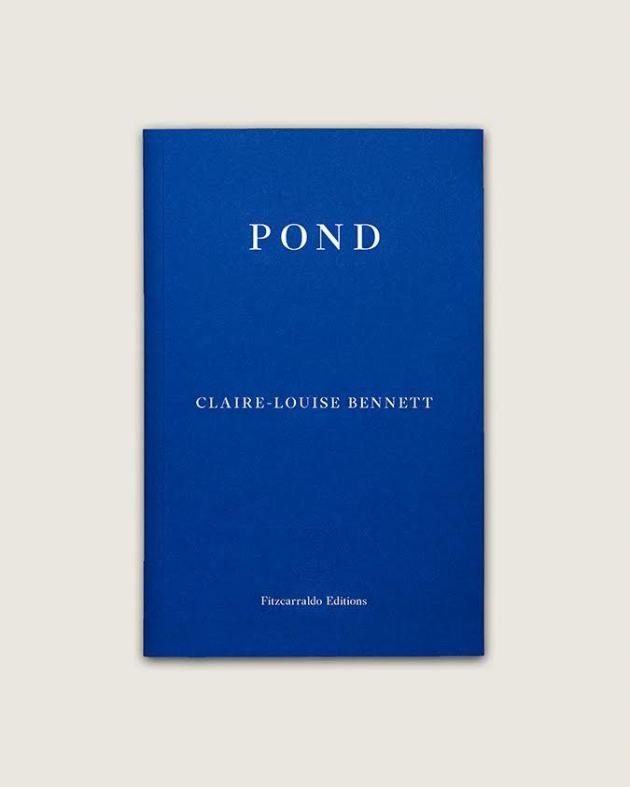
My review of Claire-Louise Bennett‘s Pond was posted today on the Guardian‘s website. It will feature in Saturday’s Guardian Review. You can read it here.
Jamie Fisher, “A Patron Saint for Sadsacks: What Snark Says About Failure — and What Literature Says Back,” Los Angeles Review of Books 10 June 2015

… In his introduction to the BDLF, Andrew Gallix suspects “that there is indeed a touch of Schadenfreude about the pleasure derived from reading these anecdotes of writerly woe.” There’s a name for this pleasure, and this narrative tradition: It’s snark. …
… Gallix’s introduction suggests that in writing the BDLF, Rose “may have been exorcising some demons of his own.” …
… Gallix places Rose’s work alongside any number of famous literary silences in the face of imperfection: “Rimbaud’s renunciation of poetry …, the Dada suicides, Wittgenstein’s coda to the Tractatus, the white paintings of Malevich or Rauschenberg, Yves Klein’s vacant exhibitions, as well (of course) as John Cage’s mute music piece.” Gallix describes the appeal of “absolute whiteness,” untrammeled potential.
This is true enough, in its way; any artist has coped with those moments of paralyzing uncertainty, when silence or irony seem better than wreckage. But Gallix’s misreading of Cage is, I think, telling. Cage intended the vacancy of the work to supply a stage for the ambient environment. His point wasn’t that art is incapable of speech, or that the artist has, finally, nothing to say. His intention was to draw a circle around a small section of public life and say, All that is inside this circle is art. It’s a circle of reception, an announcement that he is willing to listen. When Gallix calls Cage’s piece “mute,” he fails to understand that it is a stage for the people, and the experiences, we don’t usually choose to hear. …
Julian Hanna, “Beautiful Losers,” Rev. of The Biographical Dictionary of Literary Failure by C. D. Rose, 3:AM Magazine 11 December 2014
The introduction, a brilliant extended meditation on ‘real’ failure by 3:AM’s own co-editor-in-chief Andrew Gallix, complements the fictional failures that follow.

Mark Diston, Rev. of The Biographical Dictionary of Literary Failure by C. D. Rose, The Register 6 December 2014
The introduction by Andrew Gallix, editor of 3:AM Magazine, is a fascinating essay of literary failure and failures in literature.
Keith Watson, Rev. of The Biographical Dictionary of Literary Failure by C. D. Rose, failure magazine November 2014
The BDLF is a clever put-on, a brisk stroll through Borges’s Library of Babel guided by Rose’s fastidious prose and copious literary references, but it is also a clarion for the infinite possibilities of literature. As Andrew Gallix observes in his introduction, “Writing about fictitious or lost works is a means of holding literature in abeyance, of preserving its potentiality.” Rose’s failures are also potential successes, each one a small recognition that the actuality of literature will never equal its potentiality. Reading Ulysses will never quite match the idea of reading Ulysses. And in that sense, all literature, no matter how great, is a glorious failure.
Michael Dirda, Rev. of The Biographical Dictionary of Literary Failure by C. D. Rose, The Washington Post 5 November 2014
After a scholarly introduction that touches on such topics as blankness, the whiteness of the page and the ontology of fiction, Rose opens The Biographical Dictionary of Literary Failure with an account of the life of Casimir Adamowitz-Kostrowicki.
Jonathon Sturgeon, “In Praise of Literary Failure,” Flavorwire 30 October 2014
The book’s introduction, too, is one of the finer pieces of literary criticism to be released this year. Written by Andrew Gallix, editor-in-chief of 3:AM Magazine, which purports to be “the first literary blog,” the intro deftly surveys the gamut of literary failure. Especially good and poetic is Gallix’s take on the scourge of the writer, the blank page:
Blankness is the sine qua non for inclusion in the BDLF, but it is seldom sought after directly. Manuscripts and books remain blank to us through being censored, lost, drowned, shredded, pulped, burned, used as cigarette paper or wrapped around kebabs, fed to pigs or even ingested by their own authors…These brief biographies are sketches that merely gesture towards the possibility of narrative development; stories that are cut short or fall silent. Stories that would prefer not to.
Douglas Lord, Rev. of The Biographical Dictionary of Literary Failure by CD Rose, Library Journal 16 October 2014
Don’t be taken in, as I first was, by Sorbonne instructor Andrew Gallix’s Very Serious Introduction in which he notes all sorts of high-level details, such as that most of the writers “…devoted their lives to the pursuit of some Gesammtkunstwerk…”.
Jeff Bursey, Rev. of [SIC], by Davis Schneiderman, The Quarterly Conversation 10 March 2014
In 2011 Andrew Gallix, in the Guardian, wrote a piece on unread difficult books, and he mentioned “an anthology of blank books [edited by Michael Gibbs] entitled All Or Nothing.” We can consider Blank as continuing that line. Kenneth Goldsmith’s prefatory essay “Why Conceptual Writing? Why Now?” in Against Expression: An Anthology of Conceptual Writing (2011) contains these useful lines: “What has happened in the past fifteen years has forced writers to conceive of language in ways unthinkable just a short time ago. With an unprecedented onslaught of the sheer quantity of language . . . , the writer faces the challenge of exactly how best to respond.” In volume one of his trilogy, Schneiderman edged near to muteness, but in [SIC] he has positioned himself, the work, and us in a new spot. His latest book is filled with words. None of them are his.
Richard Marshall, “Modernist Ghosts,” 3:AM Magazine 18 June 2013

. . . Reality is inevitably, and tragically, the boss, relentless and remorselessly impervious to the dreams of its inhabitants. We hope for autonomy, agency, but fear it’s just the drink talking post hoc most of time. ‘When you say my name, you retain nothing of me but my absence. And nobody is present behind these words I speak’ says Emilie in the Andrew Gallix short story “Fifty Shades of Grey Matter“. The story presents a doomed lover contemplating his lost love. The materiality, the bodily anxiety presses in against the frenetic, desperate and seething mind of the protagonist and throughout there’s a need to try and combine the two — the mind and the body — to understand the relationship in some way. The story is implacable and granite strong in this. The violence of physical action, the dangerous crime that bodies seem to presuppose in the narrative, carries ‘the mute reminder of the possibility of impossibility’ symbolized by an insane aside about anal rape. What kind of dark matter is being imagined in this? The subject is Occasionalism, the question of powers and causality.
. . . Gallix’s odd fiction seems also to hold lyricism in a merciless fixed embrace. The facts are stone, as dry as archaism, stratified, absorbed and the utter indifference to the sensual passion of its protagonist is expressed in a language chisselled and polished like marble. Everything is imagined with prodigal allusiveness. It’s as tight as wire, extremes of tragedy, pathos and irony are cut like contours ploughed into copper with a burin. If the effect is a dismembered cruelty, it is a cruelty of the universe, of a cause from somewhere else altogether, somewhere or some agency that knows enough to cause it.
Gallix’s approach is not alone in the Fiddleblack collection. Nor is this conceit I’m pressing — arbitrarily at times, but then making a run of it to see where we might go, for there are others that might be mysteriously pressed into action. The impossibility of causality without knowledge of how to create or annhiliate, well, that has some edge, even if we think it exactly false. But Gallix, to continue using him as a catalyst here, has that line about the ‘possibility of impossibility,’ and who cannot unforgive a paradox when we’re telling each other stories about how it isn’t?
. . . But the orgiastic demonstration of writing’s imaginative physique is best in the antiquity of Gallix’s Roman fairy tale of Valentin Vermot, a ghost haunted by ghosts that, abbreviated to an essentialist verbatim, goes: ‘Once upon a time there was a man called Valentin. Valentin Vermot. Just like you. He thought he was haunted by a ghost, but his ex-wife assured him that there was no such thing. “There are no ghosts,” she said. “There are no ghosts.” Valentin opened his eyes. He was all alone, but Emilie’s voice was still ringing in his ears. There are no ghosts, there are no ghosts, there are no ghosts, there are no ghosts…’ . . .
 ANDREW GALLIX