[SIC]

Jeff Bursey, Rev. of [SIC], by Davis Schneiderman, The Quarterly Conversation 10 March 2014

In 2011 Andrew Gallix, in the Guardian, wrote a piece on unread difficult books, and he mentioned “an anthology of blank books [edited by Michael Gibbs] entitled All Or Nothing.” We can consider Blank as continuing that line. Kenneth Goldsmith’s prefatory essay “Why Conceptual Writing? Why Now?” in Against Expression: An Anthology of Conceptual Writing (2011) contains these useful lines: “What has happened in the past fifteen years has forced writers to conceive of language in ways unthinkable just a short time ago. With an unprecedented onslaught of the sheer quantity of language . . . , the writer faces the challenge of exactly how best to respond.” In volume one of his trilogy, Schneiderman edged near to muteness, but in [SIC] he has positioned himself, the work, and us in a new spot. His latest book is filled with words. None of them are his.

La faim du livre

Along with Gérard Berréby, Augustin Trapenard, and Hervé Laurent, I was interviewed by Linn Levy for a piece entitled “La faim du livre” which appeared in the December 2013 issue of Swiss magazine Edelweiss. The article features on pp. 44-47; my interview is on p. 46.

La faim du livre

Edelweiss part en quête de la littérature contemporaine, des mots qui dérangent et se demande si être écrivain veut encore dire quelque chose par les temps qui courent. Quatre intellectuels se penchent sur ces questions et nous éclairent.

«Nous sommes les visages de notre temps», clamaient les futuristes russes, le poète Maïakosvki en tête, il y a exactement un siècle, pétris de la conviction que l’art qu’ils inventaient allait renverser l’ordre des choses, qu’en récrivant le monde ils façonneraient le futur. Et aujourd’hui? A qui appartiennent les visages de l’époque contemporaine? Peut-on encore écrire? Et quels sont, parmi le demi-millier d’ouvrages publiés cette rentrée en Suisse et en France, ceux qui tordent la littérature, l’éprouvent, l’inventent? Oui, dans quels livres trouve-t-on les questions que nous ne nous sommes pas encore posées? Difficile pour le lecteur de se retrouver dans le magma de fictions qui ornent les étals des librairies comme les marchandises envahissent les hypermarchés. Le divertissement, devenu la norme au risque d’endormir insidieusement les esprits, laisse peu de place au doute, la tension semble diluée, presque rien ne dérange, pas grand-chose ne dépasse. Alors, pour celui qui a faim d’autre chose que de spectacle et qui ne déteste pas être dérangé – «Etre scandalisé, un plaisir», assurait Pasolini –, il s’agit de résister en cherchant les lignes qui dévient, la littérature, la vraie, ce souffle qui a «la faculté d’empêcher la folie du monde de s’emparer totalement de nous», comme l’écrit Alberto Manguel. Quatre experts nous éclairent sur les mots d’aujourd’hui, l’influence du web, la mort imminente du droit d’auteur, celle de la figure de l’écrivain, sur le remix aussi, et l’irrévérence anglo-saxonne ou helvétique… L’éditeur Gérard Berréby, l’écrivain et professeur Andrew Gallix, le journaliste Augustin Trapenard et le critique d’art Hervé Laurent ont accepté de surcroît de dévoiler leurs titres préférés de la rentrée.

Andrew Gallix
Ecrivain, éditeur, professeur à la Sorbonne

L’écriture a cinquante ans de retard sur la peinture – triste constat de l’artiste Brion Gysin dans les années 60… «Et, pour le philosophe et romancier anglais Lars Iyer, la situation n’a fait qu’empirer. Le roman, censé échapper au monde des genres, est lui-même devenu un genre. Pour lui, la littérature est morte (comme la musique classique avant elle) et les livres que l’on peut encore écrire doivent exprimer la distance qui nous sépare de la grande littérature du passé. Cette «postlittérature» s’inscrit d’ailleurs dans un contexte politique et culturel plus général: pour Mark Fisher ou Simon Reynolds, par exemple, la modernité est derrière nous. Cette nouvelle crise du roman, symbolisée par Reality Hunger, le manifeste de David Shields, se traduit souvent par un rejet de la fiction.» Les idées se bousculent dans l’esprit brillant d’Andrew Gallix. L’écrivain britannique, professeur à la Sorbonne, collaborateur du quotidien The Guardian, punk depuis l’âge de 12 ans, a lancé en 2000 le premier blog littéraire en anglais, «3:AM Magazine»1, dont le mot d’ordre est le très groucho-marxesque: «De quoi qu’il s’agisse, nous sommes contre». Un webzine si avant-gardiste qu’il a donné naissance à un véritable mouvement littéraire, The Offbeat Generation, regroupant des plumes anglophones non conformistes (Tony O’Neill, Ben Myers, Tom McCarthy notamment), rejetant la culture dominante et le monde traditionnel de l’édition. «La littérature est quelque chose qui résiste, analyse-t-il. Même s’il n’existe plus vraiment d’avant-garde – le web l’a diluée en quelque sorte –, je remarque que l’écriture conceptuelle, expérimentale prend de plus en plus d’importance. Il y a toute une génération d’auteurs qui reste très influencée par la théorie poststructuraliste de Derrida, je pense notamment à Rachel Kushner. Il y a un autre courant d’écrivains, américains pour la plupart, qui s’inscrit dans la directe lignée de l’éditeur Gordon Lish – celui qui a en quelque sorte fait Raymond Carver. Pour eux, tout se passe au niveau de la phrase. Et, pour finir, je trouve passionnante et à suivre la scène littéraire qui s’est formée autour de la revue new-yorkaise n+1 (nplusonemag.com).»
1 http://www.andrewgallix.com / http://www.3ammagazine.com

Il lit:
Au départ d’Atocha, Ben Lerner (à paraître)
C, Tom McCarthy, L’Olivier
Nue, Jean-Philippe Toussaint, Editions de Minuit

New Modernist

Douglas Glover, “The End of Realist Stories — Andrew Gallix @ theguardian.com,” Numéro Cinq Blog 12 November 2013

Or “Fuck Realism” as he says on his blogpost linking to the essay, which, yes, is an impassioned cry against the reductive, prosaic monotony of what Northrop Frye called “low mimetic” realism, the realism of the middle of the road, market driven, read-and-toss, consumer fiction of our day (and days before). Gallix is a leading new Modernist (I keep trying to come up with a tag that will fit the bill — this one is provisional), founder of 3:AM Magazine in the UK, and contributor to Numéro Cinq. Put this new essay from the Guardian together with his essay “On Literary Bondage” from our August issue and then throw in my essay “The Novel as a Poem” and figure out where you stand.

The Offbeats

Ben Ashwell, “An Interview with Tony O’Neill,” Bookslut 138 (November 2013)

… O’Neill built a strong reputation for his needles-and-all accounts of addiction by publishing his stories online, on sites like 3:AM Magazine. This led him to be grouped with a range of other writers — such as Ben Myers, Lee Rourke, Adelle Stripe, and Andrew Gallix — who were collectively branded “The Offbeat Generation” by The Guardian.

gallixoneill
[Me and Tony O’Neill, Paris, June 2009]

Literary Bondage

Here’s an extract from my Guardian Books piece on the oulipo that went up today:

As Gabriel Josipovici argues in What Ever Happened to Modernism?, modern literature was forged out of a refusal to submit to external constraints, with the novel a “new form in which the individual could express himself precisely by throwing off the shackles that bound him to his fathers and to tradition”. The flipside of this emancipation of the writer (or privatisation of writing) was, as Walter Benjamin pointed out, isolation. No longer the mouthpiece of the Muses or society, novelists could only derive legitimacy from themselves. “Going back to the world of genres is not an option, any more than is a return to the world of the ancien régime,” writes Josipovici. The Oulipo escapes the Romantic cul-de-sac of unfettered imagination (or its Surrealist avatar, chance) by reintroducing external constraints, which are self-imposed.

Failure is What Writers Do

Anne Enright, “Falling Short: Seven Writers Reflect on Failure,” The Guardian 22 June 2013

I have no problem with failure — it is success that makes me sad. Failure is easy. I do it every day, I have been doing it for years. I have thrown out more sentences than I ever kept, I have dumped months of work, I have wasted whole years writing the wrong things for the wrong people. Even when I am pointed the right way and productive and finally published, I am not satisfied by the results. This is not an affectation, failure is what writers do. It is built in. Your immeasurable ambition is eked out through the many thousand individual words of your novel, each one of them written and rewritten several times, and this requires you to hold your nerve for a very long period of time — or forget about holding your nerve, forget about the wide world and all that anxiety and just do it, one word after the other. And then redo it, so it reads better. The writer’s great and sustaining love is for the language they work with every day. It may not be what gets us to the desk but it is what keeps us there and, after 20 or 30 years, this love yields habit and pleasure and necessity.

. . . A novel is written (rather pathetically) not to be judged, but experienced. You want to meet people in their own heads — at least I do. I still have this big, stupid idea that if you are good enough and lucky enough you can make an object that insists on its own subjective truth, a personal thing, a book that shifts between its covers and will not stay easy on the page, a real novel, one that lives, talks, breathes, refuses to die. And in this, I am doomed to fail.

A Ceaseless Threnody

Will Self, “Falling Short: Seven Writers Reflect on Failure,” The Guardian 22 June 2013

To attempt to write seriously is always, I feel, to fail — the disjunction between my beautifully sonorous, accurate and painfully affecting mental content, and the leaden, halting sentences on the page always seems a dreadful falling short. It is this failure — a ceaseless threnody keening through the writing mind — that dominates my working life, just as an overweening sense of not having loved with enough depth or recklessness or tenderness dominates my personal one. It follows that to continue writing is to accept failure as simply a part of the experience — it’s often said that all political lives end in failure, but all writing ones begin there, endure there, and then collapse into senescent incoherence.

I prize this sense of failure — embrace it even. As a child I loved a John Glashan cartoon that showed a group of meths drinkers lying around on the floor of a squat. “Anyone can be a success,” one of them was saying, “but it takes real guts to be a failure.” Clearly I intuited what was coming. When anyone starts out to do something creative — especially if it seems a little unusual — they seek approval, often from those least inclined to give it. But a creative life cannot be sustained by approval, any more than it can be destroyed by criticism — you learn this as you go on.

. . . No, this is the paradox for me: in failure alone is there any possibility of success. I don’t think I’m alone in this — nor do I think it’s an attitude that only prevails among people whose work is obviously “creative”. On the contrary, it often occurs to me that since what successes I do manage are both experienced and felt entirely in solitude, there must be many others who are the same as me: people for whom life is a process to be experienced, not an object to be coveted. There may be, as Bob Dylan says, no success like failure, but far from failure being no success at all, in its very visceral intensity, it is perhaps the only success there is.

The Unread and the Unreadable

This appeared in Guardian Books on 18 February 2013:

The Unread and the Unreadable

We measure our lives with unread books — and ‘difficult’ works can induce the most guilt. How should we view this challenge?
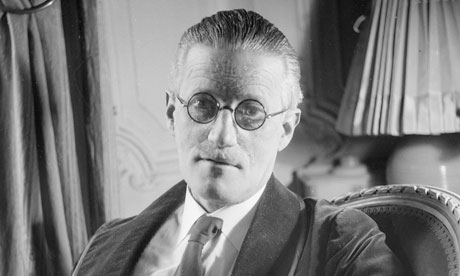
[Samuel Beckett said of James Joyce's Finnegans Wake … 'It is not only to be read. It is to be looked at and listened to.' Photograph: Lipnitzki/Roger Viollet/Getty Images

[Samuel Beckett said of James Joyce’s Finnegans Wake … ‘It is not only to be read. It is to be looked at and listened to.’ Photograph: Lipnitzki/Roger Viollet/Getty Images]

There was a time when a learned fellow (literally, a Renaissance man) could read all the major extant works published in the western world. Information overload soon put paid to that. Since there is “no end” to “making many books” — as the Old Testament book Ecclesiastes prophesied, anticipating our digital age — the realm of the unread has spread like a spilt bottle of correction fluid. The librarian in Robert Musil‘s The Man Without Qualities only scans titles and tables of contents: his library symbolises the impossibility of reading everything today. The proliferation of lists of novels that you must, allegedly, have perused in your lifetime, reflects this problem while compounding it. On a recent visit to a high street bookshop, I ogled a well-stacked display table devoted to “great” novels “you always meant to read”. We measure out our lives with unread books, as well as coffee spoons.

The guilt and anxiety surrounding the unread probably plays a part in our current fascination with failed or forgotten writers. Hannah Arendt once wondered if “unappreciated genius” was not simply “the daydream of those who are not geniuses”, and I suspect there is indeed a touch of schadenfreude about this phenomenon too. On the book front, we could mention Mark O’Connell’s Epic Fail, the brilliantly idiosyncratic Failure, A Writer’s Life by Joe Milutis, and Christopher Fowler‘s Invisible Ink: How 100 Great Authors Disappeared, based on the longstanding column in the Independent on Sunday. Online, there is The New Inquiry‘s Un(der)known Writers series, as well as entire blogs — (Un)justly (Un)read, The Neglected Books Page, Writers No One Reads — devoted to reclaiming obscure scribes from oblivion. One of my personal favourites is The Biographical Dictionary of Literary Failure, which celebrates the lives of writers who have “achieved some measure of literary failure”. The fact that they all turn out to be fictitious (à la Félicien Marboeuf) and that the website will vanish after a year, make it even more delightful. I recommend the tale of Stanhope Sterne who, like TE Lawrence, lost a manuscript on a train — at Reading, of all places: “Is there, I wonder, some association with that dull junction’s homonym, that it is a writer’s fear of someone actually reading their work that causes these slips?”

When Kenneth Goldsmith published a year’s worth of transcribed weather reports, he certainly did not fear anyone would read his book from cover to cover — or even at all. That was not the point. With conceptual writing, the idea takes precedence over the product. This is an extreme example of a trend that began with the advent of modernity. Walter Benjamin famously described the “birthplace of the novel” — and hence that of modern literature — as “the solitary individual”: an individual now free from tradition, but also one whose sole legitimacy derived from him or herself, rather than religion or society.

In theory, the novel could thus be anything, everything, the novelist wanted it to be. The problem, as Kierkegaard observed, is that “more and more becomes possible” when “nothing becomes actual”. Literature was a blank canvas that increasingly dreamed of remaining blank. “The most beautiful and perfect book in the world,” according to Ulises Carrión, “is a book with only blank pages.” Such books had featured in eastern legends for centuries (echoed by the blank map in “The Hunting of the Snark” or the blank scroll in Kung Fu Panda), but they only really appeared on bookshelves in the 20th century. They come in the wake of Rimbaud‘s decision to stop writing, the silence of Lord Chandos; they are contemporaneous with the Dada suicides, Wittgenstein‘s coda to the Tractatus, the white paintings of Malevich and Rauschenberg, as well as John Cage‘s 4’33”.

Michael Gibbs, who published an anthology of blank books entitled All Or Nothing, points out that going to all the trouble of producing these workless works “testifies to a faith in the ineffable”. This very same faith prompts Borges to claim that “for a book to exist, it is sufficient that it be possible” and George Steiner to sense that “A book unwritten is more than a void.” For Maurice Blanchot, Joseph Joubert was “one of the first entirely modern writers” because he saw literature as the “locus of a secret that should be preferred to the glory of making books”.

If literature cannot be reduced to the production of books, neither can it be reduced to the production of meaning. Unreadability may even be a deliberate compositional strategy. In his influential essay on “The Metaphysical Poets”, TS Eliot draws the conclusion that modern poetry must become increasingly “difficult” in order “to force, to dislocate if necessary, language into its meaning”. The need to breathe life back into a moribund language corrupted by overuse, chimes with Stéphane Mallarmé‘s endeavour to “purify the words of the tribe”. The French writer was very much influenced by Hegel, according to whom language negates things and beings in their singularity, replacing them with concepts. Words give us the world by taking it away. This is why the young Beckett‘s ambition was to “drill one hole after another” into language “until that which lurks behind, be it something or nothing, starts seeping through”.

Literature (for the likes of Mallarmé and Blanchot) takes linguistic negation one step further, by negating both the real thing and its surrogate concept. As a result, words no longer refer primarily to ideas, but to other words; they become present like the things they negated in the first place. When critics objected that Joyce‘s Finnegans Wake was unreadable, Beckett responded: “It is not to be read — or rather it is not only to be read. It is to be looked at and listened to. His writing is not about something; it is that something itself”. Unlike ordinary language, which is a means of communication, literary language resists easy, and even complete, comprehension. Words become visible; the bloody things keep getting in the way. From this perspective, the literary is what can never be taken as read. In a recent article, David Huntsperger gives an interesting contemporary twist to this debate. He views the opacity of some contemporary novels as a healthy corrective to our “clickthrough culture, where the goal of writing is to get you from one place to another as effortlessly as possible, so that (let’s be honest here) you can buy something”.