All the Latest

A new story, entitled “Celesteville’s Burning“, was posted on The White Review‘s site this morning. It’s an extract from a novel I’m working on. You’ll find a teaser below.

“… Allegra – or possibly Anushka – had struggled to fully comprehend the answers to some (if not most) of her questions. The fact that the former usually bore little (if any) relation to the latter did not help. Neither did Zanzibar’s scattergun delivery nor his baffling habit of peppering his sentences with arcane references to Heidegger and Blanchot. Whenever he switched to pigeon English, he sounded like Jacques Derrida dubbed by Inspector Clouseau, which proved an even greater source of confusion. Of course, now that she was grinding her crotch against his salient features, that his nose kept popping in and out of her prize orifices, Zanzibar’s discourse was largely inaudible anyway. This was as it should be. She wanted to move beyond surface meaning, to experience his words at a more physical — and yet more spiritual — level. That of muffled stubble-mumbles. Warm, moist exhalations. Visceral verbal vibrations. Epic poems licked on to her clitoris, one labial consonant at a time. …”

Read the whole story here.

Strategies of Copying and Appropriation

Kenneth Goldsmith, “It’s Not Plagiarism. In the Digital Age, It’s ‘Repurposing’,” The Chronicle of Higher Education 11 September 2011 (an extract from Goldsmith’s Uncreative Writing):

In 1969 the conceptual artist Douglas Huebler wrote, “The world is full of objects, more or less interesting; I do not wish to add any more.” I’ve come to embrace Huebler’s idea, though it might be retooled as: “The world is full of texts, more or less interesting; I do not wish to add any more.”

It seems an appropriate response to a new condition in writing: With an unprecedented amount of available text, our problem is not needing to write more of it; instead, we must learn to negotiate the vast quantity that exists. How I make my way through this thicket of information—how I manage it, parse it, organize and distribute it—is what distinguishes my writing from yours.

The prominent literary critic Marjorie Perloff has recently begun using the term “unoriginal genius” to describe this tendency emerging in literature. Her idea is that, because of changes brought on by technology and the Internet, our notion of the genius — a romantic, isolated figure — is outdated. An updated notion of genius would have to center around one’s mastery of information and its dissemination. Perloff has coined another term, “moving information,” to signify both the act of pushing language around as well as the act of being emotionally moved by that process. She posits that today’s writer resembles more a programmer than a tortured genius, brilliantly conceptualizing, constructing, executing, and maintaining a writing machine.

Perloff’s notion of unoriginal genius should not be seen merely as a theoretical conceit but rather as a realized writing practice, one that dates back to the early part of the 20th century, embodying an ethos in which the construction or conception of a text is as important as what the text says or does. Think, for example, of the collated, note-taking practice of Walter Benjamin’s Arcades Project or the mathematically driven constraint-based works by Oulipo, a group of writers and mathematicians.

[…] Over the past five years, we have seen a retyping of Jack Kerouac’s On the Road in its entirety, a page a day, every day, on a blog for a year; an appropriation of the complete text of a day’s copy of The New York Times published as a 900-page book; a list poem that is nothing more than reframing a listing of stores from a shopping-mall directory into a poetic form; an impoverished writer who has taken every credit-card application sent to him and bound them into an 800-page print-on-demand book so costly that he can’t afford a copy; a poet who has parsed the text of an entire 19th-century book on grammar according to its own methods, even down to the book’s index; a lawyer who re-presents the legal briefs of her day job as poetry in their entirety without changing a word; another writer who spends her days at the British Library copying down the first verse of Dante’s Inferno from every English translation that the library possesses, one after another, page after page, until she exhausts the library’s supply; a writing team that scoops status updates off social-networking sites and assigns them to the names of deceased writers (“Jonathan Swift has got tix to the Wranglers game tonight”), creating an epic, never-ending work of poetry that rewrites itself as frequently as Facebook pages are updated; and an entire movement of writing, called Flarf, that is based on grabbing the worst of Google search results: the more offensive, the more ridiculous, the more outrageous, the better.

These writers are language hoarders; their projects are epic, mirroring the gargantuan scale of textuality on the Internet. […]

There’s been an explosion of writers employing strategies of copying and appropriation over the past few years, with the computer encouraging writers to mimic its workings. When cutting and pasting are integral to the writing process, it would be mad to imagine that writers wouldn’t exploit these functions in extreme ways that weren’t intended by their creators. […]

While home computers have been around for about two decades, and people have been cutting and pasting all that time, it’s the sheer penetration and saturation of broadband that makes the harvesting of masses of language easy and tempting. On a dial-up, although it was possible to copy and paste words, in the beginning texts were doled out one screen at a time. And even though it was text, the load time was still considerable. With broadband, the spigot runs 24/7.

By comparison, there was nothing native to typewriting that encouraged the replication of texts. It was slow and laborious to do so. Later, after you had finished writing, you could make all the copies you wanted on a Xerox machine. As a result, there was a tremendous amount of 20th-century postwriting print-based detournement: William S. Burroughs’s cutups and fold-ins and Bob Cobbing’s distressed mimeographed poems are prominent examples. The previous forms of borrowing in literature, collage, and pastiche — taking a word from here, a sentence from there — were developed based on the amount of labor involved. Having to manually retype or hand-copy an entire book on a typewriter is one thing; cutting and pasting an entire book with three keystrokes — select all / copy / paste — is another.

Clearly this is setting the stage for a literary revolution.

Or is it? From the looks of it, most writing proceeds as if the Internet had never happened. The literary world still gets regularly scandalized by age-old bouts of fraudulence, plagiarism, and hoaxes in ways that would make, say, the art, music, computing, or science worlds chuckle with disbelief.
Imagine all the pains that could have been avoided had Frey or Leroy taken a Koonsian tack from the outset and admitted that their strategy was one of embellishment, with dashes of inauthenticity, falseness, and unoriginality thrown in. But no.

[…] Nearly a century ago, the art world put to rest conventional notions of originality and replication with the gestures of Marcel Duchamp’s ready-mades, Francis Picabia’s mechanical drawings, and Walter Benjamin’s oft-quoted essay “The Work of Art in the Age of Mechanical Reproduction.” […]

In 1959 the poet and artist Brion Gysin claimed that writing was 50 years behind painting. He might still be right: In the art world, since Impressionism, the avant-garde has been the mainstream. Innovation and risk taking have been consistently rewarded. But, in spite of the successes of modernism, literature has remained on two parallel tracks, the mainstream and the avant-garde, with the two rarely intersecting. Now the conditions of digital culture have unexpectedly forced a collision, scrambling the once-sure footing of both camps. Suddenly we all find ourselves in the same boat, grappling with new questions concerning authorship, originality, and the way meaning is forged.

The Blueprint

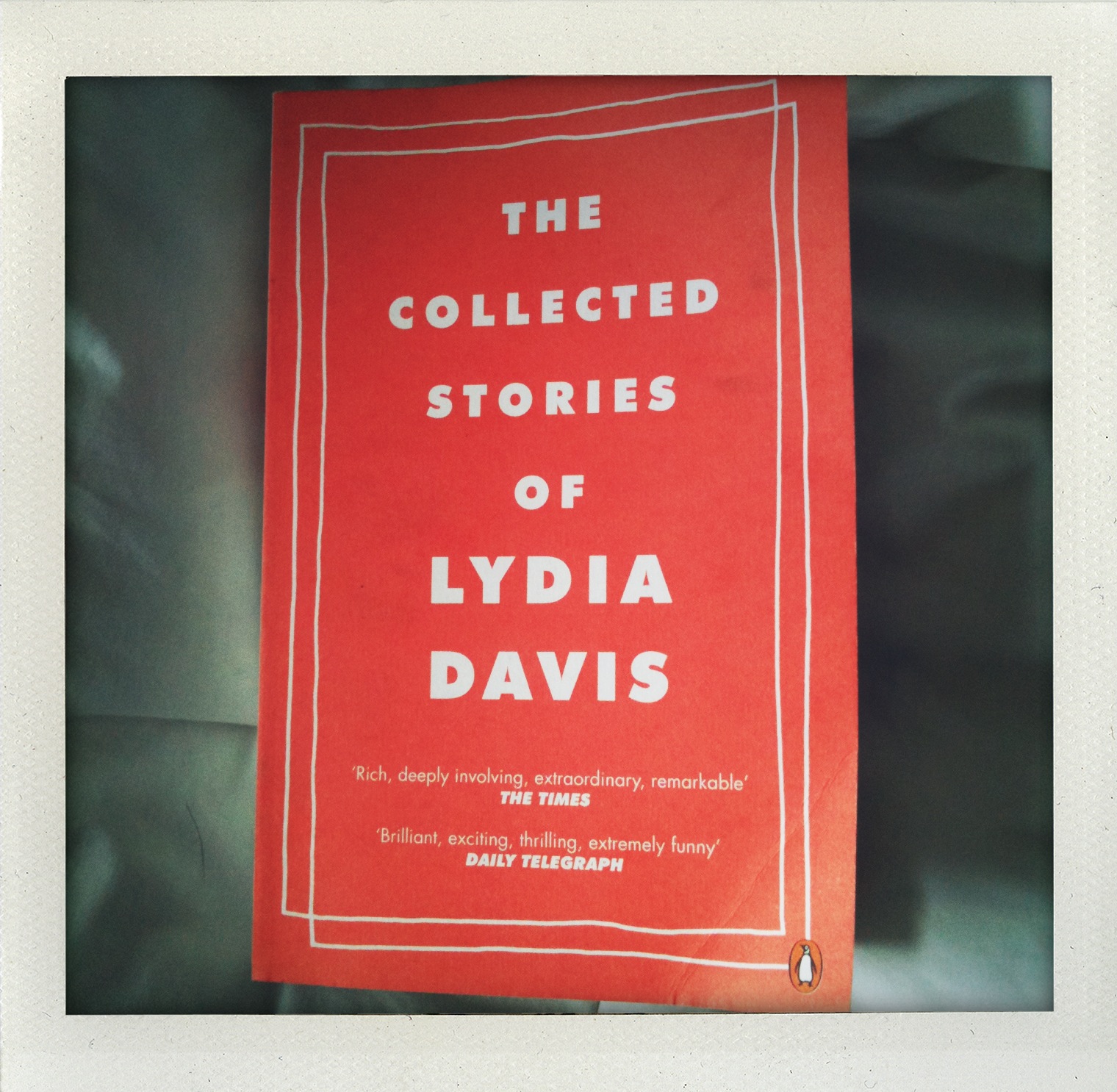
An extract from “The House Plans” from The Collected Stories of Lydia Davis (2009):

In the beginning, my blueprint had absorbed all my time and attention because I was going to build the house from it. Gradually, the blueprint became more vivid to me than the actual house: in my imagination, I spent more and more time among the pencilled lines that shifted at my will. Yet if I had openly admitted that there was no longer any possibility of building this house, the blueprint would have lost its meaning. So I continued to believe in the house, while all the time the possibility of building it eroded steadily from under my belief.

A History of Pie Activism

This appeared in The Guardian’s Comment is Free section on 20 July 2011:

From Jonnie Marbles to the Yippies: A History of Pie Activism
The attack on Rupert Murdoch is part of a tradition of patisserie activism — but shaving foam is no substitute for the real thing
Noel Godin, political custard pie thrower
[Nöel Godin, political custard pie thrower. Photograph: Van Parys/Corbis]

Jonathan May-Bowles (aka Jonnie Marbles), who attacked Rupert Murdoch during yesterday’s phone-hacking hearing, has all the makings of a formidable flan flinger. In his capacity as comedian-cum-activist, he embodies a kind of Platonic ideal of patisserie terrorism – that strange interface between slapstick and protest.

Pie-throwing as a political gesture has its roots in the Groucho-Marxism of the 1960s student uprisings and, more specifically, in the prankish happenings of the Yippies. Tom Forçade, the founder of High Times magazine, is usually considered to have perpetrated the very first political pie crime in 1970. Aron Kay, who came to be known as “The Yippie Pie Man”, followed suit, covering countless politicians and celebrities (including the mayor of New York City and Andy Warhol) in cream, between the late 1970s and early 1990s. Yesterday, he allegedly posted a message on a website giving his full support to May-Bowles: “Murdoch definitely needed a pie, for sure.” However, it was a Belgian anarchist who really put “patisserie guerrilla” on the map. One could argue that he even managed to turn it into an art form.

In the late 60s, Nöel Godin was, among other things, a film critic who amused himself by reviewing movies he hadn’t seen or that didn’t even exist. Georges Le Gloupier, a fictitious film director (invented by his partner in crime Jean-Pierre Bouyxou), made regular appearances in these reviews.

In 1969, Godin wrote that Le Gloupier had been so outraged by Robert Bresson‘s latest film that he had felt compelled to chuck a “Mack Sennett-style” pie smack in the director’s face. In a sequel, he went on to describe how the French novelist Marguerite Duras had avenged the initial “creamy affront” by giving Le Gloupier an impromptu pastry pasting while he was dining out in Saint-Germain-des-Prés. “Madame,” said the biter bit after licking his frothy chops, “I prefer your patisserie to your novels.”

Through some quirk of fate, the publication of the second article coincided with Madame Duras’s arrival in Belgium on a promotional tour. This proved a godsend to Godin, who decided to give a final twist to this burlesque saga. He ambushed the prime exponent of the “empty novel” and treated her to a real custard pie this time round. A visiting card was nestling in the incredible, edible weapon. It read: “With the compliments of Le Gloupier.”

The seminal Duras drubbing provided a blueprint for all the subsequent pie attacks. A few months later, it was choreographer Maurice Béjart‘s turn to fall victim to a Chantilly crime. By that time, Le Gloupier had acquired all his distinctive features: the refined dinner jacket and bow tie of gentleman-burglar Arsène Lupin, the false beard and spectacles of a cartoon, bomb-throwing anarchist and, last but not least, the absurd “gloup! gloup!” mantra. In the time-honoured tradition of Galatea, Pinocchio and sundry gingerbread men legging it after rising from the pastry board, Le Gloupier took on a life of his own: he started popping up all over the place, unbeknown to his creator, who was often associated with attacks he had taken no part in, but was only too willing to take credit for.

According to Godin, a well-aimed pie can break through the victim’s public image and lay bare his true character. New Wave director Jean-Luc Godard, for instance, reacted in good-humoured fashion and refused to press charges. By contrast, Bernard-Henri Lévy reacted violently and was flanned on at least five occasions as a result. The vendetta against the pop philosopher turned into a running gag in France.

The movement probably peaked in 1998, with the pieing of Bill Gates. Godin had now become a celebrity in his own right, and was frequently invited on live TV shows to be pied by presenters he had himself pied. The whole thing was descending into farce. However, the website of Godin’s “Internationale pâtissière” continues to advertise the latest pie attacks on a monthly, and sometimes even weekly, basis. The pieing of Murdoch could well be the sign of a revival.

Jonathan May-Bowles still has a thing or two to learn, though. A plateful of shaving foam is no substitute for the real thing. Godin once told the Observer: “We only use the finest patisserie ordered at the last minute from small local bakers. Quality is everything. If things go wrong, we eat them.”

****

Here is a longer (unpublished) version of the same piece:

Jonathan May-Bowles, who attacked Rupert Murdoch during yesterday’s phone-hacking hearing, has all the makings of a formidable flan flinger. In his capacity as comedian-cum-activist, he embodies a kind of Platonic ideal of patisserie terrorism — that strange interface between slapstick and protest. Pity, then, that he didn’t take a leaf out of Mack Sennett‘s book: “A mother never gets hit with a custard pie,” warned the Hollywood director, who knew a thing or two about the use of confectionery as weaponry, “Mothers-in-law, yes. But mothers? Never”. Old men are also a no-no, even if they happen to be at the head of an evil international media conglomerate. Pieing is always a difficult balancing act, a subtle blend of humour and anger, and in this case the first, vital ingredient was sorely lacking. Like the pie itself — a plateful of shaving foam — it wasn’t the real thing. Instead of shattering the spectacle (in Situationist parlance), May-Bowles has simply provided a perfect photo opportunity illustrating the metaphorical humble pie that Murdoch was already eating. Worse still, the media mogul may come out of this looking like the victim.

Pie-throwing as a political gesture has its roots in the Groucho-Marxism of the 60s student uprisings and, more specifically, in the prankish happenings of the Yippies in the United States. Tom Forçade, the founder of High Times magazine, is usually considered to have perpetrated the very first political pie crime in 1970. Aron Kay, who came to be known as “The Yippie Pie Man”, followed suit, covering countless politicians and celebrities (including the mayor of New York City and Andy Warhol) in cream, between the late 70s and early 90s. Yesterday, he allegedly posted a message on a website giving his full support to May-Bowles: “Murdoch definitely needed a pie, for sure!” However, it was Belgian anarchist Noël Godin who really put “patisserie guerrilla” on the map. One could argue that he even managed to turn it into an art form.

Like Aron Kay, Godin was influenced by the slapstick of the Three Stoges and the political ferment of 1968, but he also drew inspiration from the insurrectionary humour of late nineteenth-century French anarcho-pranksters like the Hydropathes or the Zutistes, to whom he paid homage in his anthology of radical subversion (Anthologie de la subversion carabinée, 1988).

In the late 60s, Godin was, among other things, a film critic who amused himself by reviewing movies he hadn’t seen or that didn’t even exist. Georges Le Gloupier, a fictitious film director (invented by his partner in crime Jean-Pierre Bouyxou), made regular appearances in these reviews. In1969, Godin wrote that Le Gloupier had been so outraged by Robert Bresson’s latest film, that he had felt compelled to chuck a “Mack Sennett-style” pie smack in the director’s face. In a sequel worthy of one of Joe Orton’s classic epistolary pranks, he went on to describe how the French novelist Marguerite Duras had avenged the initial “creamy affront” by giving Le Gloupier an impromptu pastry pasting while he was dining out in Saint-Germain-des-Prés. “Madame,” said the biter bit after licking his frothy chops, “I prefer your patisserie to your novels”. Through some quirk of fate, the publication of the second article coincided with Mme Duras’s arrival in Belgium on a promotional tour. This proved a godsend to Godin. The affair was causing so much fuss that the novelist was immediately forced to hold a press conference during which she repeatedly denied all prior knowledge of “Le Gloutier” (sic). Godin decided to give a final twist to this burlesque saga, thus illustrating Wilde’s dictum that life imitates art. He ambushed the prime exponent of the “empty novel,” and treated her to a real custard pie this time round. A visiting card was nestling in the incredible, edible weapon. It read: “With the compliments of Le Gloupier”.

The seminal Duras drubbing provided a blueprint for all the subsequent pie attacks. Le Gloupier’s metamorphosis into a latter-day noble bandit figure had occured overnight. A few months later, it was choreographer Maurice Béjart’s turn to fall victim to a chantilly crime. By that time, Le Gloupier had acquired all his distinctive features: the refined dinner jacket and bow tie of gentleman-cambrioleur Arsène Lupin, the false beard and spectacles of a cartoon, bomb-throwing anarchist and, last but not least, the absurd “gloup! gloup!” slogan. In the time-honoured tradition of Galatea, Pinocchio and sundry gingerbread men legging it after rising from the pastry board, Le Gloupier took on a life of his own, popping up all over the place, unbeknown to his creator, who was sometimes associated with attacks he had taken no part in, but was only too willing to take credit for.

According to Godin, custard pies are the weapons of “the weak and powerless” (L.A. Times). A well-aimed pie can shatter the pompous and vacuous public image of a celebrity in a matter of seconds. Le Gloupier’s targets (politicians, journalists, actors, pop stars, writers) are never selected at random (“Every victim has to be thoroughly justified,” The Observer) and his weapons are chosen with the same meticulous care (“We only use the finest patisserie ordered at the last minute from small local bakers. Quality is everything. If things go wrong, we eat them”). Pseudo-philosopher Bernard-Henri Lévy was flanned on five different occasions because he was “totally in love with himself” and epitomized “empty, vanity-filled literature”.

According to Godin, a well-aimed pie can break through the victim’s public image and lay bare his true character. New Wave director Jean-Luc Godard, for instance, reacted in good-humoured fashion and refused to press charges. By contrast, Bernard-Henri Lévy reacted violently and was flanned on at least five occasions as a result. The vendetta against the pop philosopher turned into a running gag in France.

The movement probably peaked in 1998, with the pieing of Bill Gates. Godin had now become a celebrity in his own right, and was frequently invited on live TV shows to be pied by presenters he had himself pied. The whole thing was descending into farce. However, the website of Godin’s “Internationale pâtissière” continues to advertise the latest pie attacks on a monthly, and sometimes even weekly, basis. The pieing of Murdoch could well be the sign of a revival.

Jonathan May-Bowles still has a thing or two to learn, though. A plateful of shaving foam is no substitute for the real thing. Godin once told the Observer: “We only use the finest patisserie ordered at the last minute from small local bakers. Quality is everything. If things go wrong, we eat them.”

But They Aren’t Writing Anything At All!

An extract from “Literature’s New Clothes,” A Life Unfurnished 4 July 2011:

Contemporary literary fiction is a case of the Emperor’s new clothes. It is time somebody shouted out from the crowd: “But they aren’t writing anything at all!”

[…] Contemporary literary fiction continues the attempt to live up to Plato’s definition of art — which, for Plato, made art true — by writing in a manner to give the appearance alone of literature. The effect is a genre in which, for the writer, the sense of Writing Literature is dominant, and, for the reader, the sense of Reading Literature is dominant. And this effect is produced, not simply by the abandonment of most of the elements of character and plot, not simply even by an avoidance of high-literary language and style, but by a self-conscious juxtaposition of the signs of excruciating effort — short, elliptical sentences; absence of fulsome description; muted tone of painful sublimation — with the signs of iconoclastic casualness — colloquialisms; lack of trajectory; air of the incidental. This is how the appearance alone of literature is pursued: by the combination of painful retention, of a Literature that will never appear, and easy production, of a Literature that need only appear. […]

As a Child Might Pee Against a Tree

An extract from Biblioklept Interviews Novelist Lars Iyer,” Biblioklept 15 July 2011:

[…] Literature continues. But it does so, in contemporary literary fiction, as a kind of empty form. As the anonymous blogger of Life Unfurnished has put it: contemporary literary fiction gives ‘the appearance alone of literature’; it is a genre ‘in which, for the writer, the sense of Writing Literature is dominant, and, for the reader, the sense of Reading Literature is dominant’.

Reviewing Jean-Luc Godard’s film Every Man For Himself, Pauline Kael writes, ‘I got the feeling that Godard doesn’t believe in anything anymore; he just wants to make movies, but maybe he doesn’t really believe in movies anymore, either’. Without agreeing with Kael’s assessment of Godard, I’d like to paraphrase her formulation: I think literary writers want to write literary fiction without believing in literature — without, indeed, believing in anything at all.

It seems to me that the literary gestures are worn out — the creation of character, plot, the contrivance of high-literary language and style as much as the avoidance of high-literary language and style, and the abandonment of most elements of the creation of character and plot. The ‘short, elliptical sentences’ of which the blogger of Life Unfurnished writes, the ‘absence of fulsome description’, the ‘signs of iconoclastic casualness’, the ‘colloquialisms’, the ‘lack of trajectory’, the ‘air of the incidental’: all are likewise exhausted.

What, then, is to be done? As writers, as readers, we are posthumous. We’ve come too late. We no longer believe in literature. Once you accept this non-belief, once you affirm it in a particular way, then something may be possible.

Witold Gombrowicz seems to be advocating a return to older forms of literary insouciance: ‘Where are the good old days, when Rabelais wrote as a child might pee against a tree, to relieve himself? The old days when literature took a deep breath and created itself freely, among people, for people!’ But we cannot simply return to Rabelais, as Gombrowicz knew. Too much has happened! If a kind of self-consciousness is a distinguishing mark of the contemporary literary novelist, this is not something that can be relinquished altogether. The role of centuries of writing — of the rise of the nineteenth century bourgeois novel, of modernism and so on — must be marked.

But it can be marked by portraying our distance now from the conditions in which the great works of literature and philosophy were written. W. and Lars, the characters in Spurious, revere Rosenzweig. But this is also reverence for a culture that would deem Rosenzweig and his work important – a culture that is completely different from the one which W. and Lars occupy. True, they revere contemporary masters, too — the filmmaker Béla Tarr, for example — but Tarr lives far away, in very different conditions. W. and Lars occupy the world of the present, and the world that valued the ideas they value, the world that sustained those ideas and nurtured their production, has disappeared. Much of the humour of the book comes from the fact that its characters are men out of time — gasping in awe at Rosenzweig’s work at one moment, leafing through gossip magazines at another; proclaiming a great love of Kafka one minute, playing Doom on a mobile phone the next.

All the Latest

I’ve written a piece about custard-pie activism for the Guardian‘s Comment is Free section. You can read it here. An expanded version of my review of Marc-Edouard Nabe‘s latest novel appeared in 3:AM Magazine. Also in 3:AM, I talk about my summer reading list.

Hauntology

This appeared in Guardian Books on 17 June 2011:

Hauntology: A Not-So-New Critical Manifestation
The new vogue in literary theory is shot through with earlier ideas

[Haunting presence … Jacques Derrida, who coined the term hauntology, in a still from the documentary Derrida]

Hauntology is probably the first major trend in critical theory to have flourished online. In October 2006, Mark Fisher — aka k-punk — described it as “the closest thing we have to a movement, a zeitgeist”. A mere three years later, Adam Harper prefaced a piece on the subject with the following caveat: “I’m all too aware that it’s no longer 2006, the year to blog about hauntology”. Two months ago, James Bridle predicted that the concept was “about six months away from becoming the title of a column in a Sunday supplement magazine”. Only four months to go, then. My hunch is that hauntology is already haunting itself. The revival starts here.

Like its close relative psychogeography, hauntology originated in France but struck a chord on this side of the Channel. In Spectres of Marx (1993), where it first appeared, Jacques Derrida argued that Marxism would haunt Western society from beyond the grave. In the original French, “hauntology” sounds almost identical to “ontology”, a concept it haunts by replacing — in the words of Colin Davis — “the priority of being and presence with the figure of the ghost as that which is neither present, nor absent, neither dead nor alive”.

Today, hauntology inspires many fields of investigation, from the visual arts to philosophy through electronic music, politics, fiction and literary criticism. At its most basic level, it ties in with the popularity of faux-vintage photography, abandoned spaces and TV series like Life on Mars. Mark Fisher — whose forthcoming Ghosts of My Life (Zer0 Books) focuses primarily on hauntology as the manifestation of a specific “cultural moment” — acknowledges that “There’s a hauntological dimension to many different aspects of culture; in fact, in Moses and Monotheism, Freud practically argues that society as such is founded on a hauntological basis: the voice of the dead father”. When you come to think of it, all forms of representation are ghostly. Works of art are haunted, not only by the ideal forms of which they are imperfect instantiations, but also by what escapes representation. See, for instance, Borges‘s longing to capture in verse the “other tiger, that which is not in verse”. Or Maurice Blanchot, who outlines what could be described as a hauntological take on literature as “the eternal torment of our language, when its longing turns back toward what it always misses“. Julian Wolfreys argues in Victorian Hauntings (2002) that “to tell a story is always to invoke ghosts, to open a space through which something other returns” so that “all stories are, more or less, ghost stories” and all fiction is, more or less, hauntological. The best novels, according to Gabriel Josipovici, share a “sense of density of other worlds suggested but lying beyond words“. For the reader or critic, the mystery of literature is the opacity — the irreducible remainder — at the heart of writing that can never be completely interpreted away. The whole western literary tradition itself is founded on the notion of posterity, which Paul Eluard described as the “harsh desire to endure” through one’s works. And then, of course, there’s the death of the author… All this, as you can see, could go on for quite a while, so perhaps we should wonder if the concept does not just mean all things to all (wo)men. Steen Christiansen, who is writing a book on the subject, explains that “hauntology bleeds into the fields of postmodernism, metafiction and retro-futurism and that there is no clear distinction — that would go against the tension which hauntology aims at”.

As a reflection of the zeitgeist, hauntology is, above all, the product of a time which is seriously “out of joint” (Hamlet is one of Derrida’s crucial points of reference in Spectres of Marx). There is a prevailing sense among hauntologists that culture has lost its momentum and that we are all stuck at the “end of history“. Meanwhile, new technologies are dislocating more traditional notions of time and place. Smartphones, for instance, encourage us never to fully commit to the here and now, fostering a ghostly presence-absence. Internet time (which is increasingly replacing clock time) results in a kind of “non-time” that goes hand in hand with Marc Augé’s non-places. Perhaps even more crucially, the web has brought about a “crisis of overavailability” that, in effect, signifies the “loss of loss itself”: nothing dies any more, everything “comes back on YouTube or as a box set retrospective” like the looping, repetitive time of trauma (Fisher). This is why “retromania” has reached fever pitch in recent years, as Simon Reynolds demonstrates in his new book — a methodical dissection of “pop culture’s addiction to its own past”.

Hauntology is not just a symptom of the times, though: it is itself haunted by a nostalgia for all our lost futures. “So what would it mean, then, to look for the future’s remnants?” asks Owen Hatherley at the beginning of Militant Modernism, “Can we, should we, try and excavate utopia?” It might just be worth a shot.

Only an Imitation of the Ideal

Rick Gekoski, Writing is Bad for You (in the Rick Gekoski: Fingers on the Page column), The Guardian 7 July 2011:

“…Alan Hollinghurst has recently observed a similar phenomenon in himself, and used it to explain why he lives alone. “I’m not at all easy to live with,” he says. “I wish I could integrate writing into ordinary social life, but I don’t seem to be able to. I could when I started. I suppose I had more energy then. Now I have to isolate myself for long periods.”

You don’t, of course, need to live by yourself to become isolated. When I am writing I wander in a fug all day, wake in the middle of the night — waking my wife Belinda as well — and stagger downstairs to record a thought or two. Leave the bed with my mind whirling with gorgeously formed sentences which are as evanescent as the smell of lily of the valley, and about as easy to recall. By the time I get to the keyboard their perfection (as it seems to me in my drowsy creative mode) has dissipated, and though I can catch something of what seemed a sensational formulation it is already, in that Platonic way, only an imitation of the ideal. I fiddle about, rewrite and reconsider, and go back to bed an hour later thoroughly stimulated, dissatisfied, and unable to sleep. I read for another hour. The next day I complain that I am tired, and show all the signs of it: irritability, abstraction, and a tendency to fall asleep on a sofa at any time, including when I am being spoken to. …”

Quotes

“It would be in contradiction to the conservative nature of the drives if the goal of life were a state of things which had never yet been attained. On the contrary, it must be an old state of things, an initial state from which the living entity has at one time or another departed and to which it is striving to return by the mazings along which its development leads. …For a long time, perhaps, living substance was thus being constantly created afresh and easily dying, till decisive external influences altered in such a way as to make ever more complicated mazings before reaching its aim of death. These mazings to death, faithfully kept to by the conservative drives, would thus present us today with the picture of the phenomena of life.”
Sigmund Freud, Beyond the Pleasure Principle