Who’s Who When Everyone is Someone Else

My review of Who’s Who When Everyone is Someone Else by C.D. Rose. The Irish Times, 1 September 2018, p. 32.

Is C.D. Rose an elaborate literary hoax? Some have harboured suspicions ever since he “edited” The Biographical Dictionary of Literary Failure (2014) chronicling the fate of obscure scribes, who, on closer inspection, all turned out to be fictional. The provocative title of his debut novel, Who’s Who When Everyone is Someone Else, lets the (Cheshire) cat out of the bag.

A suspiciously anonymous protagonist doubles up — like so many other things in this tale of doppelgängers and mistaken identities — as a remarkably reliable narrator who conceals his storytelling talents behind apologetic asides to the reader (the storyline is far less digressive than he makes out). Following the “modest success” of a book he edited — yes, the aforementioned Biographical Dictionary — he is invited to deliver a series of 10 lectures on lost or forgotten works in an unspecified provincial city, somewhere in central Europe. The stage is set for a campus caper in Kafkaland that reads, at times, like a David Lodge revisited by Umberto Eco.

When he sets foot in his cramped hotel room — dominated by an oversized Narnia-like wardrobe — the narrator senses that he is “somewhere just not quite right”, signalling that he has stepped through the looking-glass into a recognisable, yet subtly defamiliarised, world. After all, what is this “cupboard within a cupboard” if not a mise en abyme — the space of fiction squared, which is that of literature itself?

The uncanniness of the hotel room spreads to the labyrinthine city, which seems expressly “designed to lose oneself in”, geometry being a “loose concept” in these Expressionistic climes. Roaming the streets, the narrator has the distinct feeling of being preceded (rather than followed) as though haunted by the anxiety of influence or trapped in someone else’s narrative. It transpires that the ever-elusive Professor, who (supposedly) invited him in the first place, is dead — having probably been eliminated as part of a sinister plot to eradicate literature. Unbeknown to him, the narrator has been enrolled in the resistance due to his faith in Maxim Guyavitch, a cult author who wrote very little and whose very existence is contested.

Who’s Who is a book lover’s book, as well as a comic gem. Its palimpsestic quality is obvious from the italicised opening paragraphs, which are meant to be an excerpt from a potboiler the narrator is trying (and failing) to read on the train. Later, the discovery of a volume — which may or may not be a lost Guyavitch — is savoured like a fine vintage: “It gave off an odour of ferns, of waxy newness with an undertow of body musk”. The lectures that interrupt the frame narrative at regular intervals (the last one is left blank in homage to Tristram Shandy) allow the author to produce pastiches of various genres ranging from magic realism to folk horror. Most of the authors on whose fake works he then offers a mock-academic excursus exist — insofar as they are figments of other writers’ imaginations. Enoch Soames, for instance, comes from Max Beerbohm, Vilém Vok from Enrique Vila-Matas, Silas Flannery from Italo Calvino, Maurice Bendrix from Graham Greene and Herbert Quain from Borges.

It is the latter, of course, who advocated summarising or critiquing books instead of going to all the trouble of composing them. Writing about fictitious or lost works (both in this case) is a means of holding literature in abeyance; of preserving its potentiality. This is as close as we can get to fiction’s “strange kind of utopia”.

As for the author? C.D. Rose is a rose is a rose is a rose.

The Story of “The Face”

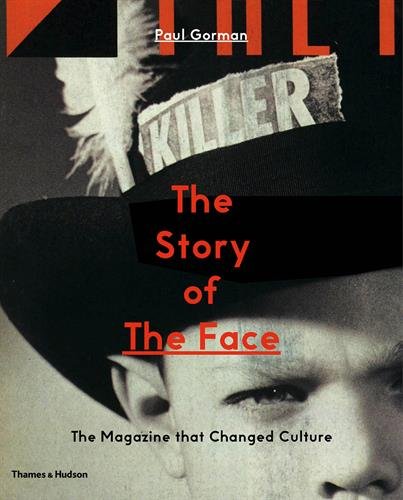
My review of The Story of “The Face”: The Magazine That Changed Culture by Paul Gorman. The Times Literary Supplement, 24 & 31 August 2018, p. 43.

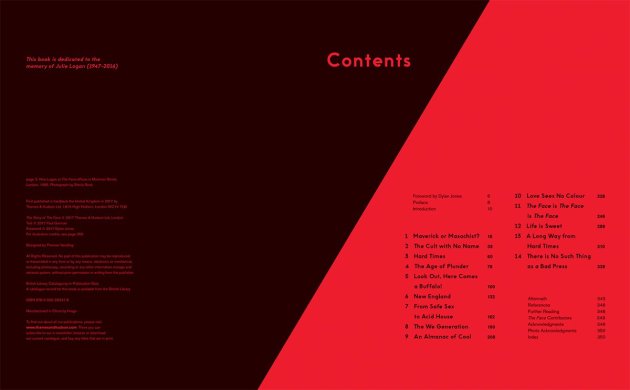
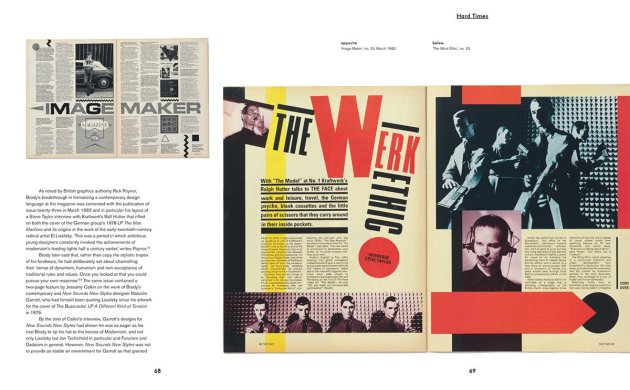
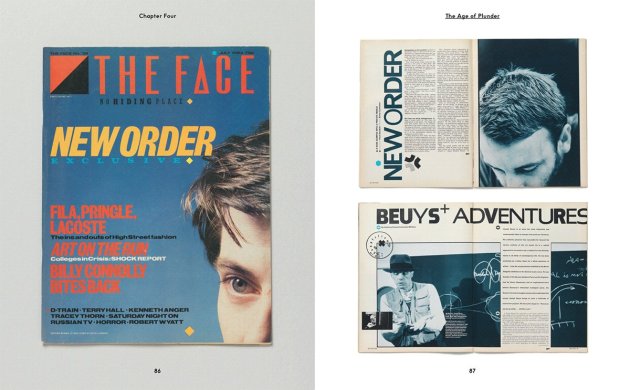
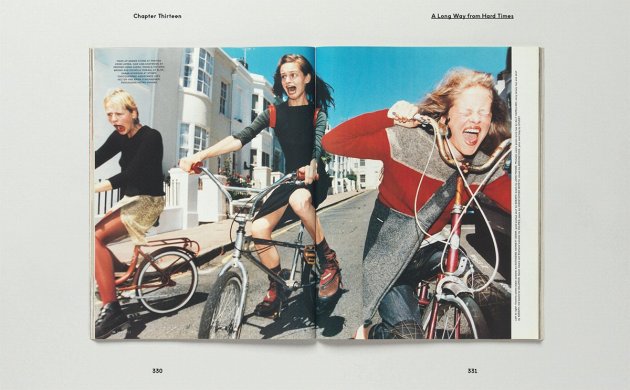
Paul Gorman’s The Story of “The Face” charts the rise and fall of the original style magazine, from its launch, on a shoestring, in 1980, to 1999, when it was sold off by its founder to a publishing giant. Nick Logan’s monthly would only survive five more years in the brave new digital world it had foreshadowed with its kaleidoscopic cultural coverage. Right from the start, The Face proved a victim of its own success. Having identified style as the prism through which to observe the zeitgeist — thereby eliding the distinction between men and women’s magazines — it soon spawned a host of imitators, not least among the Sunday supplements. At one stage, art director Neville Brody was producing a brand new typeface for every issue, in a frenetic bid to remain one step beyond.

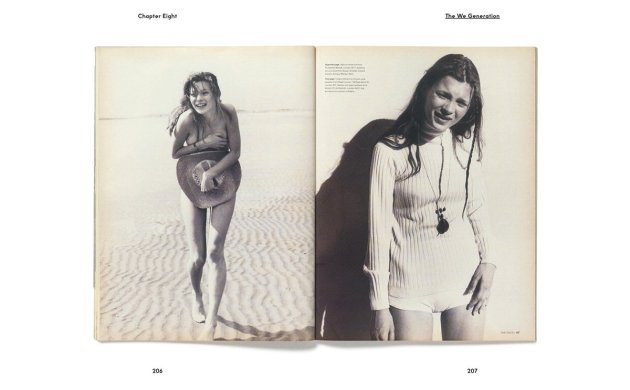
This coffee-table book, with its hundreds of lavishly reproduced covers and innovative page layouts, does full justice to the “world’s best-dressed magazine”. Flicking through it, one witnesses The Face’s visual identity gradually shifting away from radical graphic design towards slick era-defining photography. The Story of The Face is a paean to its founder who, the author contends, has been airbrushed out of history. Logan’s fascination with the intersection between pop music and street style was rooted in his days as a young mod in the 1960s, which the title of his prime publication would allude to (a face being a top mod). After working for the local press, he graduated to the New Musical Express where he became editor at the age of twenty-six, in 1973, presiding over what was arguably the paper’s most important period. He left, following a breakdown, subsequently launching the hugely successful Smash Hits aimed at the post-punk teenybopper market.

The Face was ahead of its time, but also very much of it. The inaugural issue was even delayed by a printers’ strike. Although he knew that the Two Tone phenomenon had already peaked, Logan insisted on putting a picture of The Specials’ Jerry Dammers on the cover as the band typified the marriage of street style and popular music he intended to explore. In a landmark piece published a couple of years later, Robert Elms observed that youth culture now represented “not a rebellion but a tradition” — one, he may have sensed, that was drawing to a close. The days of the austerity dandies who, devoid of job or future, fashioned themselves into extravagant works of art, were numbered. Never again would style have so much substance. The Face chronicled the end of an era as much as it ushered in a new one, endowing its early strapline — “rock’s final frontier” — with a presciently valedictory tone.


The Story of “The Face” (excerpt)

My short review of Paul Gorman‘s excellent The Story of “The Face”: The Magazine That Changed Culture features in the latest issue of The Times Literary Supplement, 24 & 31 August 2018, p. 43.

Here’s an extract:

. . . The Face was ahead of its time, but also very much of it. The inaugural issue was even delayed by a printers’ strike. Although he knew that the Two Tone phenomenon had already peaked, Logan insisted on putting a picture of The Specials’ Jerry Dammers on the cover as the band typified the marriage of street style and popular music he intended to explore. In a landmark piece published a couple of years later, Robert Elms observed that youth culture now represented “not a rebellion but a tradition” — one, he may have sensed, that was drawing to a close. The days of the austerity dandies who, devoid of job or future, fashioned themselves into extravagant works of art, were numbered. Never again would style have so much substance. The Face chronicled the end of an era as much as it ushered in a new one, endowing its early strapline — “rock’s final frontier” — with a presciently valedictory tone.

Poetic Fragments of Recollection

Volpert, Megan. “Punk is Dead is Very Alive.” Popmatters, 16 April 2018

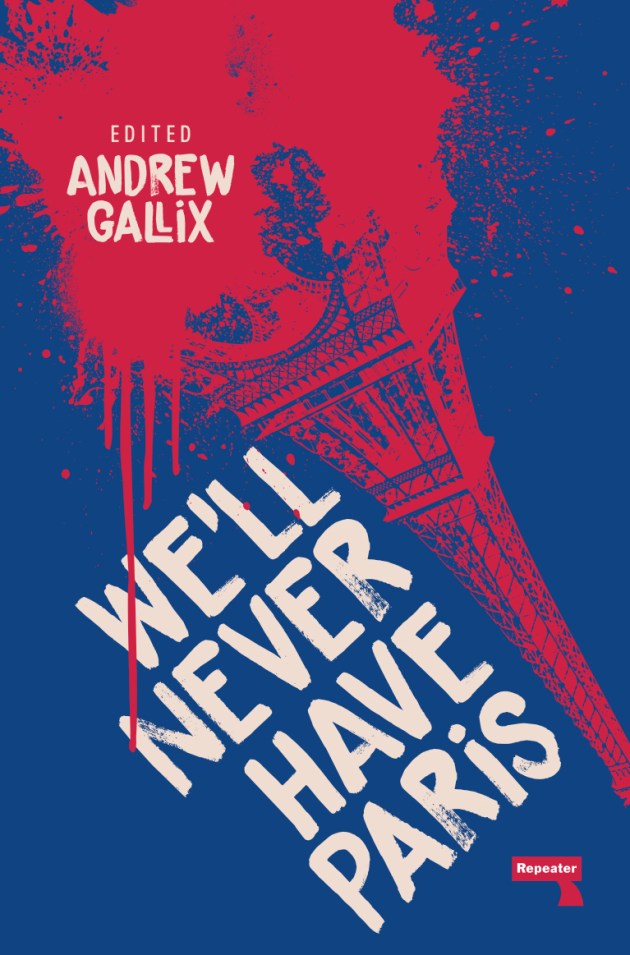
… If you want to learn a tremendous quantity of information about punk that has been obscured by a lack of reputable first-hand accounts, look no further than Punk Is Dead: Modernity Killed Every Night. It’s a collection of weird histories and poetic fragments of recollection strung together by two editors: Richard Cabut, who was 17 in the summer of 1977, and Andrew Gallix, who is best known as chief of 3:AM Magazine. The focal point of the book is London in late 1976, during the 15-minutes where pretty much everybody agrees that “punk” was a genuinely existing thing. …

Throttling the Helm

Marshall, Richard. “A Personal Golgotha.” 3:AM Magazine, 19 May 2018:


Richard Marshall writes: “A bit of fun… Stuff I’ve done over the years here at 3:AM thanks to legends Andy Gallix and Andrew Stevens… It’s all DIY — hardly proofread and done too fast in between day jobs to be anything but jump-start writing. So forget about the writing. What matters is what its about. It adds up to a boss reading list and a cranked up gang of characters smoking up the haunted back bars of the eerie early morning. 3:AM’s been around since 2000 and I joined Gallix’s punkstorm early on. It’s one of the oldest literary sites on the web. And back in the early days there was hardly anything out there so we were literally making it up as we went along. We still are. Lots of things have changed since the start and people have come and gone of course. There’s a new crew now. Still, I like that Andy’s still throttling the helm and Andrew keeps lighting fires. …”


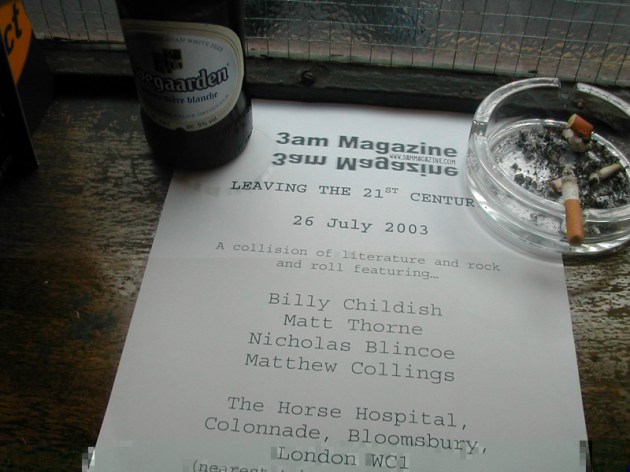
[Pictures from top:
Flyer advertising 3:AM Magazine‘s ‘Leaving the 21st Century‘ gig at London’s Horse Hospital, 26 July 2003.
‘Leaving the 21st Century’, 26 July 2003.
Richard Marshall, London, 2003.
Me sporting a 3:AM T-shirt, London, 2003.
Andrew Stevens at Death Disco, London, 2003.]


Delicately Broached Negation

Brian Dillon, Essayism, 2017

‘Aestheticizing’, we’d learn to say of such love; I hate the word to this day. As if there were anything available, anything left, except aesthetics, except an effort to frame the wreckage in the aftermath, at the last. The refusal of ‘aestheticization’ is a refusal to accept the worst, but dressed up as its opposite. The greatest art is nothing but delicately broached negation. I went looking for writers who would tell me that, time and again.

The Cost of Living

This review of Deborah Levy’s The Cost of Living appeared in the Irish Times on 7 April 2018, p. 34:

The Price a Woman Has to Pay For Unmaking a Home

The Cost of Living is the second instalment, and future centrepiece, in Deborah Levy’s autobiographical trilogy. Its pivotal nature becomes apparent when the narrator is loaned a shed of her own, where three books — “including the one you are reading now” — will be conceived. Such foregrounding of the work’s primal scene is no metafictional gimmick, however. It is consonant with Levy’s commitment to looking life in the eye, rather than reflected in the shield of allegory.

“It was there,” she explains, “I would begin to write in the first person, using an I that is close to myself and yet is not myself”. Gazing back at her textual avatar – becoming the reader, as well as the author, of herself – Levy opens up this gap through which she journeys towards the “vague destination” of a “freer life”.

There is a deeply moving, albeit somewhat disquieting, passage, where the nine-year-old Deborah, fresh off the boat from her native South Africa, comes knocking on the door of her middle-aged self in London, and ends up watching Bake Off with the two daughters she will later give birth to. This is a variation on the “flashback in the present” technique that the author frequently deploys to great effect in her fiction, but spectacularly fails to get across to a boardroom full of film executives, in one of the book’s many comic scenes.

Describing this ongoing project as a “living biography” is particularly apposite, not only because the author is alive, kicking and evidently at the height of her creative powers, but also because she eschews nostalgia, firmly convinced that the past is never written in stone. Towards the end of the book, she speaks to her mother for the first time since her passing: “She is listening. I am listening. That makes a change”. She goes on to recount a heart-rending anecdote about a pair of earrings she almost buys her as a gift in a department store, before the unspeakable enormity of death suddenly sinks in at the till.

If Things I Don’t Want to Know (2013) was a response to Orwell’s Why I Write, the emphasis here is on how to write in the wake of two traumatic events which occurred within a year of each other: the break-up of the author’s marriage and her mother’s demise. In the Booker-shortlisted Swimming Home (2011), one of the characters claims to only enjoy biographies once the subjects have escaped “from their family and spend the rest of their life getting over them”. Finding herself in a similar situation, the author now seems to be putting into practice all the themes she has been rehearsing in her works since the 1980s, as though the fiction were a prelude to her vita nova.

As Levy downsizes, her life grows bigger and she feels emboldened and energised by the adventure she has embarked upon despite all the hardship. She has no regrets about swapping her book-lined study for a “starry winter night sky”, now that she writes on a tiny balcony, where she falls asleep fully dressed “like a cowgirl”, in her north London “apartment on the hill”. Other people – including the family from down the road that she borrows for Sunday lunches, the Turkish newsagents and the Welsh octogenarian firebrand who kindly lends her the shed – are a constant source of fascination, but so too are the bees, moths, squirrels and birds she shares the world with: “everything,” she observes, “is connected in the ecology of language and living”. She delights in the practicalities of daily life, even proving a dab hand with a Master Plunger, and when she zips along the road on her electric bicycle, her party dress “flying in the wind”, she finds it difficult not to whoop.

The Cost of Living refers to the price a woman has to pay for unmaking the home she no longer feels at home in. In Levy’s case, this radical act of erasure inaugurates a quest for a new life that is inseparable from the writing of a new narrative. No longer willing to take part in the masquerade of femininity – that “societal hallucination” – she fumbles for a different kind of role to play. At this juncture, all she knows is that it will be a “major [as yet] unwritten female character”. The process of transitioning “from one life to another” also prompts her to reinterpret some of her fondest memories and past attitudes: “Did I mock the dreamer in my mother and then insult her for having no dreams?”

Deborah Levy describes women’s often thankless homemaking enterprise as “an act of immense generosity”. It is also a perfect description of this truly joyous book.