
Lee Rourke, “A Bookshop Going Places,” Guardian Books 13 July 2011
First we had slow food, then slow writing and now, quite naturally it seems, we have slow bookselling.
Lee Rourke, “A Bookshop Going Places,” Guardian Books 13 July 2011
First we had slow food, then slow writing and now, quite naturally it seems, we have slow bookselling.
Will Coldwell, “Throwback Thursday: On Holiday in the 1980s – In Pictures,” The Guardian 3 April 2014


Caption: A photo that captures Britain at its finest: “That’s my stepdad rocking the sandals-and-socks combo,” says the reader who submitted it. “I’m wearing a Royal Wedding T-shirt showing Charles and Diana in punk attire.” Photograph: gallix/GuardianWitness
This is a picture of me (right) and Allen taken by my mum in Jersey, July 1981. When it featured on the Guardian‘s home page, they added a “How to wear socks with sandals” fashion piece just above!
“What We Wore by” by Jesse Barron, i-D Magazine 2O December 2013

What We Wore by Nina Manandhar
From the Clapham Soul Heads and the Anarcho Punks in Dreamland to the Spliffy-Chicks and Teenage Shoegazers, British subculture and street style from 1950 to 2010 has been one of the most thriving, varied and crazy anywhere in the world. In What We Wore, photographer Nina Manandhar invited fashion, music and art stars including Dizzee Rascal, Carrie Munden and Alasdair McLellan as well as the general public to submit photos from their youth with explanations of their life and style. The result is an eye-grabbing melange of young twin punks, bleach blonde boys and photo collages of kids in visors and hoodies with ‘WHERE MY DOGS AT???’ cut ‘n’ pasted along the top. Instagram your own with #whatweworeuk or submit at submit@what-we-wore.com and see the top picks in Autumn 2014 when What We Wore, which will be published by Prestel, will be on shelves.
Carlos Magro, “Gallix,” fragmentos escritos 25 January 2014
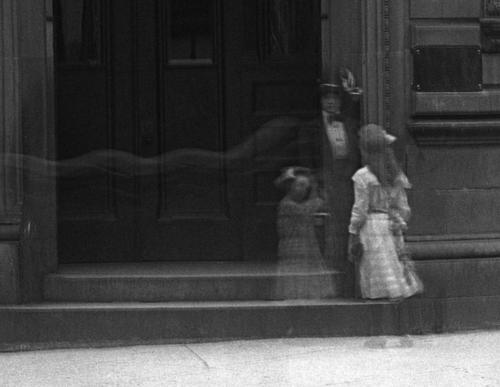
El “contenido” está “ahí fuera” -siempre ahí- toda la literatura es “paráfrasis”: “¿Quién estaría interesado en un discurso nuevo y no transmitido? Lo importante no es contar, sino volverlo a contar, y en esta repetición, contarlo de nuevo como si fuera la primera vez” (Maurice Blanchot. L’Entretien infini, 1969)
Andrew Gallix. “La influencia de la ansiedad”
[Foto: Fotografía tomada fuera del Royal Bank Branch. Notre Dame Street, Montreal, Canada. 1911]
Jeff Bursey, Rev. of [SIC], by Davis Schneiderman, The Quarterly Conversation 10 March 2014
In 2011 Andrew Gallix, in the Guardian, wrote a piece on unread difficult books, and he mentioned “an anthology of blank books [edited by Michael Gibbs] entitled All Or Nothing.” We can consider Blank as continuing that line. Kenneth Goldsmith’s prefatory essay “Why Conceptual Writing? Why Now?” in Against Expression: An Anthology of Conceptual Writing (2011) contains these useful lines: “What has happened in the past fifteen years has forced writers to conceive of language in ways unthinkable just a short time ago. With an unprecedented onslaught of the sheer quantity of language . . . , the writer faces the challenge of exactly how best to respond.” In volume one of his trilogy, Schneiderman edged near to muteness, but in [SIC] he has positioned himself, the work, and us in a new spot. His latest book is filled with words. None of them are his.
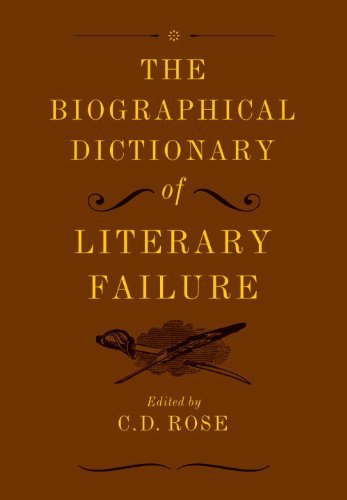
C. D. Rose‘s The Biographical Dictionary of Literary Literature (Melville House), with an introduction by yours truly, will be published on 4 November 2014.
Richard Marshall, “Borges’s ‘Funes the Memorious’,” 3:AM Magazine 9 March 2014
A writer is in hell when her reader forgets her. This is the problem of Beatrice. Beatrice existed infinitely for Dante but he hardly if at all for her. Here’s the nub for Borges and his prodigious minimalism: we should stop thinking a ten minute conversation with Roberto Bolano would reveal to us the true meaning of 2666. And never doubt that our greatest love hardly acknowledges us. Andrew Gallix’s strange and Roman miniature is probably a Florentine exile; his ‘Fifty Shades of Grey Matter’ engulfs this type of inutterable despair. Yet still, whatever is imagined is there. If this is likened to a journey then it ends in a catastrophe which is not destiny but its secret instruction.
The great Spanish novelist Enrique Vila-Matas has posted a link to my 2012 article, “La influencia de la ansiedad,” on his blog.
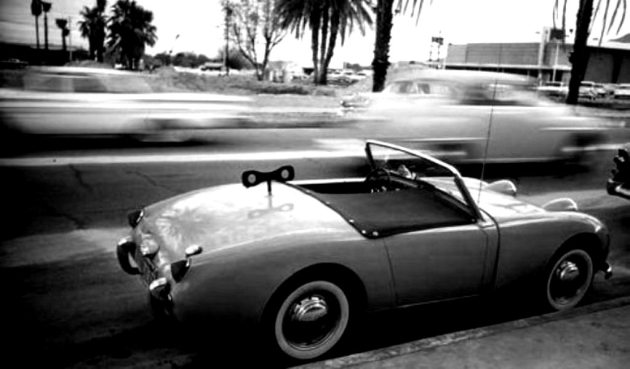
My piece on realism is referenced, rather dismissively, by J. W. Cormack in a question he puts to the excellent Jason Schwartz. Is it really contentious to claim that most people’s idea of a traditional novel — a “proper” novel — is (alas) one which can be loosely defined as “realist”?
J. W. Cormack, “Jason Schwartz,” BOMB 7 January 2014
Speaking of category, I read a fairly de rigueur article from The Guardian, one of those “end of fiction” pieces you see every few years — although this one seemed to be equating “traditional fiction” with “the realist novel.” Is this a mistake? Do you feel like the world needs a different fictive vocabulary than the purely representational one we’ve become accustomed to?


