Oulipo: Freeing Literature By Tightening its Rules

This appeared in Guardian Books on 12 July 2013:

Oulipo: Freeing Literature By Tightening its Rules

By imposing multiple restrictions on the processes of writing, this group of French writers seek to find what literature might be, rather than what it is
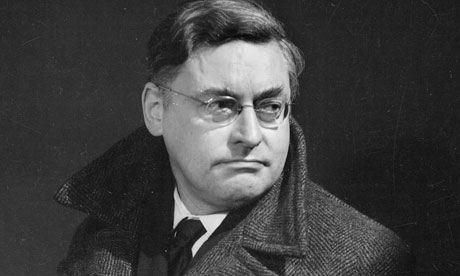
Billions of ideas ... Raymond Queneau Photograph: Lipnitzki/Roger Viollet/Getty Images

Billions of ideas … Raymond Queneau Photograph: Lipnitzki/Roger Viollet/Getty Images

You might think Raymond Queneau was guilty of a little overkill when he cured a bout of writer’s block by writing One Hundred Thousand Billion Poems, but this flipbook presentation of 10 sonnets did more than paper over a barren spell, it became the founding text of an experimental literary collective.

The 14 lines on each page are printed on individual strips, so that every line can be replaced by the corresponding one in any of the other poems. By the author’s reckoning, it would take someone 190,258,751 years to go through all possible combinations. Cent Mille Milliards de Poèmes is at once complete, always in the process of becoming (with a little help from the reader) and necessary (on its own combinatorial terms) — the signatures of the Ouvroir de Littérature Potentielle, or Potential Literature Workshop (OuLiPo) launched by Queneau and François Le Lionnais in 1960.

The Oulipo replayed literary modernity in ludic mode. It was, inter alia, an attempt to reconcile CP Snow’s two cultures, an undertaking which was embodied by the workshop’s co-founders: Queneau was a writer fascinated by science; Le Lionnais, a scientist fascinated by writing. In their own way, they were reprising the early Romantic ambition that “all art should become science, and all science art” (Friedrich Schlegel). Despite such lofty claims, the collective adopted a very pragmatic approach to fiction, which is rather unusual in France, where literature has preserved much of its mystique and creative writing programmes are almost unheard of. According to Daniel Levin Becker, Oulipians consider “literature in the conditional mood; not the imperative“. They do not profess to know what literature should be, but attempt to uncover what it could be, either in theory or practice. In the early days, the emphasis was firmly on the former (i.e. “anoulipism” in Oulipospeak). When they were not scouring the great works of the past in search of proto-Oulipian procedures, the group members were busy establishing a lineage of “pre-emptive plagiarists” (Lewis Carroll, Raymond Roussel et al.). The invention and possible deployment of new writing constraints (“synthoulipism”) soon became the main focal point, however, and under the aegis of Georges Perec (who joined in 1967) the production of ambitious new works took centre stage.

Oulipians are into literary bondage. Their fetish is predicated on the notion that writing is always constrained by something, be it simply time or language itself. The solution, in their view, is not to try, quixotically, to abolish constraints, but to acknowledge their presence, and embrace them proactively. For Queneau, “Inspiration which consists in blind obedience to every impulse is in reality a sort of slavery”. Italo Calvino (who was co-opted in 1973) concurred: “What Romantic terminology called genius or talent or inspiration or intuition is nothing other than finding the right road empirically”. Choosing the “right road” from the outset, instead of stumbling upon it haphazardly, is the Oulipian way: once the Apollonian structure has been circumscribed, Dionysus can work his magic. “I set myself rules in order to be totally free,” as Perec put it, echoing Queneau’s earlier definition of Oulipians as “rats who build the labyrinth from which they plan to escape”.

As Gabriel Josipovici argues in What Ever Happened to Modernism?, modern literature was forged out of a refusal to submit to external constraints, with the novel a “new form in which the individual could express himself precisely by throwing off the shackles that bound him to his fathers and to tradition”. The flipside of this emancipation of the writer (or privatisation of writing) was, as Walter Benjamin pointed out, isolation. No longer the mouthpiece of the Muses or society, novelists could only derive legitimacy from themselves. “Going back to the world of genres is not an option, any more than is a return to the world of the ancien régime,” writes Josipovici. The Oulipo escapes the Romantic cul-de-sac of unfettered imagination (or its Surrealist avatar, chance) by reintroducing external constraints, which are self-imposed.

Whether or not constraints should be disclosed to the reader is a moot point. Harry Mathews refuses to do so, while Jacques Roubaud (another mathematician) argues that the constraint(s) should be the very subject matter of any truly Oulipian work. Some constraints are a trifle gimmicky, like Jacques Jouet’s metro poems, or even Jean Lescure’s N+7 procedure. Others are far more convincing, for example, Raymond Queneau’s Exercises in Style in which the same anecdote is retold in 99 different ways. “The problem, when you see the constraint,” Perec observed, is that you no longer see anything else. It is a testament to his prodigious talent that one of the first reviewers of A Void (1969) should have failed to notice that the novel does not contain the most common letter (e) in the French language. This lipogrammatic tour de force is particularly poignant because the missing e (pronounced “eux” — “them” — in French) refers to all those (including the author’s parents) who went missing during the second world war.

For Philippe Lacoue-Labarthe and Jean-Luc Nancy, the Romantic fragment “stands for itself and for that from which it has been detached,” making it both finite and (theoretically) infinite. According to Lauren Elkin and Scott Esposito, the Oulipian constraint serves a similar purpose: “The work which results may be ‘complete’ in itself, but it will also gesture at all the other work that could potentially be generated using that constraint”. Exhaustion is the “necessary corollary” of potentiality, they continue. This is particularly true in the case of Perec, who, like an agoraphobic miniaturist, focuses on manageable, bite-sized chunks of reality, which he then tries to shoehorn into his books. He claimed that his ambition in Life A User’s Manual (1978) was “to exhaust not the world” but “a constituted fragment of the world”. An Attempt at Exhausting a Place in Paris (1975) — his famous exploration of the “infra-ordinary” — involved spending three days on the Place Saint-Sulpice observing what happened when nothing happened.

One could argue that the failure of the Oulipian project is Perec’s major theme. In one of the dreams in La Boutique obscure — recently translated for the first time — Perec discovers an edition of A Void in which the banned letter e keeps recurring. In Life A User’s Manual, Bartlebooth dies clutching the last piece of a jigsaw puzzle, which turns out to be the wrong shape. The plot — based on an algorithm enabling the knight in a game of chess to touch every single square on the board once — enacts the novel’s failure (there is a missing chapter corresponding to an unvisited basement). “The Winter Journey” (which Atlas Press is bringing out in a new edition) revolves around the discovery — and subsequent loss — of a book (the eponymous Winter Journey) proving that all the great modern poets were in fact plagiarists. Also, 53 Days — about an unfinished book left by a writer who disappears — was left unfinished by Perec, when he disappeared in 1982. The most famous Oulipian — himself a crossword constructor — knew that literature was an unsolvable puzzle.

Some say that the Oulipo increasingly resembles a gathering of ageing cruciverbalists: it started off looking for “pre-emptive plagiarists” and is now largely concerned with archiving its glory days. In an age of N+7 Machines and ebooks, many of the Oulipo’s algorithm-based experiments have lost their cutting edge. The recent revival of interest, in the English-speaking world, is due to translations of works by historic Oulipians, as well as Daniel Levin Becker’s youthful transatlantic enthusiasm (he is the group’s latest recruit). Perhaps it is a measure of the movement’s success that these days some of the most interesting debates and experiments are taking place outside the narrow confines of the group. Take Multiples, for instance, which originated as a special issue of McSweeney’s, edited by Adam Thirlwell, which Portobello is bringing out here next month. It is a typically Oulipian exercise in which 12 short stories are translated by 61 novelists into 18 different languages. Each story is translated into or out of English several times, until something new is found in translation.

****

Here is a longer, unedited version of the above piece:

One Hundred Thousand Billion Poems, Raymond Queneau‘s fabled collection of ten sonnets, appeared in 1961. Composed as an antidote to a bout of writer’s block, it came in the singular — albeit fittingly juvenile — shape of a flipbook. The fourteen lines on each page were printed on individual strips, so that every line could be replaced by the corresponding one in any of the other poems. By the author’s reckoning, it would take someone 190,258,751 years to go through all possible combinations. Rather than a mere gimmick, Queneau had produced a work that was at once complete, always in the process of becoming (with a little help from the reader) and necessary (on its own combinatorial terms). It was also the founding text of the OuLiPo — Ouvroir de Littérature Potentielle, or Potential Literature Workshop — launched by Queneau and François Le Lionnais in 1960.

The Oulipo replayed literary modernity in ludic mode. It was, inter alia, an attempt to reconcile C. P. Snow’s two cultures. This bold undertaking was embodied by the workshop’s co-founders: Queneau was a writer fascinated by science; Le Lionnais, a scientist fascinated by writing. In their own way, they were reprising the early Romantic ambition that “all art should become science, and all science art” (Friedrich Schlegel). Despite such lofty claims, the collective adopted a very pragmatic approach to fiction, which is rather unusual in France, where literature has preserved much of its mystique and creative writing programmes are almost unheard of. In Many Subtle Channels (2012), Daniel Levin Becker explains that Oulipians consider “literature in the conditional mood; not the imperative”. They do not profess to know what literature should be, but attempt to uncover what it could be, either in theory or practice. In the early days, the emphasis was firmly on the former (i.e. “anoulipism” in Oulipospeak). When they were not scouring the great works of the past in search of proto-Oulipian procedures, the group members were busy establishing a lineage of “pre-emptive plagiarists” (Lewis Carroll, Raymond Roussel et al.). The invention and possible deployment of new writing constraints (“synthoulipism”) soon became the main focal point, however, and under the aegis of Georges Perec (who joined in 1967) the production of ambitious new works took centre stage.

It is a truth universally acknowledged, that Oulipians are into literary bondage. Their fetish is predicated on the notion that writing is always constrained by something, be it simply time or language itself. The solution, in their view, is not to try, quixotically, to abolish constraints, but to acknowledge their presence, and embrace them proactively. “Inspiration which consists in blind obedience to every impulse is in reality a sort of slavery,” argued Queneau, who rejected the Surrealists’ automatic writing: “The classical playwright who writes his tragedy observing a certain number of familiar rules is freer than the poet who writes that which comes into his head and who is the slave of other rules of which he is ignorant.” Italo Calvino (who became a member in 1973) concurred: “What Romantic terminology called genius or talent or inspiration or intuition is nothing other than finding the right road empirically”. Choosing the “right road” from the outset, instead of stumbling upon it haphazardly, is the Oulipian way: once the Apollonian structure has been circumscribed, Dionysus can work his magic. It is thus through the observance of rules — which make it possible, for instance, to eradicate linguistic automatisms — that emancipation takes place. “I set myself rules in order to be totally free,” as Perec put it, echoing Queneau’s earlier definition of Oulipians as “rats who build the labyrinth from which they plan to escape”.

The refusal to submit to external constraints was key to the emergence of modern literature. Gabriel Josipovici brilliantly analyses this trend in What Ever Happened to Modernism?: “Genres were the sign of submission to authority and tradition, but the novel, a narrative in prose, was the new form in which the individual could express himself precisely by throwing off the shackles that bound him to his fathers and to tradition”. The flipside of this emancipation of the writer (or privatisation of writing) was, as Walter Benjamin pointed out, isolation. No longer the mouthpiece of the Muses or society, novelists could only derive legitimacy from themselves, hence a crisis of authorial authority. “Going back to the world of genres is not an option, any more than is a return to the world of the ancien régime,” writes Josipovici. This is perfectly true. However, the historical importance of the Oulipo is to have found an escape from the Romantic cul-de-sac of unfettered imagination (or its Surrealist avatar, chance). This was achieved through the reintroduction of external constraints — self-imposed this time round, in compliance with the laws of the French Republic, but within a collective framework (that of the workshop).

Whether or not constraints should be disclosed to the reader is a moot point. Harry Mathews refuses to do so, while Jacques Roubaud (another mathematician) argues that the constraint(s) should be the very subject matter of any truly Oulipian work. “The problem, when you see the constraint,” Perec observed, is that you no longer see anything else. It is a testament to his prodigious talent that one of the first reviewers of A Void (1969) should have failed to notice that the novel does not contain the most common letter (e) in the French language. Some Oulipian constraints are a trifle gimmicky, like Jacques Jouet’s metro poems, or even Jean Lescure’s famous N+7 procedure (which consists in replacing every noun in any text with the seventh following noun in a dictionary). Others are far more convincing. In Raymond Queneau’s Exercises in Style (recently republished by New Directions) the same anecdote is retold in 99 different ways, thus proving that writing is never just writing. Perec’s aforementioned lipogrammatic tour de force is particularly poignant because the missing e (pronounced “eux” — “them” — in French) refers to all those (including the author’s parents) who went missing during the Second World War.

In The Literary Absolute, Lacoue-Labarthe and Nancy write that the Romantic fragment “stands for itself and for that from which it has been detached,” making it both finite and (theoretically) infinite. According to Lauren Elkin and Scott Esposito, the Oulipian constraint serves a similar purpose: “The work which results may be ‘complete’ in itself, but it will also gesture at all the other work that could potentially be generated using that constraint” (The End of Oulipo?, 2012). They go on to explain that exhaustion is the “necessary corollary” of potentiality. This is particularly true in the case of Perec, who, like an agoraphobic miniaturist, focuses on manageable, bite-sized chunks of reality which he then tries to shoehorn into his books. He claimed that his ambition in Life A User’s Manual (1978) was “to exhaust not the world” but “a constituted fragment of the world”. An Attempt at Exhausting a Place in Paris (1975) — his famous exploration of the “infra-ordinary” — involved spending three days on the Place Saint-Sulpice observing what happened when nothing happened.

One could argue that the failure of the Oulipian project is Perec’s major theme. In one of the dreams in La Boutique obscure — recently translated for the first time — Perec discovers an edition of A Void in which the banned letter e keeps recurring. In Life A User’s Manual, Bartlebooth dies clutching the last piece of a jigsaw puzzle, which turns out to be the wrong shape. The plot — based on an algorithm enabling the knight in a game of chess to touch every single square on the board once — enacts the novel’s failure (there is a missing chapter corresponding to an unvisited basement). “The Winter Journey” (which Atlas Press are bringing out in a new edition) revolves around the discovery — and subsequent loss — of a book (the eponymous Winter Journey) proving that all the great modern poets were in fact plagiarists. 53 Days — about an unfinished book left by a writer who disappears — was left unfinished by Perec, when he disappeared in 1982. The most famous Oulipian — himself a crossword constructor — knew that literature was an unsolvable puzzle.

Some say that the Oulipo increasingly resembles a gathering of ageing cruciverbalists: it started off looking for “pre-emptive plagiarists” and is now largely concerned with archiving its glory days. In an age of N+7 Machines and ebooks, many of the Oulipo’s algorithm-based experiments have lost their cutting edge. The recent revival of interest in the English-speaking world is due to translations of works by historic Oulipians, as well as Daniel Levin Becker’s youthful enthusiasm (he is the group’s latest recruit). Some of the most interesting debates and experiments are taking place outside the narrow confines of the group. Take Multiples, for instance, which originated as a special issue of McSweeney’s, edited by Adam Thirlwell, that Portobello are bringing out here next month. It is a typically Oulipian exercise in which 12 short stories are translated by 61 novelists into 18 different languages. Each story weaves in and out of English several times, until something new is found in translation.
The Unread and the Unreadable

This appeared in Guardian Books on 18 February 2013:

The Unread and the Unreadable

We measure our lives with unread books — and ‘difficult’ works can induce the most guilt. How should we view this challenge?

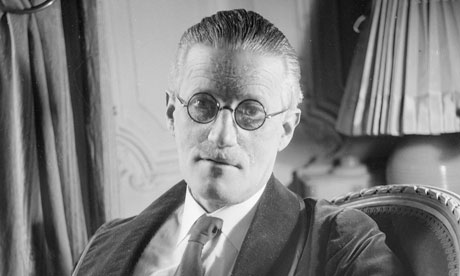
[Samuel Beckett said of James Joyce's Finnegans Wake … 'It is not only to be read. It is to be looked at and listened to.' Photograph: Lipnitzki/Roger Viollet/Getty Images

[Samuel Beckett said of James Joyce’s Finnegans Wake … ‘It is not only to be read. It is to be looked at and listened to.’ Photograph: Lipnitzki/Roger Viollet/Getty Images]

There was a time when a learned fellow (literally, a Renaissance man) could read all the major extant works published in the western world. Information overload soon put paid to that. Since there is “no end” to “making many books” — as the Old Testament book Ecclesiastes prophesied, anticipating our digital age — the realm of the unread has spread like a spilt bottle of correction fluid. The librarian in Robert Musil‘s The Man Without Qualities only scans titles and tables of contents: his library symbolises the impossibility of reading everything today. The proliferation of lists of novels that you must, allegedly, have perused in your lifetime, reflects this problem while compounding it. On a recent visit to a high street bookshop, I ogled a well-stacked display table devoted to “great” novels “you always meant to read”. We measure out our lives with unread books, as well as coffee spoons.

The guilt and anxiety surrounding the unread probably plays a part in our current fascination with failed or forgotten writers. Hannah Arendt once wondered if “unappreciated genius” was not simply “the daydream of those who are not geniuses”, and I suspect there is indeed a touch of schadenfreude about this phenomenon too. On the book front, we could mention Mark O’Connell’s Epic Fail, the brilliantly idiosyncratic Failure, A Writer’s Life by Joe Milutis, and Christopher Fowler‘s Invisible Ink: How 100 Great Authors Disappeared, based on the longstanding column in the Independent on Sunday. Online, there is The New Inquiry‘s Un(der)known Writers series, as well as entire blogs — (Un)justly (Un)read, The Neglected Books Page, Writers No One Reads — devoted to reclaiming obscure scribes from oblivion. One of my personal favourites is The Biographical Dictionary of Literary Failure, which celebrates the lives of writers who have “achieved some measure of literary failure”. The fact that they all turn out to be fictitious (à la Félicien Marboeuf) and that the website will vanish after a year, make it even more delightful. I recommend the tale of Stanhope Sterne who, like TE Lawrence, lost a manuscript on a train — at Reading, of all places: “Is there, I wonder, some association with that dull junction’s homonym, that it is a writer’s fear of someone actually reading their work that causes these slips?”

When Kenneth Goldsmith published a year’s worth of transcribed weather reports, he certainly did not fear anyone would read his book from cover to cover — or even at all. That was not the point. With conceptual writing, the idea takes precedence over the product. This is an extreme example of a trend that began with the advent of modernity. Walter Benjamin famously described the “birthplace of the novel” — and hence that of modern literature — as “the solitary individual”: an individual now free from tradition, but also one whose sole legitimacy derived from him or herself, rather than religion or society.

In theory, the novel could thus be anything, everything, the novelist wanted it to be. The problem, as Kierkegaard observed, is that “more and more becomes possible” when “nothing becomes actual”. Literature was a blank canvas that increasingly dreamed of remaining blank. “The most beautiful and perfect book in the world,” according to Ulises Carrión, “is a book with only blank pages.” Such books had featured in eastern legends for centuries (echoed by the blank map in “The Hunting of the Snark” or the blank scroll in Kung Fu Panda), but they only really appeared on bookshelves in the 20th century. They come in the wake of Rimbaud‘s decision to stop writing, the silence of Lord Chandos; they are contemporaneous with the Dada suicides, Wittgenstein‘s coda to the Tractatus, the white paintings of Malevich and Rauschenberg, as well as John Cage‘s 4’33”.

Michael Gibbs, who published an anthology of blank books entitled All Or Nothing, points out that going to all the trouble of producing these workless works “testifies to a faith in the ineffable”. This very same faith prompts Borges to claim that “for a book to exist, it is sufficient that it be possible” and George Steiner to sense that “A book unwritten is more than a void.” For Maurice Blanchot, Joseph Joubert was “one of the first entirely modern writers” because he saw literature as the “locus of a secret that should be preferred to the glory of making books”.

If literature cannot be reduced to the production of books, neither can it be reduced to the production of meaning. Unreadability may even be a deliberate compositional strategy. In his influential essay on “The Metaphysical Poets”, TS Eliot draws the conclusion that modern poetry must become increasingly “difficult” in order “to force, to dislocate if necessary, language into its meaning”. The need to breathe life back into a moribund language corrupted by overuse, chimes with Stéphane Mallarmé‘s endeavour to “purify the words of the tribe”. The French writer was very much influenced by Hegel, according to whom language negates things and beings in their singularity, replacing them with concepts. Words give us the world by taking it away. This is why the young Beckett‘s ambition was to “drill one hole after another” into language “until that which lurks behind, be it something or nothing, starts seeping through”.

Literature (for the likes of Mallarmé and Blanchot) takes linguistic negation one step further, by negating both the real thing and its surrogate concept. As a result, words no longer refer primarily to ideas, but to other words; they become present like the things they negated in the first place. When critics objected that Joyce‘s Finnegans Wake was unreadable, Beckett responded: “It is not to be read — or rather it is not only to be read. It is to be looked at and listened to. His writing is not about something; it is that something itself”. Unlike ordinary language, which is a means of communication, literary language resists easy, and even complete, comprehension. Words become visible; the bloody things keep getting in the way. From this perspective, the literary is what can never be taken as read. In a recent article, David Huntsperger gives an interesting contemporary twist to this debate. He views the opacity of some contemporary novels as a healthy corrective to our “clickthrough culture, where the goal of writing is to get you from one place to another as effortlessly as possible, so that (let’s be honest here) you can buy something”.

The French Protect Their Language Like the British Protect Their Currency

This first appeared in The Guardian‘s Comment is Free section on 23 May 2013. It was reprised in The Guardian Weekly (31 May-6 June 2013, p. 48):

The French Protect Their Language Like the British Protect Their Currency

A row over using English in universities has blown up in France, where language is at the heart of the national identity

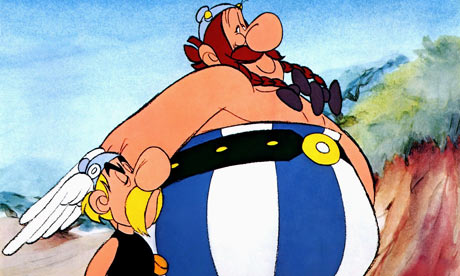
'The nod to Asterix (left, pictured with Obelix) – the diminutive comic-strip hero who punches above his weight thanks to his cunning and occasional swigs of magic potion – is highly significant.' Photograph: Allstar/Cinetext/United Artist

‘The nod to Asterix (left, pictured with Obelix) – the diminutive comic-strip hero who punches above his weight thanks to his cunning and occasional swigs of magic potion – is highly significant.’ Photograph: Allstar/Cinetext/United Artist

The front page of Libération, one of France’s leading dailies, was printed entirely in English on Tuesday. “Let’s do it,” ran the banner headline. Sounding like a Nike slogan penned by Cole Porter, it in fact referred to a new bill, which, if passed, would allow some university courses to be taught in English.

Inside the paper (and in French), the editorialists urged their compatriots to “stop behaving like the last representatives of a besieged Gaulish village”. The nod to Asterix — the diminutive comic-strip hero who punches above his weight thanks to his cunning and occasional swigs of magic potion — is highly significant. For decades, France has identified with the plucky denizens of Asterix’s village, the last corner of Gaul to hold out against Roman invasion. This is how the French fancy themselves: besieged but unbowed — a kind of Gallic take on the Blitz spirit.

The reason Uderzo and Goscinny’s books resonated at the time of their publication is that they replayed the myth of French resistance in the context of the cold war. This time around the invaders were no longer German or Roman, but American. Asterix’s first outing (in a long-defunct magazine called Pilote) occurred in 1959, the year Charles de Gaulle became president, and grammarian Max Rat coined the word “franglais“. My contention is that this is not purely coincidental.

France’s identity has long been bound up with its language, more so possibly than anywhere else. This may be due to the fact that French is treated as a top-down affair, policed by the state: an affaire d’état, if you will. Language, for instance, is at the heart of the Organisation Mondiale de la Francophonie, France’s answer to the Commonwealth. The flipside of a state-sponsored language has been a deep-rooted anxiety over linguistic decay and decline. The official custodian of the French tongue — the Académie française — was partly created, back in 1635, to counter pernicious Italian influences.

French nationalism was largely discredited after the second world war, because of the Vichy regime and collaboration. As a result, it often took refuge in cultural — particularly linguistic — concerns. De Gaulle’s inflammatory 1967 speech in Quebec, when he took the linguistic battle into the very heart of enemy territory, speaks volumes. “Long live free Quebec! Long live French Canada! And long live France!” declaimed de Gaulle (en français dans le texte, of course). Quebec was repositioned as a besieged Gaulish village, and French as a symbol of resistance — perhaps even as a surrogate magic potion. For de Gaulle, liberating Quebec meant reversing France’s defeat at the hands of the English in 1763.

My feeling is that France is haunted by its lost American future. Had the US fallen under Gallic domination, French would probably be the world’s lingua franca today. Fears over the decline of French vis-à-vis English are exacerbated by the knowledge that the enemy is also within. Although the linguistic watchdogs regularly come up with alternatives to anglicisms — “mercatique” for “marketing”; “papillon” for “Post-it note” — American expressions are often adopted with far more enthusiasm in France than across the Channel. David Brooks’s portmanteau word bobo (bourgeois bohemian) is more ubiquitous here than in Britain. Even more worrying, perhaps, is the French penchant for unwittingly redefining (“hype” for “hip”) or making up new English expressions (brushing, footing, fooding etc.).

The unregulated flexibility of English probably gives it an extra edge in our ever-shifting digital world. As Susan Sontag once pointed out, French is “a language that tends to break when you bend it”. It is significant that many young French speakers today should suddenly switch to English when writing a mél or courriel (if you’ll pardon my French) to a friend.

So what is all the fuss about right now? The higher education minister, Geneviève Fioraso, wants to amend the 1994 Toubon law so that French universities are allowed to teach a limited number of courses in English (which is already the case in the elite grandes écoles and top private business schools). The main aim of this is to attract foreign students, particularly from rapidly expanding economies such as China, India, or Brazil.

Unfortunately, Fioraso committed an unforgivable faux pas — on a par with Sarkozy’s disparaging comments about the Princess of Cleves — when the idea was first mooted in March. She warned that if teaching in English were not introduced, French research would eventually mean “five Proust specialists sitting around a table”. This led to accusations of philistinism on the part of those who believe that sitting around a table discussing the works of Proust is precisely what being French is all about.

Not surprisingly, reactions have been far more favourable in the scientific community than in literary circles. The Académie française is up in arms over what it sees as “linguistic treason”. Prominent academic and author Antoine Compagnon fears that the measure may lead to dumbing down, since most of these lectures would be spoken in “Globish” rather than the true language of Shakespeare. Bernard Pivot, who used to host a top literary TV programme (and belongs to the Académie), argues that French will become a dead language if it relies on English borrowings to describe the modern world. Claude Hagège, a renowned linguist, concurs, saying that France’s very identity is at stake.

Roland Barthes famously described language as essentially “fascist”, not because it censors but, on the contrary, because it forces us to think and say certain things. The idea that we are spoken by language as much as we speak through it is, I think, an important one here: French offers a different world view from English. Today, the symbol of British sovereignty is an independent currency. In France, it is an independent language, and that is indeed something to be cherished.

***

Here is a longer, unedited version of the same piece:

On Tuesday, the front page of Libération, one of France’s leading dailies, was printed entirely in English. “Let’s do it,” ran the banner headline. Despite sounding like a Nike slogan penned by Cole Porter, it referred to a new bill, which, if passed, would allow some university courses to be taught in English. Inside (and in French), the editorialists urged their compatriots to “stop behaving like the last representatives of a besieged Gaulish village”. The nod to Asterix — the diminutive comic-strip hero who punches above his weight thanks to his cunning and occasional swigs of magic potion — is highly significant. For decades, France has identified with the plucky denizens of Asterix’s village, the last corner of Gaul to hold out against Roman invasion. This is how the French fancy themselves: besieged but unbowed — a kind of Gallic take on the Dunkirk/Blitz spirit. Part of the resonance of Uderzo and Goscinny’s books is that they replayed the myth of the French resistance in the context of the Cold War. Now, of course, the invaders were no longer German or Roman, but American imperialists who spoke the tongue of perfidious Albion (or at least a variant thereof). Asterix’s first outing (in a long-defunct magazine called Pilote) occurred in 1959, the year de Gaulle became president, and grammarian Max Rat coined the word “franglais”. My contention is that this is not purely coincidental.

France’s identity has long been bound up with its language, more so possibly than anywhere else. This may be due to the fact that French is treated as a top-down affair, policed by the state: an affaire d’état, if you will. Language, for instance, is at the heart of the Organisation Mondiale de la Francophonie, France’s answer to the Commonwealth. The flipside of a state-sponsored language has been a deep-rooted anxiety over linguistic decay and decline. The official custodian of the French tongue — the Académie française — was partly created, back in 1635, in order to counter pernicious Italian influences. The title of Joachim du Bellay’s Defence and Illustration of the French Language (1549) — one of the first concerted efforts to raise French to the level of Latin and Greek — is eloquent: defence takes precedence over illustration.

French nationalism was largely discredited after the Second World War, due to the Vichy regime and collaboration. As a result, it often took refuge in cultural — particularly linguistic — concerns. The defence of the French language would be instrumental in de Gaulle’s attempt to counter Anglo-Saxon domination by embodying a third way between the United States and Soviet Union. The President’s inflammatory 1967 speech in Quebec, when he took the linguistic battle into the very heart of enemy territory, speaks volumes. “Long live free Quebec! Long live French Canada! And long live France!” declaimed de Gaulle (en français dans le texte, of course). Quebec was repositioned as a besieged Gaulish village, and French as a symbol of resistance — perhaps even as a surrogate magic potion. The Canadian PM countered that “Canadians do not need to be liberated. Indeed, many thousands of Canadians gave their lives in two world wars in the liberation of France and other European countries”. The two leaders were talking at cross purposes. For de Gaulle, liberating Quebec meant reversing France’s defeat at the hands of the English in 1763.

My feeling is that France is haunted by its lost American future. Had the United States fallen under Gallic domination, French would probably be the world’s lingua franca today. Fears over the decline of French vis-à-vis English are exacerbated by the knowledge that the enemy is also within. Although the linguistic watchdogs regularly come up with alternatives to anglicisms – “mercatique” for “marketing”; “papillon” for “Post-it note” — American expressions are often adopted with far more enthusiasm in France than across the Channel. David Brooks’s portmanteau word “bobo” (bourgeois bohemian) is ubiquitous over here, but has failed so far to take off in Britain. Even more worrying, perhaps, is the French penchant for unwittingly redefining (“hype” for “hip”) or making up new English expressions (brushing, footing, fooding etc.). None of this is new, of course. Dropping English phrases in conversation was already the last word in chic for the crème de la crème in the days of Proust, and René Etiemble’s famous Parlez-vous franglais ? was published as far back as 1964. The unregulated flexibility of English probably gives it an extra edge in our ever-shifting digital world. As Susan Sontag once pointed out, French is “a language that tends to break when you bend it”. It is significant that many young French speakers today should suddenly switch to English when writing a “mél” or “courriel” (if you’ll pardon my French) to a friend.

So what is all the fuss about right now? Higher Education Minister Geneviève Fioraso wants to amend the 1994 Toubon law (or “loi all good” as it is sometimes called) so that French universities are allowed to teach a limited number of courses in English (which is already the case in the elite grandes écoles and top private business schools). The main aim of this reform is to attract foreign students, particularly from rapidly-expanding economies such as China, India, or Brazil. Unfortunately, Ms Fioraso committed an unforgivable faux pas — on a par with Sarkozy’s disparaging comments about the Princess of Cleves — when the idea was first mooted in March. She warned that if teaching in English were not introduced, French research would eventually mean “five Proust specialists sitting around a table”. This led to accusations of philistinism on the part of those who believe that sitting around a table discussing the works of Proust is precisely what being French is all about.

Not surprisingly, reactions have been far more favourable in the scientific community than in literary circles. The Académie française is up in arms over what it sees as “linguistic treason”. Prominent academic and author Antoine Compagnon fears that the measure may lead to dumbing down, since most of these lectures would be spoken in “Globish” rather than the true language of Shakespeare. Bernard Pivot, who used to host a top literary TV programme (and belongs to the Académie), argues that French will become a dead language if it relies on English borrowings to describe the modern world. Claude Hagège, a renowned linguist, concurs, saying that France’s very identity is at stake.

Roland Barthes famously described language as essentially “fascist”, not because it censors but, on the contrary, because it forces us to think and say certain things. The idea that we are spoken by language as much as we speak through it is, I think, an important one here: French offers a different world view from English. Today, the symbol of British sovereignty is an independent currency. In France, it is an independent language, and that is indeed something to be cherished.

[* In The Guardian Weekly, this article appeared under the following heading: “The French Are Right to Protect their Language: It Runs to the Heart of their Identity and Offers a Different Worldview to English”.]

Detour in the Orthodoxy

This interview with Clémentine Deliss was published in 3:AM Magazine in December 2005:

Detour in the Orthodoxy: Andrew Gallix Interviews Clémentine Deliss

3:AM: I gather that Metronome was primarily an arts magazine. Why did you decide, after nine years, to launch into fiction with a new publishing house called Metronome Press?

CD: Metronome has always worked with fiction. The very first issues included texts of fiction rather than criticism or theoretical texts written by art critics. The intention has been to create a detour in the orthodoxy of a person’s work whether they are an artist, critic, or writer. There is no point in replicating the same identity that one carries as a professional within the context of Metronome. Metronome is there to create a short-circuit between professionals working in different fields of aesthetic practice, and in many cases, in different urban locations (spanning Africa to Europe). The spark or trigger that awakens professional curiosity is potent when a moment of differentiation or otherness is recognised by the participating interlocutors (there can be no complacency with regard to the intersection of different theoretical discourses within art). So fiction in the context of contemporary art practice sets up a certain field of expression in contrast to the more standardised forms of writing we find in art magazines. Metronome is an organ, not an art magazine as such. To set up Metronome Press is to build on the ongoing interest in fiction and translation, nothing more. There is no exception to the rule.

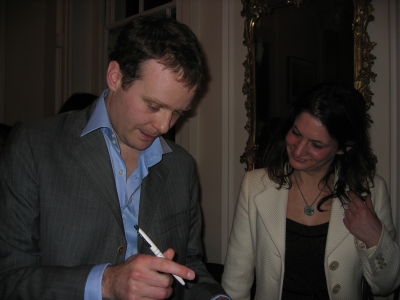
London launch of Metronome Press at the Arts Club: Tom McCarthy & Louise Stern

London launch of Metronome Press at the Arts Club: Tom McCarthy & Louise Stern

3:AM: Metronome Press is “dedicated to developing fiction and new styles of writing in relation to contemporary art practice”. Why are you so interested in the art/writing interface? Is the distinction between the two worlds disappearing?

CD: I am interested in experiments related to interpretation. Metronome is an interpretational tool rather than a vehicle for the promotion of artists’ works. Metronome Press has a similar attitude. It has not been set up within a literary field, but within the context of writing produced in relation to art production. Our challenge is the art world, and its discourse, not the literary world. We do not deny that visual artists can produce good literature, nor do we exclude the input of writers within our framework, but our main area of investigation is research and experimentation in art practice.

3:AM: Three of the first four novels in the collection are by writers (Tom Gidley, Tom McCarthy and Phyllis Kiehl) who also have artistic activities. Are they primarily artists who write on the side, or is writing integral to their artistic vision? Did you encourage any of them to take up the pen for the first time, or were all three already writers as well as artists?

CD: Phyllis Kiehl and Tom Gidley are primarily visual artists. Both have written in the past, and have now produced novels. They were writers before I knew them. I had published Phyllis Kiehl’s short stories in several earlier issues of Metronome (4, 5, 6, 7), and Tom Gidley had written a lot for Frieze in the past. I knew that Gidley had withdrawn for a while in order to write a book, and so I contacted him when we set up Metronome Press to see if he was interested. Phyllis was working on Fat Mountain Scenes whilst she and I were living in Paris. By publishing Fat Mountain Scenes, she was able to place her novel within the art context prior to the literary world of publishing.

3:AM: How did you come across Tom Gidley, Phyllis Kiehl and Tom McCarthy’s works?

CD: As I said above, I knew Tom Gidley and Tom McCarthy had both finished novels and whilst I had not read them, I was curious to follow up the hunch that fiction within art practice might be the way forward. And Phyllis as I said earlier, was in the process of writing her first novel as we both moved to Paris. It all made sense and their inclusion in the first collection of fiction produced by Metronome Press is a sign that perhaps there is a further interest out there. We are keen to receive manuscripts, scenarios, novels, etc., from artists.

London launch: Phyllis Kiehl & Tom Gidley

London launch: Phyllis Kiehl & Tom Gidley

3:AM: In the US, it is quite acceptable for writers to play music and do art (or vice versa), but not so much in Europe. Is this something that should be encouraged?

CD: It’s always interesting to enter different territories. Today there is an important shift in the way we view art as an aesthetic field or set of practices, rather than as differentiated compartmentalised art productions (theatre/dance/visual arts/literature/film, etc). But you have to be lucid about whatever crossover you are ready to experiment with, and the context in which you are doing it. For Metronome Press to take on the airs of a literary publishing house in Paris, with all the history this city has, would be suicide! However, for us to work within art practice using fiction as a means of expression, and encouraging artists to experiment with other styles of communication, seems a logical step to take in today’s world.

3:AM: Do you see Metronome Press as a French, English or Anglo-French venture? It is based in Paris, but the first four novels are in English and one of your web addresses is a UK address…

CD: Metronome Press is based in Paris. It has no nationalist identity. It relates to those locations where we live (and that is necessarily subjective) and to those locations where we have worked.

3:AM: You are republishing Charles Henri Ford and Parker Tyler’s The Young and Evil which had originally been published by Obelisk Press in 1933. How did this come about?

CD: Thomas Boutoux and I loved the book. It is languid and tight at the same time. A perfect combination of erotic thinking and scenic or episodic action with a touch of historical information on the art scene of the early twentieth century. We were fortunate to be able to secure the rights and reprint an edition that is laid out exactly as the first edition was. There are cheap versions from other publishers, but the graphics that Charles Henri Ford had developed are rarely respected.

3:AM: The latest issue of Metronome mixes fiction and erotica as a homage to Maurice Girodias‘s Olympia Press. Do you see Metronome Press as the heir of the Olympia Press?

CD: Metronome Press is inspired by the system that Girodias had developed. If we could have a hotel too and a bar like Girodias we’d be happy! Let’s hope, however, that we don’t enjoy the multiple bankruptcies that characterised Girodias’ professional career!

3:AM: Do you think the anglophone literary scene in Paris is about to enjoy a revival?

CD: I don’t think that is the issue. Everyone and everywhere is anglophone these days. But we do hope that Paris will open up even more to the international situation it has always nurtured.

La Rentrée Littéraire Redux

This appeared in Guardian Books on 9 October 2012:

La Rentrée Littéraire Redux

The French books world’s demented annual commercial knockout context shows little sign of going away


[Eternal return… Parisian book buyers. Photograph: Alamy]

Much ink was expended, earlier this year, on the subject of parenting in France. For better or worse — usually the former — it was deemed far less “child-centric” than across the Channel. There is, however, at least one area where French kids set the agenda: the agenda (French for “diary”) itself.

Although nominally in December, the end of the year really occurs in early summer, when schools break up for a two-month hiatus. By August, Paris feels eerily empty, in a way that London, for instance, never does. At times, it almost looks like the local population has been wiped out by a neutron bomb, leaving hordes of tourists roaming around a ghost town. Most of those who cannot afford to go away are relegated — out of sight, out of mind and out of work — to the infamous banlieues, which, owing to some strange optical illusion, only become visible when they disappear in flames.

By the same token, it is September, and not January, which marks the true beginning of the year; a beginning that spells eternal recurrence rather than renaissance. “La rentrée” — the back-to-school season extended to the entire populace — never fails to remind me of Joey Kowalski, the narrator of Gombrowicz’s Ferdydurke, who, despite being 30 years old, is marched off to school as though he had been caught playing truant. “La rentrée” is the bell that signals the end of playtime; the restoration that follows revolution. In an annual re-enactment of the “retour à la normale” after the carnival of May 1968, everybody returns to the old “train-train quotidien”: the daily grind of “métro, boulot, dodo” (commute, work, bed — an expression derived from a poem by Pierre Béarn). A vague sense that real life is elsewhere (as Rimbaud never quite put it) lingers a while, before fading like suntans and memories of holiday romances.

The start of the new school year (“la rentrée scolaire”) coincides, give or take a few weeks, with the opening of the publishing season (“la rentrée littéraire”). In fact, both rentrées go together like cheese and wine, Alsace and Lorraine, or Deleuze and Guattari. This is not purely coincidental, since publishers are largely dependent upon education for the grooming of future generations of book buyers. The “rentrée littéraire” is the equivalent of cramming for your finals — a tome-intensive blitzkrieg geared towards the autumn literary prizes and subsequent Christmas sales. The season kicks off mid-August, really kicks in mid-October, and climaxes in November, when most book prizes are awarded: the illustrious Prix Goncourt (hot on the heels of the Grand Prix de l’Académie française in October) but also the Prix Décembre, Femina, Flore, Interallié, Médicis, Renaudot, and a few others besides. The major publishing houses tend to carpet bomb, chucking as many titles at these awards as they can, while the indies have no other choice but to go for surgical hits, on a wing and a press release.

So far, this year’s vintage has been pretty much business as usual, apart from the growing popularity of ebooks. At season’s close, 646 novels will have been released (compared with 654 in 2011 and 701 in 2010). If French fiction is down a little, the number of foreign titles remains constant (220 against 219 last year). As a result of the uncertain economic climate, there are fewer debuts (69 against 74) and more mass-market print runs (including Fifty Shades of Grey and the new JK Rowling). Pursuing a trend observed over the past few years, many of the heavyweights (Jean Echenoz, Patrick Modiano, Philippe Sollers et al.) have been held over until mid-October in order to heighten anticipation and maximize impact upon November’s book prizes.

Some of this season’s most hotly touted titles have a distinct whiff of déjà vu. There’s the new Houellebecq (Aurélien Bellenger, whose first book was an essay on the old Houellebecq). There’s the presidential campaign, which is fast becoming a sub-genre, with no less than seven books devoted to the latest instalment (including a non-fiction novelisation by HHhH author Laurent Binet). And then there’s the obligatory scandal which, this year, comes courtesy of Richard Millet (“l’affaire Millet”!) and his “literary praise” of mass murderer Anders Breivik.

The best take on the “rentrée littéraire” appears in Ecclesiastes: “of making many books there is no end”. In no other country is so much fiction published in such a short period of time. With hundreds of novels competing for a dozen prizes or so, most are destined to sink without trace — unsold and unread. Industry observers claim that if a debut novel has not caused a buzz by mid-September, it’s (French) toast. The result is a book glut comparable to Europe’s wine lakes and butter mountains.

David Meulemans, who heads indie press Aux Forges de Vulcain, made a few waves recently by announcing that he would not be taking part in this year’s rentrée. He described the publishing season as “mass commercial suicide”: a launch pad for prizes virtually no one stands a chance of ever winning. Sylvain Bourmeau — who praises the extraordinary diversity of publications on offer (belying, in his view, the French literati’s reputation for navel-gazing) — acknowledges, in Libération, that the rentrée is indeed a “weird national lottery”. For the past decade, Pierre Astier has been one of its most vocal critics. This former indie publisher, who went on to launch one of France’s first literary agencies, highlights the hypocrisy of a system — controlled by an old boys’ network — that fosters cut-throat competition without establishing a level playing field. Conflicts of interest abound; nepotism is rife. Being life members, the Goncourt judges are endowed with godly powers. Four of them even have books in the running for this year’s awards, which are usually carved up among the major publishing houses anyway. Astier also criticises the lack of openness to francophone writers, which he interprets as a sign that decolonisation has not gone far enough.

Although its quaint customs are often parodied (as in Patrick Besson’s Ma rentrée littéraire), the publishing season, is still widely seen as an instance of France’s cultural exceptionalism; its “droit à la différence” — or even différance.


The Booker Steps Away From Being its Own Genre

This appeared in The Guardian (Comment is Free section) on 28 July 2012:

The Booker Steps Away From Being its Own Genre

The inclusion on the Man Booker longlist of four debuts and three novels from excellent indie publishers is a welcome sign

[Science Fiction novelist China Miéville has criticised the Booker Prize for becoming its own genre. Photograph: Sarah Lee for the Guardian]

The announcement of this year’s Booker longlist, just a few days before the opening of the Olympics, reminds us that literary jousting originated in ancient Greece. Modern literary competitions appeared shortly after the revival of the Olympic Games at the end of the 19th century. The Nobel prize in literature (1901) was followed by the Prix Goncourt in France (1903), the Pulitzer prizes in the States (1917) and the James Tait Black memorial prizes in Britain (1919). Compared with their Greekish forebears, they are far trickier affairs. Australian author Richard Flanagan is clearly no friend of contemporary book contests: in his view, they are often barometers “of bad taste” that only serve “to give dog shows a good name”.

The aristocratic authors of an earlier period often felt that there was something a little common, even humiliating, about wanting to be read by others, possibly of an inferior station. In Deceit, Desire, and the Novel, René Girard describes some of the excuses they came up with to give the impression that their works had got into print without their knowledge. La Rochefoucauld (to whom I am vaguely related through one of his descendants’ bastard offspring) claimed, for instance, that his manuscript had been stolen by a servant.

Thomas Bernhard had similar issues with literary prizes. My Prizes: An Accounting, published posthumously, is a series of diatribes against the nine eponymous prizes he received up until 1980 and the “assholes” who bestowed them upon him — which brings us back to the Booker.

In François Ozon’s film Swimming Pool, a bestselling author (played by Charlotte Rampling) pays a visit to her publisher, where she bumps into an up-and-coming novelist who has just won a minor literary prize. After the latter’s departure, the publisher tries — and fails — to clear the air by describing the award as “hardly the Booker prize!” Charlotte Rampling’s character reminds him of what he always used to say at the beginning of his career: “Awards are like haemorrhoids: sooner or later, every arsehole gets one”. This scene epitomises the Booker effect: the petty rivalries and insidious corrupting influence.

Launched in 1969, the Booker was always conceived of as a publicity stunt designed to shift units. I think it is fair to say that no other literary prize in the world has ever received so much media attention. By 1990, when Gilbert Adair included a chapter entitled “Le Booker nouveau est arrivé” in his Barthes-inspired Myths and Memories, the prize had already become an institution, thanks to a marketing strategy not dissimilar to that of Beaujolais nouveau.

The Booker has always worn its commercialism on its sleeve: its official name — the Man Booker Prize — derives from its original (Booker-McConnell) and current (the Man Group) sponsors. This, of course, is not necessarily a bad thing. Trying to sell more books is certainly nothing to be ashamed of, and the Booker has two big advantages over the Gallic Goncourt: it is not controlled by the publishing industry and the judging panel changes every year. However, financial considerations do, regrettably, play a part in the selection process: a publisher must “contribute £5,000 towards general publicity if the book reaches the shortlist” and “a further £5,000 if the book wins the prize”. Indies may find it difficult to stump up this sort of money.

The Nobel is awarded to “the person who shall have produced in the field of literature the most outstanding work in an ideal direction”. Aimed at “the intelligent general audience,” the Booker never entertained such lofty ambitions. It was always resolutely middlebrow as last year’s controversy over “readable books” that “zip along” amply illustrated.

Since its inception, the prize has championed a type of well-made mainstream novel that reflects the liberal humanist world view of the Home Counties (sometimes with decorative postmodern knobs on). When a thriller found its way on to the longlist, many people thought that the judges had lost the plot, and were no longer able to recognise a Booker novel. This reaction only confirmed China Miéville‘s argument that despite traditionally shunning genre fiction, the Booker had itself become a genre. This, I feel, has been the prize’s most pernicious influence. The novel — which was meant to be the genre to end all genres in which philosophy and poetry would be reunited — has been reduced to innocuous literary fiction narratives written as though modernism had never happened.

This year, there has been no populist talk of jolly good reads or zip-along page-turners. On the contrary, chairman Peter Stothard signalled the judges’ intention to focus on “texts not reputations“: books “that you can make a sustained critical argument about”. The kind that “you don’t leave on the beach” and want to “read again and again”. Hence, perhaps, the presence of four debuts and three novels released by excellent indie publishers (And Other Stories, Myrmidon Books and Salt).

The inclusion of Deborah Levy‘s Swimming Home, one of the finest new novels I have read (and already reread) in a long time, seems like a very good omen indeed. It radiates the sensual languor of sun-drenched afternoons in the south of France and the disquieting, uncanny beauty only perceived by a true daytime insomniac. At times, it reminded me of Ozon’s film. Let us hope this year’s Booker will not be awarded to an arsehole.

****

Here is a longer — uncut and unedited — version of the above text. A draft, if you will:

The announcement of this year’s Booker longlist, just a few days before the opening of the Olympics, reminds us that literary jousting originated in Ancient Greece. These early competitions, however, were more akin to poetry slams or the itinerant Literary Death Match, than to the sedate book prizes we are accustomed to. Dithyrambic contests were collective, all-singing-and-dancing renditions of poetic works. The name of the victorious chorus would often go down in history, while that of the poet himself would be forgotten. It was, above all, the performance that was being assessed.

Modern literary competitions appeared shortly after the revival of the Olympic Games at the end of the nineteenth century. The Nobel Prize in Literature (1901) was followed by the Goncourt in France (1903), the Pulitzer in the States (1917) and the James Tait Black Memorial Prize in Britain (1919). Compared with their Greekish forbears, they are far trickier affairs. Australian author Richard Flanagan is clearly no friend of contemporary book contests: in his view, they are often barometers “of bad taste” that only serve “to give dog shows a good name”. Whether or not most prizes “get it mostly wrong,” he clearly has a point when it comes to the Nobel: “No one I know hails Sigrid Undset or Frans Eemil Sillanpaa or Par Lagerkvist — Nobel laureates in 1928 and 1939 and 1951, respectively — as globally significant writers, important as they are to their own national literatures, perhaps because no one I know has ever read them. Yet Tolstoy, Chekhov, Kafka, Fitzgerald, Joyce, Cortazar, Nabokov, Borges, Kundera, Roth and Bolano have all been passed over for the gong of gongs”.

According to Lars Iyer (whose novel Spurious was shortlisted for last year’s Not the Booker), “the prestige of authorship” — producing great works — has given way to “the prestige of an ephemeral kind of literary careerism,” which is sanctioned by book clubs and prizes: “With pomp and circumstance, the award ceremonies vainly bestow medals of greatness on novels that vaguely mime our fading memory of masterpiece. The prestige, the debris, the body of Literature remains even as the spirit has fled”. The aristocratic authors of an earlier period often felt that there was something a little common, even humiliating, about wanting to be read by others, possibly of an inferior station. In Deceit, Desire, and the Novel, René Girard describes some of the excuses they came up with to give the impression that their works had got into print without their knowledge. La Rochefoucauld (to whom I am vaguely related through one of his descendants’ bastard offspring) claimed, for instance, that his manuscript had been stolen by a servant. Thomas Bernhard had similar issues with literary prizes. In the autobiographical Wittgenstein’s Nephew (1982), he describes a cursory acceptance speech as “a few sentences, amounting to a small philosophical digression, the upshot of which was that man was a wretched creature and death a certainty”. My Prizes: An Accounting, published posthumously, is a series of diatribes against the nine eponymous prizes he received up until 1980 and the “assholes” who bestowed them upon him — which brings us back to the Booker.

In François Ozon’s film Swimming Pool (2003), a bestselling author (played by Charlotte Rampling) pays a visit to her publisher, where she bumps into an up-and-coming novelist who has just won a minor literary prize. After the latter’s departure, the publisher tries — and fails — to clear the air by describing the award as “hardly the Booker Prize!” Charlotte Rampling’s character reminds him of what he always used to say at the beginning of his career: “Awards are like haemorrhoids: sooner or later, every arsehole gets one”. This scene epitomises the Booker effect: the petty rivalries and insidious corrupting influence.

Launched in 1969, the Booker was always conceived of as a publicity stunt designed to shift units. I think it is fair to say that no other literary prize in the world has ever received so much media attention. By 1990, when Gilbert Adair included a chapter entitled “Le Booker nouveau est arrivé” in his Barthes-inspired Myths and Memories, the prize had already become an institution, thanks to a marketing strategy not dissimilar to that of Beaujolais nouveau. The Booker has always worn its commercialism on its sleeve: its official name — the Man Booker Prize — derives from its original (Booker-McConnell) and current (the Man Group) sponsors. This, of course, is not necessarily a bad thing. Trying to sell more books is certainly nothing to be ashamed of, and the Booker has two big advantages over the Gallic Goncourt: it is not controlled by the publishing industry and the judging panel changes every year. However, financial considerations do, regrettably, play a part in the selection process: a publisher must “contribute £5,000 towards general publicity if the book reaches the shortlist” and “a further £5,000 if the book wins the prize”. Indies may find it difficult to stump up this sort of money.

The Nobel is awarded to “the person who shall have produced in the field of literature the most outstanding work in an ideal direction”. Aimed at “the intelligent general audience,” the Booker never entertained such lofty ambitions. It was always resolutely middlebrow as last year’s controversy over “readable books” that “zip along” amply illustrated. Since its inception, the prize has championed a type of well-made mainstream novel that reflects the liberal humanist world view of the Home Counties (sometimes with decorative postmodern knobs on). When a thriller found its way on to the longlist, many people thought that the judges had lost the plot, and were no longer able to recognise a Booker novel. This reaction only confirmed China Miéville‘s argument that despite traditionally shunning genre fiction, the Booker had itself become a genre. This, I feel, has been the prize’s most pernicious influence. The Novel — which was meant to be the genre to end all genres in which philosophy and poetry would be reunited — has been reduced to innocuous literary fiction narratives written as though Modernism had never happened.

This year, there has been no populist talk of jolly good reads or zipalong page-turners. On the contrary, chairman Peter Stothard signalled the judges’ intention to focus on “texts not reputations“: books “that you can make a sustained critical argument about”. The kind that “you don’t leave on the beach” and want to “read again and again”. Hence, perhaps, the presence of four debuts and three novels released by excellent indie publishers (And Other Stories, Myrmidon Books and Salt). The inclusion of Deborah Levy‘s Swimming Home, one of the finest new novels I have read (and already reread) in a long time, seems like a very good omen indeed. It radiates the sensual languor of sun-drenched afternoons in the south of France and the disquieting, uncanny beauty only perceived by a true daytime insomniac. At times, it reminded me of Ozon’s film. Let us hope this year’s Booker will not be awarded to an arsehole!

Whatever Happened to 3:AM Magazine?

This appeared in Guardian Books on 10 July 2012:

Whatever Happened to 3:AM Magazine?

When the 3:AM website suddenly vanished last week, the might of social media helped track down the person who could switch the server back on. But what are the implications for online magazines?

[Turn it on again … server outages were undeniably on the rise, but this time there was no website to check. Photograph: Thomas Northcut/Getty Images]
I concluded my last contribution to this site with a quotation from Maurice Blanchot: “Literature is going toward itself, toward its essence, which is disappearance”. Little did I know that 3:AM Magazine — the literary webzine I had edited with a group of friends for more than a decade — would shortly after vanish suddenly into cyberspace. Whether it was going toward its essence is a moot point, which falls outside of our present remit.

When I am not running late, I often check the website, along with my email, before setting off for work. The last time I performed this routine, I sat, for what seemed like ages, staring, bleary-eyed, at an empty page that obstinately refused to load. Blogger’s block, as I like to call it, is a less heroic, technological version of l’angoisse de la page blanche: the agony experienced by writers in front of a blank page. The only sign of activity came from the little dotted line going round and round in vicious circles like Sisyphus‘s boulder or — rather fittingly in this instance — nobody’s business. With hindsight, I realise it should have put me in mind of the proverbial dotted line on which dodgy contracts are carelessly signed. At this juncture, however, I wasn’t unduly worried — or at least I wasn’t yet aware that my relative (and frankly uncharacteristic) nonchalance may have been (was) inappropriate. After all, this sort of thing had been happening — not happening — on and off for several months, and each time normal service had resumed of its own accord, as if by magic.

Although rare, server outages were undeniably on the rise, and downtime had gone from a couple of hours to a couple of days. This, of course, should have prompted a reassessment of my non-interventionist attitude, but there was little I could do, short of moving the entire website to a new company and server, which is precisely the kind of drastic measure I was eager to postpone for as long as possible. Attempting to make contact with our host — whether by phone, email, carrier pigeon or Ouija board — was a fruitless exercise I had long given up in favour of more fulfilling pursuits such as staring at empty web pages failing to load. Besides, these outages afforded me a few guilty pleasures, not least a little breathing space from the frenzy of online activity: they reminded me of the carnivalesque atmosphere brought about, in my childhood household, by the power cuts of the 1970s. And there was the frisson of flirting with disaster without going all the way — until that fated morning when I tried to check the website only to discover that there was no website to check. There was still no website when I came home from work that evening, nor the following day, nor the day after that. When the expected resurrection had failed, Godot-like, to materialise for almost a week, we were forced to contemplate the nightmare scenario of having lost 12 years’ worth of archives.

The web is a Library of Babel that could go the way of the Library of Alexandria. It is the last word in the quest for a book in which everything would be said — a tradition that extends from epic poetry to Joyce’s Ulysses through the Bible, the Summa Theologica, Coleridge‘s omnium-gatherum and the great encyclopedias, as well as Mallarmé‘s “Grand Oeuvre”. It is the ultimate Gesamtkunstwerk — “the catalog of catalogs”, the “total” library conjured up by Borges — but it also marks the triumph of the ephemeral.

In order to mimic the instant gratification provided by the web, Argentinian publisher Eterna Cadencia recently published an anthology of short stories using disappearing ink. Once you open the volume, the ink begins to fade in contact with light and air, vanishing completely within two months. In recent years, I have received a growing number of requests from early contributors to 3:AM Magazine, asking me to delete a poem or story of theirs. These people are usually applying for a new job, and find themselves haunted online by youthful incarnations of themselves that may jeopardise their futures. Yet it only took an instant for someone to switch off 3:AM‘s server and solve this problem. The past does not pass on the web; it lingers or resurfaces — unless, of course, it is wiped away. In our case, most of the material was retrievable via the Internet Archive, but as Sam Jordison pointed out in a recent email, how can we be sure that this site, or a similar one, will always be around? At least, in the old days of dead trees, you could safeguard copies of your journal in libraries or universities. When 3:AM was launched, I used to print out every new article we posted, but stopped when the site started running to thousands of pages. I had never imagined that the company I was paying to host, and indeed back up, our webzine would vanish without a word of warning, like disappearing ink.

3:AM‘s servers (located in Dallas, Texas) were owned by a company (based in Saint Joseph, Missouri) whose website was down. Emails bounced back and the phone had been disconnected. We naturally assumed that the owner — whose main claim to fame was his contribution to the penis-enlargement business — had done a runner. But as soon as the word was out, we were inundated with heart-warming messages of support and offers of help via social media, and within a few hours, Twitter had located the owner’s whereabouts. 3:AM readers informed us that he was now the landlord of — or an employee in (there were conflicting reports) — a tattoo parlour. Someone even kindly mailed me an overexposed picture of the aforementioned establishment.

American novelist Steve Himmer spotted that he and the alleged fugitive had a friend in common on Facebook, who was able to send a direct message. London-based author Susana Medina friended him and striked up a conversation. His mobile phone number and personal email addresses were soon unearthed and passed on by amateur sleuths. Blogger Edward Champion conducted a phone interview with the errant entrepreneur in which the latter claimed that he had wound up his web hosting business in 2008 and had no idea that he was still hosting us. He mentioned a “server admin in Bucharest” — name of Florin — who had been handling the company’s “lingering details”. If this is all true, and it could well be, 3:AM had been running on some unattended phantom server. I also wonder whom I have been paying all these years.

Thanks to our readers’ support, and to Champion’s fine detective work, the server has been switched back on (possibly by Florin) … until we migrate elsewhere.

La influencia de la ansiedad

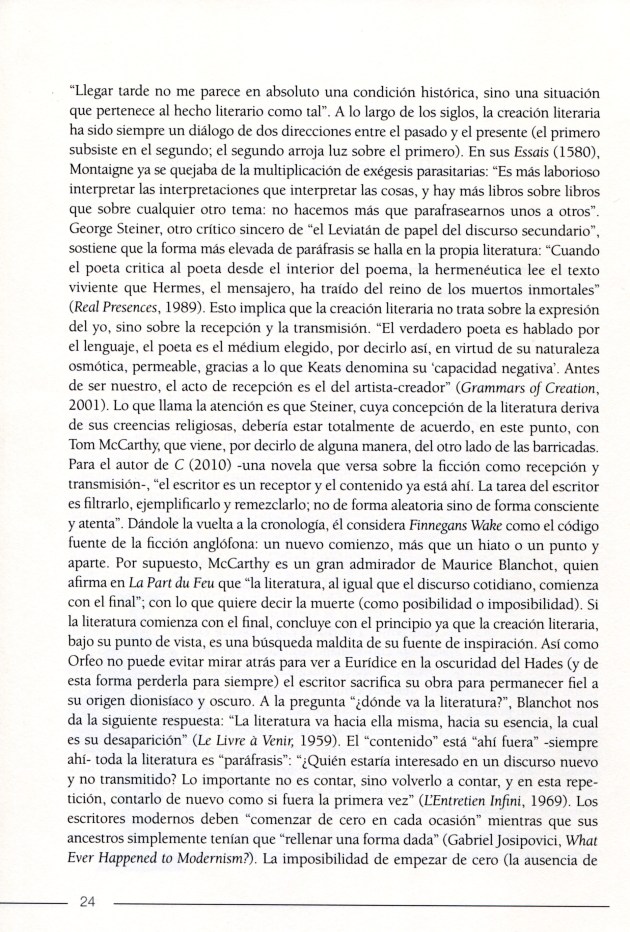
This article, translated by Iris Bernal, appeared in Función Lenguaje 2 (summer 2012)

La influencia de la ansiedad

“Llegamos demasiado tarde para decir algo que no se haya dicho ya” se lamentaba La Bruyère a finales del siglo XVII. El hecho de que el propio La Bruyère llegara tarde al afirmar esto (el Eclesiasta y Terencio ya se habían adelantado a él en los siglos III y II AC) venía a demostrar su aserto. Según la precuela de Macedonio Fernández, anterior al Génesis, siempre hemos llegado demasiado tarde. Este autor imagina lo que bien podría haber sucedido cuando Dios estaba a punto de crear el universo. De pronto, una voz clama en el desierto, interrumpiendo el eterno silencio del espacio infinito, la misma que aterra a Pascal: “Todo ha sido escrito, todo ha sido dicho, todo ha sido hecho”, se lamenta. El Todopoderoso, que ya ha escuchado esto con anterioridad, sigue adelante sin darle importancia, dando sentido a la famosa ocurrencia de André Gide: “Todo está ya dicho, pero como nadie escucha, hay que volverlo a decir” (Le Traité du Narcisse, 1891). En el principio fue el verbo, y el verbo es anterior al principio mismo.

En su obra más influyente, The Anxiety of Influence (1973), Harold Bloom argumentaba que los grandes poetas románticos malinterpretaron a sus ilustres predecesores “con el fin de liberar un espacio imaginativo para sí mismos”. La figura del padre literario se asesinaba, metafóricamente hablando, a través de un proceso de “transgresión poética”. T.S. Eliot ya había expresado una idea similar a propósito de la de Philip Massinger: “Los poetas inmaduros imitan; los poetas maduros roban; los malos poetas desfiguran lo que toman, y los buenos poetas lo convierten en algo mejor, o al menos en algo diferente” (1920). Borges, discípulo de Macedonio, al cual Bloom hace referencia, compartía la misma longitud de onda (aunque en el extremo opuesto del dial) cuando exclamaba que “cada escritor crea sus propios precursores” (1951).

Según Bloom, este sentimiento de inferioridad es, más que un fenómeno característico del Renacimiento, el motor principal de la historia de la literatura: “Llegar tarde no me parece en absoluto una condición histórica, sino una situación que pertenece al hecho literario como tal”. A lo largo de los siglos, la creación literaria ha sido siempre un diálogo de dos direcciones entre el pasado y el presente (el primero subsiste en el segundo; el segundo arroja luz sobre el primero). En sus Essais (1580), Montaigne ya se quejaba de la multiplicación de exégesis parasitarias: “Es más laborioso interpretar las interpretaciones que interpretar las cosas, y hay más libros sobre libros que sobre cualquier otro tema: no hacemos más que parafrasearnos unos a otros”. George Steiner, otro crítico sincero de “el Leviatán de papel del discurso secundario”, sostiene que la forma más elevada de paráfrasis se halla en la propia literatura: “Cuando el poeta critica al poeta desde el interior del poema, la hermenéutica lee el texto viviente que Hermes, el mensajero, ha traído del reino de los muertos inmortales” (Real Presences, 1989). Esto implica que la creación literaria no trata sobre la expresión del yo, sino sobre la recepción y la transmisión. “El verdadero poeta es hablado por el lenguaje, el poeta es el médium elegido, por decirlo así, en virtud de su naturaleza osmótica, permeable, gracias a lo que Keats denomina su ‘capacidad negativa’. Antes de ser nuestro, el acto de recepción es el del artista-creador” (Grammars of Creation, 2001). Lo que llama la atención es que Steiner, cuya concepción de la literatura deriva de sus creencias religiosas, debería estar totalmente de acuerdo, en este punto, con Tom McCarthy, que viene, por decirlo de alguna manera, del otro lado de las barricadas. Para el autor de C (2010) -una novela que versa sobre la ficción como recepción y transmisión-, “el escritor es un receptor y el contenido ya está ahí. La tarea del escritor es filtrarlo, ejemplificarlo y remezclarlo; no de forma aleatoria sino de forma consciente y atenta”. Dándole la vuelta a la cronología, él considera Finnegans Wake como el código fuente de la ficción anglófona: un nuevo comienzo, más que un hiato o un punto y aparte. Por supuesto, McCarthy es un gran admirador de Maurice Blanchot, quien afirma en La Part du Feu que “la literatura, al igual que el discurso cotidiano, comienza con el final”; con lo que quiere decir la muerte (como posibilidad o imposibilidad). Si la literatura comienza con el final, concluye con el principio ya que la creación literaria, bajo su punto de vista, es una búsqueda maldita de su fuente de inspiración. Así como Orfeo no puede evitar mirar atrás para ver a Eurídice en la oscuridad del Hades (y de esta forma perderla para siempre) el escritor sacrifica su obra para permanecer fiel a su origen dionisíaco y oscuro. A la pregunta “¿dónde va la literatura?”, Blanchot nos da la siguiente respuesta: “La literatura va hacia ella misma, hacia su esencia, la cual es su desaparición” (Le Livre à Venir, 1959). El “contenido” está “ahí fuera” -siempre ahí- toda la literatura es “paráfrasis”: “¿Quién estaría interesado en un discurso nuevo y no transmitido? Lo importante no es contar, sino volverlo a contar, y en esta repetición, contarlo de nuevo como si fuera la primera vez” (L’Entretien Infini, 1969). Los escritores modernos deben “comenzar de cero en cada ocasión” mientras que sus ancestros simplemente tenían que “rellenar una forma dada” (Gabriel Josipovici, What Ever Happened to Modernism?). La imposibilidad de empezar de cero (la ausencia de una “primera vez” definitiva) significa que la literatura fracasa al comenzar una y otra vez, como si se tratara de una compulsiva repetición inducida de forma traumática. En otras palabras, no cesa de acabar. La novela, dice Tom McCarthy, ha estado “viviendo su propia muerte” desde Don Quijote; la “experiencia del fracaso” es parte integral de su ADN. Si no estuviera muriendo, no estaría viva.

Escribiendo para el New York Review of Books en 1965, Frank Kermode afirmó que “el destino específico de la novela, considerada como un género, es el de estar siempre muriendo”. Y proseguía afirmando que la muerte de la novela era “el material sin el que la literatura moderna es inimaginable”. Esta cuestión de la muerte de la literatura es de hecho tan antigua como la propia literatura. Se puede rastrear hasta Juvenal y Tácito, pasando por David Shields, Samuel Richardson, y llegando a los escribas del fin-de-siècle. Para Richard B. Schwartz, el asunto empezó a torcerse en el Renacimiento tardío: “la Literatura en mayúsculas realmente murió con la aristocracia que la consumía” (After the Death of Literature, 1997). Según Steiner, el declive comenzó con la crisis lingüística que acompañó al auge de la novela. Después del siglo XVII (después de Milton), “la esfera del lenguaje” dejó de abarcar la mayor parte de la “experiencia y la realidad” (“The Retreat from the Word”, 1961). Las matemáticas se volvieron cada vez más difíciles de traducir al lenguaje; la pintura post-impresionista escapaba de toda verbalización; la lingüística y la filosofía destacaban el hecho de que las palabras se refieren a otras palabras… La proposición final del Tractatus (1921) de Wittgenstein atestigua esta intrusión de lo innombrable: “De lo que no se puede hablar, hay que callar”. Tan solo cuatro años antes, Kafka había conjeturado que quizá hubiera sido plausible escapar al canto de las Sirenas, pero no a su silencio.

Harold Bloom tiene razón: llegar tarde no es simplemente una “condición histórica”. Después de todo, ya era uno de los temas principales del Quijote. Así como señala Gabriel Josipovici, “este sentimiento de haber llegado, de algún modo, demasiado tarde, de haber perdido para siempre algo que alguna vez fue una posesión común, es una preocupación clave, la preocupación fundamental del Romanticismo” (What Ever Happened to Modernism?, 2010). En contra del ambiente de deterioro de la confianza en los poderes del lenguaje -igual que el “desencanto del mundo” de Schiller se estaba volviendo más aparente, y la legitimidad del escritor, en un “tiempo destituido” (Hölderlin) de Dioses ausentes y Sirenas mudas, parecía cada vez más arbitraria- la literatura llegó a ser considerada como un “absoluto” (Phillipe Lacoue-Labarthe y Jean-Luc Nancy, L’Absolu Littéraire : Théorie de la littérature du romantisme allemand, 1968). Walter Benjamin describió de forma célebre el “lugar de nacimiento de la novela” como “el individuo en soledad”, un individuo aislado de la tradición que no puede reclamar ser el portavoz de la religión o la sociedad. Tan pronto como este “individuo en soledad” se elevaba al estatus de un alter deus, la tardanza esencial a toda la creatividad humana resultaba obvia. “Ninguna forma artística”, dice Steiner en Grammars of Creation (2001), “nace de la nada. Siempre viene después” y el “creador humano se enfurece ante [este] venir después, al ser, para siempre, segundo con respecto al misterio original y originador de la formación de la forma” (Real Presences, 1990). William Marx ha analizado con gran maestría cómo en Francia las desmedidas reivindicaciones para la literatura condujeron a esta decadencia prolongada. Esta evolución, de lo sublime a lo ridículo, tuvo lugar en tres etapas. A finales del siglo XVIII, la literatura se transformó en un sucedáneo de la religión. En una segunda etapa, marcada por la arrogancia, los escritores intentaron aislarse del resto de la sociedad (el arte por el arte) desencadenando de este modo un proceso de marginalización. En una última fase, la devaluación de la literatura (a los ojos del público en general) fue interiorizada por los propios escritores e incorporada a sus obras (L’Adieu à la Littérature. Histoire d’une dévalorisation XVIIIe-XXe siècles, 2005).

En sus Vorlesungen über die Ästhetik (compiladas en 1835), Hegel declaró, de manera brillante, que el arte se había transformado en “algo del pasado”. No quería decir con esto, como a menudo se ha creído, que el arte y la literatura estuviesen muertos, o incluso en decadencia, sino que no podían seguir transmitiendo de forma adecuada las más elevadas aspiraciones espirituales de la humanidad. En otras palabras, no podían seguir siendo el instrumento para expresar lo Absoluto. Influido por Hegel, Blanchot se pregunta: “¿Está el arte alcanzando su final? ¿Está pereciendo la poesía por haberse visto reflejada en sí misma, igual que aquel que muere después de contemplar a Dios?” (Le Livre à Venir). Si, como él propone en otro sitio, “la literatura surge en el momento en el que la literatura se convierte en una pregunta”, entonces la respuesta es no (La Part du Feu, 1949). Sin embargo, al transformarse en una pregunta, la literatura se transforma a su vez en su propia respuesta, por lo que ya no es capaz de sincronizarse consigo misma. Uno podría alegar que la literatura es entonces la distancia que la separa de sí misma. “Aquellos viejos tiempos”, anteriores al Génesis según Witold Gombrowicz, “cuando Rabelais escribía cómo un niño hacía pis contra el tronco de un árbol” habían acabado. “Retroceder al universo de los géneros literarios no es una opción”, ratifica Gabriel Josipovici, “como tampoco lo es un retorno al mundo del ancien régime” (What Ever Happened to Modernism?). Esta crisis de identidad se agravaba por una conciencia cada vez mayor de las limitaciones de la creación literaria. La literatura ya no sabía exactamente lo que era, pero sí sabía lo que no era, lo que ya no era capaz de hacer. “Ser moderno”, como declaró Roland Barthes, “es conocer lo que ya no es posible”. Es también anhelar esa imposibilidad, en la forma en la que Borges lo hacía en “el otro tigre, el que no está en el verso”. Tom McCarthy afirma que una novela es “algo que contiene su propia negación”, que clama contra sus propias limitaciones. Según este autor, la literatura es “un medio que sólo marcha cuando no funciona”: es “un fallo en el sistema, igual que un fallo en el ordenador”. “Fracasa otra vez. Fracasa mejor”, como decía Beckett en Worstward Ho (1983). Para Blanchot, es precisamente esta imposibilidad esencial de la literatura (su incapacidad para convertirse en una instancia del Absoluto hegeliano) lo que la preserva como posibilidad. La obra está siempre por venir.

La potencialidad, el angustioso vértigo de la libertad, es fundamental para la modernidad literaria. Pierre Menard responde a la arbitrariedad de la ficción (puesta de relieve por la libertad creativa) reescribiendo palabra por palabra Don Quijote y, de este modo, convierte la contingencia en necesidad (“Pierre Menard, autor de El Quijote”, 1939). Otra respuesta a esta cuestión es la de Henry James, que permite al lector sentir “la narración como podría haber sido” tras “la obra construida y limitada a la que él da vida” (Le Livre à Venir). Una creciente reticencia a dar vida a cualquier obra, por muy limitada que sea, se hizo sentir desde el siglo XVIII en adelante. En Sygdommen til Døden (1849), Kierkegaard observó cómo “se hace cada vez más plausible porque nada se vuelve real”. Llevando esta lógica hasta el extremo, Rousseau afirma que “No hay nada más bello que lo que no existe”, mientras que Keats resaltaba la belleza innombrable de las melodías “no escuchadas” (“Ode on a Grecian Urn”, 1819). Una figura emblemática, como señala Dominique Rabaté (Vers une Littérature de l’épuisement, 1991) es el “demonio de la posibilidad” lui-même: Monsieur Teste de Valéry, que se niega a reducir el campo de posibilidades convirtiendo cualquiera de ellas en realidad. Es un claro precursor del Ulrich de Musil -el epónimo Der Mann ohne Eigenschaften (1930-42)- al cual Blanchot describe como alguien que “no dice que no a la vida sino que aún no, quien finalmente actúa como si el mundo no pudiera nunca empezar excepto al día siguiente”. Otra figura representativa es Lord Chandos, de Hofmannstahl, el cual, habiendo renunciado a la literatura porque el lenguaje no puede “penetrar en el núcleo más íntimo de las cosas”, llegó a personificar un motín mudo instigado (en la vida real) por Rimbaud (Ein Brief “Lord Chandos”, 1902). Estos escritores cada vez más reticentes, los cuales, como el Bartleby de Melville, “preferirían no hacerlo” (“Bartleby, the Scrivener”, 1853), son los que Jean-Yves Jouannais denominó “artistas sin obra” (Artistes sans oeuvres, 1997); los partidarios de lo que Enrique Vila-Matas denomina la “literatura del no” (Bartleby y compañia, 2000).

La literatura ha ido muriendo inexorablemente a lo largo del siglo XX. En 1925, José Ortega y Gasset escribió sobre el “declive” de la novela. En 1930, Walter Benjamin afirmaba que estaba en “crisis”. Theodor W. Adorno creía que no podía haber poesía después de Auschwitz. En 1959, Brion Gysin (el de los “cut-ups”) se quejaba de que la ficción llevaba un retraso de cincuenta años con respecto a la pintura. A principios de los ‘60, Alain Robbe-Grillet criticó la momificación de la novela en su encarnación del siglo XIX. En 1967, John Barth publicó “The Literature of Exhaustion”, texto en el que hablaba de “la extenuación de determinadas formas o el agotamiento de determinadas posibilidades”. Ese mismo año, Gore Vidal diagnosticó que la novela estaba exhalando su último aliento. “Debemos continuar durante mucho tiempo hablando de obras y escribiéndolas, haciendo como que no nos damos cuenta de que la iglesia está vacía y que los feligreses se han ido a otra parte, a ocuparse de otros dioses”. En 1969, Ronald Sukenick publicó una colección de relatos breves titulada The Death of the Novel. A comienzos de los ‘70, el Nuevo Periodismo de Tom Wolfe fue considerado por algunos como el futuro de la escritura creativa. La muerte de la literatura y el mundo tal y como lo conocemos hoy en día, se convirtió en un tema de actualidad entre los académicos estadounidenses a principios de los ‘90 (ver, por ejemplo, la obra de Alvin Kernan titulada con gran acierto The Death of Literature, 1992). Habitualmente, argumentaban que los Departamentos de Inglés habían sido secuestrados por los estudios culturales, la Filosofía Continental y la corrección política enloquecida (a la que Bloom ha denominado “Escuela del Resentimiento”).

Desde entonces, han ocurrido dos cosas. La novela -que fue creada con el propósito de fusionar la poesía y la filosofía (según los primeros Románticos alemanes), de contener los demás géneros e incluso, el universo entero (siguiendo la concepción de Mallarmé acerca de El Libro o el sueño de Borges de una “Biblioteca Total”)- ha sido relegada a la “ficción”, un género que aborda la creación literaria como si el siglo XX nunca hubiera existido. Al mismo tiempo, la era digital ha llevado el exceso de información (del cual ya se quejaba en su momento el Eclesiasta) a un nivel completamente nuevo. Como consecuencia de esto, David Shields cree que la novela ya no está capacitada para reflejar la compleja vitalidad de la vida moderna: él prescribe nuevas formas híbridas de escritura (Reality Hunger, 2010). El poeta estadounidense (y fundador de UbuWeb) Kenneth Goldsmith nos pide encarecidamente que dejemos de escribir del todo para centrarnos en recombinar los textos que hemos ido acumulando a lo largo de los siglos (Uncreative Writing, 2011). Trasladando el retrato que James Joyce hizo de sí mismo como “el hombre del corta y pega” a la era digital, Mark Amerika afirma que hoy en día todos somos “remezcladores”. Sin embargo, ¿qué ocurriría si, tal como se preguntaba Lewis Carroll, las combinaciones de palabras fueran limitadas y ya las hubiéramos utilizado todas?

Según Steiner, somos “agonistas”, “vamos rezagados”: “No tenemos más comienzos” (Grammars of Creation). Para nosotros, el lenguaje “está desgastado por el uso” y el “sentido de revelación, de profuso conocimiento” exhibido por los escritores del periodo Tudor, Isabelino y Jacobeo “nunca ha vuelto a ser plenamente recuperado”. En vísperas de los innombrables horrores de la Segunda Guerra Mundial, Adorno ya sentía que “los cadáveres de las palabras, palabras fantasmales” era todo lo que habíamos dejado. El lenguaje se había corrompido, irremediablemente arruinado por “el uso de la tribu” (Mallarmé). ¿Es que acaso ya no podemos seguir el mandato de Ezra Pound de “hacerlo nuevo”?

“Incluso la propia originalidad ya no es capaz de sorprendernos”, escribe Lars Iyer en un destacable ensayo publicado recientemente por The White Review. Según este novelista y catedrático de filosofía, vivimos en “una era de palabras sin precedente” pero en la cual los Novelistas Importantes han dado paso a “una legión de escribas”. La literatura tan sólo sobrevive como ficción literaria kitsch: una “parodia de estilos pasados”; “una pantomima de sí misma”. Este es un terreno que Andrew Marr ha revisitado a comienzos del siglo XXI. La novela, hoy en día, “no reivindica ampliar los límites del modo en que entendemos el mundo” y se encuentra anclada a finales del siglo XIX: “Los cientos de buenos artesanos de la novela, que aprendieron de forma laboriosa y detallada las lecciones acerca de la construcción de la trama y los personajes, dónde ser recargados y cuándo lacónicos, se han convertido en réplicas modernas de máquinas pensantes llevadas a su máximo nivel de desarrollo hace un siglo. Es como si el motor de combustión interna hubiera sido perfeccionado en 1870 y todos los coches de hoy en día fueran simples modelos victorianos con un estilo actualizado”. La conclusión a la que llegó Marr fue que la novela –tal como ocurrió anteriormente con “la sinfonía, el ballet, el arte figurativo o la cerámica esmaltada”– podría haber perdido ya su esplendor: “… las grandes obras, el tiempo de los descubrimientos, está muerto y no puede ser reabierto” (“Death of the Novel”, The Observer 27 de Mayo de 2001). En “The Literature of Exhaustion”, John Barth ya había pronosticado cómo “las ultimidades sentidas de nues- tro tiempo” (por ejemplo, el mismísimo final de la novela como “forma artística mayor”, tal como mencionaba Marr) podrían convertirse en alimento para obras futuras. En este sentido, Iyer da en el clavo. En su opinión, no estamos escribiendo las páginas finales de la literatura (su conclusión) sino más bien su “epílogo”: la nuestra es “una literatura después de la literatura”. Mientras que los poetas Románticos de Bloom se sentían “subsidiarios” frente a sus ilustres predecesores, Iyer cree que hemos llegado demasiado tarde, y punto. La literatura hoy en día ya no es “la Cuestión en sí misma, sino la Cuestión que se ha desvanecido”. La tarea del escritor es “conjurar al fantasma” de una tradición que se ha dado por vencida. De este modo, las novelas de Tom McCarthy, Lee Rourke o el propio Iyer no son tanto la evidencia de un revival del nouveau roman, sino ejemplos de un nuevo tipo de ficción ontológica que explora las posibilidades perdidas del Modernismo.

Según Kathleen Fitzpatrick, la muerte de la novela ha sido utilizada por los novelistas como un ardid para garantizar su supervivencia (The Anxiety of Obsolescence: The American Novel in the Age of Television, 2006). Nos queda comprobar si, como afirma Iyer, nos hemos adentrado en una era post-literaria, o si por el contrario, la crónica acerca de la muerte de la literatura ha sido magnificada una vez más.

Una versión reducida de este artículo fue publicada en el periódico británico The Guardian, el 10 de enero de 2012, con el título “In Theory: the Death of Literature”.


Larger versions of these scans are available here:
Page 23 / Page 24 / Page 25 / Page 26 / Page 27 / Page 28 / Page 29 / Page 30 / Page 22

London’s Outrage

Here is my first interview with Jon Savage. It appeared in 3:AM Magazine in June 2002:

London’s Outrage Andrew Gallix interviews Jon Savage

3:AM: You were about 23 when punk came along. When did you first hear about it and why did it appeal to you so much?

JS: Being a pop fan from the year dot: I was a teenager at the height of the mid-60s pop explosion. Wanting to rock and there being no rock. The countdown to punk was very simple: Nuggets (1972) and Hard Up Heroes (1973) rekindled interest in the hard, mutated sixties pop that you could buy in Rock On [Ted Carroll’s record shop] in 73-75 (ie Yardbirds, Kinks, Who, Them etc). Patti Smith’s Horses. Charles Shaar Murray’s article about the Ramones (November 75). The Ramones’ first album (April 76). Television’s “Little Johnny Jewel”.

3:AM: I believe you were training to become a solicitor in 1975: did punk save you from a life of tedium like bank clerk Mark Perry, for instance?

JS: Yes. It enabled me ultimately to quit the law and enter the media — another kind of hell but not that particular kind of hell.

3:AM: Unlike Mark Perry, you graduated from Cambridge University. Did your social/intellectual background prevent you from feeling totally integrated within the new scene or, on the contrary, did it help you better understand its numerous influences and appreciate it even more?

JS: Um, I would have to say that despite the influence that those three years of University might well have had on me, you would have to place 13 years of growing in Ealing, and another 8 of being a teenager in Kensington and wandering around central London. I’m a West Londoner and was acutely aware of my pop-saturated environment. So for me not to be fascinated by punk would have been stranger. Plus there is the emotional element (oh sorry, because I have a brain I’m not supposed to have any emotions) and I was totally pissed off, isolated and alienated, in 1976.

3:AM: Why did you pick up a pen rather than a guitar? Did you ever consider forming a band?

JS: No, because to be in a band, in 1977, was to go up and down the country in a van getting spat at. I don’t think so. Plus, I was working in the lawyers’ office at the time and so was unable. Steven Lavers and I had a concept band called Para — I was Para Noia and he was Para Normal — but that’s all it was. If I had been in the same situation 12 years later (like Bob Stanley of Saint Etienne) then I would have no doubt started tinkering around with samplers.

3:AM: When did you start your fanzine London’s Outrage? Were you directly influenced by Sniffin’ Glue? What were your favourite fanzines?

JS: London’s Outrage was done at the end of November 1976: went to see The Clash, saw The Sex Pistols, and did it in two days. I was highly influenced by Sniffin’ Glue, Who Put The Bomp, Bam Balam, and, on the visual side, Claude Pélieu and John Heartfield.

3:AM: Could you tell us about how you produced London’s Outrage, how it was distributed and how many copies you sold?

JS: 50 copies xeroxed. 1000 copies printed. Distributed through Rough Trade — the first one, I might add. All sold. London’s Outrage 2 (all photos and montage set in Notting Hill, Ladbroke Grave and Notting Dale) — only 50 copies xeroxed and sold.

3:AM: I was surprised to discover that Sniffin’ Glue actually had an office: did you also have a professional approach to your zine? Did you ever consider turning London’s Outrage into a more commercial proposition like Jamming, for instance?

JS: No. I always disliked Jamming because I hated The Jam and the whole point of fanzines was to construct a new verbal / visual language, not to ape the existing music media. I also thought Sniffin’ Glue lost its edge when it got ‘professional’. Plus I thought Danny Baker was an idiot, unlike Mark Perry for whom I have great respect.

3:AM: “Outrage” was a punk buzzword like “boredom” or “anarchy”, but why exactly did you call your fanzine London’s Outrage?

JS: It was already on the Sex Pistols’ flyer (for the Notre Dame Hall gig) that I converted for the front cover. Easy.

3:AM: In a TV programme a few years ago, you spoke of the influence of Sheperd’s Bush on the Sex Pistols and of Notting Hill / Ladbroke Grove on The Clash: what impact did London have on the punk scene?

JS: Well, it started in London, didn’t it? This is too wide a question. The answers are in England’s Dreaming. The one thing I would say was that London was so decrepit that 15-25 year olds could leave home and squat or find cheap flats. Obviously, this is no longer possible.

3:AM: What were the punk years like for you on a day-to-day basis? Did you hang out at Louise’s [where the Pistols and the Bromley Contingent used to hang out] in the early days?

JS: No.

3:AM: Were you a regular at The Roxy [London’s first exclusively punk club]?

JS: Yes.

3:AM: Did you shop in Sex, Seditionaries, Acme Attractions, Boy or Beaufort Market [all on London’s King’s Road]?

JS: Yes. In a way that was my introduction because I shopped in Acme and must have been to Sex before I heard the British punk groups. I didn’t shop in Boy because I thought it was naff. My friend Poly Styrene had a stall in Beaufort Market, so I used to hang out there.

3:AM: Who were your favourite bands? Do you still listen to some of them today?

JS: Ramones, Sex Pistols, early Television, early Clash, The Adverts, The Buzzcocks, The Saints, Wire, Penetration, The Slits, Siouxsie, Subway Sect, The Prefects, X-Ray Spex — the distaff side. Still listen to them today, not all the time, but I still like the energy, the humour and the strong emotions. I hated The Jam and The Stranglers: ghastly retro rubbish, old information. The point about punk was that everything should be new.

3:AM: In England’s Dreaming, you claim that punk’s gay roots were hidden as soon as the movement went overground: how important were those roots?

JS: As important as they are throughout the history of popular culture and artistic movements: damn near central. Many of punk’s original participants were gay, and much of the original aesthetic was also. There is much about this in England’s Dreaming. Gay involvement in pop culture is always downplayed, if not ignored, by scared and insecure het boys who can’t admit that much of what they love comes from queers. Well it does, so get used to it.

3:AM: How did you graduate from the world of fanzines to the weekly music press, Sounds, Melody Maker and later The Face?

JS: Quick pick up of anyone on the scene who had a brain in early 1977: in my case, thanks to Dave Fudger and Vivien Goldman. For the rest of it, read Paul Gorman’s In Their Own Write.

3:AM: How did you get on with other young, hip gunslinging punk rock critics like Tony Parsons, Julie Burchill, Caroline Coon, John Ingham or Jane Suck?

JS: This is the bitching question, right? Pass.

3:AM: Much of what you have written (on Joy Division, for instance, or the intro to The Manual) is punk-related: is it still very much an influence for you?

JS: Well, obviously. It’s not like I’m sitting here with spiked up hair or bondage strides, but I do not regret any aspect of my involvement with punk at all and despise those who, in order to achieve some illusory ‘adulthood’, deride their adolescent ideals. I think that successful adulthood depends on the integration of youthful ideals with mature experience of the world.

3:AM: Where does your obsession with pop culture (from Picture Post Idols to house music through The Kinks) come from?

JS: Being a sentient being with quivering antennae in early sixties suburbia. The Beatles hit hard, and then I saw the Kinks on the telly in summer 1964 and couldn’t believe that boys could look like girls and make such an unholy racket. Compared to the other great option, sport, this mix of glamour and perceptual subversion was so much more attractive. Football: just a bunch of people in bad clothes running round in the rain, getting shouted at. I still loathe sport culture, not the sport. I was 10 in 1963, so the whole parade of sixties pop was unfurled before my greedy eyes. I couldn’t get enough of it.

3:AM: How did you come to write The Faber Book of Pop with Hanif Kureishi?

JS: His idea. A good one, as it happens.

3:AM: Did you like him as a writer?

JS: I liked Buddha, didn’t like Intimacy at all. Ultimately, we both want quite different things.

3:AM: Why do you think it took so long for punk to have an impact on British fiction?

JS: Because fiction always lags behind music. And because the literary ‘scene’ in England is SO vile. Example: when in 1975, I left university for the world, my guides were not Martin Amis or Ian McEwan, but Patti Smith and The Ramones. They told me all I needed to know, not the overhyped products of an incredibly small, and inward-looking clique.

3:AM: Who are your favourite contemporary British writers?

JS: I don’t think in these terms. All my reading is concentrated on my work which is at present located in the 1930s.

3:AM: How did the British Film Institute’s Never Mind the Jubilee punk season come about?

JS: I was asked by Hilary Smith (National Film Theatre Head) and I said yes. I knew most of the footage because of the research I’d done for England’s Dreaming and Arena’s Punk and the Pistols programme.

3:AM: What impact do you hope it will have? Punk is often seen retrospectively through the black and white photos of the music press: maybe these films will show how colourful it really was? It might also prove once and for all that there were no mohicans back in 77…

JS: Well that’s a start! I think seeing beyond the clichés presented by lame thirty/fortysomethings (example: Never Mind the Buzzcocks — a total travesty; another example, the super-straight Nick Hornby) is extremely important: punk was wild, outcast, vicious and protective at the same time. It wasn’t boring, and it wasn’t straight (I don’t mean this just in terms of sexuality, but in a perceptual sense). It did not, initially, reinforce the dominant values. So if you’re pissed off, you might pick up some tips. You might find a bunch of outcasts coming together curiously uplifting. There is, also, some great music there (and that’s where I came into all of this). Otherwise: punk is dead. It was 25 years ago: half an adult lifetime. Bye bye.

The Man Who Stopped Writing

This appeared in 3:AM Magazine on 11 July 2011:

marc-edouardnabe

L’Homme qui arrêta d’écrire, Marc-Edouard Nabe, 2010

Marc-Edouard Nabe has always relished playing with fire, but never more so than when he burned what would have been the fifth volume of his journal. His main motivation was to avoid being trapped in a Shandyesque race with time, ending up pigeonholed as a diarist. Nevertheless, he went on to describe this event in Alain Zannini (2002), a novel so blatantly autobiographical that it even bore his real name as its title (Nabe, short for “nabot” — midget — is a nom de plume). The implication was clear: having lived his life in order to narrate it, Zannini had gradually become Nabe’s creation. What, then, would happen if the writer were to stop writing?

This ontological question is raised in L’Homme qui arrêta d’écrire (“The Man Who Stopped Writing”), which begins with the author-narrator’s paradoxical assertion — given the length of the book, let alone its very existence — that he has forsaken literature after being dropped by his publisher. “A publisher paying me to write books nobody reads,” he deadpans, “I thought this would go on for ever.”

For the best part of two decades, the real-life Nabe had received a monthly wage from Les Editions du Rocher, but this stipend was suddenly withdrawn when they were bought out in 2005. The novelist responded by taking legal action. Throughout the lengthy lawsuit, he expressed himself by means of posters, which his hardcore supporters pasted all over the walls of France’s major cities. He also maintained the fiction that his authorial days were over, so as to remain in character while secretly writing his novel about writing no more.

The appearance of L’Homme qui arrêta d’écrire thus came as quite a surprise, not least because Nabe chose to go down the self-publishing, or rather “anti-publishing”, route. The minimalist jet-black cover has a whiff of piracy about it: no barcode, no ISBN, no publisher’s name or logo; the spine remains bare. On the front, the author’s name is reduced to “Nabe” as if it had become a brand, and on the back you only find a number, indicating that it is the author’s twenty-eighth published work (and seventh novel). The book is only available through an official website and a handful of highly unlikely retailers (a butcher’s, a florist’s, a hairdresser’s and three restaurants at the last count). By cutting out the middleman, Nabe claims to be able to make a 70% profit, instead of the usual 10%, on each copy sold. The initial print run — funded by the sale of paintings (Nabe is also an artist and jazz guitarist) — sold out within a month; there have been three more since. Last year, the novel was shortlisted for the prestigious Renaudot prize — a first for a self-published volume in France — and last month, the online platform morphed into a full-blown company.

This declaration of war on the publishing industry is in keeping with Nabe’s image as an écrivain maudit. “Great artists,” says the protagonist, as Baudelaire’s Flowers of Evil manuscript is auctioned off at Sotheby’s, “have but one purpose: to become moral alibis for the bastards of posterity”. Initially accused of being a crypto-fascist (partly because of his predilection for Céline and Lucien Rebatet), Nabe is now frequently depicted as a pro-Palestinian leftist (whose anti-Americanism, it must be said, borders on the pathological). His first television appearance, in 1985, proved so incendiary that he was beaten up by a leading anti-racist campaigner. Every day, he declared — looking every inch the provocative young fogey, complete with centre parting, bow tie and retro spectacles — I shoot up with a Montblanc pen full of “utter hatred of humanity”. A great admirer of Jacques Mesrine, Nabe famously befriended the flamboyant bankrobber Albert Spaggiari as well as the Venezuelan terrorist Carlos the Jackal. Following 9/11, he produced a pamphlet entitled Une Lueur d’espoir (“A Glimmer of Hope”) and argued repeatedly that bin Laden was only acting in self-defence. In 2003, he even travelled to Baghdad, where he protested against the invasion of Iraq in typically Gallic fashion: by writing a novel. These antics may have earned him a large cult following, but Mazarine Pingeot summed up the views of many when she declared that Nabe was “unfortunately” a great writer.

Despite running to almost 700 pages, L’Homme qui arrêta d’écrire has no chapters or even paragraphs, as though it were shot in real time, like 24, the American TV series the narrator watches. If the dialogue is a little didactic — even Socratic — at times, there are far fewer purple passages than usual. This is the affectless, almost pedestrian, prose of someone who will not even allow himself to sign an autograph or compose a letter any more. The novel is meant to read as if it were unwritten. This tonal blankness (often reminiscent of Houellebecq’s) is marred on occasion by poor punning, but it can also be shot through with flashes of sheer poetry: a vintage sewing machine is likened to a “giant bee in mourning”; a brunette’s hair looks like it has been “soaked in liquid night”.

Structurally, L’Homme qui arrêta d’écrire is a 21st-century reworking of Dante’s Divine Comedy, taking us all the way from Inferno to Paradiso via Purgatorio. The picaresque plot begins when the protagonist abandons his calling, and spans seven days during which events that really took place over several years are skilfully conflated. At a loose end, the “post-writer” wanders around town and meets Jean-Phi, a young celebrity blogger who acts as his Virgil, guiding him through his post-literary vita nuova. Nabe’s mouthpiece dreams of a “literary lobotomy” that would rid him of all the bookish references preventing him from living fully in the here and now. Try as he may, Jean-Phi is unable to wean him off his old ways, and each new stroll through the streets of Paris gives rise to a digression about Raymond Roussel‘s birthplace or Proust‘s childhood haunts. However, as the days go by, and his life becomes increasingly bound up with Jean-Phi’s youthful entourage, the narrator rediscovers the pleasure of living gratuitously, without having to worry about transmuting his experiences into words. In the final pages, Mallarmé‘s famous dictum that “The world was made in order to result in a beautiful book” appears on a poster but, crucially, it has been misquoted, so that it is now the book which results in a beautiful world.

The protagonist inhabits this inverted world. Early on, he wonders if his new condition does not necessarily imply that he has himself become a character, as if a writer and his creation were but two sides of the same coin. The names of all the famous living people who appear in the novel have been slightly doctored (Depardieu, for instance, becomes Depardieux). This is no doubt to avoid lawsuits, but it also seems to indicate that they too have stepped through the looking-glass, on the other side of which they are exposed as grotesque parodies of themselves. As one of Jean-Phi’s friends remarks, a mere typo can suddenly plunge you into another universe.

One of the key scenes is a chance meeting with Alain Delons (Delon), on the seventh day. The narrator explains that he is his favourite actor because in all his major films Delon/s goes on a quest for a doppelgänger he could replace or who could replace him. The same, of course, can be said about the novelist’s entire oeuvre, which is haunted by the figure of the double. Narrator and author are as indistinguishable as ever, here, although the former is clearly an anti-Nabe, inhabiting a parallel universe where he has been defeated by his detractors. L’Homme qui arrêta d’écrire, proof of the real-life author’s triumph, is an affirmation of the truth of fiction, as well as of the virtues of unmediated life: after all, he wrote his novel by pretending not to. Give Nabe a mask, and he will tell you the truth. Just don’t ask him — or me, for that matter — who the doppelgänger is.

Zannini/Nabe once quipped that Alain Zannini — in which Zannini meets Nabe — was told in the “double person singular”. Sometimes, however, I really is another, rather than just the other half of a divided self. Although no oil painting, Michel Houellebecq is Dorian Gray to Nabe’s picture — the acceptable face of controversy. Or at least this is Nabe’s spin on events. In the early 90s, both men lived at the same address (103 Rue de la Convention in the fifteenth arrondissement of Paris) facing each other, like bookends, across a cobbled courtyard. Both belong to the same generation, come from similar lower middle-class backgrounds, had domineering Corsican mothers they rebelled against, established their reputations by courting controversy and chronicled the demise of French joie de vivre. Nabe was, in fact, the senior partner in this relationship, up until the success of Atomised in 1998.

In The Map and the Territory, which finally earned him the Goncourt prize last year, Houellebecq depicted his own murder. Nabe immediately outed himself as the culprit in the course of an interview. What he really meant is that Houellebecq had committed literary suicide, by selling out and writing a Goncourt novel. Losing the Renaudot prize, on the other hand, reaffirmed Nabe’s outsider status. Like his master, Céline, he remains untainted by recognition, alone against the world; beyond the pale. With an eye on posterity, Marc-Edouard Nabe is biding his time.